Have you ever started a recipe only to realize you don’t have a measuring cup? It can be frustrating, right?
But don’t worry—measuring cups aren’t the only way to get your ingredients just right. You can actually measure cups without measuring cups, using simple tools you already have at home. Keep reading, and you’ll learn easy tricks that save you time and keep your cooking on track, even when you’re missing that one essential kitchen tool.
Your next delicious meal is closer than you think!
Common Household Items As Measuring Tools
Measuring cups are not always easy to find in every kitchen. Many common household items can help you measure ingredients accurately.
Using everyday objects like spoons, glasses, and packaging can make cooking easier and faster without special tools.
Using Spoons For Accurate Measurement
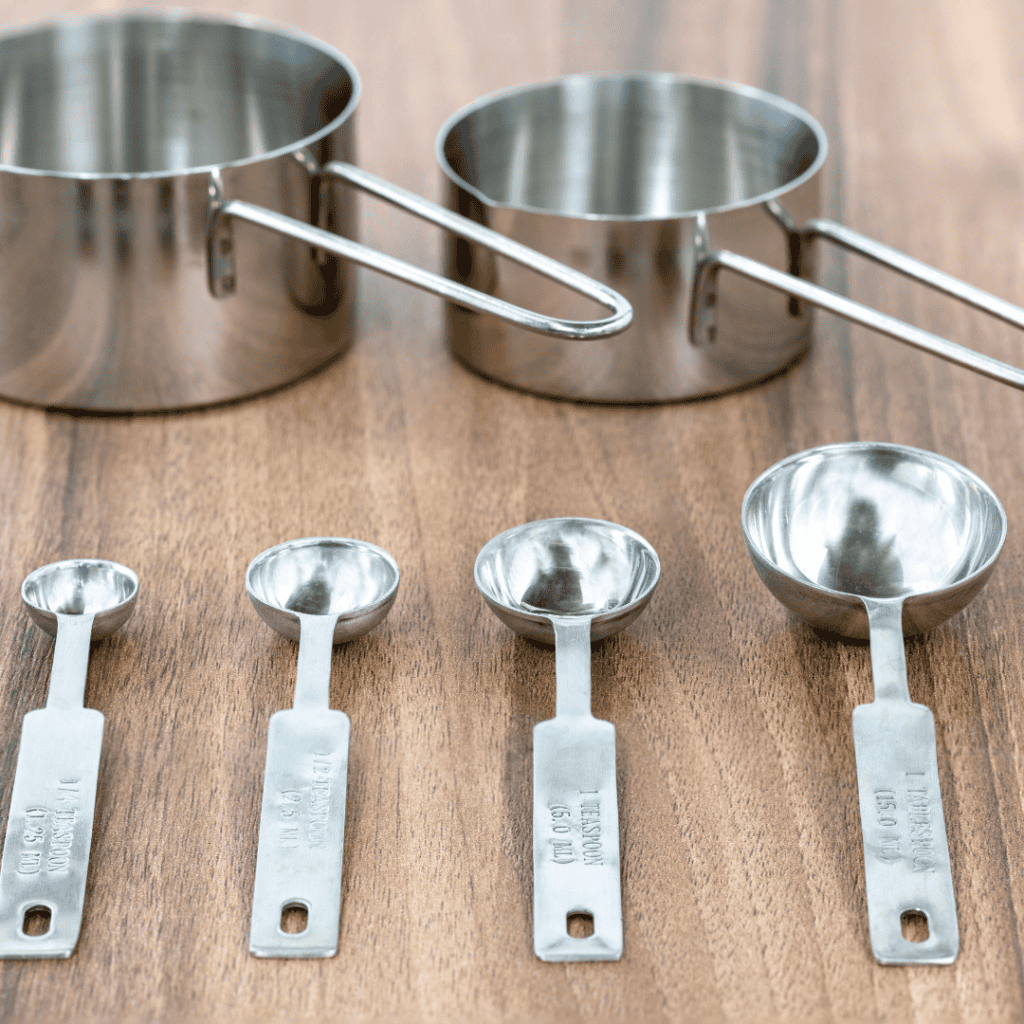
Spoons are a great way to measure small amounts of ingredients. Tablespoons and teaspoons are common in many kitchens and give good accuracy.
- 1 tablespoon equals about 15 milliliters
- 1 teaspoon equals about 5 milliliters
- Use level spoons, not heaping ones, for better accuracy
- Use a knife or flat edge to level off spoons
Measuring With Glasses And Mugs
Glasses and mugs can serve as rough measuring tools. Know their approximate volume to convert measurements.
| Item | Approximate Volume | Equivalent Cups |
| Standard drinking glass | 240 ml | 1 cup |
| Small coffee mug | 180 ml | 3/4 cup |
| Large mug | 350 ml | 1 1/2 cups |
Utilizing Food Packaging For Reference
Many food packages list volume or weight. Use this information to estimate your measurements.
- Milk cartons often show volume in milliliters or cups
- Flour bags list weight; 1 cup of flour weighs about 120 grams
- Use packaging size to compare with your needed measurement
- Mark containers with tape or marker for future use
Credit: www.recipesandplaces.com
Hand-based Measurement Techniques
Measuring cups are common tools in the kitchen. You can still measure ingredients without them. Using your hand helps estimate amounts easily.
Hand-based measurements work well for quick cooking. They save time and need no extra tools.
Estimating Volume With Palm And Fingers
Your palm and fingers can show how much to use. For example, a cupped hand holds about half a cup of liquid.
Using fingers can help measure small amounts. The tip of your thumb or a finger joint can equal a teaspoon or tablespoon.
- A cupped palm holds roughly ½ cup of liquid
- The tip of your thumb is about 1 teaspoon
- From the first to second knuckle on your finger equals 1 tablespoon
Using Your Hand For Dry Ingredients
Dry ingredients like flour or sugar can be measured with your hand. A loose handful is close to ½ cup.
For smaller amounts, pinch ingredients between thumb and forefinger. This can measure a pinch or dash.
- A loose handful equals about ½ cup dry ingredients
- A pinch between thumb and forefinger is roughly ⅛ teaspoon
- A small pinch or dash is less than ⅛ teaspoon
Hand Size Variations And Adjustments
Hand sizes differ for everyone. Use your own hand as a guide to adjust measurements.
Try measuring known amounts once. Then compare your hand sizes to those amounts for better accuracy.
- Measure your hand against a standard cup once
- Note if your hand holds more or less than ½ cup
- Adjust your estimates based on your hand’s size
Visual And Practical Hacks
Measuring cups are handy tools, but you can measure without them. Simple visual tricks and everyday items help you estimate cup sizes. These methods work well when you don’t have measuring cups nearby.
Try these practical hacks to measure cups accurately using common kitchen items and easy guides.
Filling Containers To Marked Levels
Use containers with volume markings to measure cups. Many jars, bottles, and pitchers have marks for ounces or milliliters. These marks can help you fill the right amount without a measuring cup.
- Find a container with volume labels.
- Pour your ingredient slowly to the mark that equals one cup (8 ounces or about 240 ml).
- Use a liquid measuring cup if available to cross-check the marks on other containers.
- Note the marks on your favorite containers for future use.
Using Water As A Volume Guide
Water is a useful tool to measure ingredients by volume. You can use water to mark levels or estimate the size of other containers.
| Volume | Approximate Water Level |
| 1 cup | 8 fluid ounces or 240 milliliters |
| 1/2 cup | 4 fluid ounces or 120 milliliters |
| 1/3 cup | 2.7 fluid ounces or 80 milliliters |
| 1/4 cup | 2 fluid ounces or 60 milliliters |
Fill a clear container with water to the desired level. Then pour water out and use that container to measure dry or liquid ingredients.
Repurposing Bottles And Jars
Many bottles and jars can work as makeshift measuring tools. You can mark them for volume or use their known capacities to estimate cups.
Here are some common items and their typical volumes:
- A standard soda bottle cap holds about 1 tablespoon (15 ml).
- A small jam jar usually holds around 1 cup (240 ml).
- A large yogurt container often equals 2 cups (480 ml).
Mark these containers with tape or a marker to note cup measurements.

Credit: thehungryequestrian.com
Tips For Measuring Different Ingredients
Sometimes you don’t have measuring cups handy. You can still measure ingredients with simple tricks. This guide helps you measure liquids, flour, sugar, and sticky items without tools.
These tips make cooking and baking easier. You will learn how to estimate amounts by using household items or your hands.
Measuring Liquids Without Tools
Use common containers like spoons, glasses, or bottles to measure liquids. A tablespoon holds about 15 ml, and a teaspoon holds about 5 ml.
- A regular coffee cup holds about 240 ml or 1 cup.
- Use a clear glass and fill it to a marked level to estimate volume.
- A standard soda bottle cap holds about 5 ml.
- Use your palm: a small handful of liquid is roughly 1 tablespoon.
Estimating Flour And Sugar Amounts
Flour and sugar can be tricky to measure without cups. Use your hand or common containers to guess the amount.
- A heaping handful is about 1 cup of flour or sugar.
- Spoon flour into a bowl, then level it with a knife for accuracy.
- A regular ice cream scoop holds about 1/2 cup.
- For sugar, use a small glass or jar and fill it halfway for 1/2 cup.
Handling Sticky Or Granular Ingredients
Sticky or granular ingredients like honey or brown sugar stick to spoons and bowls. Use these tips to measure them well.
- Lightly oil your spoon before scooping sticky ingredients.
- Press brown sugar firmly into a small cup or container to measure.
- Use wax paper or plastic wrap to scoop sticky items and then transfer.
- For granular spices, use your fingertip to pinch small amounts.
Ensuring Accuracy And Consistency
Measuring cups are helpful, but you can measure without them. Getting the right amount keeps recipes tasty and balanced.
Using simple tricks helps keep your measurements steady. This guide shows how to check and adjust your measurements well.
Double-checking Measurements
After measuring ingredients without cups, always double-check. This avoids mistakes that change the dish’s flavor or texture.
- Use common objects as guides, like a tablespoon or a cup from your kitchen.
- Level dry ingredients with a flat edge to avoid extra amounts.
- Compare liquid amounts with a clear container marked with volume lines.
- Weigh ingredients if possible for more accuracy.
- Check your measurements twice before cooking.
Adjusting Recipes Based On Results
Sometimes, your first try may not be perfect. Adjust the recipe by changing ingredient amounts slightly.
| Problem | Adjustment |
| Too dry | Add a little more liquid next time |
| Too salty | Use less salt or add a bland ingredient |
| Too sweet | Reduce sugar or sweeteners |
| Too thick | Thin with water or broth |
| Too thin | Add more dry ingredients or thickeners |
Keeping Notes For Future Reference
Write down your measurements and results. Notes help you repeat good results and avoid past mistakes.
- Record ingredient amounts and substitutes used.
- Note cooking times and temperatures.
- Write how the final dish tasted and looked.
- Keep notes in a dedicated notebook or app.

Credit: rhondasues.com
Frequently Asked Questions
How Can I Measure A Cup Without A Cup?
You can use household items like a standard-sized mug, spoon, or even your hand. For instance, a standard mug holds about one cup. A tablespoon can measure 1/16th of a cup, while your cupped hand can estimate about half a cup.
What Is An Alternative To Measuring Cups?
Common kitchen items can substitute measuring cups. Use a water glass, coffee mug, or even a clean jar. These items can help measure approximate volumes by referencing their known capacity, such as a mug holding around 8 ounces or one cup.
Can I Use A Spoon To Measure A Cup?
Yes, tablespoons can help measure small quantities. Sixteen tablespoons make up one cup. This method is useful for baking or cooking when precise measurements aren’t critical. However, for larger quantities, using a mug or glass might be more efficient.
Is A Coffee Mug Equal To A Measuring Cup?
A standard coffee mug typically holds about 8 ounces, equivalent to one cup. However, mug sizes can vary, so it’s best to check its capacity first. Use a mug for approximate measurements when a precise measuring cup isn’t available.
Conclusion
Measuring cups are not always needed in the kitchen. Use common items like spoons, glasses, or jars instead. These tools help you cook without extra equipment. Practice makes it easier to guess amounts correctly. Cooking becomes fun and less stressful this way.
Keep these tips in mind for your next recipe. You can still make tasty meals without measuring cups. Try these simple tricks and enjoy cooking more.