Your wood cutting board is more than just a kitchen tool—it’s where you prepare meals for your loved ones. But if you don’t clean it properly, harmful bacteria can linger, putting your health at risk.
You might think rinsing with water is enough, but there’s a right way to clean and care for your board that keeps it safe and lasts longer. You’ll discover simple, effective steps to properly clean your wood cutting board and keep it fresh every time you cook.
Stick with me, and you’ll never worry about your board’s cleanliness again.

Credit: ca.style.yahoo.com
Choosing The Right Cleaning Tools
Cleaning a wood cutting board requires care to keep it safe and durable. Using the right tools helps remove dirt and bacteria without damaging the wood.
Some tools work better than others for gentle cleaning. It is important to pick tools that clean well but do not wear down the board.
Soft Brushes And Sponges
Soft brushes and sponges clean wood cutting boards without scratching. They remove food particles and stains gently.
- Use a brush with soft bristles for scrubbing hard-to-reach spots.
- Pick a sponge that is non-abrasive and easy to rinse.
- Avoid steel wool or rough scrubbers that can damage the wood surface.
- Clean tools after use to avoid spreading bacteria.
Avoiding Harsh Chemicals
Harsh chemicals can harm wood and leave residues. They may cause cracks or make the board unsafe for food.
| Chemical | Effect on Wood | Safer Alternative |
| Bleach | Damages fibers, removes natural oils | White vinegar or mild soap |
| Ammonia | Causes discoloration and dryness | Warm water and lemon juice |
| Harsh detergents | Strips protective finish | Gentle dish soap |
Daily Cleaning Routine
Keeping your wood cutting board clean every day helps it last longer. Dirt and germs can hide in the wood if you do not clean it well.
Follow simple steps to wash and dry your board properly. This keeps your kitchen safe and your board in good shape.
Washing With Warm Soapy Water
Use warm water and mild soap to clean your wood cutting board. Avoid soaking it in water to stop the wood from cracking.
- Rinse the board with warm water.
- Apply a small amount of dish soap.
- Scrub gently with a soft sponge or cloth.
- Rinse off all soap with warm water.
- Dry the board with a clean towel right away.
Quick Drying Techniques
Drying your wood board fast stops water damage and mold. Use these tips to dry it well every time.
| Drying Method | How to Do It | Benefits |
| Towel Dry | Wipe the board with a clean, dry towel. | Removes surface water quickly. |
| Air Dry Upright | Stand the board on its side or edge. | Allows air to circulate and dry both sides. |
| Fan or Vent | Place board near a fan or vent for faster drying. | Speeds up drying to prevent damage. |
Deep Cleaning Methods
Cleaning a wood cutting board well stops germs and smells. Deep cleaning keeps the board safe and fresh.
This guide shows simple ways to clean your board using common kitchen items. Each method helps remove stains and bacteria.
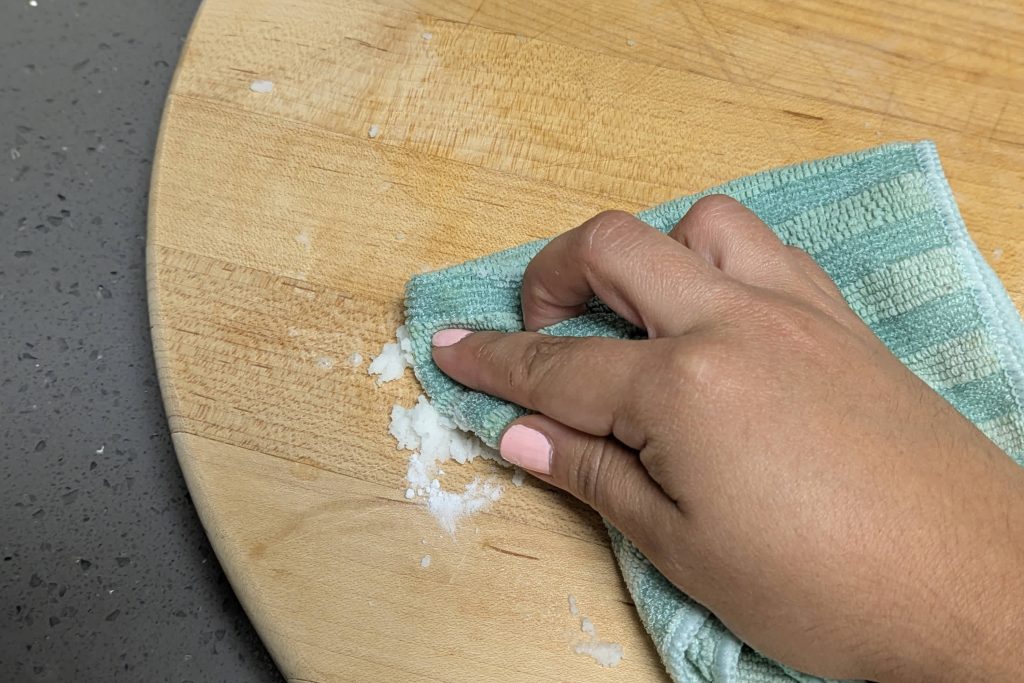
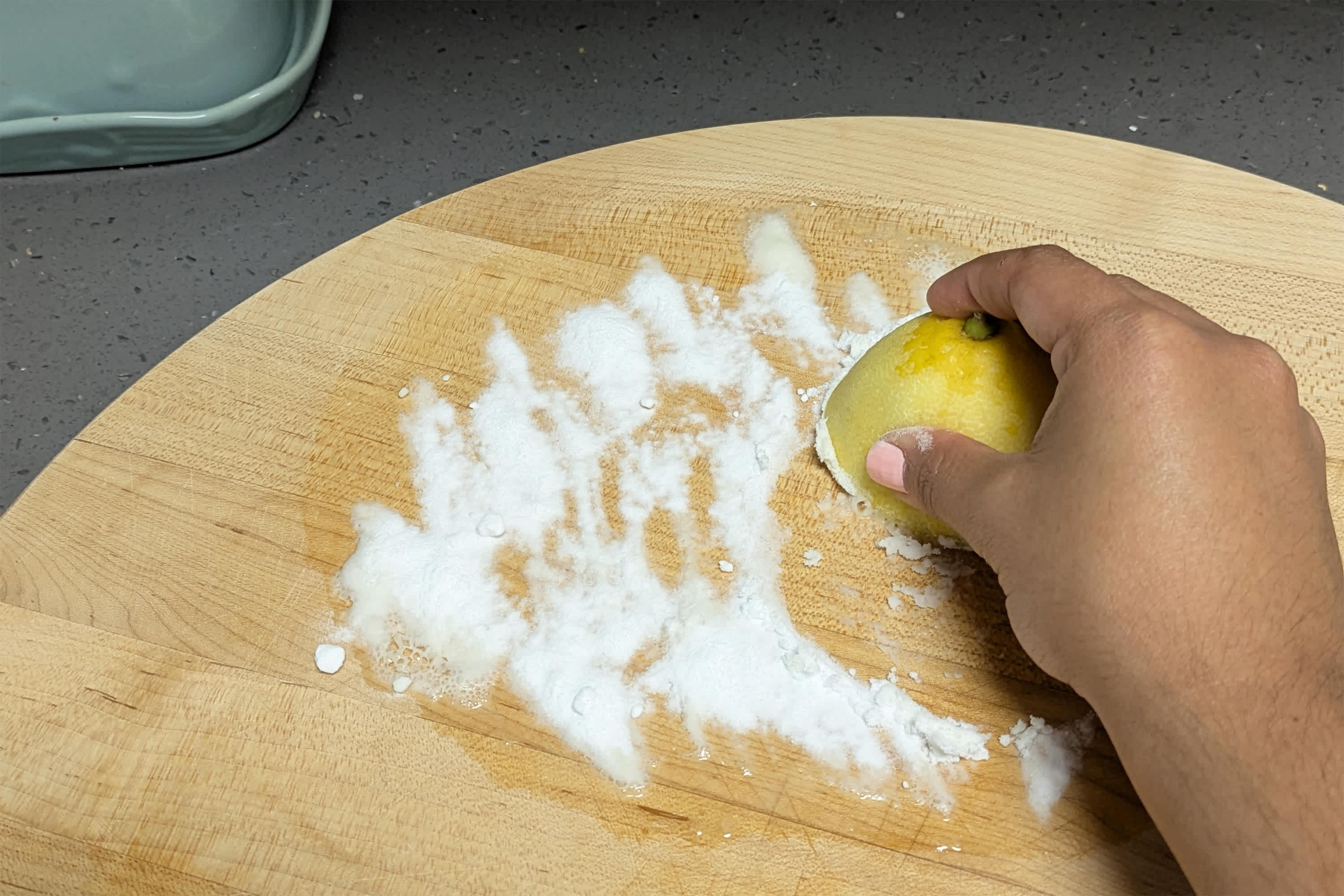
Using Salt And Lemon
Salt and lemon make a natural scrub for wood boards. Salt acts as an abrasive, and lemon adds a fresh scent while killing germs.
- Sprinkle coarse salt over the board’s surface.
- Cut a lemon in half and rub it on the salted board.
- Let the mixture sit for 5 minutes to lift stains.
- Rinse with warm water and dry with a towel.
Baking Soda Scrub
Baking soda cleans and deodorizes wood cutting boards. It helps remove tough stains and neutralizes bad smells.
| Cleaning Step | Details |
|---|---|
| Sprinkle | Spread baking soda evenly on the board. |
| Scrub | Use a damp sponge to scrub the surface gently. |
| Wait | Leave it for 10 minutes to absorb odors. |
| Rinse | Wash off with warm water and dry well. |
Vinegar Disinfection
White vinegar is a natural disinfectant. It kills many bacteria on wood boards without using harsh chemicals.
- Pour white vinegar into a spray bottle.
- Spray the entire surface of the cutting board.
- Let the vinegar sit for 5 minutes to disinfect.
- Wipe with a clean cloth and air dry the board.
Removing Stains And Odors
Wood cutting boards can absorb stains and smells from food. Cleaning them well keeps them fresh and safe to use.
Using natural ways to remove stains and odors protects the wood and keeps it strong for a long time.
Natural Deodorizers
Lemons and baking soda are great natural deodorizers. They help remove smells without harming the wood.
Rub lemon juice on the board, then let it sit for a few minutes. Baking soda can be sprinkled and scrubbed gently.
- Lemon juice neutralizes odors and lightens stains
- Baking soda absorbs bad smells and cleans surfaces
- White vinegar can also freshen the board naturally
Stain Removal Tips
To remove stains, sprinkle coarse salt on the board and rub it with a lemon. This scrubs away stains safely.
For tough stains, make a paste with baking soda and water. Apply it, let it sit, then rinse well.
- Use coarse salt as a gentle scrub
- Mix baking soda and water for a stain-removal paste
- Avoid harsh chemicals that damage wood
- Always dry the board well after cleaning
Preventing Damage And Cracks
Wood cutting boards need special care to last long. If not cleaned and stored right, they can crack or get damaged easily.
Proper cleaning helps keep your board safe for food and strong over time. Learn how to avoid common problems by handling moisture and storage well.
Avoiding Excess Moisture
Too much water can make wood boards swell and crack. It also allows bacteria to grow inside the wood.
- Wash the board quickly with warm, soapy water.
- Do not soak the board in water or put it in a dishwasher.
- Dry the board with a clean towel right after washing.
- Let the board air dry standing up or on a rack to let air reach all sides.
Proper Storage Ideas
Storing your wood cutting board properly helps keep it dry and prevents cracks. Avoid places that trap moisture or heat.
| Storage Method | Benefit |
| Store upright on a rack | Allows air circulation to dry all sides |
| Keep in a dry, cool place | Prevents warping from heat or humidity |
| Avoid stacking heavy items on board | Prevents pressure cracks or dents |
| Apply mineral oil regularly | Seals wood to reduce water absorption |
Credit: www.thekitchn.com
Maintaining With Oil Treatments
Oiling your wood cutting board keeps it strong and lasts longer. Oil protects the wood from drying out and cracking. This treatment also helps stop stains and odors.
Using the right oil and applying it at the right time are key to good care. This guide shows you how to choose safe oils and when to oil your board.
Choosing Food-safe Oils
Not all oils are safe for food contact or good for wood. Some oils can go bad and make your board sticky. Pick oils that soak in well and do not spoil.
- Mineral oil is popular because it is safe and does not go rancid.
- Coconut oil works but may harden in cold places.
- Walnut oil is natural but can cause allergies for some people.
- Beeswax mixed with oil adds extra protection and shine.
- Avoid cooking oils like olive or vegetable oil; they spoil quickly.
How And When To Oil
Apply oil on a clean, dry board. Use a soft cloth or paper towel to spread it evenly. Let the oil soak in for a few hours or overnight. Wipe off any extra oil before use.
| When to Oil | Signs Your Board Needs Oil |
| After first use | Board looks dry and dull |
| Once a month | Water no longer beads on surface |
| After deep cleaning | Board feels rough or cracked |

Credit: ca.style.yahoo.com
Frequently Asked Questions
How Often Should You Clean A Wood Cutting Board?
Clean your wood cutting board after each use to prevent bacteria buildup. Use hot soapy water and a scrub brush. Rinse thoroughly and dry immediately. This routine helps maintain its longevity and hygiene. Regular cleaning is essential for keeping your kitchen safe and your cutting board in good condition.
What Is The Best Way To Sanitize It?
To sanitize, use a mixture of vinegar and water or diluted bleach solution. Apply it evenly on the board. Let it sit for a few minutes, then rinse thoroughly. This process effectively kills bacteria and keeps your board safe for food preparation.
Regular sanitization is crucial for a healthy kitchen environment.
Can You Use Lemon To Clean The Board?
Yes, you can use lemon to clean a wood cutting board. Cut a lemon in half and rub it over the board. The acidic nature of lemon helps remove stains and odors. Rinse thoroughly with water afterward. It’s a natural and effective cleaning method that also adds a fresh scent.
How Do You Remove Stains From A Board?
To remove stains, sprinkle coarse salt on the board and scrub with a lemon half. The salt acts as an abrasive, and the lemon’s acidity helps lift stains. Rinse thoroughly and dry immediately. This method is effective for keeping your board looking clean and well-maintained.
Conclusion
Cleaning a wood cutting board is simple and important. Use warm water and mild soap every time. Avoid soaking the board to keep it strong. Dry it well to stop bacteria growth. Oil the board often to keep wood healthy.
This care helps your board last longer and stay safe. Clean boards make cooking easier and better. Keep these tips in mind for a fresh, clean cutting board.