If you want to improve your fishing game, knowing how to put a weight on your fishing line is a skill you can’t ignore. Adding the right weight helps your bait sink to the perfect spot, making it easier to catch fish.
But if you’re new to fishing or unsure how to do it correctly, it can feel tricky. Don’t worry—this guide will walk you through simple steps that anyone can follow. By the end, you’ll feel confident setting up your line to catch more fish every time you cast.
Ready to make your fishing trips more successful? Let’s dive in!

Credit: www.ebay.com
Choosing The Right Weight
Putting a weight on your fishing line helps cast farther and control bait depth. Picking the right weight matters for good fishing results.
This guide explains different types of weights and what to think about when choosing one.
Types Of Weights
Fishing weights come in many shapes and sizes. Each type fits different fishing needs and water conditions.
- Sinker Weights:Round or egg-shaped, great for bottom fishing.
- Split Shot Weights:Small clips that pinch on the line, easy to add or remove.
- Slip Sinkers:Slide freely on the line, letting fish bite without feeling resistance.
- Pyramid Weights:Pointed ends to hold in sandy or muddy bottoms.
- Bank Sinkers:Heavier and oval-shaped, good for strong currents.
Factors To Consider
Choose weight based on fishing spot, line strength, and bait type. These factors affect how well your weight works.
| Factor | What to Consider | Why It Matters |
| Water Depth | Deeper water needs heavier weights | Keeps bait at the right depth |
| Current Strength | Stronger current calls for heavier weights | Prevents weight from moving too much |
| Fishing Line Strength | Use weights lighter than line test | Avoids line breakage |
| Bait Type | Heavier bait may need less weight | Maintains natural bait movement |

Credit: mysterytacklebox.com
Attaching Weights To The Line
Adding weights to your fishing line helps your bait sink to the right depth. It also improves casting distance and line control.
There are different ways to attach weights depending on the fishing style and conditions. Learn how to use split shot weights, sliding sinkers, and fixed weights.
Using Split Shot Weights
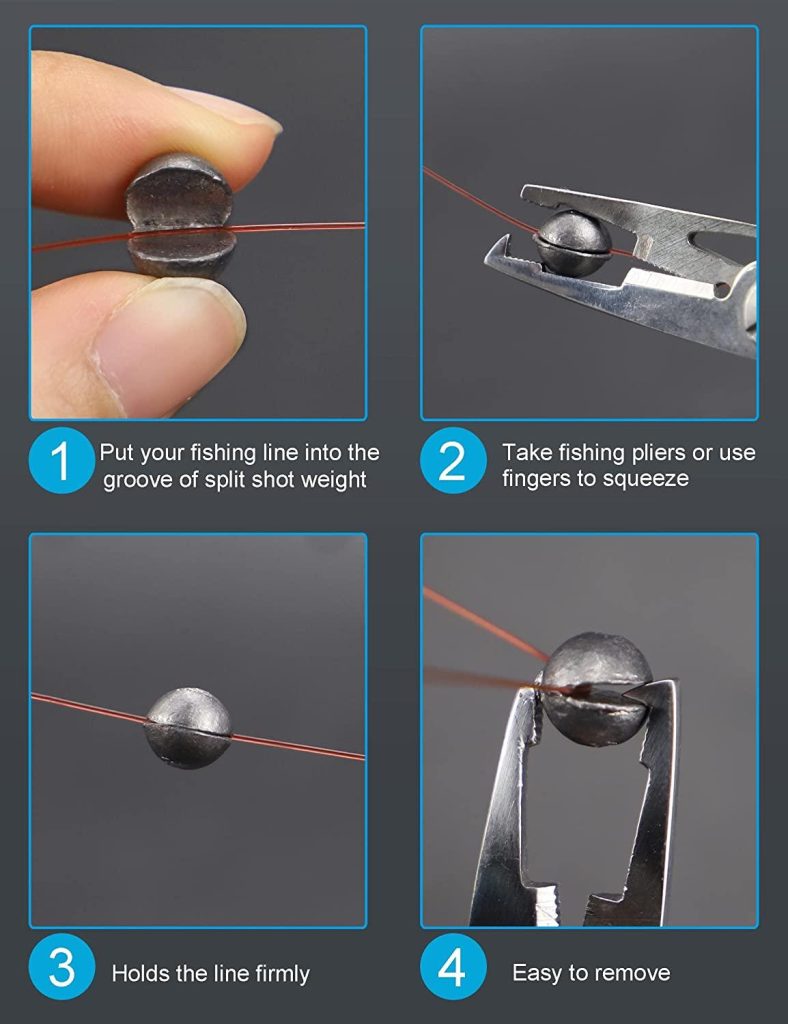
Split shot weights are small round lead pieces with a slit. You can pinch them directly onto the fishing line.
To attach, open the split shot slightly, place it on the line, then squeeze it tight with pliers. Use several split shots to add more weight.
- Pinch weights close to the hook for better bait presentation
- Space weights evenly for smooth sinking
- Use light split shots for small fish and heavier ones for deep water
Sliding Sinker Technique
Sliding sinkers slide freely on the line. They allow fish to take the bait without feeling the weight.
Thread the sliding sinker onto the line first. Then add a small rubber stopper or bead to keep it from hitting the knot.
- Slide the sinker down to the stopper before the hook
- This setup works well for bottom fishing
- Adjust stopper distance to control bait depth
Fixed Position Weights
Fixed weights stay in one spot on the line. Tie the weight directly to the line or use special clips.
This method offers more control but can make fish feel the weight when biting. It is good for fast current or deep water fishing.
- Secure the weight firmly with knots or clips
- Place weight above the hook at a set distance
- Check knots often to prevent slipping
Weight Placement Tips
Placing weight on your fishing line helps control bait depth and casting distance. Proper weight placement improves your chances of catching fish.
Different fishing spots and conditions need different weight setups. Learn how to place weight for rivers, lakes, and windy days.
Position For River Fishing
In rivers, currents move your bait quickly. Place weights so the bait stays near the bottom and moves naturally.
- Put the weight close to the bait to keep it steady in the current.
- Use a sliding weight to allow fish to take the bait without feeling resistance.
- Adjust weight size based on current speed; stronger currents need heavier weights.
Setup For Lake Fishing
Lakes have calmer waters, so weight placement focuses on controlling bait depth. You can try different setups to find what works best.
| Weight Type | Best Placement | Purpose |
| Split Shot | 6-12 inches from bait | Small weight to keep bait near bottom |
| Egg Sinkers | Above a swivel | Allows bait to move freely |
| Slip Sinkers | On main line, above leader | Cast farther and control depth |
Adjusting For Windy Conditions
Wind affects your cast and bait movement. Adjust your weight to keep control and improve accuracy.
Tips for windy days:
- Use heavier weights to prevent bait from drifting too much.
- Place weight closer to the bait to improve control.
- Check your line often for tangles caused by wind.
Optimizing Casting With Weights
Adding weight to your fishing line helps control your cast. It makes your bait go farther and stay balanced.
Choosing the right weight improves your fishing experience and increases your chances of success.
Balancing Weight And Bait
Weight keeps your bait steady in water. It stops the bait from floating too much or moving too fast.
Balance weight with bait size. Too much weight can scare fish. Too little weight won’t cast well.
- Match weight size to bait size
- Use smaller weights for light bait
- Heavier weights suit bigger bait
- Adjust weight to water conditions
Improving Casting Distance
Adding weight helps your line fly farther when you cast. It gives momentum to your bait.
Use a weight heavy enough to carry your bait but light enough to control easily.
- Start with medium weight for general casting
- Increase weight to cast longer distances
- Reduce weight for short, precise casts
- Consider wind and water flow when choosing weight
Common Mistakes To Avoid
Putting weight on a fishing line can improve casting and bait presentation. Mistakes here can cause problems like line breakage or poor casting.
Knowing what to avoid helps you fish better and protects your gear from damage.
Overloading The Line
Using weights that are too heavy for your fishing line weakens the line and may cause it to snap. It is important to match the weight size with the line strength.
- Check the line test rating before adding weight.
- Do not use weights heavier than recommended for your line.
- Use smaller weights for light lines and bigger weights for heavy lines.
- Test your setup before fishing to avoid surprises.
Incorrect Weight Placement
Placing the weight in the wrong spot on your fishing line can reduce casting distance and make your bait look unnatural to fish.
| Weight Placement | Effect |
|---|---|
| Too close to the hook | Bait moves unnaturally and scares fish |
| Too far from the hook | Line tangles and casting is poor |
| Proper distance (about 12 inches) | Natural bait movement and good casting |

Credit: mysterytacklebox.com
Maintaining Your Fishing Gear
Keeping your fishing gear in good shape helps you catch fish better. Small checks and repairs can stop big problems later. Putting the right weight on the fishing line is part of this care.
Regular maintenance makes your fishing trips smoother. It saves money and keeps your equipment working well.
Inspecting For Wear
Look at your fishing line and weights carefully before every trip. Check for cracks, rust, or bends. Old weights can damage the line or fall off during fishing.
- Check the line near the weight for frays or thinning.
- Look for rust or corrosion on metal weights.
- Make sure weights are not bent or broken.
- Test if the weight moves freely or is stuck.
Replacing Weights
When weights show wear or damage, replace them to keep fishing line strong. Use the right size and type for your fishing style.
| Weight Type | Best Use | Signs to Replace |
| Split Shot | Light fishing, small fish | Cracked or loose on line |
| Egg Sinkers | Bottom fishing | Rust or bent shape |
| Bank Sinkers | Strong currents | Broken loops or heavy rust |
Frequently Asked Questions
How Do You Attach A Weight To Fishing Line?
To attach a weight, thread the line through the weight’s hole. Then tie a secure knot below it. Use knots like the improved clinch for strong hold. This keeps the weight stable and improves casting accuracy.
What Types Of Weights Work Best For Fishing Lines?
Split shot, egg sinkers, and pyramid weights are popular. Each suits different fishing conditions like still water or currents. Choose weights based on fishing depth and target species to optimize your catch.
Can I Adjust The Weight On My Fishing Line Easily?
Yes, you can slide split shot weights along the line. For fixed weights, you need to retie the line. Adjusting weight helps control depth and bait presentation effectively.
Why Is Adding Weight Important In Fishing?
Weights help your bait sink to the desired depth. This improves bait visibility and fish attraction. Proper weighting enhances casting distance and stability in water currents.
Conclusion
Adding weight to your fishing line helps cast farther and control bait depth. Choose the right weight based on water conditions and fish type. Tie the weight securely to avoid losing it during fishing. Test your setup before casting to ensure balance and effectiveness.
Practice these steps regularly to improve your fishing skills. Simple techniques make fishing more enjoyable and successful. Keep experimenting with different weights for the best results. Fishing becomes easier with the right weight on your line.