Are you struggling to get your fishing line just right on your open face reel? You’re not alone.
Putting line on this type of reel can feel tricky if you’ve never done it before. But don’t worry—once you learn the simple steps, you’ll save time and avoid common mistakes that can ruin your fishing trip. Keep reading, and you’ll discover an easy, foolproof way to spool your open face reel like a pro.
Your next catch will thank you!

Credit: www.youtube.com
Choosing The Right Fishing Line
Picking the right fishing line is key to a good fishing trip. The line must suit the reel and the type of fish you want to catch.
There are many types of fishing lines. Understanding their differences helps you make a better choice.
Monofilament Vs. Braided
Monofilament and braided lines are the most common options for open face reels. Each has its own strengths and weaknesses.
- Monofilament:Made from one strand of nylon, it is stretchy and easy to handle.
- Braided:Made of several woven fibers, it is stronger and thinner than monofilament.
- Visibility:Monofilament is less visible in water, while braided line is easier to see above water.
- Cost:Monofilament is usually cheaper but wears out faster.
- Use:Monofilament works well for beginners; braided suits experienced anglers.
Selecting The Line Weight
Choosing the right line weight is important. It affects casting distance and strength against fish.
| Line Weight (lb) | Best For | Fish Type |
| 2-6 | Light fishing | Small fish like panfish |
| 8-12 | Medium fishing | Trout, bass |
| 14-20 | Heavy fishing | Larger fish like pike, catfish |
Gathering Necessary Tools
Before you start putting fishing line on an open face reel, it is important to have the right tools. This will make the process easier and faster.
Gather everything you need so you can work without interruption. This helps you avoid mistakes and saves time.
Fishing Line
Choose the correct fishing line for your reel and fishing style. The line should be strong and fit the reel’s capacity.
- Monofilament line is easy to handle.
- Fluorocarbon line is less visible in water.
- Braid line is strong and thin.
- Check the line weight recommended for your reel.
Scissors Or Line Cutter
You need a sharp tool to cut the fishing line cleanly. Scissors or a line cutter works well for this task.
| Tool | Use |
| Scissors | Cut lines easily and cleanly |
| Line Cutter | Designed specifically for fishing lines |
Fishing Reel
Make sure your open face reel is clean and in good condition. Check that the spool turns freely and the drag system works well.
Having the right reel is key to smooth line spooling and a better fishing experience.
Preparing The Reel
Putting fishing line on an open face reel needs careful preparation. This helps the line spool smoothly and last longer.
Start by cleaning and checking your reel. This keeps it working well and avoids problems while fishing.
Cleaning The Reel
Remove dirt, salt, and old grease from your reel. Clean parts help the reel spin easily and stop the line from tangling.
- Use a soft cloth to wipe the reel’s surface.
- Apply mild soap and water to remove grime.
- Dry the reel completely before use.
- Apply a light coat of reel oil to moving parts.
- Check that no sand or debris stays inside the reel.
Checking The Bail Arm
The bail arm controls the line release and retrieval. Make sure it moves freely and locks correctly.
| Check Point | What to Look For | Action Needed |
| Movement | Should open and close smoothly | Clean or lubricate if stiff |
| Locking | Locks firmly in place when closed | Adjust or repair if loose |
| Spring | Strong enough to snap back quickly | Replace if weak or broken |

Credit: www.reddit.com
Attaching The Line To The Reel
Putting fishing line on an open face reel starts with attaching the line correctly. This step keeps the line secure while you spool it.
Follow simple steps to attach the line firmly. This helps prevent tangles and line slippage during fishing.
Opening The Bail Arm
The bail arm controls how the line wraps onto the reel spool. You need to open it before attaching the line.
To open the bail arm, flip it up gently until it stays open. This lets you easily place the line on the spool.
Tying The Arbor Knot
The arbor knot is a strong, simple knot to attach the line to the reel spool. It keeps the line from slipping.
Here is how to tie the arbor knot:
- Pass the line around the reel spool’s arbor.
- Tie an overhand knot around the standing line.
- Tie a second overhand knot at the tag end.
- Pull both knots tight against the spool.
- Trim the tag end close to the knot.
Spooling The Line
Putting fishing line on an open face reel is an important skill for anglers. The process is called spooling. It helps the line lay evenly on the reel spool.
Correct spooling prevents tangles and improves casting. Let’s look at two key parts of spooling: maintaining tension and avoiding line twists.
Maintaining Tension
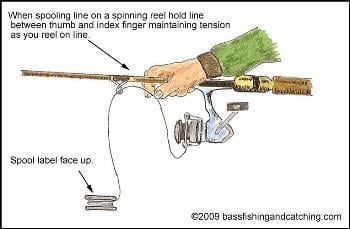
Keeping steady tension on the line as you spool it is very important. If the line is too loose, it will tangle. If it is too tight, it may stretch or break.
- Hold the line spool between your fingers to apply gentle pressure.
- Ask a helper to hold the spool if needed.
- Feed the line slowly onto the reel to keep tension steady.
- Check the line often to make sure it lies flat and tight on the spool.
Avoiding Line Twists
Line twists cause knots and reduce casting distance. Avoid twists by making sure the line comes off the spool the right way.
| Common Cause | How to Fix |
|---|---|
| Line unwinds off the spool in loops | Flip the spool over before spooling |
| Reel spool spins backwards | Check reel drag and handle direction |
| Line twists during retrieve | Use a swivel to reduce twists |

Credit: mysterytacklebox.com
Securing The Line
Securing the fishing line on an open face reel is important. It keeps the line tight and prevents slipping.
Follow careful steps to make sure the line is attached well before you start fishing.
Closing The Bail Arm
After attaching the line to the spool, close the bail arm gently. This locks the line in place.
Make sure the bail arm snaps back fully. A loose bail arm can cause line tangles or slippage.
Cutting Excess Line
Trim any extra fishing line after securing it to the spool. Leave a small length for safety.
Cutting the excess line cleanly helps avoid snags and keeps the reel tidy.
- Use sharp scissors or line cutters
- Leave about 1 to 2 inches of line
- Check for any loose ends before starting
Testing The Setup
After putting fishing line on your open face reel, it is important to test the setup. Testing helps you find any problems before you start fishing.
Check how the line feels and how smoothly the reel works. This will make your fishing experience better.
Checking Line Tension
Hold the rod and pull the line gently. The line should feel tight but not too hard to pull. Too loose line can cause tangles.
If the line is too tight, the reel may not let out line smoothly. Adjust the drag knob to fix the tension.
- Pull the line slowly to feel resistance
- Adjust drag until line moves with gentle force
- Test several times to find the right tension
Ensuring Smooth Reel Operation
Turn the reel handle to check if it spins easily. The line should wind evenly on the spool without bumps.
Listen for any unusual sounds. Grinding or clicking may mean the reel needs cleaning or fixing.
- Spin the handle slowly and smoothly
- Watch the line spool evenly on the reel
- Check for strange noises during rotation
Frequently Asked Questions
How Do I Start Putting Line On An Open Face Reel?
Begin by securing the line to the spool with an arbor knot. Hold the line tight and slowly turn the reel handle to wind evenly. Ensure the line is tight and layered without gaps or overlaps for smooth casting.
What Type Of Fishing Line Suits Open Face Reels?
Monofilament and braided lines both work well on open face reels. Monofilament is beginner-friendly and stretchable. Braided line offers higher strength and sensitivity. Choose based on your fishing style and target species for best results.
How Much Fishing Line Should I Spool On The Reel?
Fill your spool to about 1/8 inch below the spool edge. Too much line causes tangles; too little reduces casting distance. Adjust the amount based on your reel size and the type of fishing you plan.
How To Avoid Line Twists On An Open Face Reel?
Use a swivel to reduce line twists from spinning lures or bait. Avoid overfilling the spool, and keep tension consistent while spooling. Regularly check and untwist the line during use for smooth performance.
Conclusion
Putting fishing line on an open face reel is simple with practice. Take your time and follow each step carefully. Avoid tangles by keeping the line tight as you spool it. Check your reel often to make sure the line is even.
A well-spooled reel helps your fishing go smoother. Now you are ready to enjoy your time by the water. Keep practicing, and you will get better every time. Happy fishing!