Is your central air conditioner not cooling like it used to? You might be low on Freon, the key refrigerant that keeps your home comfortable during hot days.
Adding Freon can seem tricky, but with the right steps, you can do it yourself and save money. You’ll learn exactly how to put Freon in your central air conditioner safely and effectively. Keep reading to get your AC running smoothly again and enjoy a cool, refreshing home all summer long.
Signs Your Ac Needs Freon
Reduced cooling efficiencymeans your AC is not cooling the room well. It takes longer to cool or does not reach the set temperature. This often shows low Freon levels inside the system.
Ice formation on coilshappens when Freon is low. The coils freeze because the refrigerant cannot absorb heat properly. Ice buildup blocks air flow and lowers cooling power.
Hissing or bubbling soundsnear the AC unit may signal a Freon leak. These noises come from gas escaping the system. It is a sign to check and refill the Freon soon.

Credit: www.lochardplumbingheatingandcooling.com
Gathering Necessary Tools And Materials
Freoncomes in different types, like R-22 and R-410A. Check your air conditioner’s label to find the right type. Using the wrong Freon can damage the system.
Safety gearis very important. Wear goggles and gloves to protect your eyes and hands. Freon can be harmful if it touches skin or eyes.
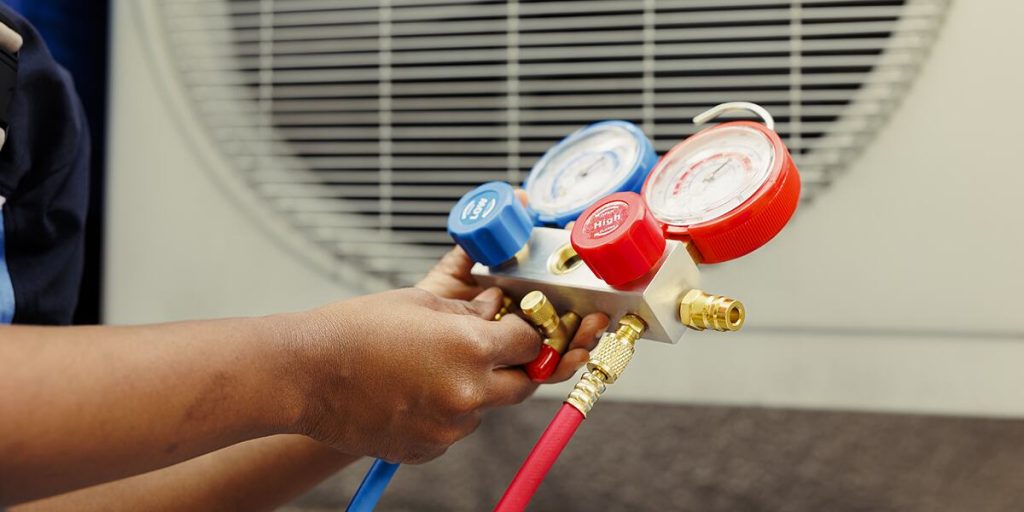
A manifold gauge sethelps check pressure in the system. It connects to the air conditioner to measure how much Freon is inside. A vacuum pumpremoves air and moisture before adding Freon. This keeps the system clean and working well.
| Tool or Material | Purpose |
|---|---|
| Freon (R-22 or R-410A) | Coolant for the air conditioner |
| Safety Gear (Goggles, Gloves) | Protects eyes and skin |
| Manifold Gauge Set | Measures system pressure |
| Vacuum Pump | Removes air and moisture |
Preparing The Air Conditioner
Start by turning off the powerto the air conditioner. This prevents any accidents or electric shocks while working. Locate the circuit breaker or switch and switch it off.
Next, find the service valveon your air conditioner. This is where you will connect the Freon tank. It usually looks like a small metal cap on the outdoor unit. Unscrew the cap carefully.
Before adding Freon, it is important to check for leaks. Look for oily spots or damage around the pipes and connections. Leaks can cause Freon to escape, making the air conditioner less effective.
Connecting The Manifold Gauges
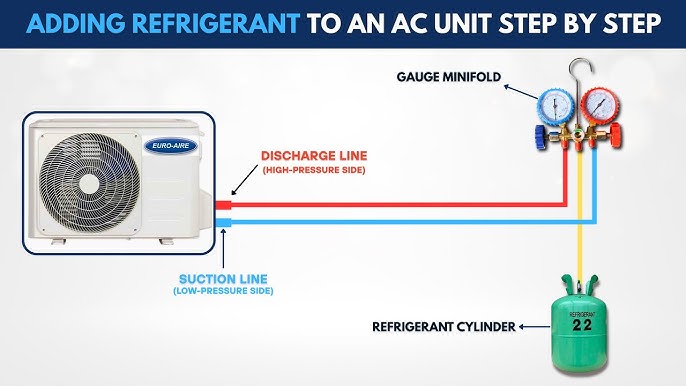
Attach the manifold gauges to the correct ports on the air conditioner. The blue hoseconnects to the low-pressure port. The red hoseconnects to the high-pressure port. The yellow hoseis for adding or recovering Freon.
Make sure the hoses are tight and secure. Loose connections can cause leaks or wrong readings.
Check the pressure levels by reading the gauges. The low sideshould show pressure close to the system’s normal range. The high sidewill be higher, showing the pressure of the refrigerant when compressed.
| Gauge | Normal Pressure Range (PSI) | Meaning |
|---|---|---|
| Low Side (Blue) | 25-45 | Shows suction pressure of Freon |
| High Side (Red) | 200-300 | Shows pressure after compression |
Gauge results tell if Freon levels are too lowor too high. Low pressure means adding Freon is needed. High pressure can mean a problem in the system.
Adding Freon To The System
Open the valve slowlyto let Freon flow into the system. This helps avoid sudden pressure changesthat can damage parts. Watch the pressure gauge carefully. It shows how much Freon is inside the system.
Keep checking the pressure as you add Freon. Stop adding when the pressure reaches the level shown in the air conditioner manual. Too much Freoncan cause the system to work poorly or break.
- Open valve carefully and slowly
- Watch pressure gauge closely
- Stop when pressure hits recommended level
- Never add too much Freon
Credit: www.georgiaairrepair.com
Finishing Up The Process
Seal the service porttightly to prevent leaks. Use a cap or valve coverto keep dirt out. This step is vital for system safety and efficiency.
Turn on the air conditioner and check its cooling performance. Listen for unusual sounds. Feel the vents for cold air. If the system cools well, the Freon level is good.
Clean all tools used during the process. Wipe off grease and dirt. Store them in a dry, safe place. Proper care helps tools last longer and keeps the workspace tidy.
Safety Tips And Precautions
Handling Freon responsiblyis very important for safety and the environment. Always wear gloves and goggles to protect your skin and eyes. Avoid breathing in Freon gas, as it can harm your lungs. Work in a well-ventilated area to reduce gas buildup.
Avoiding exposure risksmeans keeping Freon away from children and pets. Do not release Freon into the air; it damages the ozone layer. Use proper tools and never mix Freon types. Store Freon cylinders upright and secure them to prevent tipping.
When to call a professional:
- If you feel unsure about handling Freon safely.
- If your air conditioner has a leak.
- If you lack the proper tools or certification.
- If you notice strange smells or sounds from your unit.
Credit: m.youtube.com
Frequently Asked Questions
How To Know If My Ac Needs Freon?
If your AC blows warm air or struggles to cool, it may need Freon. Additionally, hissing sounds or ice on the unit are indicators. Regular maintenance can also help identify Freon issues early. Always consult a professional to avoid mishandling refrigerants.
What Tools Are Needed To Add Freon?
You’ll need a manifold gauge set, refrigerant scale, and safety goggles. A compatible Freon type and leak detector are essential too. Ensure you have gloves to protect your hands. These tools help ensure safe and effective Freon addition.
Can I Put Freon In My Ac Myself?
While possible, adding Freon requires specialized knowledge and tools. Incorrect handling can damage the unit or cause injury. For safety and efficiency, it’s best to hire a certified HVAC technician. They ensure proper handling and prevent potential hazards.
How Often Should Freon Be Added To Ac?
Freon isn’t consumed like fuel, so it shouldn’t need regular refilling. If your AC needs frequent top-ups, there might be a leak. Regular maintenance helps prevent Freon issues. Consult a professional if you suspect a problem with your system.
Conclusion
Adding Freon to your central air conditioner helps it cool better. Always check for leaks before adding Freon. Use the right type of Freon for your system. Follow safety steps carefully to avoid damage or injury. If unsure, call a professional for help.
Proper Freon levels keep your AC running smoothly. Regular maintenance can save money and extend AC life. Cool air is just a few steps away.