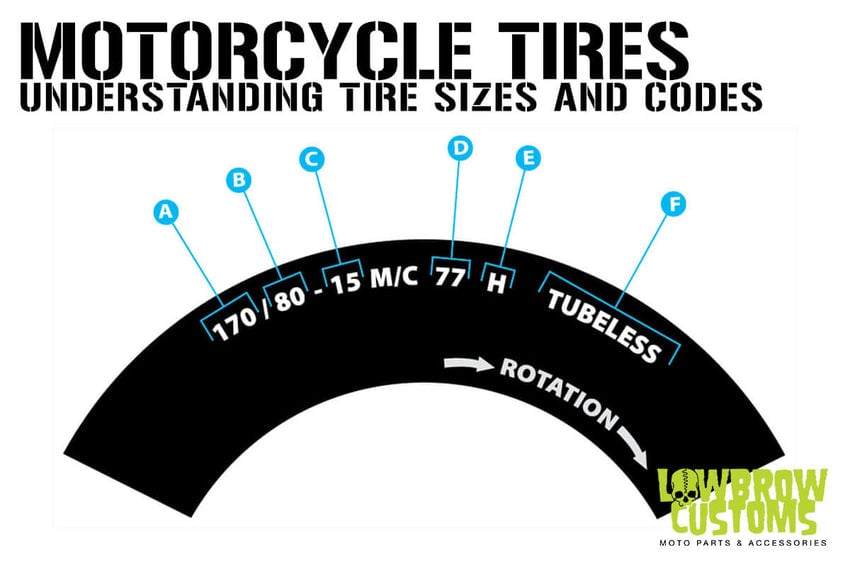
Understanding your motorcycle tire size might seem tricky at first, but it’s easier than you think. Knowing how to read the numbers and letters on your tire can save you money, improve your bike’s performance, and keep you safe on the road.
Imagine choosing the perfect tire without guesswork or confusion—giving you confidence every time you ride. You’ll learn exactly what those codes mean and how to find the right tire size for your motorcycle. Keep reading to unlock this simple yet powerful skill that every rider should master.
Motorcycle Tire Size Basics
Knowing how to read motorcycle tire sizes helps you pick the right tires. Tire sizes tell you the width, height, and type of tire.
This guide covers the main parts of tire sizes and common formats you will see.
Key Tire Size Components
Each tire size has numbers and letters that show its measurements. These include width, aspect ratio, and rim diameter.
- Width:The tire’s width in millimeters from sidewall to sidewall.
- Aspect Ratio:The tire’s height as a percentage of its width.
- Rim Diameter:The diameter of the wheel in inches the tire fits.
- Load Index:The maximum weight the tire can hold safely.
- Speed Rating:The highest speed the tire can handle safely.
Common Tire Size Formats
Tire sizes use different formats, like metric or imperial. Knowing these helps you read the size quickly.
| Format | Example | Meaning |
|---|---|---|
| Metric | 120/70 ZR17 | Width 120 mm / Height 70% of width / Rim 17 inches |
| Imperial | 3.50-18 | Width 3.5 inches / Rim 18 inches (aspect ratio not shown) |
| Alphanumeric | MT90-16 | Width and aspect ratio coded / Rim 16 inches |
Decoding Tire Width
Motorcycle tire size includes numbers that tell you about its width. This width is important for choosing the right tire for your bike.
Understanding the tire width helps you know how the tire will perform on different roads and conditions.
What The Width Number Means
The width number shows the tire’s cross-section in millimeters. It is the distance from one sidewall to the other.
This number helps you find a tire that fits your motorcycle’s rims and frame. The width also affects how the tire grips the road.
- A wider tire has more rubber touching the road.
- A narrower tire is lighter and easier to turn.
- The width number is the first part of the tire size code, such as 120/70 ZR17.
- In this example, 120 means the tire is 120 millimeters wide.
Impact On Performance
Tire width changes how the motorcycle handles, brakes, and rides. It affects speed and safety too.
| Width (mm) | Effect on Handling | Effect on Comfort |
| 100-120 | Easier to steer, quicker turns | Less cushioning, firmer ride |
| 130-150 | Balanced grip and control | Moderate comfort |
| 160 and above | More grip, stable at high speed | Smoother ride, but heavier handling |
Understanding Aspect Ratio
The aspect ratio of a motorcycle tire is the height of the sidewall compared to its width. It is shown as a percentage in the tire size code.
This number helps riders understand how the tire will perform on the road and affect the bike’s handling.
How Aspect Ratio Affects Ride
A lower aspect ratio means a shorter sidewall, which can improve cornering and stability. A higher aspect ratio means a taller sidewall, which may offer a softer ride but less sharp handling.
- Low aspect ratio tires give better road grip in turns.
- High aspect ratio tires absorb bumps better.
- Aspect ratio affects how the bike feels on different surfaces.
- Choosing the right ratio helps balance comfort and control.
Calculating Sidewall Height
You can find sidewall height by multiplying the tire’s width by the aspect ratio percentage. This tells you the exact height of the tire’s sidewall in millimeters.
| Metric | Example Value | Explanation |
|---|---|---|
| Tire Width | 120 mm | The distance across the tire from side to side |
| Aspect Ratio | 70% | The sidewall height as a percentage of tire width |
| Sidewall Height | 84 mm | 120 mm × 0.70 = 84 mm |

Credit: www.amazon.com
Interpreting Rim Diameter
Understanding rim diameter is key to reading motorcycle tire size. The rim diameter tells you the size of the wheel where the tire fits. It is usually measured in inches.
Knowing rim diameter helps you choose the right tire. Using the wrong size can cause poor handling or damage.
Measuring Rim Size
To measure rim size, you need to find the diameter of the rim’s bead seat. This is the part where the tire sits. It excludes the rim flange, which holds the tire in place.
- Use a tape measure or ruler across the center of the rim.
- Measure from one bead seat edge to the other bead seat edge.
- Record the measurement in inches for accurate tire matching.
Matching Tires To Rims
Match the tire size with the rim diameter to ensure a good fit. The tire size code includes the rim diameter number. It must be the same as your rim measurement.
| Rim Diameter (inches) | Compatible Tire Size Example |
| 16 | 90/90-16, 100/80-16 |
| 17 | 120/70-17, 130/80-17 |
| 18 | 110/90-18, 130/90-18 |
| 19 | 90/90-19, 100/90-19 |
Load Index And Speed Rating
Motorcycle tires have numbers and letters that tell you important details. Two key details are the load index and speed rating. These help you know how much weight a tire can hold and how fast it can safely go.
Reading these codes on your tire helps you pick the right tire for your bike. It keeps you safe and your bike working well.
Identifying Load Capacity
The load index is a number on the tire sidewall. It shows the tire’s maximum weight limit. This number matches a chart that tells the weight in pounds or kilograms.
Knowing the load index helps you avoid overloading the tire. Overloading can cause tire damage or accidents.
| Load Index | Max Load (lbs) | Max Load (kg) |
|---|---|---|
| 54 | 500 | 227 |
| 62 | 850 | 386 |
| 75 | 853 | 387 |
| 90 | 1323 | 600 |
Understanding Speed Limits
The speed rating is a letter on the tire sidewall. It shows the highest speed the tire can handle safely. Each letter matches a speed in miles or kilometers per hour.
Using tires with the correct speed rating keeps your ride safe at higher speeds. It also helps tires last longer without damage.
| Speed Rating | Max Speed (mph) | Max Speed (km/h) |
|---|---|---|
| M | 81 | 130 |
| H | 130 | 210 |
| V | 149 | 240 |
| W | 168 | 270 |

Credit: www.amazon.com
Tire Construction Types
Motorcycle tires have different construction types. These types affect how the tire behaves on the road.
Knowing the tire construction helps you choose the right tire for your bike and riding style.
Radial Vs Bias-ply Tires
Radial and bias-ply tires are two main types of tire construction. They differ in how the layers inside the tire are arranged.
Radial tires have layers that run across the tire from side to side. Bias-ply tires have layers that run diagonally.
- Radial tires offer better grip and handle heat well.
- Bias-ply tires are stronger and can carry heavy loads.
- Radial tires give a smoother ride at high speeds.
- Bias-ply tires have a stiffer feel and last longer on rough roads.
Choosing The Right Construction
Pick radial tires for sports bikes or fast riding. They provide good control and comfort.
Choose bias-ply tires if you need durability for heavy bikes or off-road use. They handle rough conditions well.
- Consider your bike type and riding style.
- Check the tire label to see the construction type.
- Follow manufacturer recommendations for safety.
Reading Additional Tire Markings
Motorcycle tires have many markings beyond size. These markings give useful information.
Knowing what these codes mean helps you check tire age and quality.
Manufacture Date Codes
Tires show when they were made using a four-digit code on the sidewall. The first two digits are the week, and the last two digits are the year.
For example, “2319” means the tire was made in the 23rd week of 2019.
- Look for a code starting with “DOT” on the tire sidewall.
- The last four numbers in this code are the manufacture date.
- Older tires may have three-digit codes instead.
- Check this code to avoid using old or expired tires.
Treadwear And Traction Ratings
Treadwear and traction ratings tell how long the tire lasts and how well it grips the road.
| Rating Type | What It Means | Scale or Grade |
|---|---|---|
| Treadwear | Shows tire durability | Numbers, e.g., 200, 400 (higher means longer life) |
| Traction | Measures stopping power on wet surfaces | Grades: AA (best), A, B, C (lowest) |
Tips For Selecting The Right Tire Size
Choosing the right motorcycle tire size is important for safety and performance. Tires that fit well help your bike handle better and last longer.
Understanding how to read tire size numbers can guide you in picking the correct tire. This makes your rides safer and more comfortable.
Consulting The Owner’s Manual
Your motorcycle’s owner’s manual has the exact tire sizes recommended by the maker. Always check this first before buying new tires.
The manual also shows the right tire pressure and load limits. Using the recommended size keeps your bike balanced and safe.
Considering Riding Style And Conditions
Think about how and where you ride when choosing tire size. Different styles and road types need different tires.
Smaller tires may suit city riding for better turns. Larger tires work well on highways and rough roads for stability.
- City riding: smaller, nimble tires
- Highway riding: larger, stable tires
- Off-road riding: tires with strong grip and size
- Mixed conditions: balanced size for comfort and control

Credit: cheaptiresasap.com
Frequently Asked Questions
What Do The Numbers On Motorcycle Tires Mean?
The numbers indicate tire width, aspect ratio, and rim diameter. For example, 120/70ZR17 means 120mm width, 70% height, and 17-inch rim.
How To Identify Tire Width On A Motorcycle Tire?
Tire width is the first number in the size code. It is measured in millimeters from sidewall to sidewall.
What Is The Aspect Ratio In Motorcycle Tire Size?
Aspect ratio is the tire’s height as a percentage of its width. A 70 means the height is 70% of the width.
How To Find Rim Diameter On Motorcycle Tires?
Rim diameter is the last number in the tire size code. It is measured in inches and matches your wheel size.
Conclusion
Reading motorcycle tire size is simpler than it seems. Each number and letter tells you important information. Knowing this helps keep your bike safe and running well. Always check your tire size before buying new tires. It ensures the right fit and better performance.
Take time to understand these details for a smoother ride. Stay confident on the road by choosing the correct tires. Remember, small steps make a big difference in riding safety. Keep learning and enjoy your motorcycle journey.