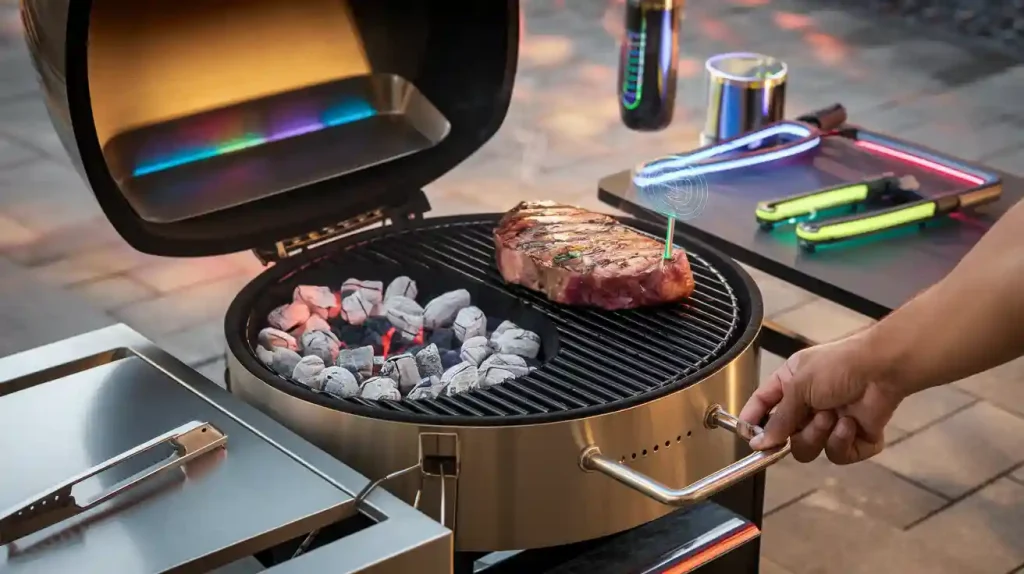
Grilling with charcoal brings out amazing flavors, but keeping the temperature just right can be tricky. If your grill gets too hot or too cool, your food might end up undercooked or burnt.
You want to enjoy perfectly grilled meals every time without the stress of guessing the heat. You’ll discover simple and effective ways to control the temperature in your charcoal grill. Whether you’re a beginner or a seasoned griller, these tips will help you master the heat and impress everyone with your cooking.
Keep reading to unlock the secrets of perfect charcoal grilling!

Credit: www.bbqspitrotisseries.com.au
Choosing The Right Charcoal
Regulating temperature in a charcoal grill starts with choosing the right charcoal. Different types of charcoal affect heat and cooking time.
Selecting the right charcoal helps control your grill’s temperature better. It also impacts the flavor and cooking experience.
Lump Charcoal Vs Briquettes
Lump charcoal is made from natural wood chunks. Briquettes are made from compressed charcoal dust and other ingredients.
- Lump charcoal lights quickly and burns hotter.
- Briquettes burn longer and provide steady heat.
- Lump charcoal produces less ash than briquettes.
- Briquettes are more uniform in size for consistent heat.
Quality And Burn Time
| Charcoal Type | Burn Time | Heat Output | Ash Production |
| Lump Charcoal | 1 to 2 hours | High | Low |
| Briquettes | 2 to 3 hours | Medium | Moderate |
High-quality charcoal lasts longer and burns evenly. Avoid cheap charcoal with fillers to maintain steady temperature control.
Setting Up Your Grill
Setting up your charcoal grill correctly helps control the cooking temperature. This ensures your food cooks evenly and tastes great.
Knowing how to arrange charcoal and start it properly makes managing heat easier. These steps prepare your grill for a perfect cookout.
Arranging Charcoal For Heat Zones
Create different heat zones by arranging charcoal in your grill. This lets you cook food at different temperatures at the same time.
Place more charcoal on one side for high heat. Leave fewer coals on the other side for low heat or indirect cooking.
- Pile charcoal on one side for direct, high heat
- Keep the other side with fewer coals for indirect, low heat
- Use the high heat side to sear meats quickly
- Use the low heat side to cook food slowly without burning
Using A Charcoal Chimney Starter
A charcoal chimney starter lights your coals evenly and quickly. It avoids the need for lighter fluid, which can affect flavor.
Fill the chimney with charcoal and place crumpled paper underneath. Light the paper to start the coals burning from the bottom up.
- Fill chimney with charcoal
- Place crumpled paper or natural fire starters under chimney
- Light the paper to start the fire
- Wait 10-15 minutes until coals are covered with gray ash
- Pour hot coals into the grill for even heat
Controlling Airflow
Regulating temperature in a charcoal grill is important. Airflow control is the key to managing heat.
Adjust vents to let in more or less air. This changes the grill temperature.
Adjusting Bottom Vents
The bottom vents allow air into the grill. More air makes the fire hotter.
To cool down, close the vents slightly. Less air means a cooler fire.
- Open vents for high heat cooking
- Partially close vents for medium heat
- Close vents for low heat or to extinguish
Managing Top Vents
Top vents let hot air and smoke out. They help control the cooking environment.
Keep them open to draw air through. Close them to trap heat inside.
- Open top vents for more smoke flavor
- Close top vents for less smoke
- Adjust for consistent cooking temperature
Monitoring Grill Temperature
Keeping track of the temperature is key to cooking food well on a charcoal grill. You need to know how hot your grill is.
There are simple tools to help you watch the temperature. These tools give you a clear idea of heat levels.
Using Built-in Thermometers
Many charcoal grills come with built-in thermometers on the lid. These help you check the heat inside without opening the grill.
Built-in thermometers give a quick temperature reading. They usually measure the air temperature inside the grill.
- Place the thermometer on the lid for easy viewing
- Check the temperature often to keep it steady
- Remember, the thermometer shows air, not food temperature
External Temperature Tools
External temperature tools give more accurate readings than built-in thermometers. They help you track food and grill heat precisely.
These tools include digital thermometers and probes. You can place probes inside the grill or in the food for real-time data.
- Digital grill thermometers show exact temperature on a screen
- Probe thermometers let you check the meat’s internal heat
- Wireless thermometers send temperature info to your phone
- Use these tools to adjust charcoal or vents for steady heat
Techniques For Heat Adjustment
Controlling the temperature on a charcoal grill is key to cooking food well. You can change the heat by changing the amount of charcoal or adjusting the grill lid.
These simple techniques help keep your grill at the right heat for any recipe.
Adding Or Removing Charcoal
Charcoal provides the heat on your grill. Adding more raises the temperature. Taking some away lowers it. Use this method to control how hot your grill gets.
- Add charcoal in small amounts to increase heat steadily.
- Spread charcoal evenly for consistent heat across the grill.
- Remove some charcoal if the grill gets too hot to avoid burning food.
- Use fresh charcoal for stronger heat and longer burning time.
- Let the charcoal burn down a bit for lower, slower cooking.
Adjusting Grill Lid Position
The grill lid controls airflow and heat flow. Opening the lid lets heat escape and cools the grill. Closing it keeps heat inside and cooks food faster.
| Grill Lid Position | Effect on Temperature |
| Fully Closed | Traps heat, raises temperature |
| Partially Open | Moderate heat, allows some smoke out |
| Fully Open | Releases heat, lowers temperature |

Credit: www.youtube.com
Maintaining Consistent Heat
Keeping a steady temperature in a charcoal grill is key for good cooking. If the heat changes too much, food cooks unevenly.
Learning how to control the heat helps you grill better and avoid burnt or raw spots.
Avoiding Temperature Fluctuations
Temperature swings happen when you open the grill too often. This lets hot air escape and cool air enter.
Use the grill lid wisely to keep the heat inside. Adjust air vents slowly to control airflow and temperature.
- Open the lid only when needed
- Adjust vents to increase or reduce oxygen
- Use a charcoal chimney for even coals
- Spread coals evenly for uniform heat
Timing Your Cooking Process
Plan your cooking time to match the grill’s heat level. High heat cooks faster, low heat takes longer.
Check your food often but avoid lifting the lid too much. Use a timer to keep track of cooking stages.
- Start with hot coals for searing
- Move food to cooler spots for slow cooking
- Use a timer for flipping and checking
- Rest food after cooking for better taste
Troubleshooting Common Issues
Keeping the right temperature in a charcoal grill is key for great cooking. Sometimes the heat gets too high or too low.
Here are simple ways to fix common temperature problems in your charcoal grill.
Dealing With Excessive Heat
Too much heat can burn food quickly and make cooking uneven. It often happens if you use too many coals or close vents too much.
Lower the heat by spreading the coals out or removing some. Open the vents to let air flow and cool the fire.
- Move coals apart to reduce heat
- Remove some coals if needed
- Open air vents to cool down the fire
- Use a water spray to lower temperature
- Keep the grill lid closed to control flare-ups
Handling Low Temperature
Low heat can cause food to cook too slowly or not at all. This usually happens if there are too few coals or the vents are closed too much.
Raise the temperature by adding more charcoal. Open the vents to increase airflow and help the fire burn hotter.
- Add fresh charcoal to boost heat
- Open vents to increase oxygen flow
- Use dry charcoal for better burning
- Keep the grill lid closed to hold heat
- Wait a few minutes after adding coals for heat to build

Credit: www.siuhaau.com
Frequently Asked Questions
How Do Vents Control Temperature In A Charcoal Grill?
Vents regulate airflow, controlling oxygen supply to the charcoal. Opening vents increases heat by boosting oxygen. Closing vents reduces oxygen, lowering temperature. Proper vent adjustment maintains consistent grilling heat and prevents flare-ups.
What Is The Best Charcoal Arrangement For Temperature Control?
Arrange charcoal in a single layer for even heat or pile it for direct high heat. Use a two-zone setup for both direct and indirect cooking. Proper arrangement helps manage temperature zones effectively for various grilling needs.
How Does Adding Water Affect Charcoal Grill Temperature?
Adding water in a drip pan stabilizes temperature by creating steam. Steam keeps food moist and prevents temperature spikes. This method is especially useful for slow cooking and smoking on a charcoal grill.
Why Should I Preheat My Charcoal Grill?
Preheating ensures charcoal is fully ignited and temperature is stable. It helps achieve consistent cooking heat and better flavor. Preheat for 15-20 minutes before grilling for optimal results.
Conclusion
Controlling temperature in a charcoal grill takes patience and practice. Adjusting vents and adding charcoal help keep heat steady. Watch your grill often to avoid flare-ups or cold spots. Using a thermometer can guide you to the right cooking heat.
With time, you will cook tastier food and enjoy grilling more. Keep these tips in mind for better BBQ results. Happy grilling!