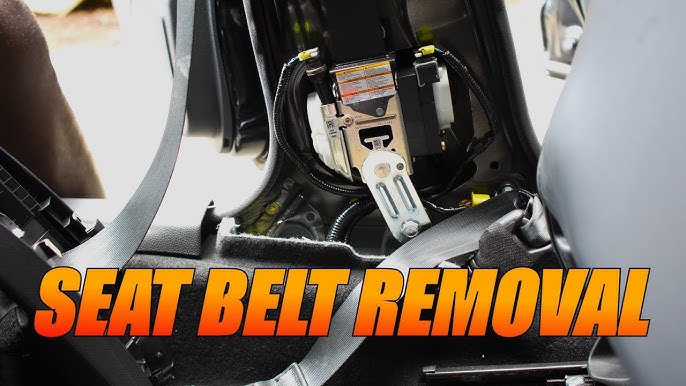
Have you ever found yourself struggling to remove a seat belt from your car? Maybe it’s stuck, tangled, or you just want to replace it for safety reasons.
Whatever the case, knowing how to remove a seat belt quickly and safely can save you time and frustration. You’ll discover simple, step-by-step tips to get the job done right. Keep reading—you’ll be surprised how easy it can be once you know what to do.

Credit: www.youtube.com
Tools Needed
Removing a seat belt from a car requires specific tools. These tools help you work safely and carefully.
Using the right tools makes the removal process easier and prevents damage to your vehicle.
Socket Wrench Set
A socket wrench set helps remove bolts that hold the seat belt. Bolts can be tight and need strong tools.
Make sure your set includes different sizes. This helps fit various bolt heads in your car.
Flathead Screwdriver
A flathead screwdriver helps pry off plastic covers around the seat belt. These covers hide bolts and screws.
Use it carefully to avoid breaking clips or scratching surfaces.
Torx Drivers
Some seat belts use Torx screws. Torx drivers fit these star-shaped screws for easy removal.
Check the size needed before starting to ensure you have the correct driver.
Pliers
Pliers help grip and pull small parts or clips during removal. They also assist in handling wires if needed.
Choose needle-nose pliers for better control in tight spaces.
Trim Removal Tool
A trim removal tool removes interior panels without damage. This tool is safer than using metal tools.
It helps access seat belt bolts hidden behind trim pieces.
Safety Gloves
Wear safety gloves to protect your hands from sharp edges. Gloves also improve grip on tools and parts.
Using gloves reduces the risk of cuts and scrapes during removal.

Credit: www.reddit.com
Safety Precautions
Removing a seat belt from a car requires care and attention. Safety should be your top priority to avoid injury.
Follow these safety precautions before and during the removal process to protect yourself and the vehicle.
Disconnect The Car Battery
Always disconnect the car battery before removing the seat belt. This stops the airbag system from triggering.
Wait at least 10 minutes after disconnecting to let all systems power down safely.
Wear Protective Gear
Use gloves to protect your hands from sharp edges or tools. Wear safety glasses to shield your eyes.
Protective gear lowers the risk of cuts and eye injuries during removal.
Work In A Well-lit Area
Good lighting helps you see screws and clips clearly. It reduces mistakes and accidental damage.
Use a flashlight or work near a window if the car interior is dark.
Handle Components Gently
Seat belt parts can be delicate. Avoid using too much force when removing bolts or clips.
Gentle handling prevents damage to the car’s safety systems and interior.
Keep Track Of All Parts
Place screws, bolts, and clips in a container. This keeps everything organized and prevents loss.
Keeping parts safe helps if you need to reinstall the seat belt later.
Test After Removal
Check that no wires or connectors are loose after removal. Loose parts can cause electrical problems.
If unsure, have a professional inspect the car before driving it again.
Locate Seat Belt Components
Removing a seat belt from your car starts with knowing its parts. Each part plays a role in safety and function.
Understanding where these components sit helps you remove the seat belt carefully and correctly.
Find The Retractor
The retractor is the part that rolls the seat belt webbing back. It is usually hidden behind the car’s panel near the seat.
Look for a plastic cover on the side of the seat or the pillar between the front and rear doors. This cover hides the retractor.
Identify The Buckle
The buckle is where you click the seat belt latch to secure it. It is attached to the car seat or floor.
- Usually near the center console or beside the seat.
- It has a release button to unfasten the belt.
- The buckle is often fixed to a short strap or metal rod.
Spot The Anchor Points
Anchor points hold the seat belt firmly to the car frame. They keep the belt stable during a crash.
| Anchor Point | Common Location | Purpose |
| Upper Anchor | Side pillar near the shoulder | Guides the belt over the shoulder |
| Lower Anchor | Near the seat base or floor | Secures the belt’s end firmly |
| Anchor Bolts | Under plastic covers or trim | Fix the belt parts to the car body |

Credit: www.reddit.com
Remove Seat Belt Cover
Removing the seat belt cover is important to access the seat belt mechanism. It helps in repairing or replacing parts safely.
Follow simple steps to take off the cover without damaging your car’s interior. Use the right tools and be gentle.
Unscrew Fasteners
Seat belt covers are held by screws or bolts. Locate these fasteners before you start removing the cover.
Use a screwdriver or wrench to remove the fasteners carefully. Keep them safe for reassembly later.
- Find screws near the seat belt base
- Use the correct screwdriver type
- Turn screws counterclockwise to remove
- Store screws in a small container
Detach Trim Pieces
Trim pieces cover the seat belt area and hold the cover in place. These pieces need to come off to free the cover.
Use a trim removal tool or a flat tool to pry the trim gently. Avoid breaking clips or scratching surfaces.
- Start at one edge of the trim
- Insert the tool between trim and panel
- Apply light pressure to pop clips loose
- Work around the trim to remove it fully
Detach Seat Belt Retractor
The seat belt retractor holds the belt tightly and allows it to pull out or retract. Removing it is important when replacing or repairing the seat belt system. This guide explains how to remove the retractor safely.
Before starting, make sure the car is off and the seat belt is not twisted. Follow the steps carefully to avoid damage.
Unbolt The Retractor
First, locate the bolts that hold the retractor to the car frame. These bolts usually require a socket wrench or screwdriver to remove. Keep the bolts in a safe place for reinstallation.
Remove the bolts by turning them counterclockwise. Be sure to support the retractor as you unbolt it so it does not fall.
- Find the bolt heads on the retractor
- Use the correct size tool to avoid stripping bolts
- Turn bolts counterclockwise to loosen
- Hold the retractor while removing bolts
- Place bolts somewhere safe
Disconnect Wiring If Present
Some seat belt retractors have electrical wiring for safety sensors. Check if your retractor has a wiring connector. Disconnecting this wiring is necessary before fully removing the retractor.
Press the release tab on the connector to unplug it gently. Avoid pulling on the wires directly to prevent damage.
- Look for wiring connected to the retractor
- Find the plastic connector with a release tab
- Press the tab to unlock the connector
- Pull the connector apart carefully
- Do not pull on wires directly
Remove Buckle And Anchor Bolts
Removing the seat belt buckle and anchor bolts is a key step in seat belt removal. These parts hold the seat belt firmly in place. Knowing how to remove them safely helps avoid damage to your car.
This guide shows how to remove the buckle and anchor bolts with simple tools. Follow the instructions carefully to ensure a smooth process.
Removing The Seat Belt Buckle
Start by locating the seat belt buckle, usually fixed to the side of the car seat. Use a wrench or socket set to loosen the bolt that holds the buckle. Turn the bolt counterclockwise to remove it.
- Find the bolt securing the buckle to the seat frame.
- Use the correct size wrench or socket.
- Turn the bolt slowly to avoid stripping.
- Remove the bolt and detach the buckle.
Removing Anchor Bolts
Anchor bolts fix the seat belt to the car frame. They are usually located near the floor or side panel. Use a socket wrench to remove these bolts carefully.
| Tool Needed | Location of Bolt | Action |
| Socket wrench | Near car floor | Turn counterclockwise to loosen |
| Ratchet handle | Side panel area | Remove bolt completely |
| Torque wrench (optional) | Any anchor bolt | Check bolt tightness when reinstalling |
Extract Seat Belt Webbing
Removing the seat belt webbing from a car is a careful process. It helps to replace or repair the belt safely.
This guide explains how to extract the seat belt webbing step by step. Follow these instructions for a clean removal.
Prepare Your Tools
Gather the tools you need before starting. This saves time and makes the job easier.
- Screwdriver set
- Socket wrench
- Trim removal tool
- Safety gloves
- Flashlight
Locate The Seat Belt Mounts
Find the bolts and covers where the seat belt webbing is attached. Check near the pillar and floor mounts.
Remove Covers And Bolts
Use the screwdriver and socket wrench to remove all covers and bolts. Keep parts in a safe place.
Extract The Webbing
Pull the seat belt webbing slowly from the retractor. Avoid forcing it to prevent damage.
| Common Seat Belt Parts | Location |
|---|---|
| Retractor | Behind the side panel |
| Buckle | On the seat base |
| Anchor Bolt | Near floor mount |
| Webbing | Runs through retractor and buckle |
Reinstall Or Replace Seat Belt
Removing and reinstalling a seat belt in your car needs care. It is important to ensure safety and fit.
This guide covers checking compatibility and following the correct steps to reinstall or replace the seat belt.
Check For Compatibility
Make sure the new or reinstalled seat belt matches your car model. Using the wrong part can cause problems.
- Check the car’s manual for seat belt specifications.
- Compare the buckle and latch design with the old seat belt.
- Verify the mounting points match the car’s structure.
- Confirm the seat belt’s length fits your vehicle’s seating arrangement.
Follow Reverse Steps
To reinstall or replace the seat belt, reverse the removal process carefully.
| Removal Step | Reinstallation Step |
| Unbolt the seat belt anchor points | Bolt the seat belt anchor points securely |
| Disconnect the seat belt retractor | Connect the seat belt retractor properly |
| Remove the seat belt from the mounting brackets | Place the seat belt back on the mounting brackets |
| Check all components for wear or damage | Inspect and tighten all bolts and screws |
| Test the seat belt for smooth operation | Test the seat belt lock and release functions |
Test Seat Belt Functionality
Checking your car’s seat belt works is important for safety. A seat belt should lock and release smoothly every time.
Testing the seat belt helps find problems early. Fixing issues can keep passengers safe in a crash.
Check The Seat Belt Retractor
The retractor pulls the seat belt back after you release it. Pull the belt out slowly and let it rewind. It should rewind smoothly without sticking.
Test The Locking Mechanism
Pull the seat belt quickly to see if it locks. The belt should stop moving to hold you in place. This prevents movement in a sudden stop or crash.
- Pull the belt out fast and let it lock.
- Try pulling the belt slowly; it should not lock.
- Make sure the belt locks every time you pull fast.
Inspect The Buckle Release
Press the buckle release button to see if the belt releases easily. The buckle should click securely when fastened and release without sticking.
| Check Point | Expected Result |
| Retractor | Belt pulls out and rewinds smoothly |
| Locking Mechanism | Belt locks when pulled fast |
| Buckle | Clicks securely and releases easily |
Look For Wear And Tear
Check the seat belt webbing for cuts, frays, or heavy wear. Damage can reduce the belt’s strength and safety.
Frequently Asked Questions
How Do I Safely Remove A Car Seat Belt?
To safely remove a car seat belt, first disconnect the car battery. Then, unbolt the seat belt mounting points using proper tools. Avoid cutting the belt to prevent damage. Follow your vehicle’s manual for specific removal instructions to ensure safety and avoid airbag system issues.
Can I Remove The Seat Belt Without Damaging The Car?
Yes, you can remove the seat belt without damaging the car by using correct tools and following the vehicle’s service manual. Avoid cutting or forcing parts. Carefully unbolt the anchors and keep all components intact for possible reinstallation or replacement.
What Tools Are Needed To Remove A Car Seat Belt?
You typically need a socket wrench set, screwdrivers, and possibly a Torx or Allen key. A trim removal tool helps avoid damage to interior panels. Always check your vehicle’s manual for specific tool requirements before starting the removal process.
Is It Legal To Remove A Seat Belt From A Car?
Removing a seat belt may be illegal depending on your location and vehicle use. Seat belts are safety devices required by law. Always check local traffic laws before removal, and avoid driving without a functioning seat belt system to ensure safety and compliance.
Conclusion
Removing a seat belt from a car is simple with the right steps. Always stay safe and follow instructions carefully. Use basic tools and avoid forcing parts. Take your time to prevent damage. Remember, seat belts help keep you safe.
Only remove them when necessary. This guide helps you handle the task easily. Keep your car in good shape by doing it right. Safety first, always.