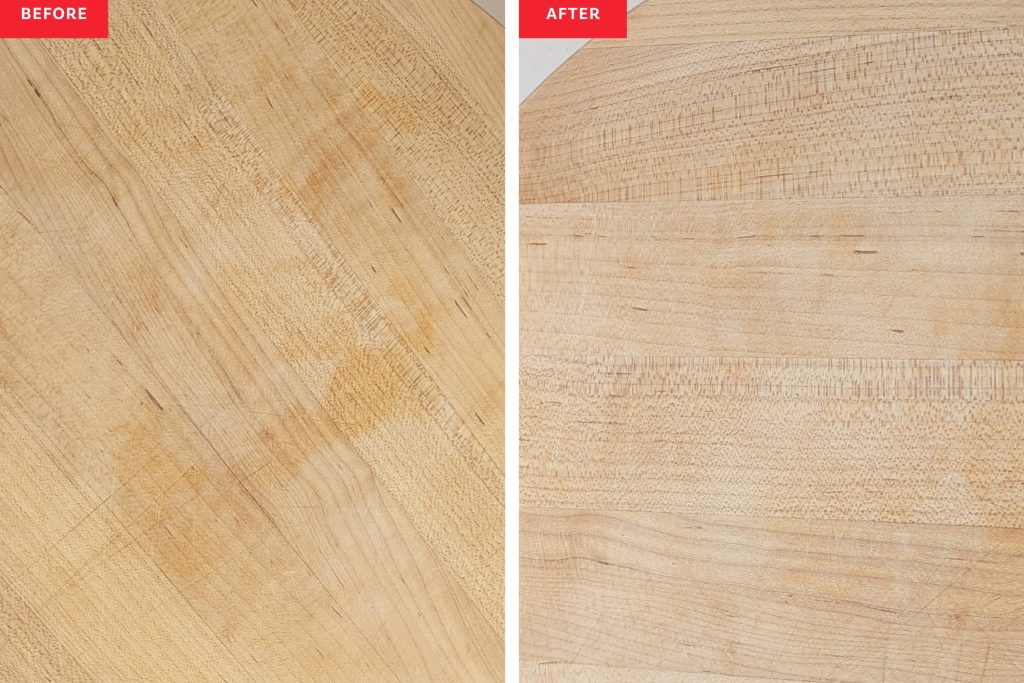
Your cutting board is one of the most used tools in your kitchen, but stains can make it look old and unhygienic. You might think those stubborn marks are impossible to remove, but with the right methods, you can restore your cutting board to its clean, fresh state.
Keep reading to discover simple, effective ways to get rid of stains and keep your kitchen safe and inviting. You won’t want to miss these easy tips that anyone can use!
Common Stains On Cutting Boards
Cutting boards often get stained from everyday kitchen use. Stains can make boards look dirty and affect food safety.
Knowing about common stains helps you clean and keep your cutting board in good shape.
Types Of Stains
Cutting boards can get different stains depending on the food you cut. Some stains are easy to remove, others need more care.
- Fruit and vegetable stains, like from berries and carrots
- Meat and blood stains
- Oil and grease stains from cooking oils
- Dark stains from spices like turmeric and paprika
- Water stains or discoloration from moisture
Causes Of Stains
Stains appear because of how food and liquids interact with the board material. Some materials soak in colors more than others.
Poor cleaning and letting stains sit for a long time also cause tough marks.
- Cutting acidic foods like tomatoes can cause discoloration
- Red meat juices contain pigments that stain wood or plastic
- Oils leave greasy spots that attract dirt
- Spices have strong colors that soak into pores
- Leaving wet boards without drying causes water marks
Daily Cleaning Tips
Keeping your cutting board clean helps avoid stains and bacteria build-up. Daily care makes your board last longer.
Use simple cleaning steps after each use. This keeps your board fresh and safe for food preparation.
Basic Washing Techniques
Wash your cutting board with warm water and soap. Scrub gently using a soft sponge or brush.
Rinse the board well to remove soap and food particles. Dry it with a clean towel or air dry upright.
- Use mild dish soap for cleaning
- Scrub all surfaces, including edges
- Rinse thoroughly to remove soap
- Dry completely before storing
Sanitizing Methods
Sanitize your cutting board to kill germs and remove stains. Use natural or store-bought sanitizers safely.
Apply sanitizer after washing. Let it sit for a few minutes, then rinse and dry well.
- Use diluted white vinegar as a natural sanitizer
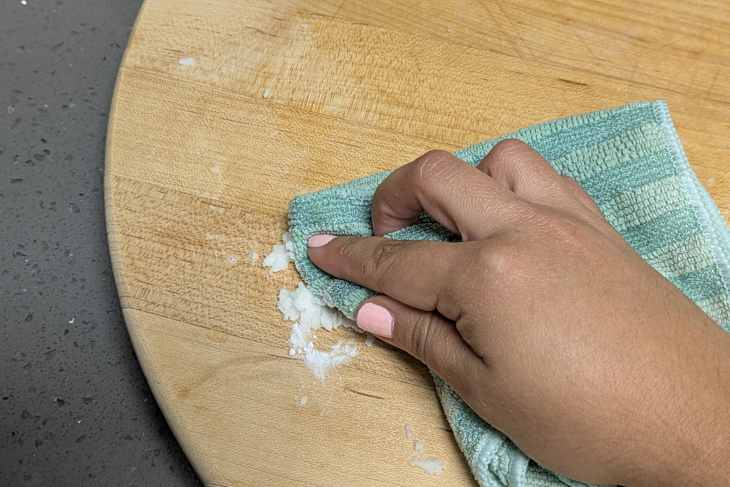
- Sprinkle baking soda for extra stain removal
- Use a bleach solution for tough sanitizing (1 tablespoon bleach to 1 gallon water)
- Always rinse and dry after sanitizing
Natural Stain Removal Methods
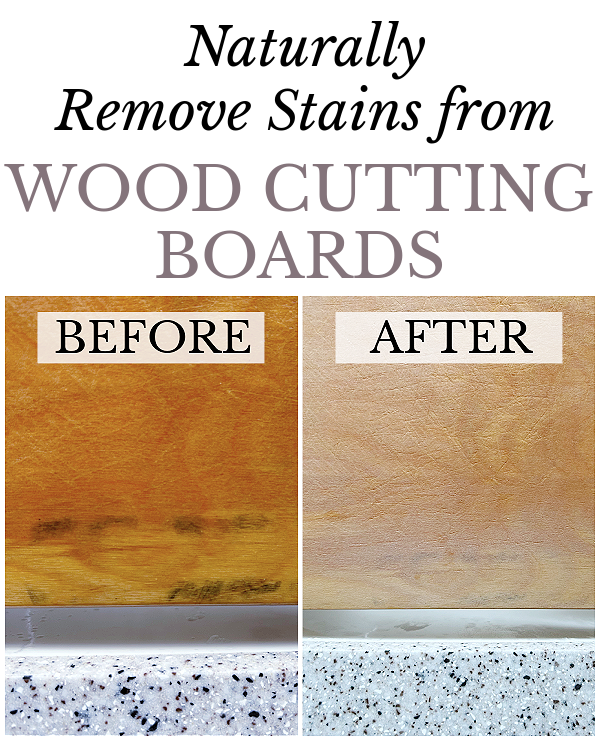
Wooden cutting boards often get stains from fruits, vegetables, and other foods. Using natural stain removers is safe and keeps your board clean.
These natural methods use simple ingredients you already have at home. They help remove stains without harsh chemicals.
Using Lemon And Salt
Lemon and salt work well to clean and brighten your cutting board. The lemon’s acid breaks down stains while salt scrubs the surface.
- Cut a lemon in half.
- Sprinkle coarse salt over the stained area.
- Rub the lemon half on the salt and stain in circles.
- Let it sit for 5 minutes.
- Rinse with warm water and dry well.
Baking Soda Paste
Baking soda is a gentle abrasive that lifts stains without damaging the wood. Mixing it into a paste improves cleaning power.
Mix equal parts baking soda and water to form a thick paste. Spread it on the stained area and let it sit for 10 minutes. Then scrub gently with a sponge and rinse.
White Vinegar Applications
White vinegar kills bacteria and helps remove stains. It is a good option for deep cleaning your cutting board.
| Step | Action |
| 1 | Pour white vinegar over the stained surface. |
| 2 | Let it sit for 5 to 10 minutes. |
| 3 | Wipe with a clean cloth or sponge. |
| 4 | Rinse with warm water and dry thoroughly. |

Credit: homewithgraceandjoy.com
Deep Cleaning Techniques
Cutting boards can get stained from food juices and spices. Deep cleaning helps remove these tough stains. Use safe and strong methods to clean your board well.
Here are some effective deep cleaning techniques using common household items and products.
Hydrogen Peroxide Treatment
Hydrogen peroxide is good for removing stains and killing bacteria. It works well on plastic and wooden cutting boards.
Pour some hydrogen peroxide on the stained area. Let it sit for 10 minutes. Then scrub gently with a brush. Rinse with warm water and dry.
- Use 3% hydrogen peroxide solution
- Apply directly to stains
- Wait 10 minutes before scrubbing
- Rinse and dry the board
Bleach Solutions
Bleach is strong and kills germs well. It can also help remove deep stains on plastic boards. Use it carefully and in small amounts.
Mix one tablespoon of bleach with one gallon of water. Soak the board for two minutes. Rinse thoroughly with water and air dry.
- Mix 1 tablespoon bleach per gallon of water
- Soak board for 2 minutes
- Rinse well after soaking
- Air dry completely
Commercial Cleaners
There are cleaners made for cutting boards. These products remove stains and kill bacteria. Follow the instructions on the label for best results.
Spray or apply the cleaner on the board. Let it sit for the recommended time. Scrub if needed, then rinse and dry.
- Choose cleaners safe for food surfaces
- Apply as directed on the product label
- Let sit for suggested time
- Rinse and dry after cleaning
Maintaining Your Cutting Board
Keeping your cutting board clean helps it last longer. It also prevents stains and odors.
Good care protects your board from damage and bacteria. Follow simple steps to maintain it well.
Regular Oiling
Oiling your cutting board keeps the wood from drying out. It also prevents cracks and warping.
Use food-safe mineral oil and apply it once a month. Let the oil soak in before wiping off excess.
- Pour a small amount of oil on the board
- Spread evenly with a clean cloth
- Let it absorb for several hours or overnight
- Wipe away any extra oil
Avoiding Cross-contamination
Use separate cutting boards for meat, vegetables, and fruits. This stops bacteria from spreading.
Clean your board well after each use. Wash with hot, soapy water and dry it completely.
- Use different boards for raw meat and fresh produce
- Wash boards immediately after use
- Sanitize boards with vinegar or diluted bleach
- Dry boards in a well-ventilated area
Proper Storage
Store your cutting board in a dry, upright position. This prevents moisture buildup and mold growth.
Avoid stacking heavy items on top of your board. Give it space to breathe to keep it in good shape.
- Keep the board in a dry place
- Store it standing on its side
- Do not leave it in damp areas
- Avoid placing heavy objects on top
Credit: www.thekitchn.com
When To Replace Your Cutting Board
Cutting boards can get dirty and worn over time. Knowing when to replace them helps keep your kitchen safe.
Old cutting boards may hide stains and germs that cleaning cannot remove. Watch for signs that mean it’s time for a new board.
Signs Of Wear And Tear
Look closely at your cutting board for deep cuts or cracks. These can trap food and bacteria.
Boards that are warped or have rough surfaces are harder to clean well. This makes them unsafe.
- Deep grooves or cuts on the surface
- Cracks that go through the board
- Warping or bending of the board
- Rough or splintered areas
Health Considerations
Old cutting boards can grow bacteria that cause illness. Stains and odors may not go away with cleaning.
If your board still smells bad after washing, it may be unsafe to use. Also, boards used for raw meat should be replaced often.
- Persistent stains that do not clean off
- Strong odors even after washing
- Cross-contamination risks from raw meat
- Visible mold or mildew growth
Credit: www.lemonslavenderandlaundry.com
Frequently Asked Questions
How Do I Clean A Stained Cutting Board?
To clean a stained cutting board, sprinkle baking soda over the stain. Add a few drops of water to make a paste. Scrub gently with a sponge or brush. Rinse thoroughly with warm water and dry immediately to prevent further stains.
Can Vinegar Remove Cutting Board Stains?
Yes, vinegar can help remove stains from cutting boards. Pour white vinegar over the stain. Let it sit for a few minutes. Scrub with a brush and rinse with water. Vinegar also helps to disinfect the surface naturally.
What Natural Ingredients Can Remove Cutting Board Stains?
Lemon and salt are effective natural stain removers. Sprinkle salt on the stain, then rub with half a lemon. The acidity of the lemon helps break down stains. Rinse with warm water and dry thoroughly to prevent warping.
How Often Should I Clean My Cutting Board?
You should clean your cutting board after every use. For deep cleaning, do it weekly using natural methods like vinegar or baking soda. Regular cleaning prevents bacteria buildup and keeps stains at bay, ensuring a safe food preparation surface.
Conclusion
Stains on cutting boards do not have to be permanent. Simple steps help keep boards clean and fresh. Regular cleaning stops stains from setting deep. Natural ingredients like lemon and salt work well. Clean boards make cooking safer and more pleasant.
Keep your kitchen tools in good shape every day. A little care goes a long way with cutting boards. Try these easy methods and see the difference yourself.