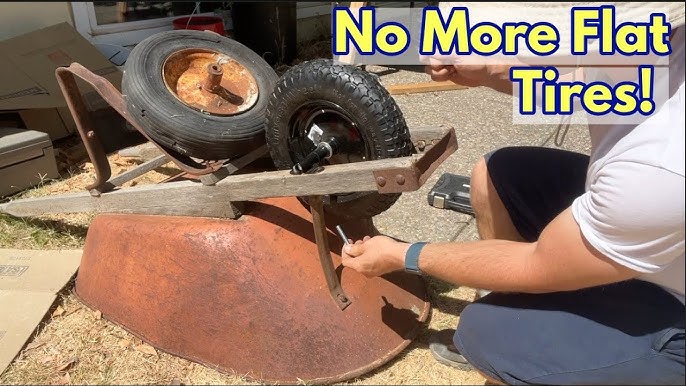
Is your wheelbarrow tire worn out or flat? Replacing it might seem tricky, but it’s easier than you think.
Imagine getting your wheelbarrow back in perfect shape quickly, without spending a fortune or waiting for help. In this guide, you’ll discover simple steps to replace your wheelbarrow tire yourself. By the end, you’ll feel confident tackling this task and keep your projects moving smoothly.
Ready to save time and money? Let’s get started!

Credit: m.youtube.com
Tools And Materials Needed
Replacing a wheelbarrow tire requires the right tools and materials. This helps make the job easier and safer.
Gather everything before starting. This saves time and avoids interruptions during the repair.
Tools Required
- Adjustable wrench or socket wrench
- Screwdriver (flathead or Phillips)
- Pliers
- Tire lever or pry bar
- Air pump or compressor
- Gloves for hand protection
Materials Needed
You need the correct replacement tire or inner tube. Check the size printed on the old tire.
| Material | Purpose |
| Replacement tire or tube | To replace the damaged or worn tire |
| Soap and water solution | To help remove and install the tire |
| Air valve caps | Protect valve stems from dirt |
Safety Equipment
Wear safety glasses to protect your eyes. Use gloves to avoid cuts and bruises.
Keep a clean workspace. Clear away dirt and debris before starting the tire replacement.

Credit: wheelco.co.nz
Removing The Old Tire
Replacing a wheelbarrow tire may seem challenging, but it’s simple. Follow these steps to remove the old tire safely and efficiently.
This guide will help you through the process with clear instructions.
Deflate The Tire
Before removing the tire, you need to deflate it. This ensures safety and makes the removal process easier.
Use a valve stem tool to release the air from the tire. Press down until all the air is out.
Loosen The Wheel Nuts
Next, you need to loosen the wheel nuts. These nuts hold the wheel in place on the axle.
Use a wrench to turn the nuts counterclockwise. Do this until they are loose enough to remove by hand.
- Ensure the wheelbarrow is stable
- Keep track of all nuts removed
- Set them aside in a safe place
Detach The Wheel From The Barrow
With the nuts removed, you can now detach the wheel. Carefully pull the wheel away from the barrow.
Ensure you have a firm grip on the wheel. Pull it straight off the axle to avoid bending or damage.
Inspecting The Wheel And Tire
Before replacing a wheelbarrow tire, you need to inspect the wheel and tire carefully. This helps find any issues that could affect the repair.
Check the tire and wheel for damage and clean important parts. This makes the replacement easier and safer.
Check For Damage
Look closely at the tire and wheel for any problems. Damaged parts can cause poor performance or accidents.
- Check the tire for cracks or tears in the rubber.
- Look for holes or punctures that cause air leaks.
- Inspect the wheel rim for bends or dents.
- Make sure the spokes are not broken or loose.
- Look for rust or corrosion on metal parts.
Clean The Rim And Axle
Cleaning the rim and axle removes dirt and rust. This helps the tire fit well and spin smoothly.
| Part | Cleaning Tip |
| Rim | Use a wire brush to remove rust and dirt. |
| Axle | Wipe with a cloth and apply lubricant if needed. |
| Spokes | Clean gently with soapy water to avoid damage. |
Selecting The Right Replacement Tire
Replacing a wheelbarrow tire needs the right choice. Picking the correct tire helps your wheelbarrow work well.
Choosing the right tire depends on size and type. These factors affect how the wheelbarrow rolls and lasts.
Matching Tire Size
Find the tire size on the old tire or wheel. Look for numbers showing diameter and width.
Use the exact size to avoid problems. A wrong size tire can cause poor balance and damage.
- Check tire diameter (the height of the tire)
- Check tire width (the thickness of the tire)
- Note rim size (the wheel’s metal part size)
Choosing Between Pneumatic And Solid Tires
Pneumatic tires have air inside. They give a smooth ride but can get flats.
Solid tires are made of hard rubber. They do not go flat but may feel harder on rough ground.
- Pneumatic Tires:Softer ride, need air, risk of punctures
- Solid Tires:No flats, low maintenance, firmer ride
Installing The New Tire
Replacing a wheelbarrow tire is a simple task. Installing the new tire properly ensures smooth use.
Follow these steps to position the tire on the rim and secure the wheel to the barrow.
Positioning The Tire On The Rim
Start by placing the new tire on a flat surface. Align the tire so the rim fits inside the tire’s bead.
Press the tire edges onto the rim. Work your way around the rim evenly to avoid twisting.
- Check that the tire bead sits tightly on the rim
- Use tire levers if needed to ease the tire onto the rim
- Avoid sharp tools to prevent tire damage
Securing The Wheel To The Barrow
Place the wheel with the new tire back on the axle. Make sure it fits snugly over the wheelbarrow frame.
Attach the wheel using the axle bolt or nut. Tighten it firmly but do not over-tighten to allow smooth rotation.
- Slide the wheel onto the axle
- Put on any washers or spacers needed
- Secure the axle bolt or nut with a wrench
- Spin the wheel to check for smooth movement
Inflating And Testing
After replacing a wheelbarrow tire, inflating it correctly is important. Proper inflation helps the wheel roll smoothly.
Testing the tire and wheel ensures safety and good performance before use.
Proper Tire Inflation
Check the tire sidewall for the recommended air pressure. Use a tire gauge to measure the pressure.
Inflate the tire slowly using an air pump. Stop when the pressure matches the recommended value.
- Do not overinflate the tire to avoid damage.
- Do not underinflate because it causes poor handling.
- Check the pressure regularly to keep it steady.
Checking Wheel Alignment And Stability
Place the wheelbarrow on a flat surface to test the wheel alignment. The wheel should spin freely without wobbling.
Push the wheelbarrow forward and backward. Make sure the wheel stays stable and aligned with the frame.
- Look for any side-to-side movement in the wheel.
- Check that the tire stays centered on the wheel rim.
- Tighten axle nuts if the wheel feels loose.
Maintenance Tips To Prolong Tire Life
Keeping your wheelbarrow tire in good shape helps it last longer. Regular care prevents damage and saves money.
Learn simple ways to maintain your tire and avoid frequent replacements.
Check Tire Pressure Regularly
Proper tire pressure keeps the tire in good condition. Check it before each use to avoid damage.
Use a pressure gauge to measure and fill air if needed. Do not overinflate or underinflate the tire.
- Low pressure causes tire wear and poor performance
- High pressure can lead to cracks or blowouts
- Maintain the pressure recommended by the tire manufacturer
Keep Tires Clean
Dirt and debris can harm the tire surface. Clean the tire after use to remove mud and stones.
Use water and a brush to clean the tire. Avoid harsh chemicals that can damage the rubber.
Inspect Tires For Damage
Look for cuts, cracks, or worn tread before and after use. Early detection prevents bigger problems.
Replace the tire if you find deep cuts or severe damage. Small cracks can be monitored but not ignored.
Store Wheelbarrow Properly
Keep your wheelbarrow in a dry place away from direct sunlight. UV rays can weaken the tire rubber.
Avoid placing heavy objects on the tire during storage. This prevents flat spots and tire deformation.
Avoid Overloading The Wheelbarrow
Do not carry weight beyond the tire’s limit. Excess weight causes tire damage and reduces its life.
Spread the load evenly to reduce stress on the tire. This helps maintain tire shape and balance.
Rotate Or Replace Tires When Needed
Rotate tires if your wheelbarrow has more than one. This promotes even wear and longer life.
Replace tires if they become too worn or damaged. Old tires can cause accidents and reduce work efficiency.

Credit: wheelco.co.nz
Frequently Asked Questions
How Do I Know When To Replace A Wheelbarrow Tire?
Check for cracks, punctures, or flatness. If the tire won’t hold air or is worn out, replacement is necessary.
What Tools Are Needed To Replace A Wheelbarrow Tire?
You need a wrench, pliers, a flathead screwdriver, and a new tire or inner tube for replacement.
Can I Replace The Tire Without Removing The Wheelbarrow?
No, you must remove the wheel first for safe and easy tire replacement.
How Long Does It Take To Replace A Wheelbarrow Tire?
Replacing a tire usually takes 15 to 30 minutes with basic tools and proper steps.
Conclusion
Replacing a wheelbarrow tire is easier than it seems. With basic tools and a little patience, you can do it yourself. This saves money and keeps your wheelbarrow working well. Always check the tire size before buying a new one.
Take your time to avoid mistakes. Soon, your wheelbarrow will be ready for any job. Simple steps make the task quick and stress-free. Keep your tools handy for future repairs too. A little care goes a long way in maintaining your equipment.