If you want to catch more bass, learning how to rig your fishing line properly is a must. The right setup can make all the difference between a missed bite and a trophy catch.
Whether you’re a beginner or looking to sharpen your skills, this guide will show you simple, effective ways to rig your line for bass fishing success. By the end, you’ll feel confident and ready to reel in bigger bass every time you hit the water.
Keep reading to discover the secrets that can boost your fishing game today.

Credit: bassonline.com
Choosing The Right Line
Selecting the proper fishing line is key for catching bass. The right line helps you cast better and feel bites more clearly.
There are different types of lines, each with its own strengths and weaknesses. Understanding these helps you pick the best one for your fishing style.
Monofilament Vs. Fluorocarbon Vs. Braided
Monofilament line is stretchy and easy to handle. It floats well and is good for beginners.
Fluorocarbon line sinks faster and is nearly invisible underwater. It is great for clear water fishing.
Braided line is very strong and thin. It has little stretch, giving you better hook sets and longer casts.
- Monofilament: Stretchy, visible, floats
- Fluorocarbon: Low stretch, invisible, sinks
- Braided: Strong, thin, low stretch
Line Strength And Test Weight
Line strength tells how much weight the line can hold before breaking. Test weight is usually measured in pounds.
Choose a test weight that matches the size of bass you want to catch. Too light can break easily. Too heavy can scare fish away.
| Test Weight (lbs) | Best Use |
|---|---|
| 6-8 | Light fishing, small bass |
| 10-14 | Average size bass, versatile |
| 15-20 | Big bass or heavy cover |
Line Diameter And Visibility
Thinner lines cast farther and are less visible to fish. Thicker lines are stronger but easier for fish to see.
Fluorocarbon is thinner and less visible than monofilament of the same strength. Braided lines are very thin but more visible.
- Thin line means less fish spooking
- Thicker line offers more durability
- Clear or green lines blend better in water

Credit: mysterytacklebox.com
Selecting The Best Hooks
Choosing the right hook is important for catching bass. It affects how well the fish bites and how easy it is to reel in.
This guide explains how to pick hooks by size, type, sharpness, and strength for bass fishing.
Hook Sizes For Bass
Bass hooks come in many sizes. The size you need depends on the bait and the bass size.
| Hook Size | Best For |
|---|---|
| 2/0 to 4/0 | Large bass and big baits like swimbaits |
| 1/0 to 1 | Medium bass and soft plastics |
| 1 to 4 | Small bass and live bait |
Types Of Hooks
Different hook types work better for certain baits and fishing styles. Knowing these helps you catch more bass.
- J-Hooks: Classic shape, good for natural bait.
- Wide Gap Hooks: Extra space for soft plastics and bigger baits.
- Circle Hooks: Designed to hook the fish in the corner of the mouth.
- Eagle Claw Hooks: Strong and sharp, good for heavy cover.
Sharpness And Durability
Sharp hooks catch bass easier. Dull hooks cause missed bites. Durability means the hook holds up after many catches.
Look for hooks made from strong steel with a sharp point. Some hooks have special coatings to prevent rust and keep sharpness longer.
Common Rigging Techniques
Rigging your fishing line right is key to catching bass. Different techniques suit different conditions. Let’s explore some popular methods.
Texas Rig
The Texas Rig is great for fishing in heavy cover. It helps your bait move through weeds without getting stuck. You need a bullet weight and an offset hook.
- Slide a bullet weight onto your line
- Tie on an offset hook
- Thread the bait onto the hook
- Bury the hook point in the bait
Carolina Rig
The Carolina Rig is perfect for covering large areas. It keeps the bait off the bottom, ideal for sandy or rocky spots. You need a swivel and a leader line.
- Slide a bullet weight onto the main line
- Add a bead and then tie on a swivel
- Attach a leader line to the swivel
- Tie the hook to the end of the leader
- Thread the bait onto the hook
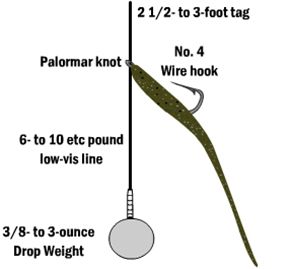
Drop Shot Rig
The Drop Shot Rig is good for deep water and clear conditions. It keeps the bait off the bottom, enticing fish. You need a drop shot weight and a small hook.
- Tie a small hook to the line with a Palomar knot
- Leave a long tag end for the weight
- Attach a drop shot weight to the tag end
- Hook the bait through the nose or wacky style
Wacky Rig
The Wacky Rig is easy and effective for attracting bass. It makes the bait move naturally in the water. You need a wide gap hook.
- Choose a soft plastic worm
- Hook it through the middle of the worm
- Let the worm hang freely on both sides

Credit: fishingbooker.com
Tying Strong Knots
Tying strong knots is important for bass fishing. A good knot keeps the line from breaking.
Strong knots hold your bait and catch fish better. Learn a few easy knots for your fishing line.
Palomar Knot
The Palomar knot is simple and very strong. It works well with braided or monofilament lines.
To tie it, double the line and pass it through the hook eye. Tie a loose overhand knot and pass the loop over the hook. Pull tight and trim the tag end.
- Double the line for extra strength
- Keep the knot loose before sliding over hook
- Pull slowly to avoid breaking the line
Improved Clinch Knot
The Improved Clinch knot is popular and easy to tie. It works well for most fishing lines.
Pass the line through the hook eye and wrap it around the standing line five to seven times. Thread the tag end through the small loop near the eye, then back through the big loop. Pull tight and cut the extra line.
- Use 5 to 7 wraps for better grip
- Thread carefully to keep the knot neat
- Wet the line before tightening to reduce friction
Loop Knot Variations
Loop knots let your bait move freely on the line. This can make your lure look more natural.
Common loop knots include the Rapala knot and the Non-Slip loop. Both keep a strong loop and hold well under tension.
- Rapala Knot: Makes a strong, fixed loop
- Non-Slip Loop: Allows more bait movement
- Loop knots help attract bass by improving lure action
Adding Weights And Sinkers
Adding weights and sinkers is key for bass fishing. They help your bait reach the right depth and stay steady.
Choosing the right weight and placing it well improves your chances of catching bass. It also balances control and sensitivity.
Choosing The Right Weight
Select weights based on water conditions and casting distance. Heavy weights work in fast currents. Light weights suit calm waters.
- Use 1/8 to 1/4 ounce for shallow water or slow currents
- Use 3/8 to 1/2 ounce for deeper water or strong currents
- Match weight size to your lure for natural movement
- Consider bass size in the fishing area
Placement Techniques
Place weights carefully to improve bait action. The position affects how the bait moves and sinks.
| Placement | Description | Best Use |
|---|---|---|
| Split Shot | Pinch small weight above the hook | Slow sinking, light cover |
| Bullet Weight | Slide weight above the hook on the line | Flipping and pitching in heavy cover |
| Drop Shot | Weight tied at the line end below hook | Vertical presentations in deep water |
Balancing Sensitivity And Control
Balance weight size for feeling bites and controlling the bait. Too heavy dulls sensitivity. Too light loses control.
- Start with lighter weights to feel subtle strikes
- Increase weight to improve casting distance and control
- Adjust weight based on bass activity and water depth
- Keep knots tight to avoid line slack and improve sensitivity
Using Swivels And Snaps
Swivels and snaps help anglers rig fishing lines for bass effectively. They prevent line problems and make lure changes easier. Knowing how to use them improves your fishing experience.
These small tools connect your main line to your lure or leader. They reduce line twist and allow quick swapping of different lures. Using the right swivel and snap can save time and reduce line damage.
Preventing Line Twist
Line twist happens when your line spins during casting or retrieving. It weakens the line and causes tangles. Swivels stop this by allowing the lure to spin freely without twisting the main line.
Use a barrel swivel or ball bearing swivel for the best results. Attach the swivel between your main line and your leader or lure. This setup helps keep your line strong and tangle-free.
Quick Lure Changes
Snaps let you change lures fast without retying knots. This saves time and keeps your line from wearing out. Use snaps combined with swivels for easy lure swaps and less line twist.
- Open the snap by pressing the latch
- Remove the old lure from the snap
- Attach a new lure to the snap
- Close the snap securely to avoid losing the lure
Types Of Swivels
| Type | Description | Best Use |
| Barrel Swivel | Simple, barrel-shaped swivel | General bass fishing |
| Ball Bearing Swivel | Contains ball bearings for smooth rotation | Heavy lures and fast retrieves |
| Three-Way Swivel | Has three attachment points | Drop shot and multi-rig setups |
| Snap Swivel | Swivel with a snap for quick lure changes | Versatile, quick lure swaps |
Tips For Rigging Soft Plastics
Rigging soft plastics correctly helps you catch more bass. It makes the lure look natural and move well in water.
Use the right hook and rigging style to improve your chances. Soft plastics need careful handling for best results.
Hook Insertion Techniques
Insert the hook straight through the nose of the soft plastic. Push it in carefully to avoid tearing the bait.
After the hook point comes out of the body, slide the plastic up the hook shaft. This keeps the bait secure and straight.
- Use a hook size that fits the plastic bait.
- Insert the hook tip in the center of the bait nose.
- Thread the bait until the hook eye is near the nose.
- Keep the bait aligned to avoid twisting on the hook.
Enhancing Action And Presentation
Make small holes or cuts in the plastic to add more movement. This helps the bait look alive underwater.
Use light weight jig heads or Texas rigs to let the bait move freely. Let the plastic wiggle and flutter with water flow.
- Choose soft plastics with flexible tails.
- Rig the bait so the tail can move easily.
- Use light sinkers to keep the natural action.
- Slow retrieves let the bait show its full action.
Avoiding Snags
Use weedless hooks to reduce snags on weeds and rocks. These hooks have covers or guards to protect the point.
Keep the hook point close to the body of the bait. This helps the rig slide through cover without catching.
- Choose hooks with a wire guard or weed guard.
- Keep the hook tip embedded just under the bait surface.
- Use Texas or Carolina rigs for heavy cover fishing.
- Cast beyond the cover and slowly retrieve through it.
Testing And Adjusting Your Rig
After setting up your fishing line for bass, it is important to test and adjust your rig. This helps ensure your line performs well and you catch more fish.
Testing your rig includes checking knot strength, feeling line sensitivity, and adjusting for water conditions. These steps keep your setup reliable and effective.
Checking Knot Security
Knots are the weakest points on your fishing line. You should check them carefully before fishing. Pull on each knot to make sure it holds tight. Look for any signs of slipping or looseness.
- Tighten knots firmly without damaging the line
- Use a wet knot test by moistening before tightening
- Retie knots if you feel any slippage
- Inspect knots regularly during fishing
Line Sensitivity Tests
Sensitivity helps you feel bites and underwater obstacles. Test your line by tapping or pulling gently. Notice how much movement or vibration you feel through the rod.
| Test Method | What to Check | Adjustment |
| Tap the line | Feel vibration | Use thinner or stiffer line if weak |
| Pull the line | Check stretch | Change to low-stretch line if too elastic |
| Cast and retrieve | Detect lure movement | Adjust line tension or length |
Adapting To Water Conditions
Water clarity, temperature, and current affect how your rig works. Adjust your line and lure to match conditions. Use stronger line in rough water to avoid breakage.
- In clear water, use light-colored line for less visibility
- In murky water, choose heavier line for better control
- In cold water, slow your retrieve to match fish activity
- In strong currents, use heavier weights and stronger knots
Frequently Asked Questions
What Is The Best Fishing Line For Bass?
Monofilament and fluorocarbon lines are popular for bass fishing. Monofilament offers stretch and buoyancy. Fluorocarbon is nearly invisible underwater and abrasion-resistant. Choose line strength between 8-15 lbs for most bass fishing situations. Consider water clarity and cover when selecting the line.
How Do I Rig A Fishing Line For Bass?
Start by tying a strong knot like the Palomar knot. Attach a suitable hook or lure. Use a swivel to prevent line twist. Adjust the leader length for your fishing style. Ensure your rig is secure and free of tangles before casting.
Should I Use A Leader When Bass Fishing?
Yes, a leader helps prevent line breakage from sharp bass teeth or underwater debris. Fluorocarbon leaders are preferred for their invisibility and abrasion resistance. A leader length of 12-24 inches is common. It improves lure presentation and increases hook-up rates.
How Do I Prevent Line Twists While Rigging?
Use a quality swivel between your main line and leader. Tie knots tightly and trim excess line. Avoid reeling against heavy drag to reduce twists. Regularly check and replace twisted line sections. Proper rigging technique minimizes line twists effectively.
Conclusion
Rigging fishing line for bass can improve your catch rate. Use the right knots and line strength for better results. Practice tying knots until they feel easy and secure. Choose the rig based on water conditions and bass behavior. Small changes make a big difference in fishing success.
Keep your gear ready and stay patient on the water. Enjoy the process as much as the catch itself. Rigging well means more fun and more fish. Give these tips a try on your next trip.