If you want your front-wheel-drive (FWD) car to drive smoothly and last longer, knowing how to rotate your tires is a must. Tire rotation might sound simple, but doing it right can save you money, improve your car’s handling, and keep you safe on the road.
You’ll learn easy, step-by-step tips to rotate your tires like a pro—even if you’ve never done it before. Keep reading, and you’ll discover how a small routine task can make a big difference for your car and your peace of mind.
Credit: www.hyundai-forums.com
Benefits Of Rotating Tires
Rotating tires on a front-wheel-drive (FWD) car helps maintain even tire wear. It improves vehicle safety and extends tire life.
Regular tire rotation balances the wear on all tires. This keeps the car stable and comfortable to drive.
Improves Tire Longevity
Tires wear unevenly because front tires handle steering and most braking. Rotating tires spreads out this wear evenly.
Even tire wear means tires last longer. You save money by not replacing tires too soon.
Enhances Vehicle Safety
Balanced tires improve traction on all wheels. This helps the car stop and turn safely, especially in wet or slippery conditions.
- Reduces risk of tire blowouts
- Prevents uneven tread wear that causes slipping
- Maintains better control on roads
Improves Fuel Efficiency
Properly rotated tires reduce rolling resistance. This means the engine works less to move the car.
| Effect | Benefit |
|---|---|
| Even tire wear | Reduces drag and improves mileage |
| Balanced traction | Lowers fuel consumption on turns and stops |
| Proper tire pressure | Enhances overall fuel economy |
Maintains Smooth Ride
Rotated tires wear evenly and keep the car balanced. This reduces vibrations and noise while driving.
A smooth ride is more comfortable and less tiring for the driver and passengers.
Credit: www.michelin.ca
Tools Needed For Tire Rotation
Rotating tires on a front-wheel-drive (FWD) car helps tires wear evenly. This keeps the car safe and improves tire life.
Before you start, gather the right tools. Using proper tools makes the job easier and safer.
Jack And Jack Stands
A car jack lifts your vehicle off the ground. Jack stands hold the car safely in the raised position. Never work under a car supported by a jack alone.
Lug Wrench
A lug wrench helps remove and tighten lug nuts on wheels. Choose one that fits your car’s lug nuts well.
Torque Wrench
A torque wrench ensures lug nuts are tightened to the right level. This prevents over-tightening or under-tightening, which can cause problems.
Wheel Chocks
Wheel chocks stop the car from rolling while you work. Place them behind the wheels that stay on the ground.
Gloves And Safety Glasses
Wear gloves to protect your hands from dirt and sharp edges. Safety glasses keep your eyes safe from dust and debris.
Additional Useful Tools
- Breaker bar: Helps loosen tight lug nuts easily.
- Wire brush: Cleans rust and dirt off wheel studs.
- Flashlight: Useful if you work in low light.
Safety Precautions
Rotating tires on a front-wheel-drive car helps keep them wearing evenly. It also keeps your car safe to drive. Before you start, you must follow safety rules. These rules protect you from injury and damage to your car.
Use the right tools and take your time. Check your car and tires closely. Always work on a flat, stable surface. This guide covers key safety steps to follow before and during tire rotation.
Prepare Your Work Area
Choose a flat, hard surface like a garage floor or driveway. Avoid soft or sloped areas. Make sure the area is clean and free of tools or debris. Good lighting helps you see what you are doing.
- Park the car on level ground
- Apply the parking brake firmly
- Turn off the engine and remove the keys
- Place wheel chocks behind the rear tires
Use Proper Tools And Equipment
Using the right tools makes the job easier and safer. Check that your jack and jack stands can support your car’s weight. Never rely on a jack alone to hold the car up.
| Tool | Purpose |
| Car jack | Lifts the car safely |
| Jack stands | Supports the car securely |
| Lug wrench | Removes and tightens lug nuts |
| Wheel chocks | Prevents car from rolling |
Protect Yourself During The Job
Wear gloves to protect your hands from dirt and sharp parts. Use safety glasses if you work under the car. Avoid loose clothing and tie back long hair. Keep children and pets away from the work area.
- Wear gloves and eye protection
- Remove jewelry that could catch on parts
- Keep a phone nearby in case of emergency
- Do not rush; move slowly and carefully

Credit: www.lesonauto.com
Preparation Steps
Rotating tires on a front-wheel-drive (FWD) car helps extend tire life. It also improves driving safety and performance.
Before starting, you need to prepare properly. This guide covers key preparation steps for tire rotation.
Choosing The Right Location
Select a flat and stable place to work on your car. This keeps the car safe while you lift it.
A garage or driveway is ideal. Make sure the area has enough space to move around freely.
- A flat surface prevents the car from rolling
- A clean area helps find dropped tools easily
- Good lighting lets you see better
- A dry spot avoids slipping hazards
Gathering Necessary Equipment
Collect all tools and safety gear before you start. This saves time and makes the process smoother.
Having the right equipment helps avoid damage and keeps you safe during tire rotation.
- Car jack to lift the vehicle
- Jack stands to support the car
- Lug wrench to remove lug nuts
- Wheel chocks to block wheels
- Gloves to protect your hands
- Owner’s manual for specific instructions
Jack Up The Vehicle
Rotating tires on a front-wheel-drive car needs lifting the vehicle safely. You must use a jack to raise the car before removing the tires.
This section explains how to find the right jack points and use the jack safely to avoid damage or injury.
Locating Jack Points
Jack points are the spots on the car frame where you can place the jack safely. Using the wrong spots can damage the car or cause it to fall.
Check your car’s manual for exact jack points. Usually, these spots are near the wheels along the car’s frame.
- Look for reinforced metal areas under the car
- Common jack points are behind the front wheels and in front of the rear wheels
- Avoid placing the jack on plastic or body panels
- Use the flat spots recommended in the owner’s manual
Using The Jack Safely
Safety is important when jacking up your car. Follow simple steps to keep the vehicle stable and prevent accidents.
Always use wheel chocks and place the jack on level ground. Never get under the car while it is only supported by a jack.
- Park on a flat surface and apply the parking brake
- Place wheel chocks on the wheels that stay on the ground
- Position the jack under the correct jack point
- Raise the car slowly and check stability often
- Use jack stands to support the car after lifting
- Do not rely on the jack alone to hold the car
Remove The Tires
Removing tires from a front-wheel-drive (FWD) car is an important step in tire rotation. This helps keep your tires wearing evenly and lasting longer.
You need to remove the tires carefully to avoid any damage. Use the right tools and follow safety steps closely.
Loosening The Lug Nuts
Before lifting the car, loosen the lug nuts on each tire. This is easier when the car is still on the ground.
Use a lug wrench to turn the nuts counterclockwise. Do not remove them completely yet, just break the tightness.
- Place the lug wrench on a lug nut
- Push or pull the wrench to turn counterclockwise
- Loosen all nuts about one full turn
- Do this for each tire you want to rotate
Taking Off The Wheels
After loosening the lug nuts, use a jack to lift the car. Make sure the car is stable before removing the wheels.
Once the car is lifted, remove the lug nuts completely. Keep them in a safe place so you don’t lose any.
- Lift the car using a jack at the correct spot
- Check that the car is secure and won’t move
- Take off the lug nuts by hand
- Pull the wheel straight off the hub
- Place the wheel aside carefully
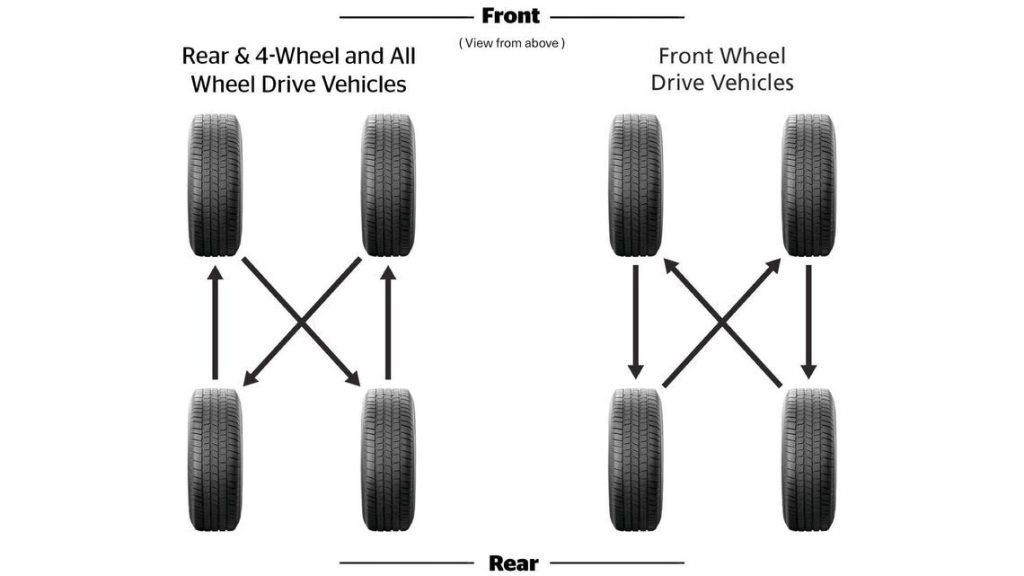
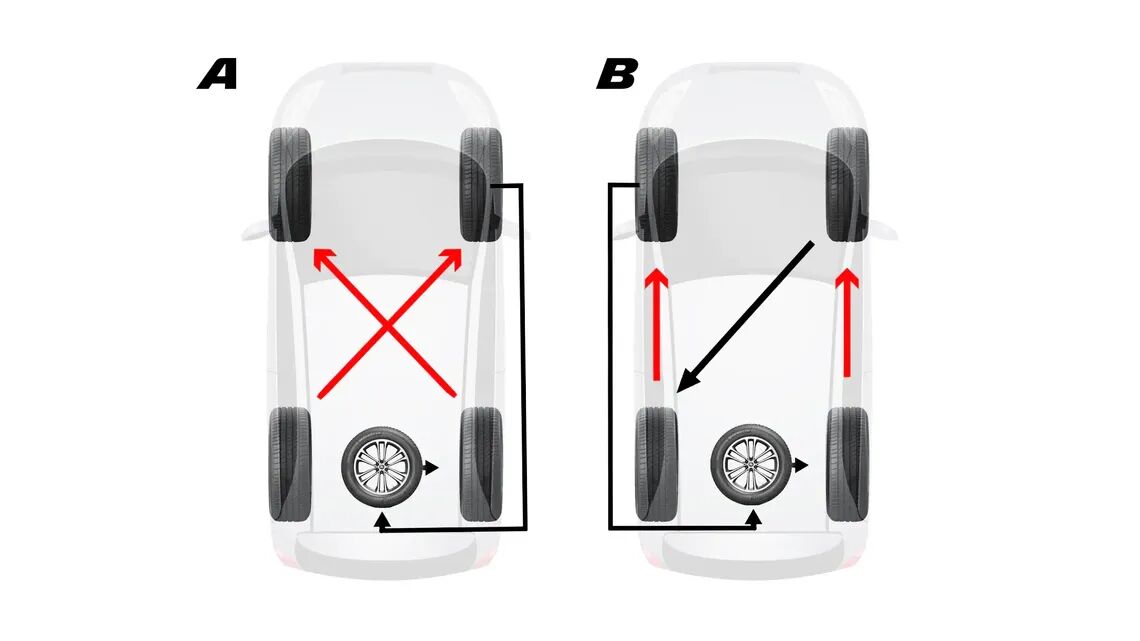
Pattern For Tire Rotation
Tire rotation helps your tires wear evenly. This keeps your car safe and extends tire life.
For front-wheel-drive (FWD) cars, tire rotation follows specific patterns. These patterns move tires to new positions.
Front-to-rear Swap
In this pattern, the front tires move straight to the rear. The rear tires move straight to the front.
This swap helps balance tire wear on FWD cars. The front tires usually wear faster, so switching them helps.
- Front left tire goes to rear left
- Front right tire goes to rear right
- Rear left tire goes to front left
- Rear right tire goes to front right
Crossing The Rear Tires
This pattern swaps the front tires straight back. The rear tires cross to the opposite sides in front.
Crossing rear tires helps even out wear on the back wheels. It also promotes balanced traction and handling.
- Front left tire moves to rear left
- Front right tire moves to rear right
- Rear left tire moves to front right
- Rear right tire moves to front left
Reattach The Tires
After rotating the tires on your front-wheel drive car, you need to put the tires back on the wheel hubs.
Make sure each tire fits properly on its hub before securing the lug nuts tightly.
Securing The Lug Nuts
Place each lug nut on its bolt by hand first to avoid cross-threading. Tighten the lug nuts in a star pattern to keep the wheel balanced.
- Start with any lug nut and tighten it finger-tight.
- Move to the lug nut directly across and tighten it finger-tight.
- Continue this pattern until all lug nuts are hand-tight.
- Use a wrench to tighten each lug nut a bit more, following the star pattern.
- Finish by tightening all lug nuts to the manufacturer’s torque specs.
Lowering The Vehicle
Once the lug nuts are secure, carefully lower the vehicle back to the ground using the jack.
| Action | Details |
|---|---|
| Check jack position | Ensure the jack is stable before lowering |
| Lower slowly | Lower the vehicle gently to avoid damage |
| Remove jack | Remove the jack once the car is on the ground |
| Final lug nut check | Recheck lug nuts for tightness after lowering |
Check Tire Pressure
Checking tire pressure is important before rotating tires on a front-wheel-drive car. Proper pressure keeps your tires wearing evenly and helps your car drive safely.
Underinflated or overinflated tires can cause poor handling and reduce fuel efficiency. Use a reliable tire pressure gauge to check each tire.
Gather The Right Tools
You need a good tire pressure gauge and an air compressor or pump. Many gas stations have air pumps you can use for free or a small fee.
Find The Correct Pressure
Look for the recommended tire pressure in your car’s manual or on the sticker inside the driver’s door. This number is the ideal pressure for your tires.
Check And Adjust Each Tire
- Remove the valve cap from the tire.
- Press the tire pressure gauge firmly onto the valve stem.
- Read the pressure on the gauge.
- Compare the reading to the recommended pressure.
- Add air if the pressure is low using the air compressor.
- Let air out if the pressure is too high by pressing the valve stem.
- Replace the valve cap securely.
- Repeat for all four tires.
Tire Pressure Guide
| Condition | Effect on Tires | Action Needed |
| Underinflated | Wears edges faster, poor fuel economy | Add air to reach recommended pressure |
| Overinflated | Wears center of tire, rough ride | Release air to lower pressure |
| Correct Pressure | Even wear, good handling | No adjustment needed |
Final Inspection
After rotating tires on a front-wheel-drive (FWD) car, a final check is important. This makes sure everything is safe and works well.
Look closely at your work area and the tires. Check for any issues before driving.
Proper tire pressure helps your car handle better. Use a tire gauge to check each tire.
- Find the recommended pressure on the driver’s door or manual
- Adjust the pressure if it is too low or too high
- Check all four tires equally
Tighten Lug Nuts
Loose lug nuts can cause problems while driving. Use a torque wrench for best results.
Tighten nuts in a star pattern to secure the wheel evenly.
- Start with one lug nut
- Move to the opposite lug nut next
- Repeat until all nuts are tight
- Use the recommended torque setting
Inspect Tire Condition
Look for signs of damage like cracks, cuts, or bulges. These can be dangerous.
Also check the tread depth. Worn tires reduce grip on the road.
- Use a tread depth gauge or a coin test
- Replace tires with uneven or low tread
- Remove any stones or debris stuck in the tread
Test Wheel Alignment
After rotation, check if the car drives straight. Pulling to one side may mean alignment issues.
Proper alignment improves tire life and safety.
- Drive on a flat road at low speed
- Notice any pulling or vibrations
- Consult a professional if problems appear
Ensure Tools Are Removed
Remove all tools and equipment from under the car and around the tires. Leaving tools behind can cause accidents.
Double-check the work area before lowering the car.
Frequently Asked Questions
How Often Should I Rotate Tires On A Fwd Car?
Tire rotation on a FWD car is recommended every 5,000 to 7,500 miles. Regular rotation ensures even tire wear and extends tire life. Always check your vehicle’s manual for specific intervals.
What Is The Correct Tire Rotation Pattern For Fwd Cars?
For FWD cars, use the “forward cross” pattern. Move front tires straight back, and rear tires diagonally forward. This pattern balances tire wear and maintains handling performance.
Why Is Tire Rotation Important For Front-wheel-drive Vehicles?
Tire rotation prevents uneven wear on front tires, which handle steering and power. It improves traction, safety, and prolongs tire lifespan. Regular rotation helps maintain smooth driving and fuel efficiency.
Can I Rotate Tires On My Fwd Car Myself?
Yes, you can rotate tires yourself with basic tools and a jack. Follow the correct rotation pattern and safety precautions. If unsure, consult a professional mechanic to avoid errors.
Conclusion
Rotating tires on a FWD car keeps them wearing evenly. It helps your car drive smoothly and safely. Regular tire rotation can save money on new tires. You only need a few tools and some time. Follow the right pattern for your tire type.
Check tire pressure while you work. Doing this every 5,000 to 7,000 miles is best. Keep your car in good shape and enjoy a safer ride. Simple steps lead to better tire life and performance.