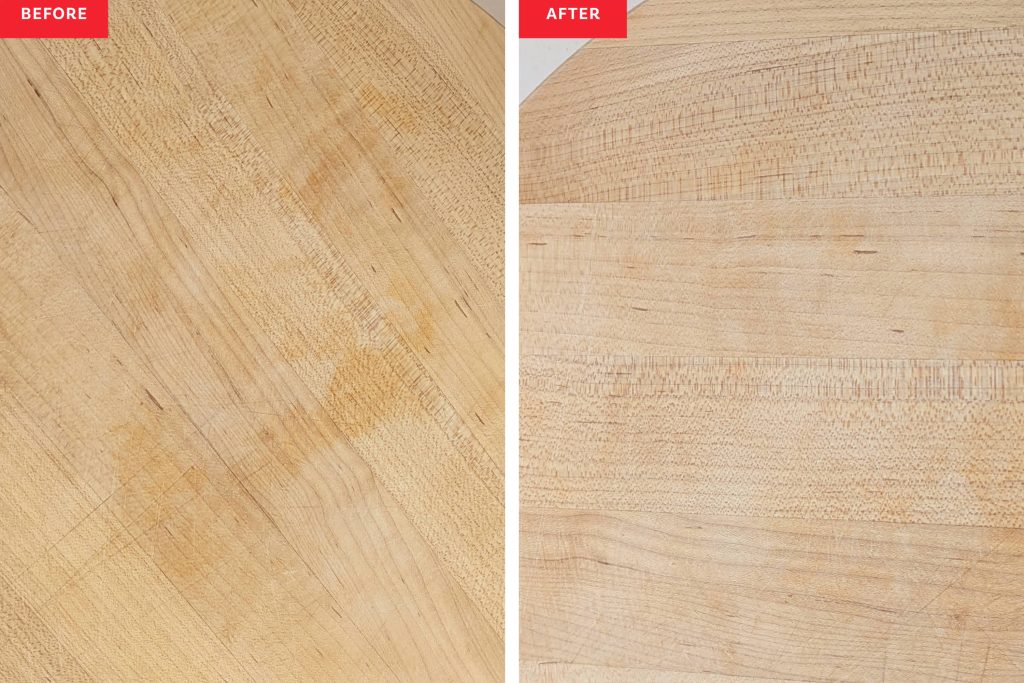
Your wooden cutting board is more than just a kitchen tool—it’s where fresh ingredients meet your cooking creativity. But have you ever stopped to wonder if your board is truly clean and safe to use?
Bacteria and stains can hide deep in the wood, putting your meals—and your health—at risk. Knowing how to properly sanitize your wooden cutting board can protect you and your family from harmful germs, while keeping your board looking great for years.
Keep reading, and you’ll discover simple, effective ways to make sure your cutting board stays fresh and safe every time you cook.
Choosing The Right Wooden Board
Choosing the right wooden cutting board is important for safety and durability. The wood type and size affect how easy it is to clean and use.
Picking a good board helps keep food safe and lasts longer. Let’s look at key features to consider.
Types Of Wood
Different woods offer different benefits for cutting boards. Hardwoods are best because they resist cuts and bacteria.
Softwoods can get damaged easily and absorb more moisture, making them less safe.
- Maple: very hard and dense, resists germs well
- Walnut: strong and dark, gentle on knives
- Cherry: smooth surface, good for light use
- Bamboo: hard and eco-friendly, but can be brittle
- Beech: durable and less porous, easy to clean
Size And Thickness Considerations
Size matters for how you use and clean your board. Larger boards hold more food but take more space.
Thickness affects stability and lifespan. Thicker boards last longer and resist warping.
- Small boards (10-12 inches) are easy to store and clean
- Medium boards (15-18 inches) suit most kitchen tasks
- Large boards (20+ inches) handle big jobs and groups
- Thickness of 1 to 1.5 inches is sturdy and long-lasting
- Thinner boards can warp or crack over time

Credit: www.youtube.com
Daily Cleaning Techniques
Keeping your wooden cutting board clean every day stops germs and bacteria. You can use easy methods to clean it well. This helps your board last longer and stay safe for food.
Focus on washing with soap and water and drying the board properly. These simple steps keep your cutting board in good shape.
Washing With Soap And Water
Use warm water and mild dish soap to wash the board. Clean both sides and edges to remove all food bits and oils. Avoid soaking the wood in water to prevent cracks.
- Rinse the board under warm water.
- Apply a small amount of dish soap.
- Scrub gently with a soft sponge or brush.
- Rinse all soap off with warm water.
- Wipe with a clean towel to remove excess water.
Drying Properly
Drying your wooden cutting board correctly stops moisture damage and mold. Air dry the board standing up or on a rack to let air flow on all sides.
| Drying Method | Why It Works |
|---|---|
| Standing upright | Air reaches both sides quickly |
| Use a drying rack | Prevents water from pooling underneath |
| Wipe after washing | Removes surface moisture fast |
Deep Sanitizing Methods
Wooden cutting boards need regular deep cleaning to stay safe. Simple washing does not remove all germs.
These deep sanitizing methods help kill bacteria and keep your board fresh.
Using White Vinegar
White vinegar is a natural disinfectant. It kills many types of bacteria on wooden surfaces.
Spray or wipe your cutting board with white vinegar. Let it sit for a few minutes, then rinse with water.
Applying Hydrogen Peroxide
Hydrogen peroxide helps remove germs and stains from wood. Use a 3% solution for safety.
Pour or spray the peroxide on the board. Wait five minutes, then wipe or rinse it off with water.
Lemon And Salt Scrub
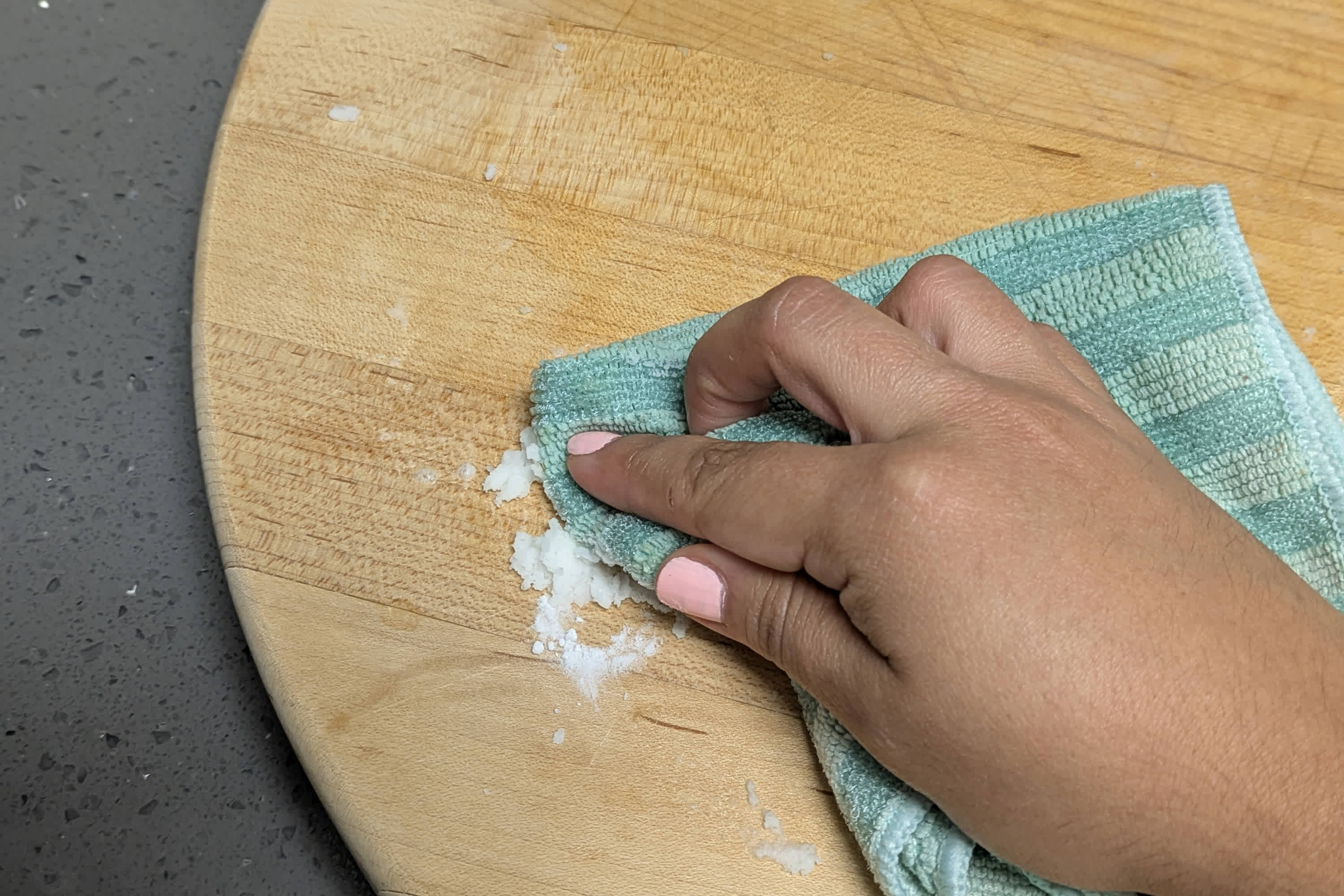
Lemon juice is acidic and kills bacteria. Salt acts as a scrub to remove dirt and stains.
Sprinkle salt on the board, then rub half a lemon over it. Let it sit for five minutes. Rinse with water.
- Use coarse salt for better scrubbing
- Rub lemon juice deep into the wood
- Repeat if stains or smells remain
Credit: www.thekitchn.com
Preventing Bacteria Growth
Wooden cutting boards can harbor bacteria if not cared for properly. Keeping them clean and dry helps stop bacteria from growing. Regular maintenance is important to protect your health.
Two key ways to prevent bacteria growth are applying oil regularly and avoiding excess moisture. These steps keep the wood strong and less likely to trap germs.
Regular Oil Treatment
Oiling your wooden board stops it from drying out and cracking. Cracks can hold bacteria and make cleaning hard. Use food-safe mineral oil for the best results.
- Apply mineral oil evenly to the board’s surface.
- Let the oil soak in for at least a few hours or overnight.
- Wipe off any extra oil with a clean cloth.
- Repeat oiling once a month or when the wood looks dry.
Avoiding Excess Moisture
Water can damage wooden boards and promote bacteria growth. Avoid soaking your board in water or leaving it wet for long periods. Dry it well after washing.
| Action | Reason |
| Wash with warm, soapy water | Remove food particles and bacteria |
| Rinse quickly | Prevent wood from absorbing too much water |
| Dry immediately with a towel | Stop moisture from soaking into the wood |
| Store board upright | Allow air to circulate and dry all sides |
Signs To Replace Your Board
Wooden cutting boards need regular cleaning to stay safe. Sometimes, cleaning is not enough. You should know when to replace your board.
Replacing your board helps keep your kitchen clean and food safe. Look for these signs to know when it is time.
Cracks And Deep Grooves
Cracks and deep grooves trap bacteria and dirt. These spaces are hard to clean well. Over time, they can cause food contamination.
If your board has many cracks or deep cuts, it is unsafe to use. These damages make the board less sanitary.
- Check for cracks by running your fingers over the surface
- Look for deep cuts that can’t be sanded out
- Replace the board if cracks grow or multiply
Persistent Odors And Stains
Strong smells on your board may show bacteria or mold growth. Stains can also mean the wood absorbed food juices.
If odors or stains stay after cleaning, it is a sign to get a new board. These problems affect the taste and safety of food.
- Smell the board after washing to check for odors
- Look closely for stains that don’t go away
- Do not use boards with strong smells or stains

Credit: homewithgraceandjoy.com
Frequently Asked Questions
How Often Should I Sanitize A Wooden Cutting Board?
Sanitize your wooden cutting board after each use, especially when cutting raw meat. Regular cleaning prevents bacteria buildup and maintains its longevity. Ensure thorough drying to avoid warping.
Can Vinegar Sanitize A Wooden Cutting Board?
Yes, vinegar is effective for sanitizing wooden cutting boards. Simply spray undiluted white vinegar onto the board, let it sit for a few minutes, then rinse with water. It’s a natural disinfectant.
Is Hydrogen Peroxide Safe For Wooden Cutting Boards?
Hydrogen peroxide is safe and effective for sanitizing wooden cutting boards. Pour it over the board and let it fizz. After a few minutes, rinse with water and dry thoroughly.
How Do I Remove Odors From A Wooden Cutting Board?
To remove odors, sprinkle baking soda on the board. Rub it in with a damp cloth, then rinse. Lemon juice can also neutralize odors and leave your board smelling fresh.
Conclusion
Keeping your wooden cutting board clean helps stop bacteria growth. Use simple methods like soap, water, and vinegar regularly. Dry the board well to prevent moisture damage. Avoid harsh chemicals that can harm the wood. Regular care keeps your board safe and lasts longer.
Clean boards mean safer food and healthier cooking. Small steps make a big difference every day.