You’ve planned your camping trip, packed your gear, and arrived at the perfect spot. But what happens when the rain starts pouring down?
Setting up your tent correctly in wet weather can make all the difference between a soggy, uncomfortable night and a cozy, dry shelter. In this guide, you’ll learn simple, effective steps to set up your tent for rain. By the time you finish reading, you’ll be ready to face any storm with confidence and keep yourself dry no matter what.
Keep going—you don’t want to miss these essential tips!
Credit: alpkit.com
Choosing The Right Tent
Selecting the right tent is key for staying dry in the rain. The right tent keeps water out and air flowing.
Look at materials, design, and features that stop rain from entering your tent.
Waterproof Materials
Tent fabrics must resist water well. Look for tents made from polyester or nylon with waterproof coatings.
- Polyester with polyurethane coating
- Nylon with silicone treatment
- Ripstop fabrics for strength
- Rainfly with waterproof layers
Tent Design For Rain
A tent made for rain has a shape that sheds water fast. Steep walls and a sloped roof work best.
| Design Feature | Rain Benefit |
| Steep Roof | Prevents water pooling |
| Extended Rainfly | Keeps rain off doors and windows |
| Raised Floor | Stops water from seeping in |
| Ventilation Flaps | Reduces inside condensation |
Sealed Seams And Zippers
Seams and zippers are weak points for rain. Good tents seal these areas well.
Check for these features:
- Seam tape inside to block water
- Waterproof zipper covers or flaps
- Double stitching for extra strength
- Zipper quality that resists rust
Selecting The Campsite
Setting up a tent for rain requires choosing the right campsite. A good location keeps you dry and comfortable.
Consider the land’s features and potential weather conditions before pitching your tent.
Avoiding Low-lying Areas
Low-lying areas can collect water during rain. These spots may lead to flooding or puddles in your tent.
- Look for higher ground to set up your tent.
- Avoid areas near rivers, lakes, or streams.
- Check for signs of previous water pooling.
Natural Shelter Options
Natural shelters can protect your tent from rain. Trees and bushes may block wind and rain.
Make sure the shelter is stable and does not pose a risk of falling branches.
- Set up near sturdy trees for rain cover.
- Avoid branches that look dead or weak.
- Use bushes to shield from wind.
Ground Slope And Drainage
The slope of the ground affects water drainage. A gentle slope helps water flow away from your tent.
Position your tent so that the entrance faces downhill. This prevents water from entering your tent.
- Pick a spot with a slight slope.
- Ensure water can drain easily.
- Avoid flat areas where water can collect.
Preparing The Tent Site
Setting up your tent properly helps keep you dry during rain. Choosing the right spot and preparing the ground is key. This guide covers how to prepare the tent site for rainy weather.
Focus on clearing debris, creating drainage, and using a groundsheet. These steps protect your tent and make your stay more comfortable.
Clearing Debris
Remove sticks, rocks, and leaves from the area before pitching your tent. Debris can damage your tent floor and cause water to pool underneath.
Clear an area larger than your tent’s footprint. This prevents damage and improves comfort.
Creating Drainage Channels
Dig small trenches around your tent site. These channels will guide rainwater away from your tent.
- Choose a slight slope for your tent site.
- Dig shallow channels about 3 inches deep.
- Make sure channels lead water downhill and away.
- Clear any blockages in the channels regularly.
Proper drainage keeps your tent dry and prevents flooding inside.
Using A Groundsheet
A groundsheet adds an extra waterproof layer under your tent. It protects against wet ground and stops water from seeping in.
| Groundsheet Type | Benefit |
|---|---|
| Plastic tarp | Cheap and waterproof but heavy |
| Silicone-coated nylon | Lightweight and durable |
| Polyethylene sheet | Inexpensive and easy to cut |

Credit: www.youtube.com
Pitching The Tent
Setting up a tent correctly is important for staying dry in the rain. A good pitch keeps water out and air flowing.
Focus on tightening the rainfly, securing guy lines, and placing tent stakes properly for the best protection.
Tightening The Rainfly
Make sure the rainfly is stretched tight over the tent. A loose rainfly can let water pool and leak inside.
Check all straps and buckles and pull them firmly. The rainfly should cover the tent edges well.
Securing Guy Lines
Guy lines add extra support to the tent in windy and rainy conditions. Secure them tightly to keep the tent stable.
- Attach guy lines to the loops on the rainfly or tent body.
- Tie the lines to solid anchors like trees or stakes.
- Use tensioners to adjust the tightness easily.
- Keep lines at a 45-degree angle for best hold.
Proper Tent Stakes Placement
Placing tent stakes correctly helps keep your tent secure during rain and wind. Stakes hold the base tight to the ground.
| Stake Location | Purpose | Tip |
| At tent corners | Anchor tent base | Drive stakes at 45 degrees away from tent |
| Along tent edges | Prevent sagging | Space stakes evenly every 2-3 feet |
| Guy line points | Support structure | Use strong, durable stakes |
Additional Rainproofing Tips
Setting up your tent well helps keep you dry during rain. Extra steps make your tent stronger against water.
These tips will help you protect your tent better. They also improve comfort inside the tent.
Applying Tent Sealant
Tent seams can let water in. Use tent sealant to cover these seams and stop leaks.
Apply sealant carefully on all seams outside and inside the tent. Let it dry fully before use.
- Clean seams before applying sealant
- Use a brush or applicator for even coverage
- Check for cracks or holes and seal them too
- Allow 24 hours drying time for best results
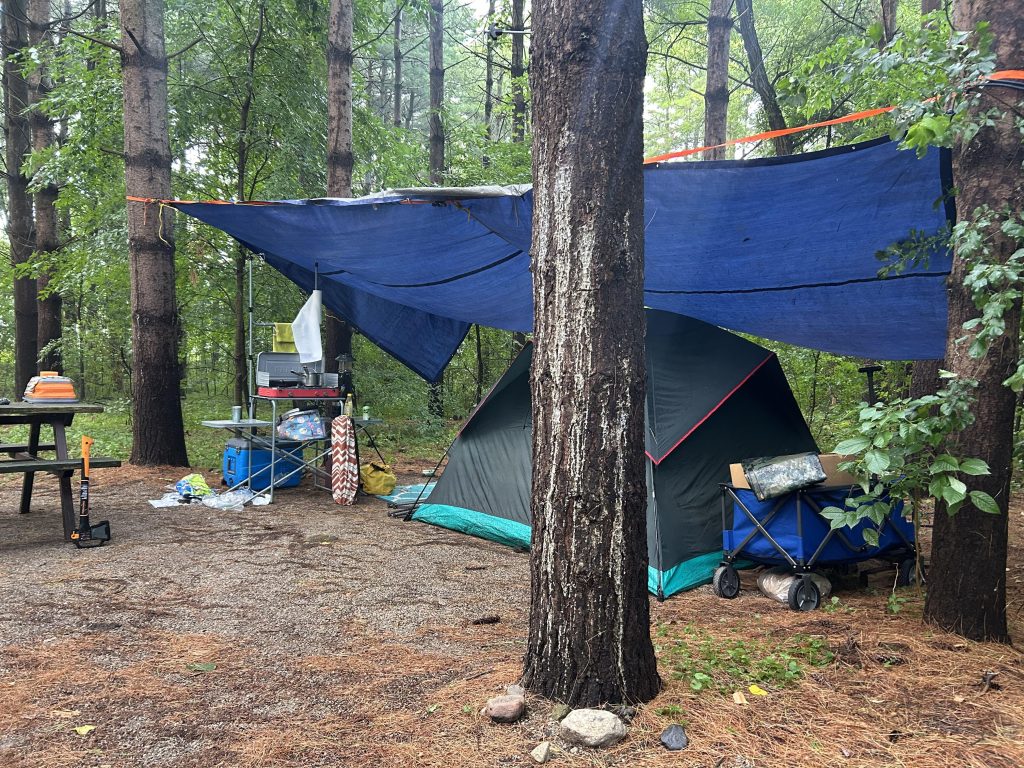
Using A Tarp For Extra Protection
Place a tarp under your tent to stop water from coming up. This adds an extra layer of protection.
You can also use a tarp over the tent for heavy rain. Make sure it does not block tent vents.
- Choose a tarp slightly smaller than your tent floor
- Secure tarp edges with stakes or rocks
- When covering above, keep tarp away from tent walls
- Leave space for air to flow under the tarp
Ventilation To Prevent Condensation
Good ventilation stops moisture buildup inside your tent. This keeps you dry and comfy.
Open vents or windows slightly even in rain. Use rain flaps to keep water out while letting air in.
- Open mesh windows or vents for airflow
- Use rainfly vents if your tent has them
- Avoid sealing tent completely tight
- Dry wet clothes outside the tent
Managing Wet Gear
Setting up a tent in the rain means dealing with wet gear. Keeping your things dry is very important. Wet gear can make your camping trip uncomfortable.
Organizing wet items inside the tent helps prevent water damage. It also keeps your sleeping area clean and dry.
Storage Solutions Inside Tent
Use waterproof bags or dry sacks to store wet gear. Keep these bags away from sleeping areas. This stops water from spreading inside the tent.
Hang wet clothes on tent loops or a portable clothesline. This keeps them off the floor and helps air circulate around the items.
- Use dry bags for wet clothes and shoes
- Keep gear in corner pockets or vestibules
- Hang wet items on tent loops or lines
- Separate wet gear from dry gear
Drying Wet Items Safely
Do not dry wet items directly inside the tent. Moisture can cause condensation and make the tent damp. Use a tarp or shelter outside if possible.
If you must dry inside, place a waterproof mat under the wet item. Open tent vents to improve airflow. This helps reduce moisture buildup.
- Use a tarp outside to dry wet gear
- Place waterproof mats under wet items inside
- Keep tent vents open for air circulation
- Avoid drying items directly on tent fabric
Keeping Sleeping Area Dry
Use a groundsheet or footprint under your tent. This protects the tent floor from water and mud. Keep wet shoes and clothes near the tent entrance.
Store sleeping bags in dry bags until bedtime. Avoid bringing wet gear inside the sleeping area. This keeps your bed warm and dry.
- Place a groundsheet under the tent floor
- Keep wet shoes and clothes at the entrance
- Store sleeping bags in dry bags until use
- Do not bring wet gear into sleeping area

Credit: www.reddit.com
Frequently Asked Questions
How Do I Keep My Tent Dry In Heavy Rain?
Use a waterproof rainfly and secure all tent zippers tightly. Pitch your tent on higher ground to avoid water pooling. Apply seam sealer to prevent leaks. Always stake the tent firmly to withstand wind and rain.
What Is The Best Way To Pitch A Tent For Rain?
Choose a flat, elevated spot with good drainage. Tighten the rainfly to avoid sagging and water pooling. Angle the tent door away from the wind. Use guy lines to stabilize the tent during storms.
How Can I Prevent Water From Entering My Tent?
Seal all seams and use a rainfly that covers the tent fully. Keep the tent door closed during rain. Use a ground tarp slightly smaller than the tent base to avoid water trapping.
Should I Use A Tarp Under My Tent In Rain?
Yes, a tarp protects the tent floor from moisture and damage. Make sure the tarp is smaller than the tent floor to prevent water buildup. This helps keep the tent dry and increases its lifespan.
Conclusion
Setting up a tent for rain takes some simple steps. Choose a dry, flat spot to keep water out. Use a rainfly and secure all tent parts tightly. Angle the tent so rainwater flows away quickly. Check your tent for leaks before the storm hits.
These tips help keep you dry and comfortable outdoors. Stay safe and enjoy your camping, no matter the weather.