Setting up ventilation in your grow tent is one of the most important steps to ensure healthy plants and a successful harvest. Without proper airflow, your plants can suffer from heat stress, mold, and poor growth.
But don’t worry—getting your ventilation right doesn’t have to be complicated. In this guide, you’ll discover simple, clear steps to create the perfect environment for your plants to thrive. Keep reading, and you’ll learn how to control temperature, humidity, and air quality like a pro, making your grow tent a powerhouse of growth.
Your plants will thank you!

Credit: www.reddit.com
Choosing The Right Ventilation System
Good ventilation keeps your grow tent healthy and plants strong. It removes heat, moisture, and bad air. Picking the right system is key for success.
This guide explains types of ventilation systems, how to size fans, and how to select carbon filters. Read on to find what fits your grow tent best.
Types Of Ventilation Systems
There are several ventilation setups to choose from. Each has its own use and benefits. Knowing these helps you pick the best one.
- Passive Intake: Uses natural air flow to bring fresh air inside without a fan.
- Active Intake: Uses a fan to pull fresh air into the tent.
- Exhaust Fan Only: Pushes hot, stale air out and lets fresh air come in passively.
- Inline Fan System: Moves air in and out actively, often paired with carbon filters for odor control.
Sizing Fans For Your Tent
Choosing the right fan size is important. Too small, and air won’t move well. Too big wastes energy and can stress plants.
| Grow Tent Size (ft³) | Recommended Fan CFM | Notes |
| 10 – 20 | 100 – 150 | Small tents, low heat plants |
| 20 – 40 | 150 – 250 | Medium tents with moderate heat |
| 40 – 60 | 250 – 400 | Larger tents or high heat plants |
| 60+ | 400+ | Very large tents, heavy equipment |
Calculate your tent volume (length × width × height). Match it with a fan that changes air every 1-3 minutes.
Selecting Carbon Filters
Carbon filters remove odors and clean the air. Choose one that fits your fan size and tent volume.
- Match filter CFM rating to your fan’s CFM.
- Choose filters with good quality activated carbon.
- Check the filter size fits inside your tent setup.
- Replace the filter regularly for best results.

Credit: www.fl420grow.com
Installing Intake And Exhaust Fans
Good ventilation keeps your grow tent healthy. It controls temperature and humidity. Installing intake and exhaust fans helps air flow well.
This guide covers how to position exhaust fans, set up intake fans, and ensure proper airflow direction inside your tent.
Positioning Exhaust Fans
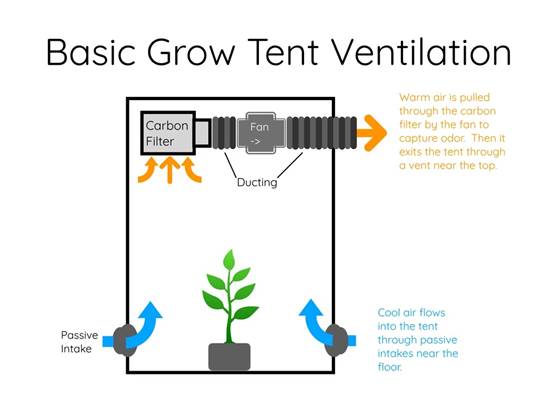
Place exhaust fans near the top of the tent. Hot air rises, so this helps remove heat efficiently. Make sure fans are secure and do not block plants.
Exhaust fans should vent air outside the tent. Avoid placing them near intake fans to stop air from cycling too quickly.
Setting Up Intake Fans
Intake fans bring fresh air into the tent. Place them near the bottom to pull in cooler air. They work best opposite the exhaust fans.
- Use a fan size that matches your tent volume
- Keep intake fans lower than exhaust fans
- Keep the intake area clean and clear
- Use filters to prevent pests and dust
Ensuring Proper Airflow Direction
| Fan Type | Placement | Airflow Direction |
|---|---|---|
| Exhaust Fan | Top of tent | Air out of tent |
| Intake Fan | Bottom of tent | Air into tent |
Make sure air moves from the intake fan to the exhaust fan. This keeps fresh air circulating and removes heat and odors.
Managing Temperature And Humidity
Keeping the right temperature and humidity in your grow tent helps plants grow healthy. You need tools and methods to watch and control these factors. Good ventilation plays a key role in managing the air inside the tent.
Using the right devices and adjusting airflow can keep the environment stable. This guide explains how to use meters, fans, and humidity tools for better control.
Using Thermometers And Hygrometers
Thermometers show the temperature inside the tent. Hygrometers measure humidity levels. Both are needed to know the current condition.
- Place thermometers at plant level for accurate readings.
- Use digital hygrometers for easy and quick humidity checks.
- Check these meters daily to track changes.
- Keep meters away from direct airflow to avoid false readings.
Adjusting Fan Speed
Fans help move air and control temperature and humidity. Adjusting fan speed changes how much air flows in and out.
| Fan Speed | Effect on Grow Tent |
|---|---|
| Low | Gentle air movement, helps plants breathe |
| Medium | Balances temperature and humidity |
| High | Quickly cools and dries air, good for hot days |
Adjust fan speed based on your meter readings. Increase speed if temperature or humidity is too high. Lower speed if it gets too dry or cold.
Incorporating Humidifiers And Dehumidifiers
Humidifiers add moisture to the air. Dehumidifiers remove extra moisture. Both help keep humidity at perfect levels.
- Use a humidifier if humidity falls below 40%.
- Use a dehumidifier if humidity rises above 70%.
- Place these devices away from plants to avoid water damage.
- Monitor their effect with your hygrometer regularly.
Optimizing Air Circulation Inside The Tent
Good air circulation is key to a healthy grow tent. It helps plants breathe and grow strong. Without it, air can become stale and harm your plants.
This guide covers ways to improve airflow inside your grow tent. You will learn how to use fans, avoid air pockets, and keep fresh air coming in.
Adding Oscillating Fans
Oscillating fans move air around the tent evenly. They prevent hot spots and help plants get fresh air on all sides. Place fans at different heights for best results.
- Mount fans on tent poles or walls
- Set fans to oscillate slowly
- Use small clip-on fans for tight spaces
- Keep fans away from plants to avoid windburn
Avoiding Air Stagnation
Air stagnation can cause mold and slow plant growth. You must keep air moving at all times. Check corners and lower areas for still air.
| Problem Area | Solution |
|---|---|
| Upper corners | Use small fans to push air |
| Near floor | Place oscillating fan low to move air |
| Behind plants | Adjust fan angle to reach spots |
Maintaining Fresh Air Supply
Fresh air brings in oxygen and removes carbon dioxide. Use intake and exhaust vents to keep air flowing. Control vent size to balance airflow.
- Install a vent fan to pull stale air out
- Keep intake vents open for fresh air in
- Use filters to keep pests out
- Check vents regularly for blockages
Controlling Odors And Air Quality
Good ventilation in a grow tent helps keep air fresh and controls smells. It also improves plant health by supplying fresh air.
Setting up the right system stops bad odors from spreading outside the tent. It also removes excess humidity and heat.
Using Activated Carbon Filters
Activated carbon filters trap and remove odors from the air. They use tiny pores to catch smelly molecules.
Attach the filter to your exhaust fan inside the tent. This way, the air is cleaned before it leaves the tent.
- Choose a filter size that matches your fan
- Place the filter inside the tent for best results
- Ensure a tight seal to avoid air leaks
Maintaining Filter Efficiency
Clean your filter regularly to keep it working well. Dust and debris can block the carbon and reduce odor control.
Replace the carbon filter every 12 to 18 months or sooner if odors return. Check it monthly for damage or wear.
- Inspect filter monthly for dust buildup
- Vacuum outer mesh to remove dust
- Replace filter if odors become strong again
Additional Odor Control Methods
Besides carbon filters, use other ways to reduce smells and improve air quality. These help keep your grow tent fresh.
- Use a good exhaust fan to move air out quickly
- Install an air purifier inside the tent
- Keep the tent clean and remove dead leaves
- Control humidity to prevent mold and odors
- Use odor neutralizers designed for grow rooms

Credit: canadagrowsupplies.com
Monitoring And Maintaining Ventilation
Good ventilation keeps your grow tent environment healthy. It controls temperature, humidity, and air quality. Regular checks help avoid problems and keep plants growing well.
Maintaining ventilation means cleaning parts, fixing issues, and upgrading equipment. These steps improve airflow and prevent damage to your setup.
Regular Cleaning And Inspection
Dust and debris can block fans and filters. Cleaning these parts often keeps air moving freely. Check hoses and vents for tears or blockages.
- Wipe fan blades with a damp cloth weekly.
- Replace or wash carbon filters every 3 months.
- Inspect ducting for holes or loose connections monthly.
- Clear any dust from vent covers and screens.
Troubleshooting Common Issues
If airflow drops, fans may be dirty or worn out. Strange noises often mean loose parts or motor problems. Check electrical connections for safety.
| Issue | Possible Cause | Solution |
| Low airflow | Blocked filters or ducts | Clean or replace filters, clear ducts |
| Loud fan noise | Loose screws or motor wear | Tighten screws or replace fan |
| Fan not running | Power issue or motor failure | Check wiring or replace motor |
Upgrading Ventilation Components
Upgrading parts can improve air quality and save energy. Choose fans with higher airflow or quieter motors. Add automatic controllers for better climate control.
- Use variable speed fans to adjust airflow.
- Install carbon filters with higher capacity.
- Add temperature and humidity sensors.
- Consider energy-efficient exhaust fans.
Frequently Asked Questions
How Do I Install Ventilation In A Grow Tent?
To install ventilation, position an exhaust fan at the top for hot air removal. Place an intake fan or vent near the bottom for fresh air. Use ducting and clamps to secure airflow equipment tightly and prevent leaks.
What Size Fan Is Best For A Grow Tent?
Choose a fan size based on tent volume. Calculate tent cubic feet and select a fan with at least one air exchange per minute. Larger tents need stronger fans for effective air circulation and temperature control.
How Often Should I Replace Grow Tent Filters?
Replace carbon or HEPA filters every 6 to 12 months. Frequent replacement ensures efficient odor control and air purification. Check filters monthly for clogging or reduced airflow and replace sooner if needed.
Can I Use Passive Intake Instead Of Fans?
Yes, passive intake uses vents without fans, relying on negative pressure from exhaust fans. It’s quieter and energy-efficient but may limit airflow in larger tents. Ensure vents are adequately sized and positioned for optimal fresh air entry.
Conclusion
Setting up ventilation in a grow tent keeps plants healthy and strong. Good airflow controls temperature and prevents mold growth. Use fans and vents to move fresh air inside. Check your system often to ensure it works well. Proper ventilation helps plants grow faster and produce more.
Small steps can make a big difference in your garden. Start with simple tools and learn as you go. Healthy plants depend on clean, fresh air every day.