Are your lawn shears leaving ragged edges instead of clean cuts? Dull blades can make your gardening chores frustrating and damage your plants.
But don’t worry—you can fix this quickly and easily. In this guide, you’ll learn simple steps to sharpen your lawn shears like a pro. Keep reading, and you’ll discover how a sharp tool can save you time, effort, and help your garden look its best all season long.
Choosing The Right Tools
Sharpening lawn shears needs the right tools for best results. Using proper equipment makes the process easier and safer.
Choosing the right tools protects your shears and helps keep them sharp longer. It also prevents damage during sharpening.
Essential Sharpening Tools
You need a few basic tools to sharpen lawn shears well. These tools work together to restore a sharp edge.
- Flat or mill file for grinding dull edges
- Sharpening stone for fine honing
- Clamp or vise to hold shears steady
- Cleaning brush to remove rust and dirt
- Lubricating oil to protect blades after sharpening
Safety Gear To Use
Wear safety gear to avoid injuries while sharpening. Sharp blades and tools can cause cuts or eye damage.
| Gear | Purpose |
| Protective gloves | Protect hands from cuts |
| Safety glasses | Shield eyes from metal filings |
| Dust mask | Prevent inhaling dust particles |
| Long sleeves | Protect arms from scratches |

Credit: www.youtube.com
Preparing Lawn Shears For Sharpening
Sharpening lawn shears keeps them cutting cleanly. Preparing them properly helps you get better results.
Before sharpening, clean and check the blades carefully. This makes the sharpening process easier and safer.
Cleaning The Blades
Remove dirt and sap from the blades before sharpening. Clean blades allow you to see damage and sharpen evenly.
Use a cloth with warm soapy water to wipe the blades. For sticky sap, apply a small amount of rubbing alcohol.
- Wear gloves to protect your hands
- Wipe both sides of each blade
- Dry the blades well to stop rust
Inspecting For Damage
Look closely at the blades for cracks, nicks, or bends. Damaged blades need repair before sharpening.
Check the blade edges and joints. Make sure the blades open and close smoothly without wobbling.
- Spot any deep cuts or chips on the edges
- Look for rust spots or corrosion
- Test blade alignment by closing the shears slowly
Sharpening Techniques
Keeping lawn shears sharp is important for clean cuts. This guide will help you learn different sharpening techniques.
Sharpening your tools regularly will improve their performance. Let’s explore some effective methods.
Using A Sharpening Stone
A sharpening stone is a traditional tool for sharpening lawn shears. It’s easy to use and gives excellent results.
Soak the stone in water before use. Hold the shear blade at the correct angle and slide it across the stone.
- Keep the stone wet for smooth sharpening
- Move the blade in one direction
- Check the blade sharpness frequently
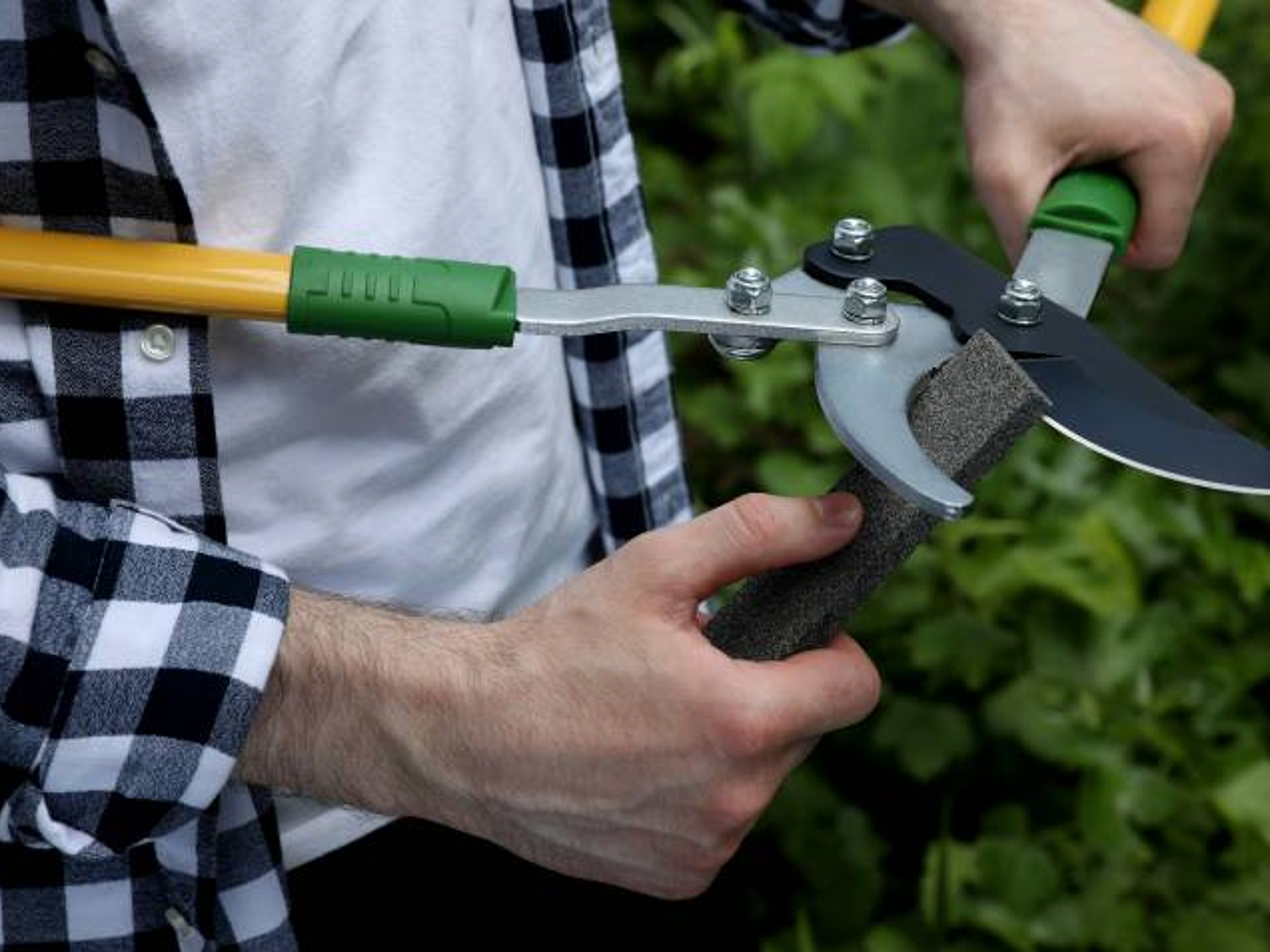
Applying A File
A metal file is handy for sharpening garden tools. It’s a simple and effective method for lawn shears.
Secure the shears in a vise. Use steady strokes with the file along the blade’s edge to sharpen it.
- Choose a file that matches the blade size
- Apply even pressure as you file
- Work on both sides of the blade
Electric Sharpeners
Electric sharpeners make the task quick and easy. They are suitable for those who need fast results.
Read the manual before use. Insert the blade and let the sharpener do the work, following the tool’s instructions.
- Choose an electric sharpener with adjustable settings
- Ensure the blade is clean before sharpening
- Wear safety goggles for protection
Maintaining Blade Angle
Keeping the right blade angle is key to sharpening lawn shears. The angle affects how sharp and effective the blades will be.
Maintaining this angle during sharpening ensures smooth cuts and longer blade life.
Optimal Sharpening Angle
The best sharpening angle for lawn shears is usually between 20 and 30 degrees. This angle helps the blade stay sharp without weakening it.
Use a file or sharpening stone to keep this angle steady while sharpening each blade.
- Hold the blade at 20 to 30 degrees against the sharpener
- Check the angle often during sharpening
- A consistent angle prevents blade damage
Consistent Stroke Methods
Use smooth and even strokes when sharpening. This keeps the blade edge sharp and uniform.
Sharpen both blades evenly to maintain proper cutting action.
- Move the sharpener from base to tip in one smooth stroke
- Apply light pressure to avoid removing too much metal
- Repeat strokes consistently on each side of the blade
- Count strokes to keep sharpening even on both blades
Testing The Sharpness
After sharpening your lawn shears, you need to check how sharp they are. Testing sharpness helps you see if the blades cut cleanly.
Good sharpness means easier cutting and less damage to plants. There are simple ways to test this at home.
Cutting Through Paper Or Grass
One way to test sharpness is by cutting paper or grass. Paper shows how clean the blades cut thin material.
Try cutting a sheet of paper with your shears. The cut should be smooth without tearing or jagged edges.
- Use a plain piece of paper for the test
- Cut the paper in one smooth motion
- Look for clean edges and no ragged tears
- Try cutting a small handful of grass next
- Sharp blades cut grass easily without crushing
Adjusting If Needed
If the blades do not cut well, they need adjustment. Dull spots or rough edges cause poor cuts.
Use a sharpening stone or file to fix dull areas. Check the blade alignment and tighten or loosen screws.
- Sharpen any dull or chipped blade spots
- Make sure blades meet evenly without gaps
- Tighten pivot bolts so blades move smoothly
- Test cutting again after adjustments
Lubricating And Reassembling
After sharpening your lawn shears, it is important to lubricate and reassemble them properly. This will keep your shears working smoothly and prevent rust.
Taking time to apply oil and tighten screws ensures your shears stay in good shape for a long time.
Applying Oil To Blades
Use a clean cloth to apply light machine oil to the blades. This reduces friction and stops the blades from rusting.
Make sure to cover the whole blade surface, including the sharpened edges and pivot area.
- Apply a few drops of oil along each blade
- Wipe off any extra oil with a clean cloth
- Open and close the shears several times to spread the oil
Tightening Screws And Bolts
Check all screws and bolts after oiling. Tighten them so the shears do not feel loose or wobbly.
Use the correct screwdriver or wrench to avoid damaging the hardware. Do not overtighten, as this can affect blade movement.
- Hold the blade steady while tightening screws
- Tighten pivot bolt until blades move smoothly
- Secure handle screws firmly but gently
Tips For Long-lasting Sharpness
Keeping your lawn shears sharp saves time and effort. Sharp blades cut cleanly and protect your plants.
Regular care helps your shears stay sharp longer. Simple habits make a big difference.
Regular Cleaning Routine
Clean your lawn shears after each use. Dirt and sap can dull the blades and cause rust.
- Wipe blades with a dry cloth
- Use soapy water to remove sap and dirt
- Dry blades completely to stop rust
- Apply light oil to the blades for protection
- Check and tighten screws or bolts regularly
Proper Storage Practices
Store lawn shears in a dry place to avoid moisture damage. Protect the blades with covers or sheaths.
| Storage Tip | Reason |
| Keep in a dry shed or garage | Prevents rust and corrosion |
| Use blade covers | Protects edges from damage |
| Hang shears on hooks | Keeps blades from touching hard surfaces |
| Store away from children | Ensures safety and blade protection |

Credit: www.angi.com
Credit: www.airtasker.com
Frequently Asked Questions
How Often Should I Sharpen Lawn Shears?
Sharpen lawn shears every few months for best results. Frequent use dulls blades faster. Regular sharpening ensures clean cuts and healthier plants.
What Tools Are Needed To Sharpen Lawn Shears?
Use a sharpening stone, metal file, or diamond file. Clean blades first with soapy water. Proper tools make sharpening easier and more effective.
Can I Sharpen Lawn Shears Without Removing Them?
Yes, sharpen lawn shears while assembled. Open blades fully and work on each edge carefully. This saves time and maintains blade alignment.
How Do I Maintain Sharp Lawn Shears Longer?
Clean blades after each use and oil them regularly. Store shears in a dry place to prevent rust. Proper care extends sharpness and tool life.
Conclusion
Sharpening lawn shears keeps your garden tools ready and effective. Regular sharpening makes cutting easier and cleaner. Dull blades can damage plants and waste your time. Using simple tools, you can sharpen shears at home. Follow safe steps to avoid injury and improve results.
Keep your shears sharp for healthy, neat plants. Small efforts lead to better gardening success. Your lawn will look well cared for and beautiful. Try sharpening often to enjoy smooth, precise cuts every time.