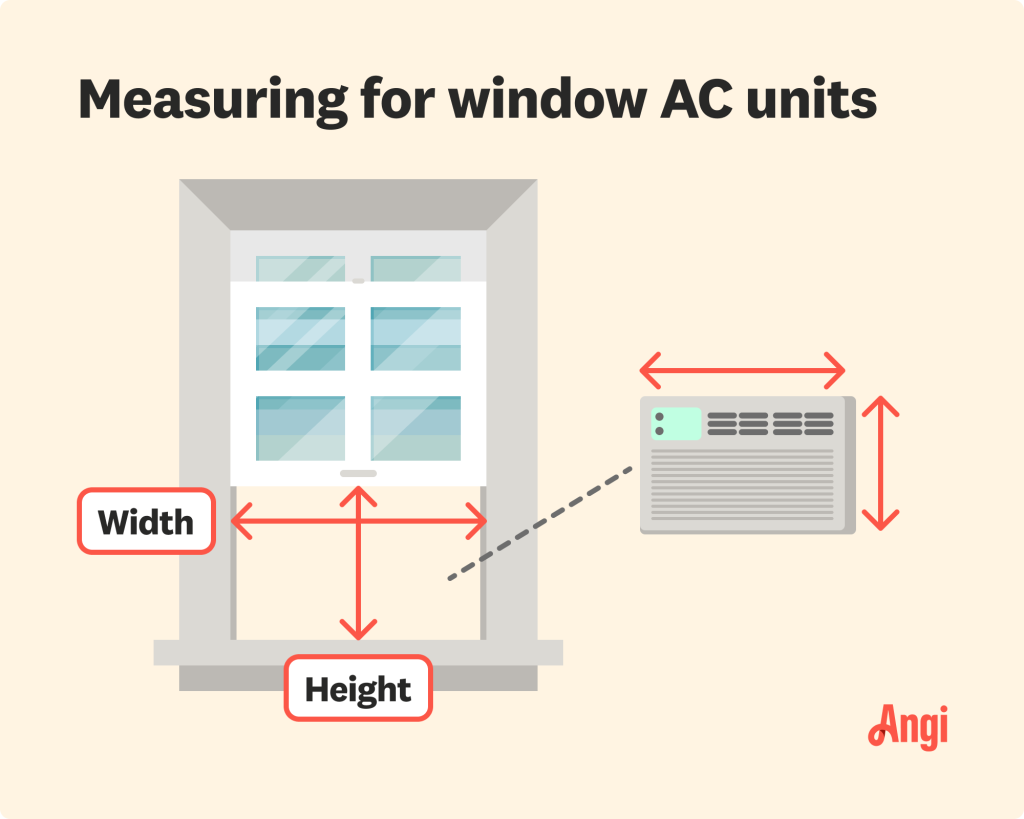
Choosing the right size window air conditioner can make all the difference between a cool, comfortable room and wasted energy bills. If your unit is too small, your space won’t get cool enough.
If it’s too big, you’ll end up spending more money without extra comfort. You might think sizing a window AC is tricky, but it doesn’t have to be. In this guide, you’ll learn simple steps to find the perfect fit for your room.
Keep reading, and you’ll discover how to stay cool without breaking the bank.
Why Proper Ac Sizing Matters
Proper AC sizingis key for comfort and savings. An undersized unitstruggles to cool the room. It runs longer, uses more energy, and wears out faster. An oversized unitcools too quickly. It turns on and off often, causing poor humidity control and higher bills.
Choosing the right size keeps your room cool and dry. It also saves money on electricity and maintenance. A well-sized unit runs smoothly and lasts longer.
- Ensures efficient cooling
- Prevents high energy costs
- Reduces wear and tear
- Maintains proper humidity
- Improves comfort
Key Factors Affecting Ac Size
Room dimensionsare key to choosing the right air conditioner size. Larger rooms need more cooling power. Measure the length and width to find the area in square feet.
Sunlight exposureaffects how much heat enters the room. Rooms with many windows or direct sun need a stronger AC to stay cool.
Insulation qualityimpacts cooling efficiency. Well-insulated rooms keep cool air inside better, so a smaller unit may work fine.
Room occupancymatters because people add heat. More people in a room means the AC must work harder.
Appliance heat outputcan raise room temperature. Devices like computers and ovens add heat, requiring a bigger AC unit.
Measuring Your Room Accurately
Measure the length and width of the room in feet. Multiply these numbers to get the square footage. For example, a room 12 feet by 10 feet is 120 square feet.
Ceiling height affects cooling needs. Standard ceilings are 8 feet high. If ceilings are higher, more cooling power is needed.
| Ceiling Height | Adjustment Needed |
|---|---|
| 8 feet or less | No adjustment |
| 9 feet | Add 10% more cooling |
| 10 feet or more | Add 20% more cooling |
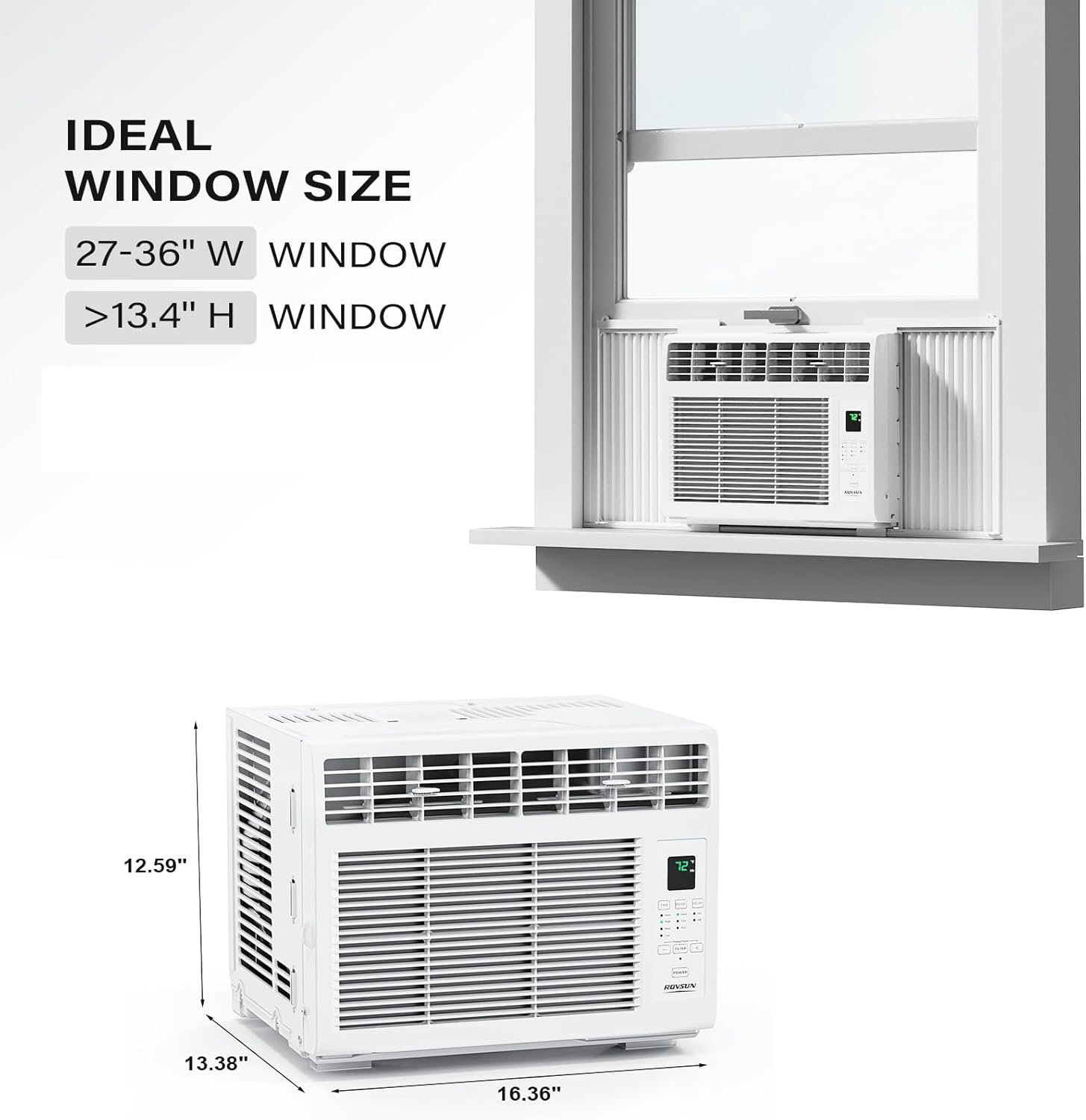
Credit: manuals.plus
Btu Ratings And Their Importance
BTUstands for British Thermal Unit. It measures the amount of heat an air conditioner can remove from a room in one hour. The higher the BTU, the more cooling power the unit has. Choosing the right BTU rating is very important for comfort and energy efficiency.
A unit with too low BTU will not cool the room well. A unit with too high BTU will cool too fast and waste energy. The size of the room affects the BTU needed.
| Room Size (sq ft) | Recommended BTU |
|---|---|
| 100 – 150 | 5,000 – 6,000 |
| 150 – 250 | 6,000 – 8,000 |
| 250 – 350 | 8,000 – 10,000 |
| 350 – 450 | 10,000 – 12,000 |
Adjusting Btu For Room Conditions
Sun-drenched rooms need more cooling power. Add about 10% extra BTUfor rooms with many windows or direct sunlight.
Shaded rooms stay cooler. You can reduce the BTU by around 10%because less heat enters these rooms.
High ceilings mean more space to cool. Increase BTU by 10-20%for rooms with ceilings over 8 feet.
Each extra person adds heat. Add about 600 BTUfor every person beyond two in the room.
Credit: www.ebay.com
Common Sizing Mistakes To Avoid
Choosing the wrong size for a window air conditioner can cause poor cooling or high energy bills. Oversized units waste power, while too small ones struggle to cool the room. Measure your space carefully to find the right fit and avoid these common mistakes.
Choosing Too Large Units
Large units cool rooms quickly but cause problems. They turn on and off often. This wastes electricity and increases bills. Rooms may feel cold and damp. Humidity stays high, making the air uncomfortable. Large units cost more upfront and take up space.
Selecting Too Small Units
Small units run non-stop trying to cool the room. They may never reach the right temperature. This wears out the unit faster. Rooms stay warm and uncomfortable. It also wastes energy and raises costs. Small units can’t cool big spaces well.
Additional Features To Consider
Energy efficiency ratingshelp save money on electricity bills. Look for units with Energy Starlabels. They use less power and cool better. Higher ratings mean better efficiency. This reduces environmental impact too.
Noise levelsmatter for comfort. Some air conditioners run very quietly. Others can be loud and disturbing. Check the decibel (dB) rating before buying. Lower dB means quieter operation, perfect for bedrooms or offices.
Smart controlsadd convenience. Many models come with Wi-Fi or app control. This lets you adjust settings from anywhere. You can set timers, change temperature, or turn the unit off remotely. It saves energy and adds ease.
Step-by-step Sizing Process
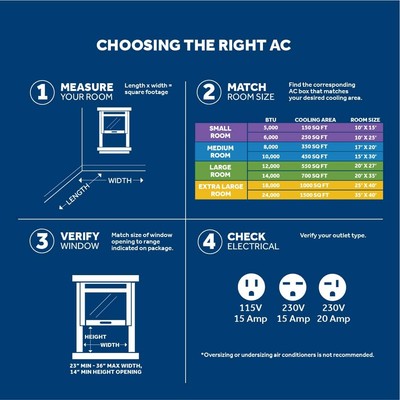
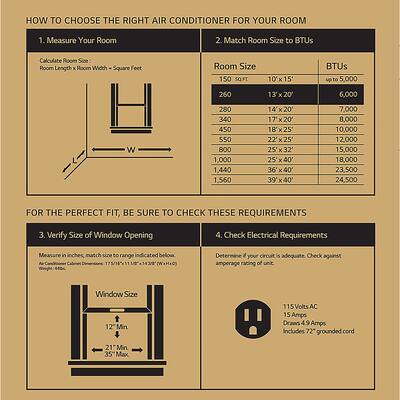
Measure the lengthand widthof your room in feet. Multiply these two numbers to get the square footage. Check the room’s ceiling height. Higher ceilings need more cooling power. Note the number of windows and doors, as these affect cooling needs.
Use the room size to find the right BTU (British Thermal Unit). Here’s a simple guide:
| Room Size (sq. ft.) | BTU Needed |
|---|---|
| Up to 150 | 5,000 BTU |
| 150 – 250 | 6,000 – 8,000 BTU |
| 250 – 350 | 8,000 – 10,000 BTU |
| 350 – 450 | 10,000 – 12,000 BTU |
| 450 – 550 | 12,000 – 14,000 BTU |
Choose a model with the BTU ratingthat matches your room size. Check for energy efficiencyand noise levels. Make sure the unit fits your window and power supply.
Tips For Installation And Maintenance
Choose a spot where air flows freely. Avoid places blocked by furniture or curtains. Place the unit near a window that faces the shade. This helps the air conditioner work better and saves energy.
Clean the air filter every two weeks during use. Dust and dirt block airflow and reduce cooling. Use a soft brush or vacuum to remove dust. Wipe the exterior with a damp cloth to keep it clean.
Store the unit in a dry place during cold months. Remove and clean all parts before storage. Cover the air conditioner to protect it from dust and moisture. Check the unit for damage before reinstalling next season.
Credit: www.bestbuy.com
Frequently Asked Questions
How Do I Calculate Btu For My Room?
To calculate BTU, measure your room’s square footage. Multiply length by width. Use a BTU chart to match your room size with the correct BTU rating. Consider factors like ceiling height, sunlight, and insulation for more accuracy.
What Room Size Is Ideal For 5,000 Btu?
A 5,000 BTU air conditioner is perfect for rooms up to 150 square feet. It’s ideal for small spaces like bedrooms or offices. Ensure the room has proper insulation and minimal sunlight to maximize cooling efficiency.
Why Is Ac Sizing Important?
Proper AC sizing ensures efficient cooling and energy savings. An undersized unit won’t cool effectively, while an oversized one wastes energy. Correct sizing prolongs the unit’s lifespan and enhances comfort.
Can Room Height Affect Ac Size?
Yes, room height affects AC size. Higher ceilings mean more air volume to cool. For rooms with high ceilings, increase the BTU rating to ensure efficient cooling.
Conclusion
Choosing the right size for your window air conditioner matters. A unit too small won’t cool well. Too big wastes energy and money. Measure your room carefully before buying. Think about sun exposure and insulation too. The right size keeps your space comfortable and saves power.
Now, you can pick a cooler that fits your needs perfectly. Stay cool and save energy all summer long.