Choosing the right size window unit air conditioner for your space can feel confusing. If your AC is too small, it won’t cool your room properly.
If it’s too big, you’ll waste energy and money. You want to get it just right—to stay comfortable without overspending. In this guide, you’ll learn simple steps to find the perfect size air conditioner for your room. By the end, you’ll feel confident making the best choice that keeps your space cool and your bills low.
Keep reading to discover how easy it can be!
Why Proper Ac Sizing Matters
Choosing the right size for a window unit air conditioner is very important. It helps the unit cool your room well and use energy wisely.
If the air conditioner is too small or too big, it will not work properly. This can cause problems with comfort, energy use, and cost.
Energy Efficiency
A properly sized AC uses less electricity. It runs at the right speed and time to cool the room.
An air conditioner that is too big cools too fast and turns on and off often. This wastes energy and raises bills.
- Right size means steady cooling
- Less power used over time
- Lower electricity bills
Comfort Levels
The right size air conditioner keeps your room at a comfortable temperature. It avoids hot or cold spots.
A unit that is too small cannot cool the room enough. One that is too big cools quickly but leaves the air damp and uncomfortable.
- Proper size cools evenly
- Maintains good humidity
- Keeps room comfortable longer
Cost Implications
Buying the right size AC saves money in the long run. You spend less on energy and avoid repair costs.
Too small units run constantly and wear out faster. Too large units cost more to buy and waste energy.
- Right size lowers energy bills
- Reduces repair and replacement costs
- Better value for your money
Key Factors For Sizing
Choosing the right size for a window unit air conditioner is important. It affects how well the unit cools a room. A unit that is too small will not cool well. A unit that is too big will waste energy.
Several factors affect the size needed. These include the size of the room, ceiling height, sunlight, and insulation quality. Learning about these helps pick the best unit size.
Room Size And Dimensions
The size of the room is the main factor. Measure the length and width of the room in feet. Multiply these to get the square footage. Larger rooms need units with more cooling power.
Here is a simple guide for room sizes and BTU capacity:
| Room Size (sq ft) | BTU Capacity |
| 100 – 150 | 5,000 – 6,000 |
| 150 – 250 | 6,000 – 8,000 |
| 250 – 350 | 8,000 – 10,000 |
| 350 – 450 | 10,000 – 12,000 |
Ceiling Height
Ceiling height affects air volume in the room. Most guides assume an 8-foot ceiling. If ceilings are higher, the unit needs more power. For ceilings over 8 feet, increase BTU capacity by 10% for each foot.
Sunlight Exposure
Rooms with a lot of sunlight get warmer. This means the air conditioner must work harder. Add extra BTUs if the room faces south or west and gets direct sun for most of the day.
- Low sunlight: no BTU increase needed
- Moderate sunlight: add 10% BTUs
- High sunlight: add 20% BTUs
Insulation Quality
Good insulation keeps cool air in and heat out. Poor insulation means the air conditioner works harder. Add about 10% more BTUs for rooms with poor insulation. If insulation is excellent, no increase is needed.
Measuring Your Room
Knowing your room’s size helps you pick the right window air conditioner. A unit that is too small will not cool well. One that is too large wastes energy.
Measure your room carefully before buying. This guide shows key points to consider for accurate sizing.
Calculating Square Footage
Start by measuring the length and width of your room in feet. Multiply these two numbers to get the square footage.
For example, a room that is 12 feet long and 10 feet wide has 120 square feet.
- Measure the length of the room in feet.
- Measure the width of the room in feet.
- Multiply length by width to find square footage.
Accounting For Room Shape
Rooms are not always perfect rectangles. For odd shapes, break the room into smaller rectangles.
Measure each section and add the square footages together.
| Room Section | Length (ft) | Width (ft) | Area (sq ft) |
|---|---|---|---|
| Main Area | 15 | 12 | 180 |
| Alcove | 5 | 6 | 30 |
| Total | 210 |
Considering Occupants And Appliances
People and machines add heat to the room. This affects how powerful your air conditioner needs to be.
- Each person adds about 600 BTUs of heat.
- Large appliances add more heat than small ones.
- Count how many people usually stay in the room.
- Note any heat-producing devices in the space.
Btu Requirements Explained
Choosing the right size window unit air conditioner is key for comfort. The cooling power is measured in BTUs.
This guide explains what BTUs are and how to match them to your room size.
What Is A Btu?
BTU stands for British Thermal Unit. It measures heat energy.
One BTU is the amount of energy to raise one pound of water by one degree Fahrenheit.
In air conditioning, BTUs show how much heat the unit can remove from a room per hour.
Btu Guidelines For Different Room Sizes
Room size determines how many BTUs you need. A bigger room needs more cooling power.
| Room Size (sq ft) | Recommended BTUs |
| 100 to 150 | 5,000 to 6,000 |
| 150 to 250 | 6,000 to 8,000 |
| 250 to 350 | 8,000 to 10,000 |
| 350 to 450 | 10,000 to 12,000 |
| 450 to 550 | 12,000 to 14,000 |
Other factors affect BTU needs. These include sunlight, ceiling height, and number of people.
- Rooms with many windows need more BTUs.
- Higher ceilings increase cooling needs.
- More people add heat to the room.
Adjusting For Special Conditions
Sizing a window unit air conditioner needs care in special situations. Some rooms have unique features that affect cooling needs.
This guide explains how to adjust your air conditioner size for these special conditions. It helps you pick the right cooling power.
High Ceilings
Rooms with high ceilings have more air volume to cool. This means the air conditioner must work harder than usual.
To adjust, increase the air conditioner’s cooling capacity by about 10% for every foot the ceiling is above 8 feet.
Direct Sunlight
Rooms that get strong sunlight heat up quickly. This raises the cooling load on your air conditioner.
- Use blinds or curtains to reduce sunlight.
- Choose a unit with 10% to 20% more cooling power.
- Check window direction: south and west face more sun.
Multiple Occupants
Each person adds heat to the room. More occupants mean more cooling is needed.
| Number of People | Additional BTUs Needed |
| 1 to 2 | 0 |
| 3 to 4 | 600 BTUs per person |
| 5 or more | 800 BTUs per person |
Heat-generating Appliances
Appliances like ovens and computers add heat. This raises the room temperature and cooling demand.
To adjust for appliances, add extra cooling capacity:
- Small appliances: add 200-300 BTUs each
- Large appliances: add 500-1000 BTUs each

Credit: northnjhvac.com
Common Sizing Mistakes
Choosing the right size for a window unit air conditioner matters a lot. A unit that is too big or too small can cause problems. Many people make mistakes when sizing their air conditioners. This guide points out common errors to avoid.
Understanding room features is also important. These factors affect how well the air conditioner works. Learn about common sizing mistakes to pick the best unit for your space.
Choosing Too Large A Unit
People often think a bigger air conditioner cools faster and better. This is not always true. A unit that is too large will cool the room quickly but will not remove enough moisture. This can leave the room feeling damp and uncomfortable.
Oversized units also turn on and off more often. This short cycling wastes energy and can shorten the unit’s life. It may also increase your electricity bills.
Choosing Too Small A Unit
A small air conditioner will run constantly to try to cool the room. It may never reach the desired temperature. This means the room stays warm and uncomfortable. The unit will also wear out faster due to overuse.
- It wastes energy because it runs too long.
- It cannot cool the room well.
- It may break down sooner.
- It increases your electricity costs.
Ignoring Room Characteristics
| Room Feature | Impact on Cooling |
|---|---|
| Room Size | Larger rooms need higher BTU units. |
| Sunlight Exposure | Rooms with more sun need stronger cooling. |
| Ceiling Height | Taller ceilings require more cooling power. |
| Insulation Quality | Poor insulation means more cooling is needed. |
Ignoring these details can lead to wrong unit size. Always check room size, sunlight, ceiling height, and insulation before choosing your air conditioner. This helps find a unit that cools well and saves energy.
Installation Tips
Installing a window unit air conditioner needs care. Proper setup helps it cool your room well.
Follow simple steps for a good fit and better energy use.
Proper Window Measurements
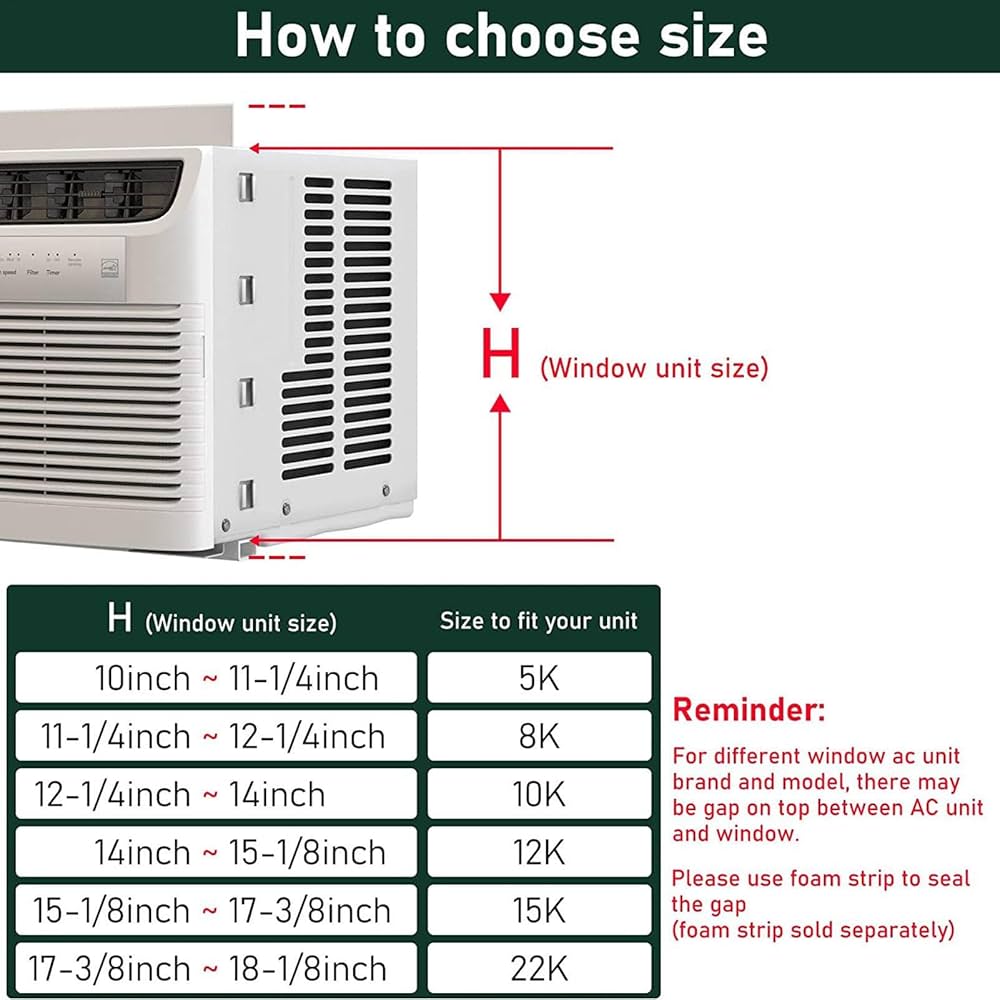
Measure your window’s width and height before buying the unit. The air conditioner should fit snugly.
Check the depth of the window frame too. Make sure the unit won’t stick out too much or fall.
- Measure window width from one side to the other.
- Measure window height from top to bottom.
- Check window sill depth for unit support.
- Allow a small gap for sealing and adjustments.
Sealing And Insulation
Seal gaps around the air conditioner to keep warm air out. This helps it cool better and saves energy.
Use weatherstripping or foam insulation strips to fill spaces. Cover with a plastic seal if needed.
- Check for gaps between the unit and window frame.
- Apply foam strips on sides and top of the unit.
- Use plastic seal or window insulation film for extra protection.
- Make sure seals are tight but do not block airflow.
Placement For Optimal Cooling
Place the air conditioner in a window that gets shade. Direct sun can reduce its cooling power.
Keep the unit away from heat sources and allow clear airflow inside the room.
- Choose a shaded window for installation.
- Ensure the unit vents are not blocked by curtains or furniture.
- Install the unit level or slightly tilted outside for drainage.
- Avoid placing near heat-producing appliances.

Credit: www.amazon.ca
Maintaining Your Window Ac
Keeping your window air conditioner in good shape helps it work well for years. Regular care lowers energy costs and stops breakdowns.
Simple maintenance tasks make your AC run smoothly and keep the air clean and cool in your home.
Regular Cleaning
Clean the outside and inside of your window AC often. Dirt and dust reduce its cooling power.
Use a soft cloth and mild soap to wipe the unit’s surface. Avoid water on electrical parts.
- Turn off and unplug the unit before cleaning
- Clean the vents and grills gently
- Remove dirt from the coils with a brush
Filter Replacement
The filter stops dust and allergens from entering your home. Change or clean it often.
A dirty filter makes the AC work harder and lowers air quality. Check the filter every month.
- Remove the filter carefully
- Wash reusable filters with warm water and dry fully
- Replace disposable filters as needed
Seasonal Maintenance
Before and after the cooling season, inspect your window AC. This helps avoid problems.
Store the unit properly when not in use to protect it from damage.
- Check for loose screws and tighten them
- Clean coils and drains to prevent clogs
- Cover the unit during winter to keep out dust
- Run the AC for a short time before summer starts

Credit: www.amazon.com
Frequently Asked Questions
How Do I Calculate The Right Size For My Window Ac?
Measure your room’s square footage by multiplying length and width. Then, match it with the AC’s BTU rating. This ensures efficient cooling without wasting energy or money.
What Btu Rating Suits A 200 Sq Ft Room?
A room of 200 square feet typically needs a 6,000 BTU air conditioner. This size cools effectively and maintains comfort without overloading the unit.
Can A Too Large Window Ac Cause Problems?
Yes, oversized units cool too fast without removing humidity. This results in a cold yet clammy room and higher electricity bills.
How Often Should I Check My Ac Size Suitability?
Check your AC size if you move to a new room or notice uneven cooling. Proper sizing ensures optimal performance and energy efficiency.
Conclusion
Sizing a window unit air conditioner is crucial for comfort. Pick the right size for your space. Too small, and it struggles. Too big, and it wastes energy. Measure your room carefully. Consider factors like sunlight, insulation, and room use.
Use BTU guidelines to match size to space. A well-sized unit cools efficiently and saves money. Keep your home comfortable with the right air conditioner choice. Remember, the right size makes a big difference. Stay cool and comfortable all summer long.