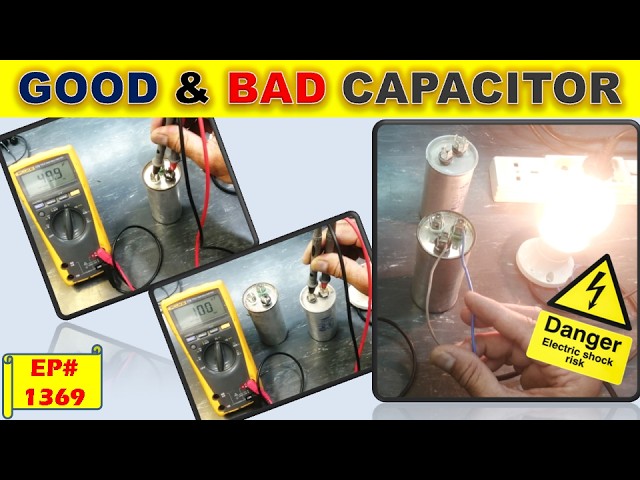
Is your air conditioner not cooling like it used to? The problem might be your capacitor.
Knowing how to test your air conditioner capacitor can save you time and money by helping you spot issues early. In this guide, you’ll learn simple, step-by-step methods to check if your capacitor is working properly. By the end, you’ll feel confident in diagnosing this common problem yourself—no need to wait for a technician.
Keep reading to take control of your AC’s performance today!

Credit: www.youtube.com
Signs Of A Bad Capacitor
The capacitor in an air conditioner helps start the motors. If it fails, the AC may not work right. Knowing the signs of a bad capacitor can save repair time and money.
Checking for these signs helps you decide if the capacitor needs testing or replacement.
Common Symptoms
A bad capacitor shows clear symptoms. These symptoms can cause your AC to stop working or run poorly.
- The AC won’t start or takes a long time to start
- Unit makes a humming noise but does not turn on
- Airflow is weak or less cool than usual
- The fan or compressor stops suddenly or runs slowly
- The capacitor looks swollen, cracked, or leaking
Impact On Ac Performance
A bad capacitor affects how well your AC cools your home. It can cause parts to work harder or stop working.
- Longer cooling cycles that raise energy bills
- Frequent shutting off and restarting of the system
- Compressor or fan motor damage from poor starts
- Reduced cooling capacity and uneven temperatures
- Complete AC failure if not repaired promptly
Tools Needed For Testing
Testing an air conditioner capacitor requires the right tools to check if it works well. Using proper tools helps find problems quickly and safely.
This guide covers the tools needed to test your AC capacitor. It focuses on equipment and safety gear for accurate and safe testing.
Essential Equipment
You need specific tools to test an air conditioner capacitor. These tools measure electrical values and help diagnose issues.
- Multimeter with capacitance testing feature
- Insulated screwdriver for discharging the capacitor
- Needle-nose pliers for handling small parts
- Replacement capacitor for testing if needed
- Flashlight to see inside the AC unit clearly
A multimeter is the most important tool. It measures the capacitor’s microfarads (µF) to see if it matches the label.
Safety Gear
Safety gear protects you from electric shock and other hazards. Always wear safety equipment when working on an AC unit.
- Insulated gloves to stop electric shock
- Safety goggles to protect your eyes
- Long-sleeve shirt and pants to cover your skin
- Rubber-soled shoes for good grounding
- Face mask if you are in a dusty or dirty area
Always turn off power and discharge the capacitor before testing. Use tools and gear to keep yourself safe while working.
Preparing For The Test
Testing an air conditioner capacitor requires careful preparation. Safety is the top priority before starting any work.
This guide covers the key steps to prepare for the test. You will learn how to shut down power and access the capacitor safely.
Power Shutdown
Turn off the main power supply to the air conditioner. This prevents electric shock during the test.
- Locate the circuit breaker panel.
- Find the breaker labeled for the air conditioner.
- Switch off the breaker to cut power.
- Use a voltage tester to confirm no power is running.
- Wear insulated gloves for extra safety.
Accessing The Capacitor
After power is off, remove the unit cover to reach the capacitor. It is usually inside the outdoor condenser unit.
| Tool | Purpose |
|---|---|
| Screwdriver | Remove screws from the unit cover |
| Flashlight | See clearly inside the unit |
| Multimeter | Test the capacitor’s electrical charge |
Carefully disconnect wires from the capacitor terminals before testing. Note wire positions for reassembly.
Testing With A Multimeter
Testing an air conditioner capacitor with a multimeter helps find faults quickly. It ensures the capacitor works well or needs replacing.
A multimeter measures electrical values like resistance and capacitance. This guide shows how to set up your multimeter and read the results.
Setting Up The Multimeter
Turn off power to the air conditioner before testing the capacitor. Remove the capacitor from the unit carefully.
Set your multimeter to the capacitance mode, often marked as “CAP” or with a symbol like “—|(—”. If your multimeter does not have this mode, use the resistance mode instead.
- Discharge the capacitor by touching its terminals with a screwdriver with an insulated handle.
- Connect the multimeter leads to the capacitor terminals. Polarity does not usually matter.
- Check the multimeter display for a reading.
Reading The Results
Look at the number shown on the multimeter screen. This number shows the capacitor’s capacitance in microfarads (µF).
Compare this reading to the capacitor’s rated value printed on its label. A good capacitor usually reads within 6% of this value.
- If the reading is much lower or zero, the capacitor is bad.
- If the multimeter shows “OL” or no change in resistance mode, the capacitor may be open or shorted.
- A steady rise in resistance means the capacitor is charging and likely good.
Using A Capacitor Tester
Testing an air conditioner capacitor helps find problems early. A capacitor tester gives quick and clear results.
This guide shows how to use a capacitor tester safely and correctly. You will learn how to connect it and read the results.
Connecting The Tester
Turn off the power to the air conditioner before testing the capacitor. This prevents electric shock.
Discharge the capacitor by touching its terminals with a screwdriver that has an insulated handle. Then, connect the tester leads to the capacitor terminals.
- Attach the red lead to the positive terminal
- Attach the black lead to the negative terminal
- Hold the leads firmly for a stable connection
Interpreting Readings
Turn on the capacitor tester. The display will show the capacitance value in microfarads (µF).
Compare the reading with the capacitor’s rated value printed on its case. A good capacitor reads close to its rating.
- A reading much lower than the rating means the capacitor is weak or bad
- A very high or infinite reading shows the capacitor may be shorted or damaged
- Zero or no reading indicates an open capacitor
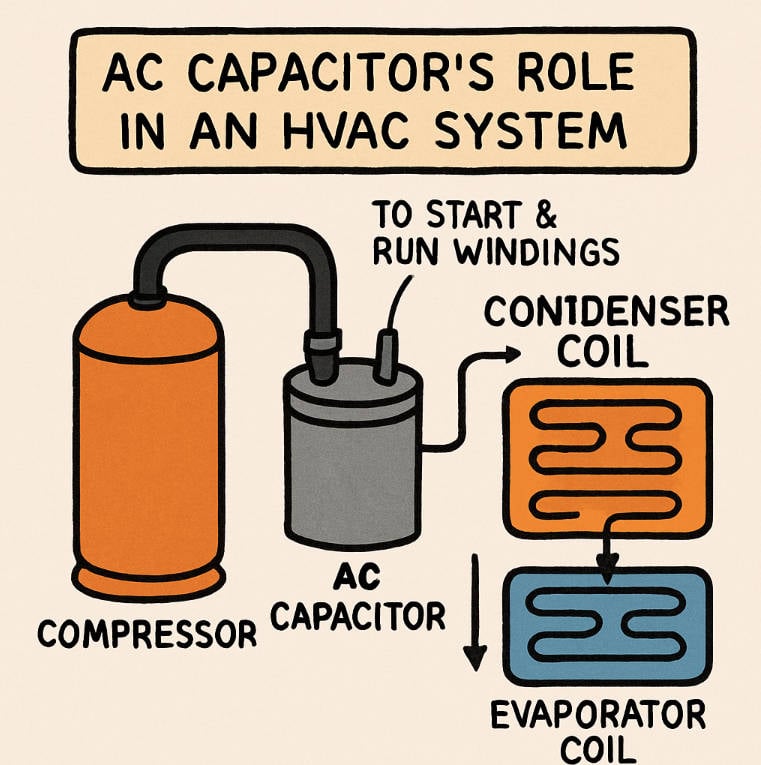
Credit: www.bettlink.com
Replacing A Faulty Capacitor
Air conditioner capacitors help start the motors. A faulty capacitor can stop the AC from working. Replacing it can fix many problems.
This guide shows how to pick the right capacitor and install it safely. Follow each step carefully to avoid damage.
Choosing The Right Replacement
Pick a capacitor that matches the old one’s specs exactly. Check the voltage and microfarad (µF) ratings. Using the wrong capacitor can cause more damage.
Look at the label on the old capacitor. It usually shows the voltage and µF numbers. Buy a new capacitor with the same numbers and type.
- Match the voltage rating (e.g., 370V or 440V)
- Match the microfarad rating (e.g., 35 µF, 5 µF)
- Choose the same physical size if possible
- Use a capacitor designed for air conditioners
Installation Steps
Turn off the power to the air conditioner before starting. This prevents electric shock and injury.
Remove the access panel to find the capacitor. Take a photo or note the wire connections. This helps with correct wiring later.
- Discharge the old capacitor using a screwdriver with an insulated handle
- Disconnect the wires from the old capacitor carefully
- Remove the mounting bracket or strap holding the capacitor
- Place the new capacitor in the same spot
- Connect the wires to the new capacitor as per the photo or notes
- Secure the capacitor with the bracket or strap
- Replace the access panel
- Turn the power back on and test the air conditioner
Preventive Maintenance Tips
Testing your air conditioner capacitor is important to keep your system working well. Regular checks help find problems early. This stops costly repairs and extends the life of your AC unit.
Knowing how to test the capacitor can save money. It also improves the AC’s performance and safety. Follow these simple tips to maintain your air conditioner properly.
Regular Inspections
Check your air conditioner’s capacitor regularly to spot signs of wear. Look for bulges, cracks, or leaks on the capacitor body. Listen for unusual noises when the AC starts. These signs can mean the capacitor is failing.
- Turn off power before inspection for safety.
- Remove the capacitor cover carefully.
- Use a multimeter to test the capacitor’s capacitance.
- Compare readings with the capacitor’s rated value.
- Replace the capacitor if readings are low or unstable.
Extending Capacitor Life
Extend your capacitor’s life by keeping your air conditioner clean and dry. Avoid moisture and dirt buildup around the capacitor. Use a protective cover if your unit is outside. Make sure the AC runs within the recommended voltage range.
| Tip | Reason |
| Keep area dry | Prevents corrosion and short circuits |
| Clean unit regularly | Reduces dirt that can damage parts |
| Check voltage supply | Protects capacitor from electrical stress |
| Replace old capacitors | Prevents sudden failure and system damage |

Credit: www.youtube.com
Frequently Asked Questions
What Are Signs Of A Bad Ac Capacitor?
A faulty AC capacitor can cause your unit to struggle when starting. It may also result in a humming sound or the unit not turning on. Inconsistent cooling and increased energy bills are other signs. Regular inspection can help identify these issues early.
How Often Should I Test My Ac Capacitor?
Testing your AC capacitor annually is ideal. This ensures it functions efficiently and prevents unexpected failures. Regular testing can also extend the lifespan of your air conditioner. Always consult a professional if you’re unsure how to perform the test correctly.
Can I Test An Ac Capacitor Myself?
Yes, you can test an AC capacitor yourself with a multimeter. First, ensure the power is off for safety. Then, discharge the capacitor before testing. Follow the multimeter instructions for accurate results. If unsure, consult a professional to avoid any risks.
What Tools Are Needed To Test An Ac Capacitor?
To test an AC capacitor, you’ll need a multimeter and insulated screwdriver. A multimeter measures the capacitor’s charge, ensuring it works correctly. An insulated screwdriver safely discharges any stored power. Always prioritize safety and consult a professional if needed.
Conclusion
Testing your air conditioner capacitor helps keep your AC running well. It prevents sudden breakdowns and saves repair costs. Always use the right tools and follow safety steps. Regular checks can extend your AC’s life. If you find problems, replace the capacitor quickly.
Simple tests can avoid big issues later. Stay comfortable by keeping your AC in good shape. Take small actions now for cool air tomorrow.