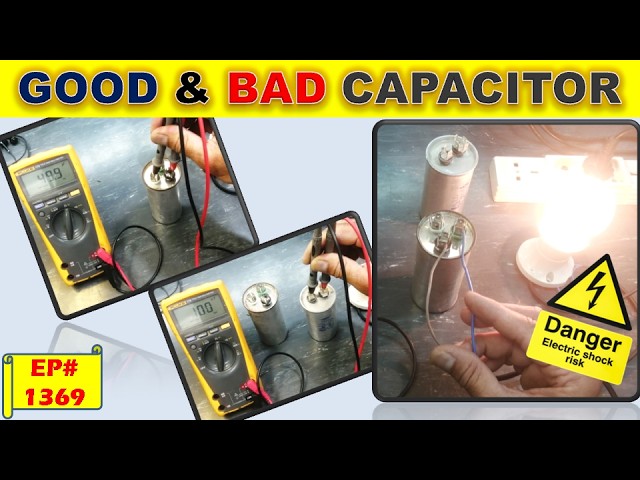
Is your air conditioner acting up and you suspect the capacitor might be the problem? Knowing how to test your air conditioner capacitor with a multimeter can save you time and money.
Instead of calling a technician right away, you can quickly check if the capacitor is working properly. This simple skill puts control back in your hands and helps you avoid unnecessary repairs. Keep reading, and you’ll learn step-by-step how to test your AC capacitor safely and accurately, even if you’ve never done it before.
Tools Needed
A digital multimeterwith a capacitance setting is best for testing capacitors. It must measure microfarads (µF) to check the capacitor’s value. Choose a multimeter with clear display and easy controls. This helps avoid mistakes during testing. A manual rangingmultimeter can work but takes more time.
Using insulated glovesprotects from electric shocks. Safety glasses shield your eyes from sparks or debris. Turn off and unplug the air conditioner before starting. Discharge the capacitor by touching its terminals with a screwdriver.
- Wear insulated gloves and safety glasses.
- Unplug the air conditioner before testing.
- Discharge the capacitor carefully.
- Use a multimeter with capacitance measurement.
- Check the multimeter’s battery and settings.

Credit: reversepcb.com
Locating The Capacitor
Start by turning off the power to the AC unit for safety. Remove the access panel carefully to see inside the unit. The capacitoris usually a small, cylindrical or oval-shaped part. It has wires connected to it and sits near the compressor or fan motor.
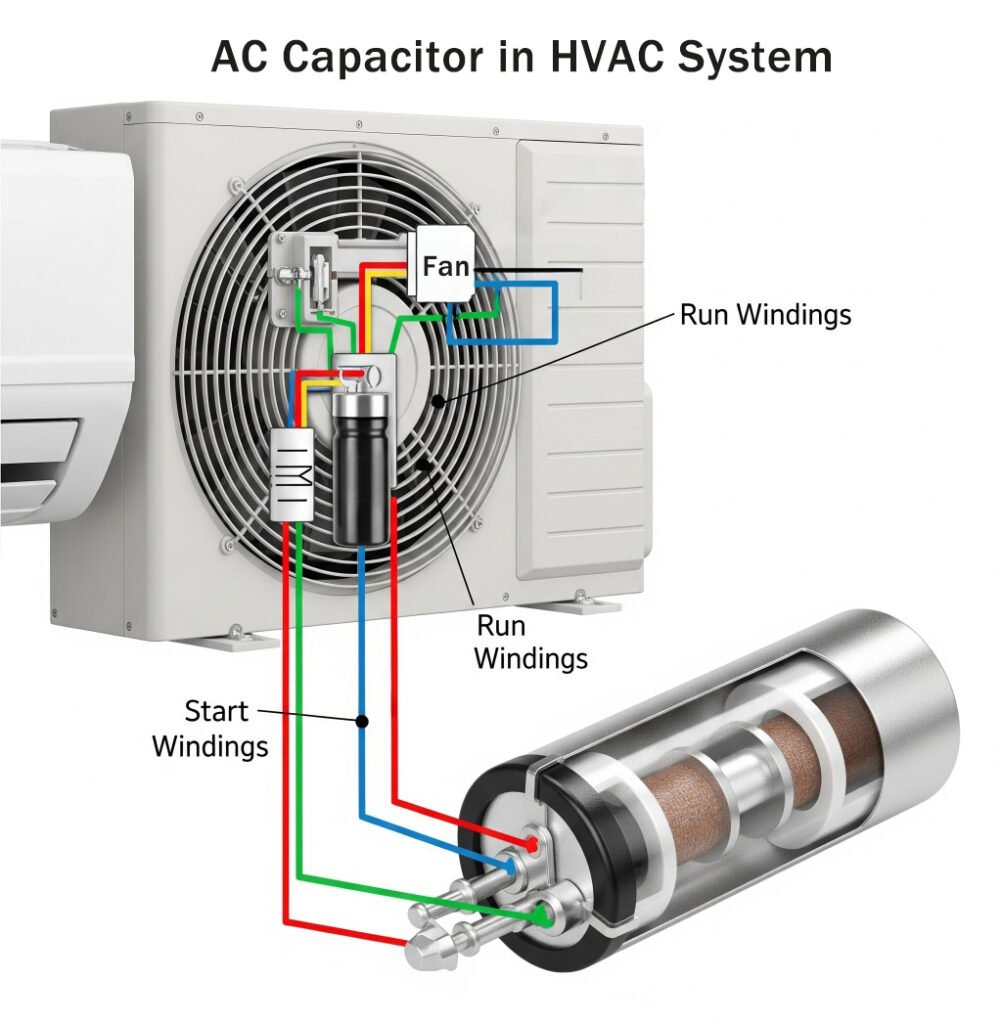
Capacitors come in different types, mainly startand runcapacitors. Start capacitors help the motor begin running. Run capacitors keep the motor running smoothly. Some units use a dual-run capacitorthat does both jobs.
| Capacitor Type | Purpose | Shape |
|---|---|---|
| Start Capacitor | Helps motor start | Usually round or oval |
| Run Capacitor | Keeps motor running | Often round or oval |
| Dual-Run Capacitor | Starts and runs motor | Oval with multiple terminals |
Preparing For Testing
Turn offthe air conditioner’s power at the breaker panel. This stops any electric shock risks.
Discharge the capacitorby touching its terminals with a screwdriver that has an insulated handle. This helps remove stored energy safely.
Set the multimeter to the capacitance testing modeor the highest resistance mode if capacitance is not available. Check the multimeter’s manual for exact settings.
- Connect the multimeter’s leads to the capacitor terminals.
- Make sure the leads touch firmly for an accurate reading.
- Watch the meter for a stable reading or a quick jump if in resistance mode.

Credit: www.youtube.com
Testing The Capacitor
Testing the capacitor starts with measuring its capacitance. Set the multimeter to the capacitance mode. Connect the multimeter leads to the capacitor terminals. The display shows the capacitance value. Compare this value with the capacitor’s rating. If it is far below, the capacitor may be faulty.
For checking continuity, switch the multimeter to the continuity setting. Touch the leads to the capacitor terminals. A beep sound means the capacitor has a short circuit. No beep indicates no short, which is good.
| Reading | Meaning |
|---|---|
| Capacitance close to rating | Capacitor is likely good |
| Capacitance much lower | Capacitor is weak or bad |
| Continuity beep | Capacitor is shorted and bad |
| No continuity beep | Capacitor is not shorted |
Interpreting Results
A normal capacitorshows a reading close to its rated capacitance. For example, a 35µF capacitor should read near 35 microfarads on the multimeter. A faulty capacitoroften shows a much lower or zero reading, indicating it lost its ability to hold charge.
| Capacitor Type | Expected Reading (µF) | Faulty Reading |
|---|---|---|
| Start Capacitor | 30 – 50 µF | Below 25 µF or no reading |
| Run Capacitor | 5 – 20 µF | Below 4 µF or no reading |
Replace the capacitor when the reading is far from the rated value. Also replace if the capacitor leaks, bulges, or makes noise. This keeps your air conditioner running well and avoids damage.
Credit: reversepcb.com
Tips For Accurate Testing
Testing an air conditioner capacitorneeds care to get correct results. Avoid touching the capacitor terminals with bare hands. This can cause inaccurate readings or electric shock.
Always discharge the capacitorbefore testing. Use a screwdriver with an insulated handle to short the terminals safely. This step is important to prevent damage to your multimeter and ensure safety.
Maintain your multimeter to keep it working well. Check the battery regularly and replace if low. Clean the probes to remove dirt or rust. This helps in getting clear and accurate measurements.
- Use the right setting on the multimeter (usually microfarads for capacitors).
- Connect the probes firmly to the capacitor terminals.
- Keep the multimeter steady while reading the value.
- Double-check readings for consistency.
Frequently Asked Questions
How Do I Test An Ac Capacitor With A Multimeter?
Set your multimeter to the capacitance mode. Disconnect the capacitor, discharge it safely, then connect the leads to the terminals. Compare the reading to the capacitor’s rated value. A significant difference indicates a faulty capacitor.
What Multimeter Setting Is Best For Capacitor Testing?
Use the capacitance (µF) setting for accurate capacitor testing. If your multimeter lacks this, use the ohms setting to check resistance. A good capacitor shows a brief rise in resistance and then infinite resistance.
How Do I Safely Discharge An Ac Capacitor Before Testing?
Turn off the power and unplug the unit. Use a screwdriver with an insulated handle to short the terminals. This safely discharges stored electricity and prevents shocks when testing the capacitor.
What Symptoms Indicate A Bad Air Conditioner Capacitor?
Common signs include the AC not starting, humming noises, or the compressor failing to run. These issues often point to a weak or dead capacitor needing testing or replacement.
Conclusion
Testing an air conditioner capacitor with a multimeter is simple. It helps find problems early and saves money. Always turn off power before starting the test. Use the multimeter to check the capacitor’s reading. Compare the reading with the capacitor’s rating.
A bad reading means the capacitor needs replacement. Regular checks keep your air conditioner running well. Taking these steps ensures cool air all summer. Don’t ignore strange noises or poor cooling. Testing capacitors can avoid bigger repairs later.