
Is your air conditioner not cooling like it used to? One common culprit might be a faulty capacitor.
Knowing how to test your air conditioner capacitor can save you time, money, and the hassle of calling a technician. In this guide, you’ll learn simple, clear steps to check if your capacitor is working properly. By the end, you’ll feel confident handling this task yourself—and keep your AC running smoothly all summer long.
Ready to find out if your capacitor needs a fix? Let’s dive in.

Credit: www.youtube.com
Signs Of A Bad Capacitor
Common symptomsof a bad air conditioner capacitor include the unit not starting or running poorly. The fan may stop spinning or run slower than usual. Strange noises like humming or buzzing can also appear. Sometimes the AC unit trips the circuit breaker repeatedly. Another sign is the AC blowing warm air instead of cold.
When to suspect capacitor issuesis if the AC unit shows these symptoms after a power surge or storm. The capacitor can wear out over time, especially in older units. If the AC starts but quickly shuts off, the capacitor could be weak. Testing or replacing the capacitor may solve the problem.
Credit: www.bettlink.com
Tools Needed For Testing
Testing an air conditioner capacitor needs some essential tools. A multimeteris key to check electrical values. Use a screwdriverto access the capacitor safely. A capacitor testercan give more exact readings.
Safety gearis very important. Wear insulated glovesto avoid shocks. Use safety gogglesto protect your eyes from sparks or debris. Make sure the power is off before starting any work.
Preparing For The Test
Ensure the air conditioner is turned offbefore starting any test. Unplug the unit or switch off the circuit breaker to avoid electric shock. Capacitors can hold a dangerous charge, so it is important to dischargethem properly using a screwdriver with an insulated handle or a resistor. This step prevents any accidental shocks during testing.
Locate the capacitor inside the unit. It is usually a cylindrical or oval-shapedcomponent with wires connected to terminals. Check the air conditioner’s manual if you are unsure where the capacitor is. It is often near the compressor or fan motor. Identifying the right capacitor is key before moving forward with testing.
Testing With A Multimeter
First, set your multimeter to the capacitance mode, often marked as “CAP”or with a capacitor symbol. Make sure the air conditioner capacitor is dischargedbefore testing to avoid damage or injury. Use the multimeter leads and connect them to the capacitor’s terminals. Polarity does not matter for most capacitors, but check your meter’s instructions.
The multimeter will show the capacitance value in microfarads (μF). Compare this reading to the capacitor’s rating, which is printed on its label. A value close to the rating means the capacitor is good. A reading much lower or showing zero means the capacitor may be faulty.
| Reading | Meaning |
|---|---|
| Close to rating (±6%) | Capacitor is good |
| Much lower than rating | Capacitor is weak or failing |
| Zero or no reading | Capacitor is dead or open |
| Infinite or very high | Capacitor is shorted |
Using A Dedicated Capacitor Tester
A dedicated capacitor tester helps measure the capacitance accurately. It shows if the air conditioner capacitor works well or needs replacing. Testing this part ensures the AC runs smoothly and avoids sudden breakdowns.
Setup And Connection
Turn off the power to the air conditioner before testing. Discharge the capacitor to avoid shocks. Connect the tester leads to the capacitor terminals. Match the tester’s positive lead to the capacitor’s positive terminal. Attach the negative lead to the negative terminal or ground.
Reading The Test Output
The tester shows the capacitor’s capacitance value in microfarads (µF). Compare this value to the capacitor’s rated capacitance. A good capacitor’s reading is usually within 6% of the rated value. A much lower or higher reading means the capacitor is faulty. Some testers beep or light up for a good capacitor. No beep or light suggests a bad capacitor.
Replacing A Faulty Capacitor
Choose a capacitor with the same voltage and microfarad ratingas the old one. Check the label on the old capacitor carefully. Using a different rating can damage the air conditioner.
Make sure the replacement capacitor is compatible with your AC model. Buying from a trusted supplierhelps ensure quality.
- Turn off power to the AC unit before starting work.
- Discharge the old capacitor by touching terminals with an insulated screwdriver.
- Note the wire positions or take a photo for reference.
- Remove wires carefully from the old capacitor.
- Remove the mounting bracket or screws holding the capacitor.
- Install the new capacitor in the same place.
- Connect wires to the matching terminals as before.
- Secure the capacitor with screws or bracket.
- Turn the power back on and test the AC.
Tips For Preventing Capacitor Failure
Regular checkshelp keep the air conditioner capacitor healthy. Cleaning dust and debris from the unit prevents overheating. Tightening loose connections reduces electrical problems. Replace worn-out parts on time to avoid bigger issues. A clean environment around the AC unit stops dirt from entering the system.
Heat and moistureaffect capacitor life. Place the unit in a shaded area to reduce heat damage. Avoid water exposure by checking drainage and covering the unit during rain. Keep plants and debris away to improve airflow. Good airflow cools the capacitor and prevents early failure.

Credit: www.youtube.com
Frequently Asked Questions
What Does An Ac Capacitor Do?
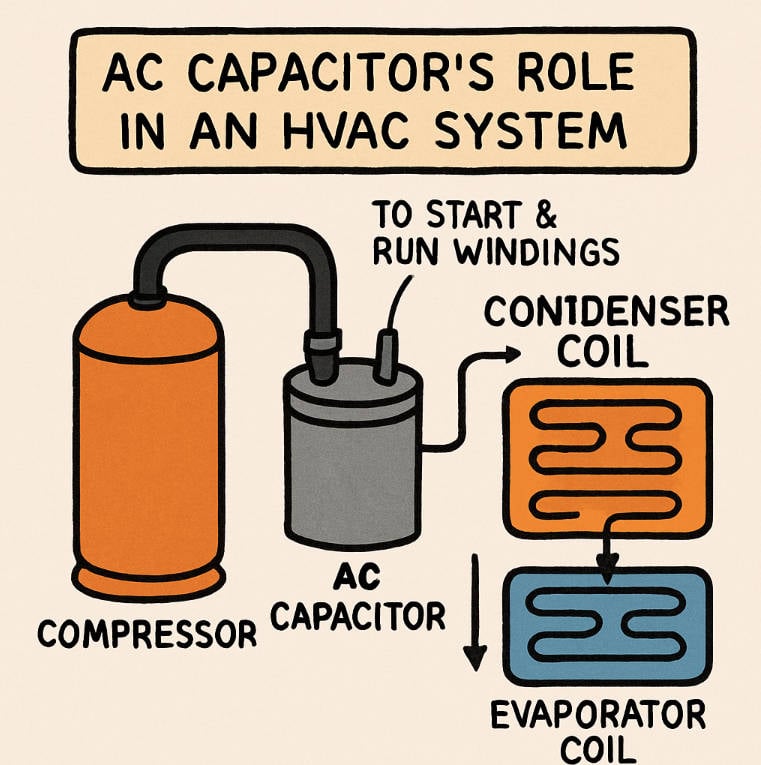
An AC capacitor stores and releases electrical energy, aiding in starting the motor. It helps regulate voltage and improves efficiency. If faulty, your AC may not start or function properly, affecting cooling performance.
How To Identify A Bad Ac Capacitor?
A bad AC capacitor may cause your AC to not start. Common signs include humming noises, warm air, or increased energy bills. Visually, a swollen or leaking capacitor is also an indication of failure.
Can I Test An Ac Capacitor With A Multimeter?
Yes, you can test an AC capacitor using a multimeter. Set the multimeter to capacitance mode. Disconnect the capacitor and discharge it safely. Then, connect the multimeter leads to the capacitor terminals to check its capacitance value.
What Tools Are Needed To Test A Capacitor?
To test a capacitor, you need a multimeter and insulated screwdrivers. Safety gear like gloves and goggles is also essential. These tools help ensure accurate testing and personal safety while handling electrical components.
Conclusion
Testing an air conditioner capacitor helps keep your unit running well. It takes just a few simple steps and basic tools. Regular checks can prevent bigger problems and save money. Always stay safe and turn off power before testing. Knowing how to test a capacitor gives you control.
It helps avoid unnecessary repairs and downtime. Small efforts today lead to cool, comfortable days ahead. Easy to do and worth the time. Try it yourself and see the difference.