If you want to catch more fish, knowing how to tie a bobber on your fishing line is a must. It’s a simple skill that can make a big difference in your fishing success.
Imagine feeling a tug on your line and seeing your bobber dip—your chance to reel in a catch. In this guide, you’ll learn an easy, step-by-step way to tie a bobber that won’t slip or fall off. Keep reading, and soon you’ll fish with more confidence and enjoy better results every time you cast your line.

Credit: www.youtube.com
Choosing The Right Bobber
Picking the right bobber makes fishing easier and more fun. It helps you see when a fish bites.
This guide explains types of bobbers, how to pick the right size, and what materials last long.
Types Of Bobbers
Bobbers come in many shapes and styles. Each type works best in different fishing spots.
- Round or Ball Bobbers: Easy to use and good for beginners.
- Slip Bobbers: Slide on the line and allow fish to take bait freely.
- Stick Bobbers: Thin and good for fast-moving water.
- Bubble Bobbers: Clear and float well on the water surface.
Selecting Bobber Size
Bobber size depends on the bait weight and fishing conditions. Bigger bobbers hold more weight.
| Bobber Size | Use For |
| Small (1/8 to 1/4 oz) | Light bait and calm water |
| Medium (1/2 oz) | Average bait and normal water |
| Large (3/4 oz and up) | Heavy bait and rough water |
Materials And Durability
Bobbers are made from plastic, foam, or wood. Each has benefits and lasts differently.
| Material | Durability | Best Use |
|---|---|---|
| Plastic | High | All types of water |
| Foam | Medium | Calm water, lightweight |
| Wood | Low | Traditional fishing, careful use |

Credit: www.youtube.com
Preparing Your Fishing Line
Before tying a bobber on your fishing line, you need to prepare the line properly. This will help your fishing setup work well and avoid problems.
Preparation includes choosing the right line, clearing tangles, and measuring the correct length of the line.
Line Types And Thickness
Fishing lines come in different materials and thicknesses. Each type has strengths for certain fishing needs.
- Monofilament lines are flexible and easy to handle.
- Fluorocarbon lines are less visible under water.
- Braid lines are strong and thin, good for heavy fish.
- Thickness affects how strong the line is and how far you can cast.
Clearing Line Tanglers
Tangles in your fishing line can cause knots and weak points. Clear them before tying your bobber.
Gently pull the line apart and use your fingers to smooth out loops. Avoid pulling too hard to stop breaks.
Measuring Line Length
| Reason | Recommended Length |
| Short casts | 10 to 15 feet |
| Medium distance | 20 to 30 feet |
| Long distance casts | 30 to 50 feet |
Choose the line length based on where you will fish. Too long or short lines can reduce your chances of catching fish.
Step-by-step Bobber Tying
Tying a bobber on a fishing line helps control bait depth. It keeps your bait in the right spot for better fishing.
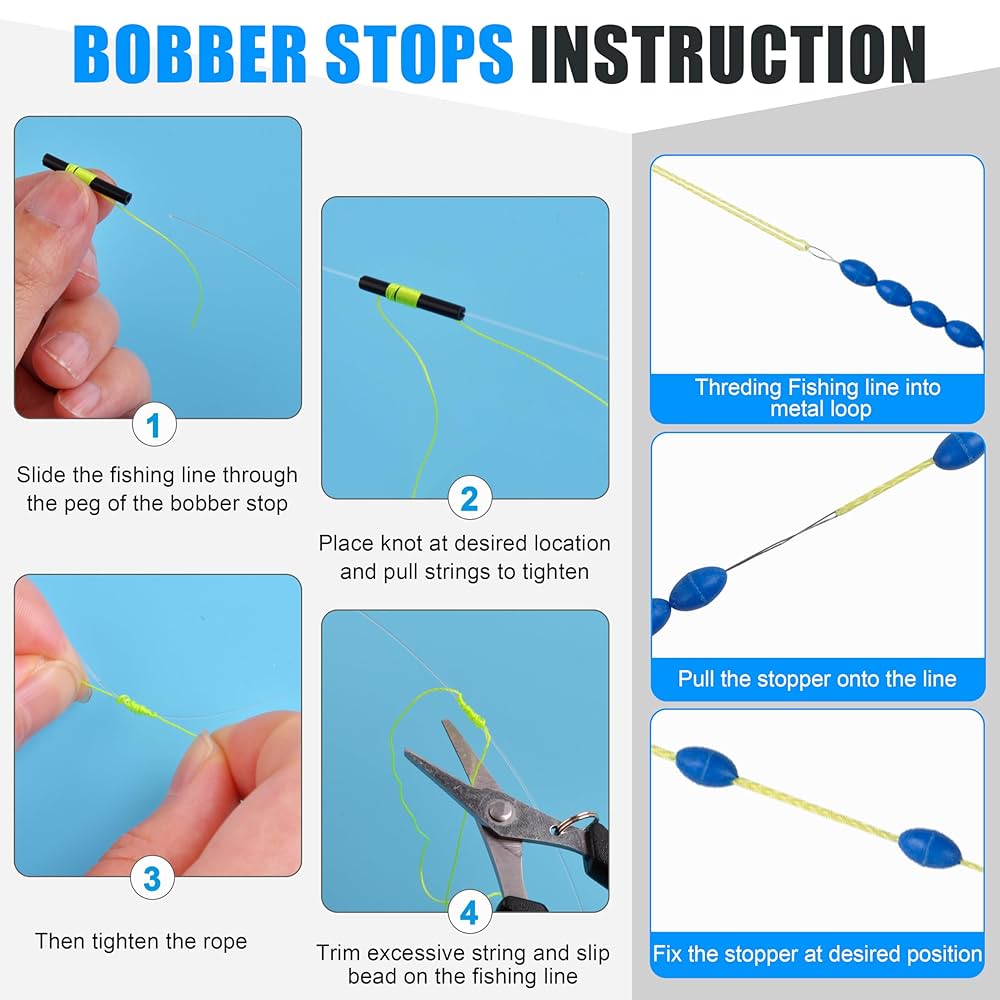
This guide shows how to attach the bobber clip, secure it with a knot, and adjust the position properly.
Attaching The Bobber Clip
Start by selecting the bobber clip that fits your fishing line. Open the clip and slide the line into it carefully.
- Hold the bobber clip in one hand.
- Open the clip gently to expose the slot.
- Insert the fishing line into the slot.
- Release the clip so it grips the line firmly.
Securing The Bobber With A Knot
Tie a knot to keep the bobber in place. A simple knot prevents slipping and keeps the bobber steady on the line.
| Knot Type | Steps |
|---|---|
| Overhand Knot | Make a loop, pass the tag end through, pull tight. |
| Uni Knot | Loop line around bobber, pass tag end through loop 3 times, pull tight. |
Adjusting Bobber Position
Move the bobber up or down to set the bait depth. Adjust it so your bait stays where fish usually swim.
- Slide the bobber clip up for deeper water.
- Slide it down for shallow water.
- Test by dropping the bait and watch how it floats.
- Lock the clip in place once the position is right.
Testing Your Setup
After tying a bobber on your fishing line, you must test your setup. Testing helps ensure your line works well in water. It also improves your chances of catching fish.
Testing shows if the bobber stays in place and moves smoothly. It also helps you adjust for different fish types. Let’s look at how to test these parts.
Checking Bobber Stability
Check if the bobber stays where you tied it. Hold your line and gently shake it. The bobber should not slide up or down easily.
If the bobber moves too much, tighten the knots. You want it to stay firm but not damage the line.
- Hold the line steady
- Shake gently to test bobber movement
- Tighten knots if bobber slips
- Avoid over-tightening to protect the line
Ensuring Smooth Movement
Your bobber should move smoothly when you pull the line. Try pulling the line slowly and watch the bobber.
The bobber must slide without sticking. If it gets stuck, check your knots and the line for twists.
- Pull the line slowly to observe bobber motion
- Look for sticking or rough movement
- Untwist or re-tie knots if needed
Adjusting For Different Fish Species
Different fish need different bobber setups. Adjust the bobber size and position based on fish type.
Smaller bobbers work for small fish. Bigger bobbers suit larger fish. Change the depth to match fish habits.
- Use small bobbers for small fish like panfish
- Choose larger bobbers for big fish like bass
- Set bobber depth where fish usually swim
- Test your setup again after adjusting
Tips For Perfect Casts
Tying a bobber on your fishing line is easy. Doing it right helps with better casts. Good casting makes fishing more fun and successful.
This guide shares tips on casting techniques, avoiding line twist, and keeping your bobber balanced. Follow these tips for smoother fishing.
Casting Techniques
Hold your rod firmly but relaxed. Use a smooth motion to swing the rod back and then forward. Avoid jerky movements to keep the line straight.
- Check your surroundings for space to cast safely.
- Pull the line tight before casting to prevent slack.
- Release the line at the right moment during the forward swing.
- Keep your wrist steady to control the line’s direction.
- Practice different casting distances by adjusting your force.
Avoiding Line Twist
Line twist causes tangles and weakens the line. It happens when the line spins during casting or retrieving.
Tips to prevent line twist:
- Use a swivel between the main line and the leader.
- Make sure your reel is spooled correctly with no loose coils.
- Keep the line tight while reeling in to reduce spinning.
- Check your lure or bobber for uneven weight that spins the line.
Maintaining Bobber Balance
A balanced bobber improves float stability and casting accuracy. Place it properly on the line to avoid tipping or sinking.
| Bobber Position | Effect |
| Too close to hook | Bobber tips forward or sinks |
| Too far from hook | Bobber drifts and casts poorly |
| Just right (6–12 inches above hook) | Bobber floats steady and casts well |

Credit: www.msn.com
Frequently Asked Questions
What Is A Fishing Bobber?
A fishing bobber is a floating device attached to your fishing line. It helps indicate bites by moving or bobbing on the water. Bobbers also keep your bait at the desired depth, attracting fish. They’re essential for beginners and experienced anglers, making fishing more efficient and enjoyable.
How Do You Attach A Bobber To A Line?
To attach a bobber, thread your line through the bobber’s top and bottom loops. Slide the bobber to the desired depth, then secure it. Ensure it’s tight enough to stay in place. This setup allows the bobber to float and signal fish bites effectively.
Why Use A Bobber When Fishing?
Using a bobber keeps your bait at the right depth, attracting more fish. It also provides visual bite detection, making it easier to know when a fish strikes. Bobbers are especially helpful for beginners, allowing them to focus on learning other fishing techniques.
Which Fishing Line Is Best For Bobbers?
Monofilament fishing line is ideal for bobbers due to its buoyancy and stretch. It helps keep the bobber floating effectively. Its visibility aids in monitoring the bobber’s movement. Monofilament line is versatile, making it a popular choice for various fishing conditions and techniques.
Conclusion
Tying a bobber on your fishing line is simple and quick. Follow the steps carefully for a secure knot. A well-tied bobber helps you catch more fish. Practice a few times to build your skill. Soon, you will feel confident and ready to fish.
Enjoy the calm and fun of fishing outdoors. Keep your gear ready and try different spots. Fishing becomes more enjoyable with the right setup. Keep learning and have patience with each cast. Happy fishing!