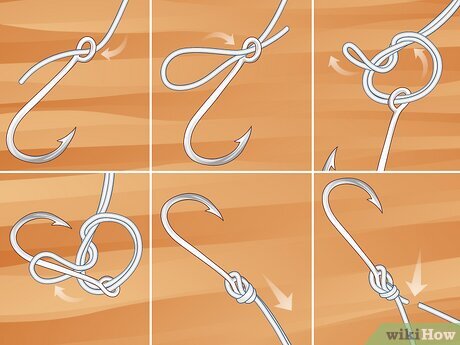
Tying a fishing hook onto your line might seem simple, but doing it the right way can make all the difference between a great catch and a lost opportunity. If you’ve ever struggled with knots that slip or break, you’re not alone.
The good news is, once you master this skill, your fishing will become more effective and enjoyable. You’ll learn easy, reliable methods to tie your fishing hook securely every time. Keep reading, and you’ll be ready to fish with confidence on your next trip.

Credit: www.ohero.com
Choosing The Right Hook And Line
Choosing the right fishing hook and line is important for a successful catch. The right combination helps you handle different types of fish and fishing conditions.
This guide explains types of fishing hooks, how to select the proper line, and how to match hook and line strength.
Types Of Fishing Hooks
Fishing hooks come in many shapes and sizes. Each type works better for certain fish and bait. Here are some common types:
- J-hooks: Classic shape, good for many fish
- Circle hooks: Reduce fish injury, best for catch and release
- Treble hooks: Three points, often used with lures
- Siwash hooks: Long shank, good for attaching to lures
- Octopus hooks: Short shank, strong and sharp for live bait
Selecting The Suitable Fishing Line
Fishing lines vary in material, strength, and thickness. The right line depends on the fish size and water conditions. Here are popular types:
- Monofilament: Flexible and easy to handle, good for beginners
- Fluorocarbon: Less visible underwater, good for clear water
- Braid: Very strong and thin, ideal for heavy cover
Matching Hook And Line Strength
Matching hook and line strength is key. Use a hook that fits the line’s breaking strength. This balance prevents losing fish or breaking tackle.
| Fish Size | Hook Size | Line Strength (lbs) |
|---|---|---|
| Small Fish | 8 to 12 | 2 to 6 |
| Medium Fish | 4 to 8 | 6 to 12 |
| Large Fish | 1 to 4 | 12 to 30 |
| Very Large Fish | 1/0 to 5/0 | 30+ |
Preparing Your Line And Hook
Before tying a fishing hook, get your line and hook ready. This makes the knot stronger and easier to tie.
Proper preparation helps prevent line slippage and hook loss while fishing.
Trimming The Line End
Cut the line end cleanly to remove any frayed or damaged fibers. Use sharp scissors or a line clipper for a smooth cut.
- Measure enough line length beyond the hook eye to tie your knot.
- Cut the end at a sharp angle for easier threading through the hook eye.
- Remove any damaged or fuzzy line ends to avoid weak knots.
Moistening The Line For Knots
Wet the line before tightening the knot. This reduces heat and friction that can weaken the line.
| Why Moistening Helps | Effect on Knot |
| Reduces friction | Keeps line strong |
| Prevents overheating | Stops line from melting |
| Allows smooth tightening | Creates a tighter knot |
Popular Knots For Fishing Hooks
Tying a fishing hook to your line is very important. The right knot keeps your hook secure and strong.
There are many knots you can use. Some knots work better for certain fishing lines and hooks.
Improved Clinch Knot
The Improved Clinch Knot is easy and popular. It works well with most fishing lines.
To tie it, pass the line through the hook eye and wrap it around five to seven times. Then, thread the line through the loop near the eye and pull tight.
- Pass line through hook eye
- Wrap line 5–7 times around the standing line
- Thread line through the small loop near the eye
- Pull line tight to secure knot
Palomar Knot
The Palomar Knot is strong and simple. It works well with braided and monofilament lines.
Fold the line in half and pass the loop through the hook eye. Tie a loose overhand knot and pass the hook through the loop. Pull the knot tight.
- Fold line in half
- Pass loop through hook eye
- Tie an overhand knot loosely
- Pass hook through the loop
- Pull knot tight
Uni Knot
The Uni Knot is versatile and easy to tie. It works well with many types of fishing lines.
Pass the line through the hook eye and make a loop. Wrap the tag end around the standing line and through the loop five times. Pull tight to finish the knot.
- Pass line through hook eye
- Make a loop with the tag end
- Wrap tag end 5 times around standing line
- Pass tag end through the loop
- Pull tight to secure knot
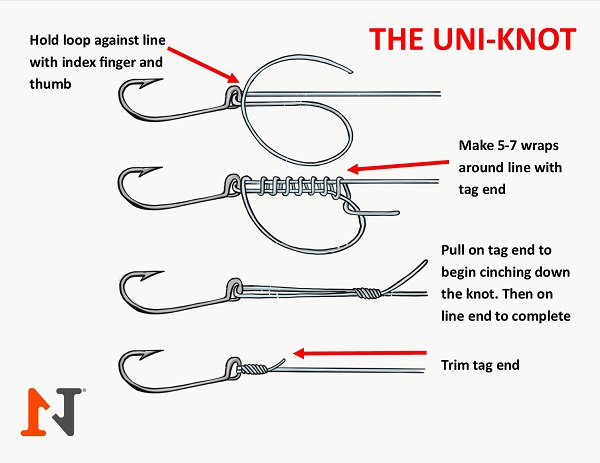
Credit: n1outdoors.com
Step-by-step Knot Tying Instructions
Tying a fishing hook on your line is an important skill for every angler. A strong knot keeps your hook secure and helps catch fish.
Here are three common knots with clear steps. Follow these instructions to tie each knot safely and quickly.
Tying The Improved Clinch Knot
The Improved Clinch Knot is popular for tying hooks. It is strong and easy to learn.
Start by threading the line through the hook eye. Wrap the tag end around the main line five to seven times.
- Thread the line through the hook eye.
- Wrap the tag end around the main line 5-7 times.
- Pass the tag end through the small loop near the hook eye.
- Then pass it back through the big loop you just made.
- Moisten the knot with water or saliva.
- Pull the main line and tag end to tighten the knot.
- Trim the extra tag end close to the knot.
Tying The Palomar Knot
The Palomar Knot is strong and simple. It works well with braided and monofilament lines.
Double about 6 inches of line and pass it through the hook eye. Tie a loose overhand knot with the doubled line.
- Double 6 inches of line and pass it through the hook eye.
- Tie a loose overhand knot with the doubled line.
- Pass the hook through the loop created by the knot.
- Moisten the knot to reduce friction.
- Pull both the tag end and main line to tighten the knot.
- Cut the tag end close to the knot.
Tying The Uni Knot
The Uni Knot is versatile and easy. It works for hooks, lures, and swivels.
Pass the line through the hook eye and double it back. Make a loop next to the eye with the doubled line.
- Pass the line through the hook eye and double it back.
- Create a loop beside the hook eye with the doubled line.
- Wrap the tag end around both lines 5-6 times.
- Pass the tag end through the loop.
- Moisten the knot before tightening.
- Pull the tag end and main line to snug the knot.
- Trim the excess tag end.
Tips For Stronger And Reliable Knots
Tying a fishing hook securely is important for a good catch. A strong knot keeps your hook tight and prevents it from slipping.
Follow these tips to make your knots stronger and more reliable. This helps you fish with confidence.
Ensuring Proper Tightening
Tighten the knot slowly and evenly. Pull the line firmly to remove all slack before finishing the knot.
Wet the line slightly with water or saliva before tightening. This reduces friction and protects the line from damage.
- Pull the knot in a smooth motion
- Make sure the knot sits close to the hook eye
- Do not overtighten and break the line
- Keep the line wet while tightening
Checking Knot Strength
Test your knot strength by pulling hard on the line after tying. If the knot slips or loosens, retie it.
Regularly inspect your knots during fishing. Replace or tighten knots that look worn or weak.
- Pull the line firmly to test the knot
- Look for any slippage or looseness
- Retie knots if you see damage or wear
- Check knots after catching a fish
Avoiding Common Knot Mistakes
Do not leave extra slack in the knot. Loose knots can slip and cause lost fish.
Avoid twisting the line or overlapping strands. This weakens the knot and makes it less reliable.
- Keep the line tight and neat while tying
- Do not twist or cross the line unnecessarily
- Trim excess tag ends but leave a small tail
- Choose the right knot for your fishing line type

Credit: www.youtube.com
Maintaining Your Fishing Gear
Taking care of your fishing gear helps you catch fish more easily. Regular checks keep your equipment safe and ready to use.
Simple maintenance can stop problems before they happen. It also saves money by making your gear last longer.
Inspecting Lines And Hooks Regularly
Check your fishing line for cuts, frays, or weak spots. Look closely at hooks for rust or bending. These problems can cause lost fish.
- Run your fingers along the line to find rough spots.
- Look for rust or corrosion on hooks.
- Make sure hooks are sharp and straight.
- Check knots to ensure they are tight and secure.
Replacing Worn-out Components
Replace damaged lines and hooks quickly. Using worn parts can lead to gear failure and lost catches. Keep extras in your tackle box.
| Component | Signs to Replace | Replacement Tips |
| Fishing Line | Frays, cuts, discoloration | Use line that matches strength and type |
| Hooks | Rust, dull points, bent shape | Choose hooks sized for your bait and fish |
Frequently Asked Questions
How Do You Tie A Fishing Hook On A Line?
To tie a fishing hook, thread the line through the hook eye. Make a loop, wrap the line around 5-7 times, then pass the tag end through the loop. Pull tight and trim the excess line for a secure knot.
What Is The Strongest Knot For Fishing Hooks?
The Palomar knot is one of the strongest for fishing hooks. It maintains line strength and is easy to tie. This knot is reliable for various fishing lines and hooks, ensuring the hook stays firmly attached during a catch.
How Can I Prevent My Fishing Hook From Slipping?
To prevent slipping, use a proper knot like the improved clinch or Palomar knot. Ensure you wet the line before tightening to reduce friction. Pull the knot tight firmly and trim the excess line close to the knot.
Why Is Tying A Fishing Hook Correctly Important?
Tying a fishing hook correctly ensures the hook stays secure during fishing. It prevents losing fish and increases catch success. A strong knot also protects the line from breaking under tension.
Conclusion
Tying a fishing hook is a valuable skill. It enhances your fishing experience. Practice makes the process easier and faster. Use the right knot for a strong hold. Keep your line straight for best results. Wetting the knot helps it tighten properly.
A secure knot means more successful fishing trips. Always check your knot before casting. Enjoy the calmness of fishing with confidence. With practice, you’ll tie hooks effortlessly. Happy fishing, and may you catch many fish!