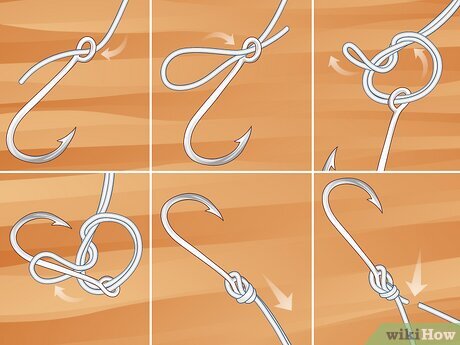
Have you ever struggled with tying a fishing hook to your line, only to have it come loose at the worst moment? Knowing how to tie a strong, reliable knot can make all the difference between landing a big catch and losing it.
In this guide, you’ll learn simple, step-by-step techniques that anyone can master. Whether you’re new to fishing or just want to improve your skills, these easy tips will help you secure your hook quickly and confidently every time. Keep reading to discover the secrets to a perfect knot that keeps your fishing line strong and your catch within reach.

Credit: www.ohero.com
Choosing The Right Hook And Line
Using the correct fishing hook and line is key to a good catch. The right match helps you catch fish without breaking your gear.
This guide covers types of hooks, how to pick the right fishing line, and matching their strength.
Types Of Fishing Hooks
Fishing hooks come in many shapes and sizes. Each type suits different fish and fishing styles.
- J-Hooks:Classic shape, good for general fishing.
- Circle Hooks:Designed to hook fish in the corner of the mouth.
- Treble Hooks:Three points, used for lures and big fish.
- Siwash Hooks:Long shank, great for replacing treble hooks on lures.
- Octopus Hooks:Short shank and wide gap, good for live bait.
Selecting The Proper Fishing Line
Fishing lines differ by material and strength. Choose one based on the fish size and water type.
| Line Type | Strength | Best For |
| Monofilament | Light to medium | All-around use, good stretch |
| Fluorocarbon | Medium to heavy | Clear water, less visible |
| Braid | Heavy | Strong, no stretch, deep water |
Matching Hook And Line Strength
Match your hook size to the line’s strength. A weak line breaks; a too-strong line scares fish.
- Small hooks work with light lines for small fish.
- Medium hooks pair with medium lines for common species.
- Large hooks need heavy lines for big fish.
- Check the line’s pound test to match the fish size.
- Balance strength for smooth casting and strong holds.
Essential Tools And Materials
Tying a fishing hook to a line requires some basic tools and materials. Using the right equipment makes the process easier and more secure.
Here are the essential items you need before you start tying your hook to the fishing line.
Fishing Line Clippers
Fishing line clippers are small tools used to cut fishing lines cleanly. They help you trim excess line after tying knots. Good clippers make sure the line does not fray or weaken.
- Look for sharp, rust-resistant blades.
- Choose clippers with a comfortable grip.
- Keep them handy to make quick cuts.
Hook Eye Inspection
Check the hook eye carefully before tying. The eye is the small loop where the fishing line passes through. It must be smooth and free of rust or damage. A rough eye can cut or weaken your line.
| Inspection Point | What to Check |
| Eye Shape | Round and fully closed |
| Surface | Smooth with no sharp edges |
| Rust | None or minimal to avoid line damage |
| Size | Fits your fishing line thickness |
Optional Knot-tying Tools
Some anglers use extra tools to help tie knots better. These tools can make the task easier, especially for beginners or when working with small hooks.
- Knot tying pliers: Hold the line and hook securely while you tie.
- Knot tying threader: Helps thread the line through small hook eyes.
- Magnifying glass: Shows details clearly for precise work.
- Knot tying jig: Holds the hook and line steady to create consistent knots.
Common Fishing Knots
Tying a fishing hook to a line is easy once you know the right knots. Good knots hold tight and do not slip.
Here are three popular knots used by anglers for strong and reliable connections.
Improved Clinch Knot
The Improved Clinch Knot is simple and great for many fishing lines. It works well with monofilament and fluorocarbon lines.
- Thread the line through the hook eye.
- Wrap the tag end around the standing line 5 to 7 times.
- Pass the tag end through the small loop near the eye.
- Then pass it back through the big loop you just made.
- Wet the knot and pull it tight.
Palomar Knot
The Palomar Knot is strong and easy to tie. It works well with braided lines and keeps the hook in line.
| Step | Action |
| 1 | Double about 6 inches of line and pass through the hook eye. |
| 2 | Tie a loose overhand knot with the doubled line. |
| 3 | Pass the hook through the loop of the overhand knot. |
| 4 | Pull on both the tag end and standing line to tighten. |
| 5 | Trim the excess tag end. |
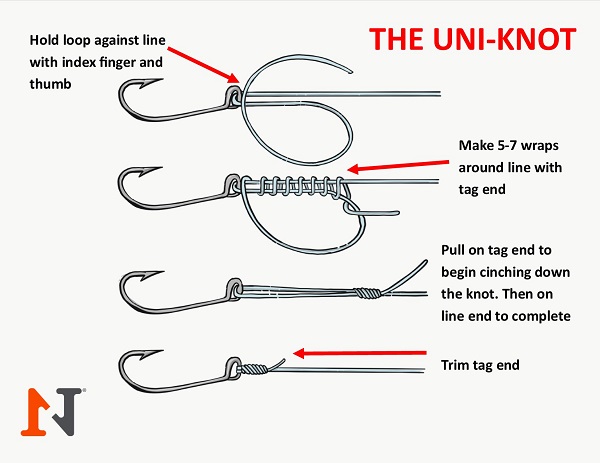
Uni Knot
The Uni Knot is versatile and works for many situations. It is good for tying hooks, lures, and swivels.
Follow these steps to tie the Uni Knot:
- Pass the line through the hook eye and double back parallel to the standing line.
- Make a loop by laying the tag end over the doubled line.
- Wrap the tag end around the doubled line and through the loop 5 times.
- Moisten the knot and pull the tag end to tighten the coils.
- Slide the knot down to the hook eye and pull the standing line to secure.
Step-by-step Knot Tying
Tying a fishing hook to a line is an important skill for fishing. A strong knot keeps the hook secure and helps catch fish.
This guide shows simple steps to tie a basic fishing knot. Follow each part carefully for best results.
Preparing The Line
Start by cutting a clean piece of fishing line. Make sure the line end is straight and free of frays.
Hold the line firmly in your hand. This makes it easier to thread through the hook eye.
Threading The Hook Eye
Take the end of the line and pass it through the hook eye from front to back. Pull about 6 inches of line through.
Hold the hook and line steady to avoid slipping while making the knot loops.
Making The Knot Loops
Wrap the loose end of the line around the main line 5 to 7 times. Keep the loops neat and close together.
- Hold the hook steady
- Make tight loops around the main line
- Count the loops carefully
Tightening And Securing The Knot
Wet the knot with water or saliva. This helps reduce friction and protects the line.
Pull the loose end and main line slowly to tighten the knot. Make sure the coils tighten evenly around the hook eye.
- Keep tension on the main line
- Pull the tag end firmly
- Trim the extra line close to the knot
Tips For Strong And Reliable Knots
Tying a fishing hook to a line securely is key to catching fish. A strong knot holds under pressure and keeps your hook in place.
Use simple steps to make your knots tight and lasting. Small details can make a big difference in knot strength.
Moistening The Line
Before tightening the knot, wet the fishing line with water or saliva. This reduces friction and prevents the line from weakening.
- Dip your fingers in water and rub on the knot
- Use saliva if water is not available
- Make sure the entire knot is moist before pulling tight
Checking Knot Tightness
After tying the knot, pull on the line and hook to test strength. The knot should not slip or loosen under firm pressure.
| Test Action | Expected Result |
| Pull line gently | Knot stays firm |
| Pull line hard | No slipping or loosening |
| Check hook movement | Hook does not slide along line |
Trimming Excess Line
Cut off the extra line close to the knot. Leaving too much line can cause tangles or catch on weeds.
Follow these tips when trimming:
- Use sharp scissors or clippers
- Leave about 2-3 mm of tag end
- Check the trimmed end is smooth and not sharp
Credit: n1outdoors.com
Common Knot Mistakes To Avoid
Tying a fishing hook to a line seems simple but can be tricky. Small errors weaken your knot and cause lost fish.
Here are common mistakes to avoid to keep your knot strong and reliable.
Skipping Steps
Many anglers rush and miss important steps when tying knots. Skipping steps can make the knot loose or slip.
- Not moistening the line before tightening
- Failing to pull the knot tight in stages
- Ignoring the proper number of twists or wraps
- Cutting the tag end too close or too far
Using Incorrect Knot For Line Type
Different lines need different knots. Using the wrong knot can reduce strength or cause slipping.
| Line Type | Recommended Knot |
| Monofilament | Improved Clinch Knot |
| Fluorocarbon | Palomar Knot |
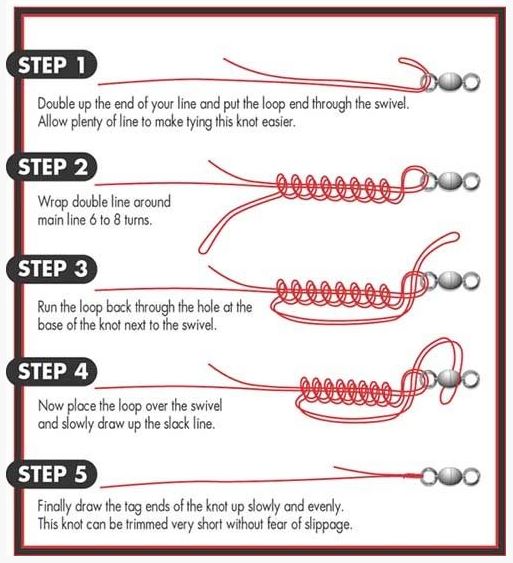
| Braid | Double Uni Knot |
| Wire Leader | Snell Knot |
Ignoring Knot Wear
Knots weaken over time and use. Ignoring wear can lead to line breakage and lost fish.
- Check knots regularly for fraying or damage
- Retie knots after catching large fish
- Replace knots if line feels weak or stiff
- Avoid reusing knots multiple times
Testing Your Knot Before Fishing
After tying a fishing hook to your line, it is important to test the knot. Testing helps ensure the knot is strong and will not fail while fishing.
A weak knot can cause lost fish or damaged gear. Taking a moment to check your knot saves time and frustration later.
Pull Test Techniques
Pull tests check if the knot holds tight under pressure. Use steady force to pull the line away from the hook.
Pull slowly and firmly. If the knot slips or loosens, it needs to be retied.
- Hold the hook in one hand.
- Pull the line with the other hand.
- Apply steady pressure, not sudden jerks.
- Watch for any movement at the knot.
Inspecting For Slippage
Look closely at the knot after the pull test. Slippage means the knot is moving or loosening.
Check if the loops or wraps have shifted from their original position. Any change can weaken the knot.
- Use good lighting to see the knot clearly.
- Look for gaps between the line and knot.
- Check if the tag end moves easily.
- Replace the knot if you see any slippage.
When To Retie
Retie the knot if it shows signs of weakness or damage. Do this before you start fishing.
Retie if the knot feels loose, slips during the pull test, or if the line is frayed near the knot.
- The knot slips under pressure.
- The line is cut or worn near the knot.
- The knot looks loose or uneven.
- You are unsure about the knot’s strength.
Credit: www.beadinggem.com
Frequently Asked Questions
How Do You Tie A Fishing Hook Securely?
To tie a fishing hook securely, use the improved clinch knot. Thread the line through the hook eye. Wrap the line around itself five times. Pass the end back through the first loop. Tighten by pulling the line. Trim the excess line for a neat finish.
What Is The Strongest Knot For Fishing Hooks?
The Palomar knot is considered the strongest for fishing hooks. It is simple and efficient. Pass the line through the hook eye. Make a loop, tie an overhand knot, and pass the hook through the loop. Tighten it carefully for a strong, reliable knot.
Can Beginners Easily Tie A Fishing Hook?
Yes, beginners can easily tie a fishing hook. Start with the improved clinch knot. It is simple and effective. Follow step-by-step instructions carefully. Practice tying regularly to gain confidence. With time, you will improve your knot-tying skills.
Why Does My Fishing Knot Keep Slipping?
A fishing knot may slip due to improper tying. Ensure the knot is tightened correctly. Use the right type of knot for your line. Wet the knot before tightening to reduce friction. Practice makes perfect, so keep practicing for better results.
Conclusion
Tying a fishing hook to a line is simple with practice. Choose the right knot and pull it tight. Check your knot before casting every time. Strong knots help keep fish on the line. Take your time and try different methods.
Soon, you will feel confident tying hooks easily. Keep practicing, and enjoy your fishing trips more. Small steps lead to better fishing skills. Stay patient, and have fun on the water!