Tying a fishing line to a hook might seem simple, but doing it the right way makes all the difference. If your knot slips or weakens, you could lose the big catch you’ve been waiting for.
You want a strong, reliable connection that holds up every time. In this guide, you’ll discover easy steps to tie your fishing line to a hook like a pro. Stick with me, and you’ll boost your confidence and improve your chances of landing more fish on every trip.
Ready to master this essential skill? Let’s get started!
Credit: www.beadinggem.com
Choosing The Right Hook And Line
Choosing the right hook and fishing line is important for a good catch. The hook and line must work well together.
This guide helps you pick hooks and lines that match each other and your fishing needs.
Types Of Fishing Hooks
Fishing hooks come in many shapes and sizes. Each type is for different fish and fishing styles.
- J-hooks: Common and good for many fish
- Circle hooks: Reduce fish injury and easy to release
- Treble hooks: Have three points, used for lures
- Siwash hooks: Single hooks, often used on spoons
- Bait hooks: Designed to hold live or dead bait
Selecting Suitable Fishing Line
Fishing lines come in different materials and strengths. Choose one that fits your fish and hook type.
Common line types include monofilament, fluorocarbon, and braided lines. Each has unique features.
- Monofilament: Stretchy and easy to handle
- Fluorocarbon: Nearly invisible underwater
- Braided: Very strong and thin
Matching Line Strength To Hook Size
Match your line strength to the hook size for best results. Too weak or too strong lines cause problems.
| Hook Size | Recommended Line Strength (lbs) |
|---|---|
| Small (12-16) | 2-6 |
| Medium (6-10) | 6-12 |
| Large (1-5) | 12-20+ |
Preparing The Line And Hook
Tying a fishing line to a hook starts with good preparation. Getting the line and hook ready makes the knot strong.
This guide covers two key steps: trimming the line end and moistening the line. Both improve your fishing setup.
Trimming The Line End
Trim the line end to avoid frays. A clean end helps tie a neat and secure knot.
- Use sharp scissors or nail clippers.
- Cut about half an inch from the end.
- Make a straight cut across the line.
- Check for any frayed fibers and trim again if needed.
Moistening The Line
Moistening the line before tying reduces friction. This prevents the line from weakening or breaking.
| Moistening Method | Purpose |
| Use water | Lubricates the line |
| Use saliva | Quick and easy moisture |
| Apply a drop of oil | Reduces friction further |
Popular Knot Techniques
Tying a fishing line to a hook is key for a strong catch. Good knots keep your hook secure and line steady.
This guide covers three popular knots: Improved Clinch, Palomar, and Uni. Each works well for different fishing needs.
Improved Clinch Knot
The Improved Clinch Knot is simple and strong. It works well with most fishing lines and hooks.
- Thread the line through the hook eye.
- Wrap the tag end around the main line five to seven times.
- Pass the tag end through the small loop near the eye.
- Then pass it through the big loop just made.
- Pull tight and trim the excess line.
Palomar Knot
The Palomar Knot is very strong and easy to tie. It is great for braided and monofilament lines.
- Double about six inches of line and pass through the hook eye.
- Tie a loose overhand knot with the doubled line.
- Pass the hook through the loop of the knot.
- Pull the line to tighten the knot around the hook eye.
- Cut the tag end close to the knot.
Uni Knot
The Uni Knot is versatile and easy to adjust. It works well for tying to hooks, lures, and swivels.
| Step | Action |
|---|---|
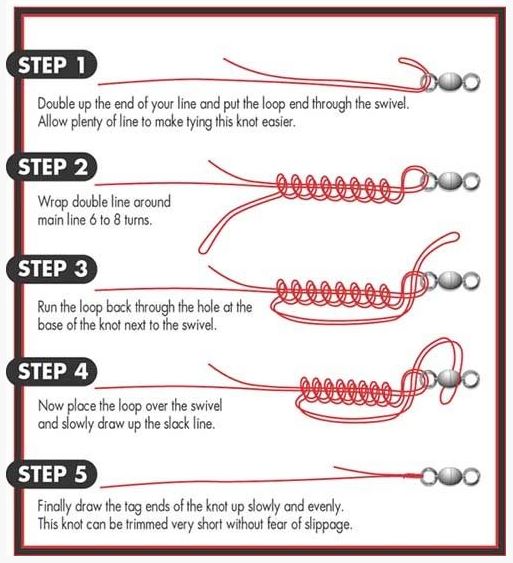
| 1 | Pass the line through the hook eye and double back forming a loop. |
| 2 | Make six turns with the tag end around the doubled line and through the loop. |
| 3 | Moisten the knot and pull the tag end to tighten it down. |
| 4 | Slide the knot to the eye and pull both ends firmly. |
| 5 | Trim the tag end close to the knot. |

Credit: www.ohero.com
Step-by-step Knot Tying
Tying a fishing line to a hook is easy with clear steps. A good knot keeps the hook secure and the line strong.
Follow these simple steps to tie your fishing line to a hook safely and tightly.
Forming The Knot Loop
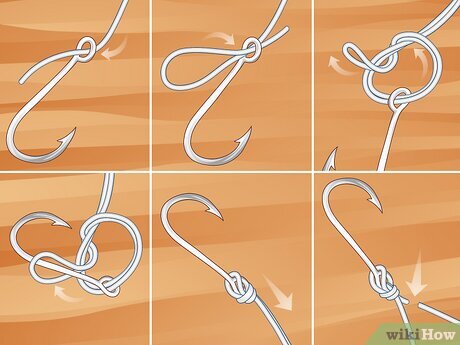
Start by passing the end of the fishing line through the eye of the hook. Then, double back to form a loop alongside the main line.
Wrapping The Line Around
Wrap the loose end of the line around the main line and the loop several times. Usually, five to seven wraps work best.
- Hold the hook and loop firmly.
- Wrap the loose end around the loop and main line.
- Keep the wraps tight and neat.
- Count the wraps to ensure enough turns.
- Prepare to secure the knot by pulling the loose end.
Securing And Tightening The Knot
Pull the loose end and the main line slowly to tighten the knot. Make sure the coils snug tightly around the hook eye.
| Action | What to Do |
| Pull Loose End | Tighten the wraps carefully |
| Pull Main Line | Secure the knot firmly |
| Check Knot | Ensure no slips or gaps |
| Trim Excess | Cut off extra line close to knot |
Tips For Stronger Knots
Tying a fishing line to a hook needs care to keep it strong. A good knot stops your catch from slipping away.
Use the right steps to avoid weak spots. This guide helps you make knots that hold well under pressure.
Avoiding Line Twists
Line twists can weaken knots and cause tangles. You can stop twists by handling the line carefully.
- Let the line run freely when tying.
- Use swivel hooks to reduce twisting.
- Keep the line straight and avoid loops.
- Pull the line gently to tighten the knot.
Checking Knot Tightness
Check your knot by pulling the line hard. A tight knot stays firm and does not slip.
| Check Point | What to Look For |
|---|---|
| Pull Strength | No slipping or loosening |
| Knot Shape | Even and neat, no overlaps |
| Line Condition | No frays or damage |
| Hook Attachment | Secure and centered |
Trimming Excess Line
Cut extra line close to the knot. Too much line can catch on weeds or weaken the knot.
- Use sharp scissors or clippers.
- Leave about 2 mm of tag end.
- Check the knot again after trimming.
- A clean finish helps the knot last longer.
Common Mistakes To Avoid
Tying a fishing line to a hook seems simple but many make mistakes. These errors reduce your chance to catch fish.
Knowing what to avoid helps you tie stronger knots that hold well in water and under pressure.
Using Incorrect Knot For Line Type
Different fishing lines need different knots. Using the wrong knot can cause the line to break or slip off the hook.
- Use the Palomar knot for braided lines.
- Choose the improved clinch knot for monofilament lines.
- Try the uni knot for fluorocarbon lines.
- Avoid knots that do not match your line type.
- Practice tying knots to ensure they hold tight.
Overtightening Or Loosening
Tying your knot too tight or too loose causes problems. Too tight can damage the line. Too loose can let the hook slip off.
| Problem | Effect |
| Overtightening | Weakens the line, may snap under pressure |
| Loosening | Knot may come undone, losing the hook |
| Correct Tension | Knot holds firm without damaging the line |
Ignoring Knot Inspection
After tying, many skip checking the knot. This can let small mistakes go unnoticed.
- Look for loose ends that may slip.
- Check if the knot is tight and neat.
- Pull the line hard to test strength.
- Retie if the knot feels weak or messy.

Credit: n1outdoors.com
Frequently Asked Questions
How Do I Tie A Fishing Line To A Hook Securely?
Use a strong knot like the Improved Clinch Knot. Pass the line through the hook eye, wrap it around 5-7 times, then thread it back through the loop. Tighten the knot firmly to prevent slipping and ensure a secure hold.
Which Knot Is Best For Tying Fishing Line To Hooks?
The Improved Clinch Knot is widely recommended. It is strong, easy to tie, and works well with most fishing lines. This knot maintains line strength and resists slipping, making it ideal for beginners and experienced anglers alike.
Can I Use Any Fishing Line To Tie Hooks?
Most fishing lines, including monofilament, fluorocarbon, and braided lines, can be used. However, knot choice and technique may vary slightly for different lines. Always test your knot’s strength before fishing to avoid losing the catch.
How Tight Should I Pull The Fishing Line Knot?
Pull the knot firmly but gently to avoid damaging the line. Tighten until the knot is snug against the hook eye. Over-tightening can weaken or break the line, so apply steady, controlled pressure for the best result.
Conclusion
Tying a fishing line to a hook is essential for fishing success. Practice makes it easier. Start with basic knots and improve over time. A secure knot means a better chance to catch fish. Always check your knot before casting.
This ensures your line stays strong. Fishing is fun, so enjoy learning each step. Share what you learn with friends or family. This adds to the enjoyment. Remember, patience is key in fishing. Happy fishing!