If you want to catch more fish, mastering the right knot for your fishing lure is a game changer. Knowing how to tie a fishing lure knot properly means your lure stays secure, your line stays strong, and your chances of landing that big catch go way up.
You’ll learn simple steps to tie a knot that won’t slip or break, even when the fish fight hard. Keep reading, and you’ll be ready to cast with confidence every time.

Credit: www.ohero.com
Choosing The Right Knot
Tying the correct knot keeps your fishing lure secure. Choosing the right knot depends on the type of line and lure.
Knowing popular knots and what affects your choice helps you fish with confidence.
Popular Knots For Fishing Lures
Some knots work better with certain lures and lines. Common knots include the Improved Clinch, Palomar, and Loop knots.
- Improved Clinch Knot:Strong and easy to tie. Works well with monofilament lines.
- Palomar Knot:Very strong and simple. Good for braided and fluorocarbon lines.
- Loop Knot:Creates a loose loop. Lets the lure move freely.
Factors Affecting Knot Selection
| Factor | Effect on Knot Choice |
|---|---|
| Line Type | Monofilament needs knots that hold well without slipping. |
| Line Thickness | Thicker lines may require knots that do not bulk up. |
| Lure Type | Some lures need knots that allow more movement. |
| Water Conditions | Rough water may need stronger, more secure knots. |
| Ease of Tying | Choose knots you can tie quickly and correctly. |
Preparing Your Line And Lure
Before you head out to fish, make sure your line and lure are ready. Proper preparation ensures a strong knot and a successful fishing trip.
This guide will help you prepare your line and lure with simple steps. You’ll learn to trim, inspect, and attach your lure correctly.
Trimming And Inspecting The Line
Trimming and inspecting your fishing line is important. It helps prevent weak spots that can cause the line to break.
Look for any frays or damage along the line. If you find any, cut off the damaged section to ensure a strong, reliable line.
- Inspect the line for any wear or tear.
- Trim the line if you see any frayed sections.
- Use sharp scissors for a clean cut.
Attaching The Lure Properly
Attaching the lure properly is crucial for a secure knot. A well-tied knot will keep your lure in place while fishing.
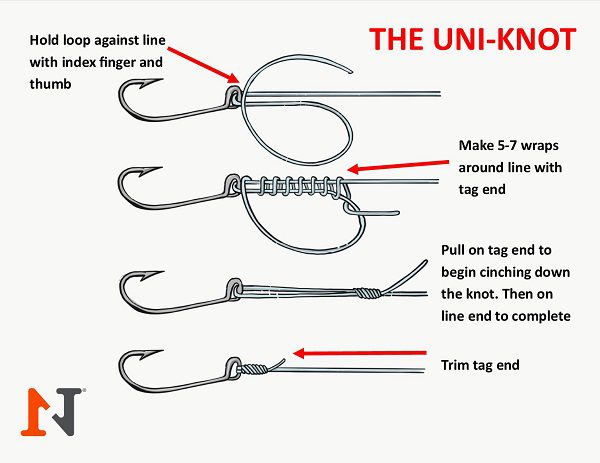
Thread the line through the lure’s eye. Wrap the line around itself several times, then pull it tight to secure the knot.
- Thread the line through the lure’s eye.
- Wrap the line around itself 4-5 times.
- Pull the line tight to secure the knot.
Step-by-step Knot Tying Techniques
Tying the right knot is important for fishing success. Good knots hold the lure firmly and prevent line breakage. This guide shows easy steps to tie three popular knots.
Follow the instructions carefully. Practice each knot until you can tie it quickly and securely.
Improved Clinch Knot
The Improved Clinch Knot is strong and simple. It works well with most fishing lines and lures.
- Thread the line through the lure eye.
- Wrap the tag end around the standing line 5 to 7 times.
- Pass the tag end through the small loop near the eye.
- Then, pass the tag end through the big loop formed.
- Moisten the knot and pull tight.
- Trim the extra tag end close to the knot.
Palomar Knot
The Palomar Knot is very strong and easy to tie. It keeps the lure moving naturally in water.
- Double about 6 inches of line and pass it through the lure eye.
- Tie a loose overhand knot with the doubled line.
- Pass the lure through the loop of the overhand knot.
- Moisten the knot and pull both ends to tighten.
- Cut the tag end close to the knot.
Loop Knot Variations
Loop knots let the lure move freely. Different loop knots suit different fishing styles.
| Knot Type | Best Use | Key Features |
| Non-Slip Loop | Lures needing free movement | Creates a secure, fixed loop |
| Rapala Knot | Swimbaits and crankbaits | Easy to tie, strong loop |
| Perfection Loop | Topwater lures | Small, neat loop with good strength |
Tips For Ensuring A Strong Hold
Tying a fishing lure knot correctly helps keep your lure secure. A strong knot prevents losing fish and gear.
Small details during tying make a big difference in knot strength. Follow these tips for the best hold.
Moistening The Knot
Wet the knot before tightening to reduce friction. This step protects the line from damage.
Use water or saliva to moisten the knot. Dry knots can weaken or break when tightened.
Tightening And Testing
Pull the knot slowly and firmly to tighten it. Avoid sudden force, which can weaken the knot.
After tightening, test the knot by pulling hard. Make sure it holds before fishing.
- Hold the tag end and main line firmly
- Pull until the knot is tight and snug
- Check for any slipping or loosening
Avoiding Common Mistakes
Do not skip moistening the knot. Dry knots often fail under pressure.
Avoid tying too few wraps or loops. More wraps usually create a stronger knot.
- Do not pull the line too fast
- Ensure the knot is neat and tight
- Trim excess tag ends but leave a small tail
Maintaining And Inspecting Knots
Tying a fishing lure knot is just the start. Keeping your knots strong is important for fishing success. Regular checks help prevent lost fish and gear.
Inspecting your knots before and during fishing keeps your line safe. Learn when to retie your knot and what signs show it is weak.
When To Retie Your Knot
You should retie your knot before every fishing trip. This keeps your connection strong and reliable. A fresh knot reduces the chance of breaking.
Retie your knot after catching a big fish. The strain can stretch or weaken the line. Also, retie if the knot feels loose or slips when pulled.
Signs Of Wear And Tear
Look closely for signs of damage on your knots. These signs mean the knot might fail soon. Replace the knot if you see any of these issues.
- Frayed or cut line near the knot
- Discoloration or thinning of the line
- Loose or slipping knot under tension
- Rough or damaged line texture
- Knots that look uneven or twisted
Checking your knots often keeps your fishing safe and fun. Always cut off old knots and tie new ones to avoid losing your lure or fish.

Credit: www.wikihow.com
Tools And Accessories To Assist Knot Tying
Tying fishing lure knots can be tricky without the right tools. Some accessories help make knot tying easier and more secure.
Using these tools can save time and improve your fishing experience. They help keep the line tight and prevent slipping.
Knot-tying Tools
There are special tools designed to help tie fishing knots neatly. These tools hold the line steady and allow better control.
Common knot-tying tools include knot tying pliers, loop tools, and needle-nose pliers. They help grip the line and pull knots tight.
- Knot Tying Pliers:Hold the line firmly for easier knot tightening.
- Loop Tools:Help make perfect loops without slipping.
- Needle-Nose Pliers:Useful for pulling knots tight in small spaces.
- Forceps:Grip small lines or hooks during knot work.
Line Conditioners And Lubricants
Line conditioners and lubricants make the fishing line smoother and easier to handle. They reduce friction during knot tying.
Using these products helps protect the line from damage and keeps knots tight. They also prevent line twisting and tangling.
- Line Conditioner:Softens the line and reduces stiffness.
- Lubricant Gel:Helps knots slide easily when tying.
- Anti-Friction Wax:Protects the line and improves knot strength.
Credit: medium.com
Frequently Asked Questions
What Is The Best Knot For Fishing Lures?
The improved clinch knot is widely preferred for fishing lures. It offers a strong, reliable hold and is easy to tie. This knot ensures your lure stays secure during casting and retrieval, improving your fishing success.
How Do I Tie A Fishing Lure Knot Step-by-step?
Start by threading the line through the lure eye. Wrap the tag end around the standing line 5-7 times. Pass the tag end through the loop near the eye, then back through the big loop. Tighten the knot and trim the excess line.
Why Is A Strong Fishing Lure Knot Important?
A strong knot prevents your lure from slipping off or breaking under tension. It maintains line strength and ensures a secure connection between the lure and line. This increases catch rates and protects your gear during fishing.
Can I Use Any Fishing Line For Lure Knots?
Most fishing lines, including monofilament, fluorocarbon, and braided lines, work well with lure knots. However, knot strength may vary. Choose a knot compatible with your line type for optimal performance and durability.
Conclusion
Tying a fishing lure knot is simple with practice. Choose the right knot for your lure type. Take your time and follow each step carefully. Strong knots help keep your lure secure and catch more fish. Try different knots to see what works best for you.
With patience, your fishing skills will improve every time. Keep practicing, and enjoy your fishing trips more. A good knot makes a big difference on the water.