Are you tired of your fishing line coming loose or losing your bait just when the big catch bites? Learning how to tie a hook and weight on your fishing line the right way can make all the difference.
Whether you’re a beginner or just need a quick refresher, this simple skill will boost your confidence and improve your chances of landing that perfect fish. Keep reading, and you’ll discover easy, step-by-step tips that anyone can follow—no confusing knots or complicated gear needed.
Get ready to fish smarter and catch more!
Choosing The Right Hook And Weight
Choosing the right hook and weight is important for fishing success. The right gear helps catch fish easily and keeps your line strong.
This guide explains types of hooks, how to pick weights, and how to match both to your fishing needs.
Types Of Fishing Hooks
Fishing hooks come in many shapes and sizes. Each type fits different fish and bait types.
- J-Hooks: Good for many fish and easy to use.
- Circle Hooks: Designed to hook fish in the corner of the mouth.
- Treble Hooks: Have three points, used with lures.
- Bait Hooks: Made for holding live or cut bait securely.
- Siwash Hooks: Often used with artificial lures.
Selecting The Appropriate Weight
Weights help your bait sink and stay at the right depth. Pick weights based on water type and fishing style.
| Weight Type | Use | Water Type |
| Split Shot | Light weight for slow sinking | Calm lakes, ponds |
| Egg Sinkers | Allow bait to move freely | Rivers, streams |
| Bank Sinkers | Heavy, holds line steady | Strong currents, deep water |
| Pyramid Sinkers | Good for sandy bottoms | Beaches, surf fishing |
Matching Hook And Weight To Fishing Conditions
Match your hook and weight to the fish type and water conditions. This improves bait presentation and catch rate.
- Use small hooks with light weights for small fish in calm water.
- Choose larger hooks and heavier weights for big fish in deep or fast water.
- Adjust weight so bait stays near the bottom without dragging.
- Change hook size based on bait size and fish mouth size.
Preparing Your Fishing Line
Getting your fishing line ready is key for a good fishing trip. A well-prepared line helps you tie hooks and weights securely. It also makes fishing easier and safer.
This guide covers how to pick the right line and how to cut and check it before use.
Selecting The Line Type And Strength
Choose a line type that fits your fishing style. The main types are monofilament, fluorocarbon, and braided lines. Each has different strength and stretch levels.
- Monofilament lines are stretchy and good for beginners.
- Fluorocarbon lines are less visible underwater and strong.
- Braided lines have high strength and low stretch.
- Pick a line strength that matches the fish you want to catch.
Cutting And Inspecting The Line
Cut the fishing line to the needed length using sharp scissors or a line cutter. After cutting, check the line for any damage like nicks or frays.
| Check | What to Look For |
| Frays | Look for loose fibers along the line |
| Nicks | Look for small cuts or scratches |
| Discoloration | Look for faded or worn spots |
| Tangles | Make sure the line is smooth and untwisted |
Tying The Hook
Tying the hook securely to your fishing line is important for a good catch. A strong knot keeps the hook from slipping off or breaking.
This guide shows simple ways to tie your hook and keep it safe on the line.
Basic Knot Techniques
Start with a clean line end. Pass the line through the hook eye twice. Make sure to leave enough line for tying.
- Wet the line to reduce friction.
- Wrap the tag end around the standing line 5 times.
- Thread the tag end through the loop near the hook eye.
- Pull the knot tight slowly and evenly.
Step-by-step Hook Knot
- Thread the line through the hook eye twice.
- Hold the tag end and wrap it around the standing line five times.
- Pass the tag end through the small loop near the hook eye.
- Moisten the knot with water or saliva.
- Pull the standing line and tag end slowly to tighten the knot.
- Trim the tag end close to the knot.
Tips For Secure Hook Attachment
| Tip | Reason |
|---|---|
| Always wet the line before tightening | Prevents damage and slips |
| Use enough wraps around the line | Increases knot strength |
| Pull knots slowly and evenly | Avoids line breakage |
| Trim tag end close but leave a small tail | Stops knot from unraveling |

Credit: www.youtube.com
Attaching The Weight
Adding a weight to your fishing line helps your bait sink properly. It also improves casting distance and control.
Knowing how to attach the weight correctly is important for successful fishing. This guide covers common ways to tie the weight.
Common Weight Attachment Methods
There are several ways to attach weights to your fishing line. Each method fits different fishing styles and conditions.
- Slip Sinkers: Slide the weight directly onto the line.
- Split Shot Weights: Pinch onto the line with pliers.
- Egg Sinkers with Swivels: Tie the line to the swivel below the weight.
- Drop Shot Rig: Tie the weight at the bottom with a special knot.
Step-by-step Weight Knot
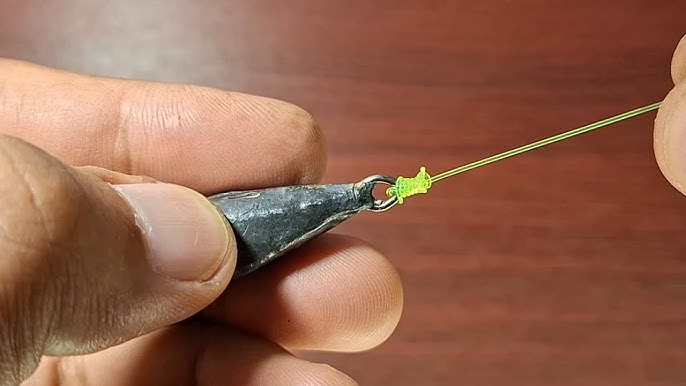
Use the improved clinch knot to tie a weight securely. This knot holds well and is easy to tie.
- Thread the line through the weight eye.
- Wrap the tag end around the main line 5 times.
- Pass the tag end through the small loop near the weight eye.
- Then pass it through the big loop just created.
- Moisten the knot with water or saliva.
- Pull the tag end and main line to tighten.
- Trim the excess tag end close to the knot.
Positioning The Weight On The Line
Where you place the weight on the line affects how your bait moves and sinks. Choose the best spot for your fishing goal.
Sliding weights move freely and allow casting long distances. Fixed weights stay in one place for precise bait control.
- Place weight near the hook for bottom fishing.
- Set weight far from the hook for natural bait movement.
- Use sliding weights for deep water fishing.
- Use fixed weights for shallow or fast waters.
Final Checks And Adjustments
After tying the hook and weight on your fishing line, it is important to do final checks. These checks help ensure your setup is strong and reliable. Proper adjustments can prevent losing fish or gear.
Focus on testing the knot, adjusting the weight, and making sure the line and knot last long. Each step improves your fishing experience.
Testing Knot Strength
Check the knot by pulling it firmly with your hands. The knot should hold tight without slipping or loosening. This test avoids breakage while fishing.
- Hold the hook and pull the line slowly.
- Look for any slipping or movement in the knot.
- Retie the knot if it feels weak or loose.
- Repeat the test until the knot stays firm.
Adjusting Weight Placement
Weight placement affects how your bait moves in the water. Move the weight up or down the line to find the best balance for casting and sinking.
| Weight Position | Effect |
| Close to hook | Bait sinks quickly, less natural movement |
| Far from hook | Bait moves more naturally, slower sink |
| Middle distance | Balanced sink rate and bait action |
Ensuring Line And Knot Durability
Check your fishing line and knot for damage before use. Replace or retie if you find any weak spots or frays. Good durability helps avoid breakage during fishing.
- Use quality fishing line for strength.
- Trim excess tag ends after tying knots.
- Rinse line with fresh water after saltwater fishing.
- Store line away from direct sunlight and heat.

Credit: jimswansonmanofthewoods.wordpress.com
Troubleshooting Common Issues
Tying a hook and weight on a fishing line can be tricky. Small mistakes cause big problems.
This guide helps fix common issues. You will learn how to avoid loose knots, line twisting, and weight slippage.
Loose Knots
Loose knots make your hook or weight fall off easily. Tight knots hold better and keep your tackle secure.
- Moisten the line before tightening the knot.
- Pull the knot slowly and firmly to secure it.
- Trim excess line close to the knot to avoid catching.
- Practice common knots like the improved clinch knot or Palomar knot.
Line Twisting
Line twisting causes tangles and weakens the line. It happens if the hook or weight spins too much.
| Cause | Fix |
| Hook spins freely | Use a swivel between line and hook |
| Weight spins on line | Attach weight with a clip or use a fixed sinker |
| Incorrect knot tying | Re-tie knot carefully without twisting the line |
Weight Slippage
Weight slipping down the line causes casting trouble and wrong bait depth. Fix it to fish better.
- Choose weights with built-in stoppers.
- Use rubber or plastic stoppers above the weight.
- Tie a small knot above the weight to hold it in place.
- Check the line for damage where the weight sits.

Credit: mysterytacklebox.com
Frequently Asked Questions
What Tools Are Needed To Tie A Fishing Hook?
To tie a fishing hook, you’ll need a fishing line, the hook, and a pair of scissors. Optionally, pliers can help tighten knots. These basic tools ensure you securely attach the hook to the line, improving your fishing experience and success rate.
How Do You Tie A Fishing Line Weight?
To tie a weight, thread the line through the weight’s hole. Then, tie a simple overhand knot below the weight. Ensure it’s secure by pulling the knot tight. This method keeps your bait at the right depth, enhancing your chances of catching fish.
What Is The Best Knot For Fishing Hooks?
The improved clinch knot is a favorite among anglers. It’s reliable and easy to tie. Pass the line through the hook eye, wrap it around the standing line, then pass through the loop. Secure by pulling tight. This knot provides strength and security.
How Can You Prevent Line Tangles?
To prevent tangles, ensure your line is spooled correctly and avoid overfilling the reel. Use swivels to reduce twists and always check for line damage. Proper line maintenance helps in smooth casting and reduces frustration during fishing trips.
Conclusion
Tying a hook and weight on your fishing line is simple with practice. Use the right knots to keep everything secure and strong. Take your time and follow each step carefully. This skill helps you fish better and catch more.
Soon, tying hooks and weights will become quick and easy. Keep practicing, and enjoy your fishing trips even more.