Are you struggling to tie a strong, reliable knot in your braided fishing line? You’re not alone.
Braided lines are tough and thin, which makes them tricky to knot correctly. But getting this right is crucial—one bad knot can mean losing your catch or even your entire rig. In this guide, you’ll learn simple, step-by-step methods to tie knots that hold tight every time.
Mastering these knots will boost your confidence and improve your fishing success. Keep reading to discover the secrets that will make your braided line as strong as possible.

Credit: www.reddit.com
Choosing The Right Knot
Tying a knot in braided fishing line needs care. The wrong knot can slip or break easily.
Choose knots that hold well and do not damage the thin braided fibers.
Best Knots For Braided Line
Some knots work better with braided lines than others. They keep the line strong and secure.
Popular knots include the Palomar, Double Uni, and FG knot. Each has different uses.
- Palomar Knot:Simple and strong. Easy to tie and holds well.
- Double Uni Knot:Good for joining two lines of similar thickness.
- FG Knot:Very slim and strong. Works well for attaching braid to leader.
Knot Strength Comparison
Strength varies between knots. Some keep most of the braid’s strength, others lose more.
| Knot | Strength Retained (%) | Ease of Tying |
|---|---|---|
| Palomar Knot | 90-95% | Easy |
| Double Uni Knot | 85-90% | Moderate |
| FG Knot | 95-98% | Difficult |

Credit: www.wikihow.com
Preparing The Line
Preparing your braided fishing line is key to tying a strong knot. Proper steps help the knot hold better and last longer.
Two main tasks are trimming and cleaning the line, and moistening it before tying the knot.
Trimming And Cleaning
Cutting and cleaning the braided line removes dirt and frayed fibers. This prepares the line for a neat knot.
- Use sharp scissors or a line cutter to trim the end.
- Remove any fuzzy or damaged fibers from the cut end.
- Wipe the trimmed end with a clean cloth to remove dirt or debris.
- Check the line for any weak spots or damage before tying.
Moistening The Line
Moistening the braided line reduces friction and heat. This helps the knot tighten smoothly without weakening the line.
Follow these tips to moisten the line properly:
| Method | Description |
|---|---|
| Water | Use fresh water to wet the knot area before pulling tight. |
| Saliva | Apply saliva on the knot for quick moistening when fishing outdoors. |
| Line Conditioner | Use a line conditioner spray to keep the line smooth and flexible. |
Step-by-step Knot Techniques
Tying knots in braided fishing line can be tricky. Braided lines are thin and slippery.
This guide shows how to tie three strong knots. These knots hold well with braided lines.
Palomar Knot
The Palomar knot is strong and simple. It works well with braided fishing line.
It keeps the line from slipping and holds hooks tightly.
- Double about 6 inches of line to make a loop.
- Pass the loop through the hook eye.
- Tie a loose overhand knot with the loop.
- Pull the hook through the loop.
- Moisten the knot and pull both ends tight.
- Trim the excess line close to the knot.
Uni Knot
The Uni knot is versatile and easy to tie. It works well for braided lines and leaders.
This knot keeps good strength and is easy to adjust before tightening.
- Pass the line through the hook eye and double back.
- Make a loop by laying the tag end alongside the doubled line.
- Wrap the tag end around the doubled line five to six times.
- Pass the tag end through the loop near the hook eye.
- Moisten the knot and pull the tag end and standing line slowly.
- Slide the knot down to the hook eye and pull tight.
- Trim the tag end close to the knot.
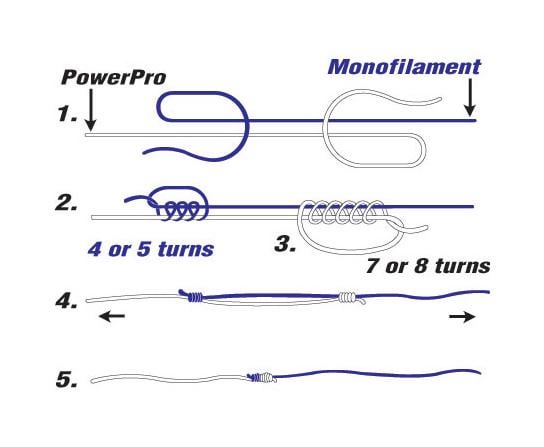
Double Uni Knot
The Double Uni knot joins two braided lines together. It is strong and reliable.
This knot works well when connecting braided line to leader or another line.
- Overlap the ends of both lines by 6 to 8 inches.
- Make a loop with the first line over the second line.
- Wrap the tag end around both lines five times.
- Pass the tag end through the loop and pull lightly to form the knot.
- Repeat steps with the second line.
- Pull both standing lines to slide knots together.
- Moisten knots and pull tight.
- Trim the tag ends close to the knots.

Credit: www.youtube.com
Tips For Knot Security
Tying a strong knot in braided fishing line keeps your catch safe. Good knot security stops the line from breaking or slipping.
Learn simple ways to make your knots hold better and last longer in tough fishing conditions.
Applying Proper Tension
Pull the knot slowly and evenly to tighten it. Avoid jerking or quick pulls that can damage the braided line.
- Hold the knot firmly with your fingers.
- Pull both ends of the line gently and steadily.
- Make sure the knot tightens without twisting the line.
- Check for any weak spots or loose loops before use.
Avoiding Line Slippage
Braided lines can slip more than other lines. Use knots that grip well and add extra wraps for security.
| Tip | How It Helps |
| Use double or triple wraps | Increases friction to hold the knot tight |
| Moisten the knot before tightening | Prevents heat damage and helps the knot slide tight |
| Choose knots made for braided line | Designed to reduce slippage and maintain strength |
| Test the knot before fishing | Ensures the knot will not slip under pressure |
Common Mistakes To Avoid
Tying a knot in braided fishing line needs care. Small errors can cause the knot to fail.
Knowing what to avoid helps make strong, reliable knots every time.
Over-tightening
Pulling the knot too tight can damage the braided line. The fibers may weaken or break.
Apply firm pressure, but stop when the knot feels snug. Over-tightening reduces knot strength.
- Hold the knot gently while tightening
- Wet the line before tightening to reduce friction
- Stop pulling as soon as the knot feels secure
Insufficient Wraps
Using too few wraps in the knot weakens it. The line can slip or come undone easily.
Make enough wraps to hold the knot firmly. More wraps increase friction and grip.
- Count your wraps carefully before tightening
- Use at least 4-5 wraps for braided line
- Check the knot’s tightness after making wraps
Testing Your Knot
After tying a knot in braided fishing line, you must test it. This ensures the knot will hold under pressure.
Testing helps avoid losing fish and gear. Two main ways to check your knot are pull tests and visual inspection.
Pull Test Methods
Pull tests help you feel how strong your knot is. Hold the line firmly and pull hard on the knot.
If the knot slips or comes undone, retie it. If it holds tight, the knot is secure and ready to use.
- Grip the line near the knot with your fingers
- Pull the line in opposite directions with steady force
- Feel for any slipping or loosening in the knot
- Repeat the test several times to be sure
Visual Inspection
Look closely at the knot after tying. Check if the wraps are neat and tight.
Look for any gaps, overlaps, or uneven tension. A good knot looks even and compact.
- Check for loose or uneven wraps
- Make sure the knot is tight with no gaps
- Look for damaged or frayed line near the knot
- Ensure the tag end is trimmed properly
Frequently Asked Questions
What Is The Best Knot For Braided Fishing Line?
The Palomar knot is the best for braided fishing line. It offers strong holding power and is easy to tie. This knot maintains line strength and resists slipping, ideal for braided lines.
How Do You Prevent Braided Line From Slipping?
To prevent slipping, use knots like Palomar or Double Uni. Wet the line before tightening to reduce friction. Properly tighten the knot to ensure a secure hold on braided lines.
Can I Use Monofilament Knots On Braided Lines?
Some monofilament knots work on braided lines, but not all. Braided lines need specific knots like Palomar or Double Uni. Using the wrong knot may cause slipping or weak connections.
Why Is Tying Knots In Braided Line Harder?
Braided line is slick and thin, making knots tricky. It’s less stretchy than monofilament, so knots must be tight. Using the right knot and technique ensures a strong, secure tie.
Conclusion
Tying a strong knot in braided fishing line takes practice and patience. Use simple steps and check your knot before fishing. A good knot keeps your line from slipping or breaking. Try different knots to find what works best for you.
Keep your line tight and neat for better results. With time, tying knots will feel easy and natural. Enjoy your fishing trips with confidence and success.