Tying a strong knot on braided fishing line can make all the difference between landing a big catch and losing it at the last moment. If you’ve ever struggled with knots slipping or breaking, you’re not alone.
But don’t worry—once you learn the right technique, your confidence and success on the water will soar. In this guide, you’ll discover simple, step-by-step instructions to tie knots that hold fast every time. Keep reading, and you’ll soon master the skill that turns your fishing line into a reliable partner.
Choosing The Right Knot
Tying a knot on braided fishing line needs care. Braided lines are thin and slippery.
Picking the right knot keeps your line strong and secure. It helps avoid losing fish.
Best Knots For Braided Line
Some knots work better with braided line than others. These knots hold tight and do not slip.
- Palomar Knot – Simple and very strong for braided line
- Double Uni Knot – Great for joining braided to fluorocarbon or monofilament
- Improved Clinch Knot – Common but less strong with braided line
- Arbor Knot – Used to tie braided line to reels
Try these knots to see which feels best for your fishing style.
Factors Affecting Knot Strength
Many things affect how strong a knot holds on braided line. Pay attention to these factors.
- Knot Type – Some knots hold better on slippery lines.
- Tightening – Pull the knot tight slowly and evenly.
- Line Condition – Wet the line before tightening to reduce friction.
- Number of Wraps – More wraps can increase knot strength.
- Line Diameter – Thinner lines need knots that grip well.
Check your knots often to keep them secure while fishing.

Credit: www.wikihow.com
Preparing The Line
Preparing your braided fishing line before tying a knot is important. It helps the knot hold better and lasts longer.
Taking time to trim, clean, and moisten the line makes your fishing more successful and avoids line damage.
Trimming And Cleaning
Trim the end of the braided line to remove any frayed or damaged fibers. A clean cut helps the knot stay tight.
Use sharp scissors or a line cutter for a straight edge. Avoid tearing or crushing the line.
- Cut at least 1/4 inch from the end to remove wear
- Check for dirt or salt on the line
- Wipe the line gently with a clean cloth if needed
Moistening The Line
Moistening the braided line before tying a knot reduces friction. This prevents the line from weakening or breaking.
Use water or saliva to wet the line gently. Avoid using too much liquid, just enough to make the line slippery.
- Wet your fingers first to handle the line smoothly
- Apply a small amount of water or saliva on the knot area
- Tie the knot slowly and carefully while the line is wet
The Palomar Knot
The Palomar knot is a strong and simple knot for braided fishing lines. It keeps the line from slipping and holds well under pressure.
This knot works great with braided lines because it keeps the line strong and easy to tie. Follow the steps below to tie it correctly.
Step-by-step Instructions
- Double about six inches of the braided line to form a loop.
- Pass the loop through the eye of the hook or lure.
- Tie a loose overhand knot with the doubled line around the standing part.
- Pull the loop end completely through the overhand knot.
- Slide the loop down toward the eye, but do not tighten yet.
- Moisten the knot with water or saliva to reduce friction.
- Pull both the tag end and standing line slowly to tighten the knot.
- Trim the excess tag end close to the knot.
Tips For A Secure Tie
- Always moisten the knot before tightening to avoid damage to the line.
- Use enough tag end to work with; too short makes tying hard.
- Pull the knot slowly and evenly to keep it tight and neat.
- Check the knot before fishing to make sure it is firm and secure.
- Practice tying the knot several times to improve speed and accuracy.
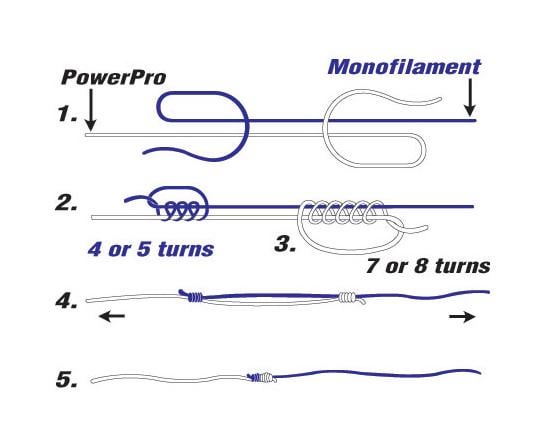
The Double Uni Knot
The Double Uni Knot is a strong and reliable way to tie braided fishing line. It connects two lines securely and works well with different types of fishing lines.
This knot is popular because it keeps most of the line’s strength and is easy to tie with some practice.
When To Use It
Use the Double Uni Knot when joining braided line to leader or another line. It works best for lines of similar or different diameters.
This knot is good for fishing with braided lines because it holds tight and does not slip under pressure.
- Connecting braided line to fluorocarbon or monofilament leader
- Joining two braided lines together
- When you need a strong, compact knot
Tying Process
Start by overlapping the two line ends side by side. Make sure you have enough line to work with on both ends.
Wrap one line around the other line and itself 4 to 6 times, then pass the tag end through the loop near the overlap. Pull to tighten but do not fully tighten yet.
- Repeat the wrapping step with the other line end
- Pull both standing lines slowly to slide the knots together
- Check that the knots are tight and snug against each other
- Trim the tag ends close to the knot
Make sure the knot is secure before casting. The Double Uni Knot should hold well and keep your line strong.
The Fg Knot
The FG Knot is a popular fishing knot. It is perfect for tying braided fishing line to a leader.
This knot is very strong and slim. It helps the line pass through the rod guides easily.
Advantages For Braided Line
The FG Knot keeps braided lines from slipping. It holds tightly without damaging the line.
It also makes the connection slim and smooth. This helps casting distance and reduces line wear.
- Strong hold on braided line
- Low profile, easy casting
- Prevents line slipping
- Less damage to the fishing line
Detailed Steps
Start by placing the braided line and leader side by side. Hold them tightly with your fingers.
Wrap the braided line around the leader many times. Make 20 to 30 tight wraps for a strong knot.
- Lay the braided line and leader together
- Wrap the braided line tightly around the leader 20-30 times
- Keep all wraps close and neat
- Pass the braided end through the loops near the wraps
- Tighten the knot slowly while moistening it
- Trim the tag ends close to the knot
Pull the braided line and leader slowly to tighten the knot. Wet the knot with water or saliva to avoid heat damage.
Cut the extra ends close to the knot. This keeps the knot slim and neat.

Credit: www.youtube.com
Common Mistakes To Avoid
Tying a knot on braided fishing line can be tricky. Many anglers make mistakes that weaken the knot.
Avoiding common errors helps your knot hold strong and lasts longer while fishing.
Slipping Knots
Braided lines are smooth and can slip if the knot is wrong. A slipping knot will fail when you pull hard.
Many knots that work well on other lines do not hold on braided lines. You must use knots designed for braided lines.
- Use knots like the Palomar or Double Uni that grip well.
- Make sure to wet the line before tightening the knot.
- Pull the knot slowly and firmly to set it.
- Leave a small tag end to prevent slipping.
Overtightening
Pulling the knot too tight can damage the braided line. This weakens the line and can cause breaks.
It is important to pull knots tight enough to hold but not so tight that the line frays.
- Wet the line to reduce friction before tightening.
- Pull the knot firmly but stop if you feel resistance.
- Check the knot for any signs of damage after tying.
- Replace the line if you see fraying or cuts.
Testing Knot Strength
Testing the strength of your knot on braided fishing line is important. It helps ensure your line will not break under pressure.
You can check knot strength easily at home before fishing.
Simple At-home Methods
Try these simple methods to test your knot’s strength without special tools.
- Pull the line slowly but firmly to feel for slipping or loosening.
- Rub the knot gently to check if the line frays or weakens.
- Use a hook or weight to apply steady pressure on the knot.
- Try tying and testing several knots to compare strength.
When To Retie
Knowing when to retie your knot is key to avoiding line failure.
| Sign | Action |
| Line slips through the knot | Retie the knot immediately |
| Frayed or damaged line near the knot | Cut and retie the line |
| Knot feels loose after casting or pulling | Tighten or retie the knot |
| After catching a large fish | Check and retie the knot |
Maintaining Your Knots
Good knots keep your fishing line strong and safe. Regular care helps avoid losing fish or gear. Check your knots often for signs of damage or wear.
Taking time to maintain your knots makes your fishing trips more successful. Simple checks and repairs can save you money and effort.
Regular Inspections
Look at your knots before and after each fishing trip. Check for cracks, frays, or looseness. Wet lines dry stiff and can hide damage. Gently run your fingers along the knot to feel for weak spots.
- Check knots for tightness and smoothness
- Look for any discoloration or worn fibers
- Test knots by pulling lightly to confirm strength
- Inspect nearby line sections for damage
- Retie knots if you notice any issues
Replacing Worn Knots
Damaged knots weaken your line and can break easily. Replace knots that show signs of wear right away. Use the same knot type you prefer or try a strong, simple knot for braided line.
| Signs of Worn Knots | Action to Take |
| Frayed or broken fibers | Cut off old knot and retie |
| Loose or slipping knot | Retie knot tightly |
| Discolored or stiff knot | Replace knot with fresh line |
| Line damage near knot | Cut damaged section and retie |

Credit: www.reddit.com
Frequently Asked Questions
What Is The Best Knot For Braided Line?
The Palomar Knot is often recommended for braided fishing lines. It’s strong, reliable, and easy to tie. This knot maintains its strength under pressure, making it ideal for catching large fish. Many anglers prefer it for its simplicity and effectiveness with braided lines.
How Do You Tie A Palomar Knot?
To tie a Palomar Knot, double your line and pass it through the hook eye. Tie an overhand knot with the doubled line. Pass the loop over the hook and pull both ends to tighten. Trim excess line to finish.
It’s simple and effective for braided lines.
Why Use Braided Line For Fishing?
Braided line is popular for its strength and sensitivity. It has a thin diameter, allowing longer casts. Its low stretch offers better bite detection and hook setting power. Braided lines are durable, making them suitable for fishing in heavy cover or deep water.
Can Braided Line Be Used In Saltwater?
Yes, braided lines are excellent for saltwater fishing. They resist abrasion and have strong knot strength. Their thin diameter cuts through water easily. This makes them ideal for various saltwater conditions. Always rinse your braided line with freshwater after use to prevent salt buildup.
Conclusion
Tying a strong knot on braided fishing line takes practice and patience. Use the right knot and tighten it carefully. Test the knot before you start fishing to avoid losing your catch. Keep your line neat and avoid twists. With these simple steps, your fishing will improve.
Enjoy the experience and stay safe on the water. Practice often, and soon tying knots will feel easy and natural. Fishing success depends on small details like a good knot. Keep learning and have fun!