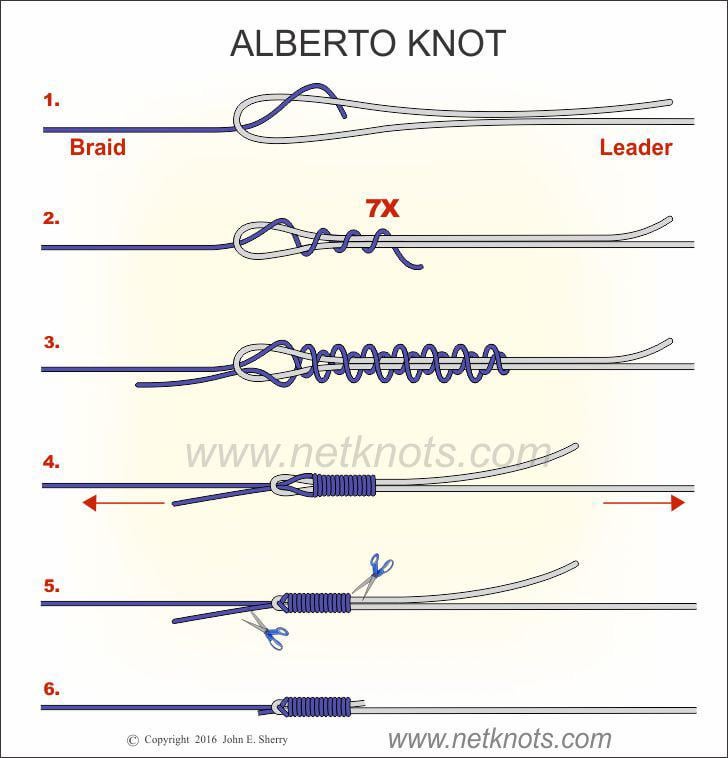
If you’ve ever struggled to connect your leader to braided fishing line, you’re not alone. Getting this knot right is crucial for a strong, reliable setup that won’t fail when you hook a big catch.
Imagine losing a trophy fish just because your line slipped or broke—frustrating, isn’t it? In this guide, you’ll learn simple, step-by-step techniques to tie your leader to braided line securely and confidently. Keep reading, and you’ll master a skill that can make all the difference on your next fishing trip.
Choosing The Right Leader And Line
Tying a leader to braided fishing line needs careful choice of line and leader. The right match helps catch fish and avoid line breakage.
This guide covers types of braided lines, leader materials, and how to match line strength for best results.
Types Of Braided Lines
Braided lines come in many types, each with different features. Choose a line based on strength, diameter, and water conditions.
- Standard Braid:Strong and thin, good for long casts.
- Coated Braid:Has a smooth coating for less water resistance.
- Colored Braid:Helps with visibility and depth control.
- High-Visibility Braid:Bright colors for easy tracking.
Selecting Leader Materials
Leader material affects stealth and durability. Pick a material that matches your fishing style and target fish.
- Fluorocarbon:Almost invisible underwater and abrasion-resistant.
- Monofilament:Flexible and good for shock absorption.
- Wire Leader:Best for sharp-toothed fish to prevent bites.
Matching Leader And Line Strength
Match leader strength close to your braided line’s strength. Too weak leaders break easily. Too strong leaders reduce casting performance.
| Braided Line Strength (lbs) | Recommended Leader Strength (lbs) |
| 10 | 8 – 10 |
| 20 | 15 – 20 |
| 30 | 25 – 30 |
| 50 | 40 – 50 |

Credit: www.reddit.com
Preparing Your Line And Leader
Tying a leader to braided fishing line needs careful preparation. Proper preparation helps secure a strong, lasting connection.
Start by handling both the braided line and the leader carefully. This makes the knot easier to tie and more reliable.
Trimming And Cleaning Line Ends
Trim the ends of both the braided line and the leader cleanly. Use sharp scissors or a line cutter for a smooth cut.
Remove any frayed or damaged parts at the ends. Clean ends help the knot hold better and prevent slipping.
Measuring Leader Length
Decide the right length of the leader before tying. The length depends on the type of fishing and water conditions.
- Short leaders (12-24 inches) suit clear water and light tackle
- Long leaders (2-4 feet) work well in rough water or for shy fish
- Adjust length based on the size of the fish you want to catch
Moistening The Line
Wet the braided line and leader before tying the knot. Moistening reduces friction and heat that can weaken the line.
Use clean water or saliva to moisten the lines. This step helps the knot tighten smoothly and hold strong.
Top Knots For Braided Line Leaders
Tying a leader to braided fishing line needs strong knots. Braided lines are thin and slippery. Not all knots hold well on them.
Here are four top knots that work well for braided line leaders. Each knot is strong and easy to tie.
Improved Clinch Knot
The improved clinch knot is simple and popular for connecting leaders. It holds well on braided lines with good tightening.
Make sure to moisten the line before pulling the knot tight. This reduces friction and keeps the line strong.
- Thread the line through the hook eye
- Wrap the tag end around the main line 5-7 times
- Pass the tag end through the small loop near the eye
- Then pass it through the big loop just formed
- Moisten and pull the knot tight
Palomar Knot
The Palomar knot is very strong and works great with braided lines. It keeps most of the line’s strength after tying.
This knot is quick to tie and is good for attaching hooks or leaders to braided line.
- Double about 6 inches of line and pass it through the hook eye
- Tie a loose overhand knot with the doubled line
- Pass the hook through the loop of the overhand knot
- Moisten the line and pull both ends to tighten
Uni Knot
The uni knot is versatile and strong for braided line leaders. It forms a neat, compact knot that slides well.
You can use this knot to tie a leader directly or to join two lines together.
- Pass the line through the eye of the hook
- Make a loop by doubling back the line
- Wrap the tag end around the doubled line 5-6 times
- Pass the tag end through the loop
- Moisten and pull the knot tight
Double Uni Knot
The double uni knot joins braided line to a leader well. It is strong and maintains line strength.
This knot is good for connecting different line types or sizes securely.
- Overlap the ends of the braided line and leader
- Make a loop with one tag end and wrap 5-6 times around both lines
- Pass the tag end back through the loop and tighten slightly
- Repeat with the other tag end
- Moisten and pull both standing lines to slide knots together

Credit: www.reddit.com
Step-by-step Knot Tying Techniques
Tying a leader to braided fishing line is important for strong fishing setups. Using the right knots helps keep your line secure.
This guide shows simple steps to tie two common knots and tips to tighten them well.
Tying The Palomar Knot
The Palomar knot is strong and easy to tie. It works well with braided lines and leaders.
Start by doubling about 6 inches of line and passing it through the leader eye.
- Make a simple overhand knot with the doubled line.
- Pass the loop over the hook or swivel.
- Pull both ends slowly to tighten the knot.
- Trim excess line close to the knot.
Tying The Double Uni Knot
The Double Uni knot joins braided line to a leader securely. It is good for different line types.
Overlap the ends of the braided line and the leader by 6 inches.
- Wrap one tag end around the other line 5 times.
- Pass the tag end through the loop near the main line.
- Repeat the wrap and loop with the other tag end.
- Pull both standing lines to slide knots together.
- Trim the tag ends close to the knots.
Tips For Tightening Knots
Tight knots hold better and avoid slipping. Wet your lines before tightening.
Pull slowly and evenly on all ends to keep the knot neat. Use your fingers to slide knots tight.
- Moisten the line with water or saliva.
- Pull each part gently and steadily.
- Check the knot for twists or gaps.
- Trim tag ends close to the knot.
Testing Knot Strength
Testing knot strength is key to safe and successful fishing. It helps you know if your leader is securely tied to braided line.
Strong knots reduce the chance of losing fish or gear. This guide explains how to test and check your knot.
Pull Test Methods
Pull tests check if your knot can hold under pressure. Use your hands or a scale to pull the line slowly.
- Hold the braided line and leader firmly.
- Pull the knot with steady force.
- Listen for any slipping sounds.
- Watch for any movement in the knot.
- Stop if the knot slips or breaks.
Identifying Weak Points
Weak points show where the knot might fail. Look for areas that stretch, loosen, or fray.
| Weak Point | What to Watch For | Fix |
| Slipping | Knot moves along the line | Retie with more wraps |
| Fraying | Line fibers look worn | Cut and retie with fresh line |
| Looseness | Knot feels soft or bulky | Tighten knot firmly |
| Breakage | Line breaks near knot | Use a stronger knot |
When To Retie
Retie your knot if it shows any signs of weakness. Do this before fishing to avoid losing fish.
- If the knot slips or loosens during the pull test
- If the line frays or breaks near the knot
- After catching a big fish that stressed the knot
- When you notice the knot feels bulky or uneven
- If you tied the knot long ago and it has been wet or used often
Common Mistakes To Avoid
Tying a leader to braided fishing line needs care. Small mistakes can cause knots to fail.
Knowing what to avoid helps make strong, reliable connections on your fishing line.
Overtightening Knots
Pulling knots too tight can weaken the line. It may cause damage or break the braid.
Knots should be snug but not crushed. This keeps the line strong and secure.
- Pull knots evenly and gently
- Stop tightening once the knot feels firm
- Wet the line before tightening to reduce friction
Incorrect Line Overlaps
Lines must overlap the right way inside the knot. Wrong overlaps make weak knots.
Check that the braided line and leader cross properly. This helps the knot hold under pressure.
- Lay the lines side by side neatly
- Make sure wraps are tight and smooth
- Avoid twisting the lines during tying
Ignoring Line Condition
Old or damaged lines reduce knot strength. Always check your line before tying.
Look for frays, cuts, or worn spots. Replace the line if it shows signs of damage.
- Inspect the braided line closely
- Use fresh leaders for better results
- Cut off damaged sections before tying
Maintenance And Care For Knots
Keeping your knots in good shape is key to successful fishing. Proper care helps prevent line breaks and lost fish.
Regular checks and good storage habits increase the life of your braided fishing line and leaders.
Regular Knot Inspection
Check your knots before and after each fishing trip. Look for any signs of wear like fraying or slipping. Wet the knot and pull it tight to make sure it holds well.
Replacing Worn Leaders
Replace leaders if you see damage or if knots slip under pressure. A worn leader can break easily and cause lost catches.
- Cut off the old leader near the knot
- Attach a new leader with a strong knot like the FG knot
- Test the knot by pulling firmly before fishing
Storage Tips
| Storage Tip | Reason |
|---|---|
| Keep line dry | Prevents mold and weakness |
| Store in a cool place | Avoids heat damage |
| Use a spool holder | Keeps line from tangling |
| Loosen knots slightly | Prevents stress on knots |

Credit: www.reddit.com
Frequently Asked Questions
What Is The Best Knot For Braided Line?
The best knot for tying a leader to braided fishing line is the Double Uni Knot. It’s strong, reliable, and easy to tie. This knot maintains a high breaking strength, making it ideal for anglers. Ensure you moisten the line before tightening the knot to prevent friction damage.
Why Use A Leader With Braided Line?
Using a leader with braided line provides several advantages. It reduces line visibility in clear water, improving your chances of catching fish. A leader also adds abrasion resistance, protecting against sharp structures. Additionally, it offers stretch, which braided lines lack, helping to absorb sudden impacts.
How Long Should A Leader Be?
The ideal leader length depends on your fishing conditions. Generally, a leader should be 2 to 4 feet long. This length provides sufficient invisibility and protection without hindering casting. Adjust the length based on water clarity and fish behavior for optimal results.
Can I Use Fluorocarbon As A Leader?
Yes, fluorocarbon is an excellent choice for a leader. It offers low visibility underwater, enhancing stealth in clear conditions. Fluorocarbon is also highly abrasion-resistant and has minimal stretch, making it ideal for various fishing scenarios. Its strength complements braided lines effectively.
Conclusion
Tying a leader to braided fishing line is simple with practice. Use the right knot to keep your line strong. Always wet the knot before tightening to avoid damage. Test the knot’s strength before fishing. This skill helps you catch more fish and enjoy your time on the water.
Keep practicing, and you will get better every time. Fishing becomes easier and more fun with a secure leader knot.