Tying braided fishing line to fluorocarbon can be tricky if you don’t know the right technique. But once you master it, your fishing setup becomes stronger and more reliable.
You want your line to hold tight without slipping or breaking when that big catch bites. In this guide, you’ll learn simple, step-by-step methods that anyone can follow to connect these two types of lines perfectly. Keep reading, and soon you’ll tie knots that boost your confidence and improve your fishing success.

Credit: www.reddit.com
Choosing The Right Knots
Tying braided fishing line to fluorocarbon requires the right knot. The knot must hold tight and not slip. Choosing the right knot makes fishing easier and safer.
Some knots work better with braided lines, others with fluorocarbon. Knowing which knot to use helps you catch more fish without losing your line.
Popular Knots For Braided To Fluorocarbon
Here are some common knots used to tie braided line to fluorocarbon leaders. Each knot has a different way to tie and different holding power.
- Double Uni Knot:Easy to tie and strong. It works well with different line types.
- FG Knot:Thin and smooth. It slides through guides easily but needs practice to tie.
- Albright Knot:Good for joining lines of different thickness. It is simple and reliable.
- Palomar Knot:Very strong and easy to tie. Best for tying hooks but can join lines too.
Knot Strength Comparison
Each knot has a different strength level. Strength depends on how well the knot holds under pressure. Here is a comparison of common knots based on strength.
| Knot | Strength (%) | Ease of Tying |
| Double Uni Knot | 85-90% | Easy |
| FG Knot | 95-98% | Hard |
| Albright Knot | 80-85% | Medium |
| Palomar Knot | 90-95% | Easy |
Preparing The Lines
Before tying braided fishing line to fluorocarbon, prepare the lines carefully. Proper preparation ensures a strong and reliable connection.
This process involves trimming and conditioning the lines to avoid damage during fishing.
Trimming And Conditioning
Trimming the lines is crucial for a neat and effective knot. Use sharp scissors for clean cuts.
Consider these tips for conditioning:
- Soak fluorocarbon in warm water for flexibility
- Apply line conditioner to reduce friction
Avoiding Line Damage
Preventing line damage increases the lifespan of your fishing gear. Handle lines with care to maintain their integrity.
| Action | Benefit |
| Store lines in cool, dry place | Prevents degradation |
| Avoid direct sunlight | Reduces UV damage |
| Check for nicks and frays | Ensures line strength |
Step-by-step Knot Tying
Tying braided fishing line to fluorocarbon needs strong knots. These knots keep your line from slipping or breaking.
This guide shows how to tie the FG knot, double uni knot, and Albright knot. Each knot works well for different fishing needs.
Tying The Fg Knot
The FG knot is very strong and slim. It works great for connecting braided line to fluorocarbon leader.
Wrap the braided line tightly around the fluorocarbon line. Make many wraps to create friction.
- Lay the fluorocarbon line straight.
- Wrap the braided line around it 10-12 times.
- Tighten the wraps and slide the knot close.
- Tie a few half hitches with the braided line.
- Trim the tag ends close to the knot.
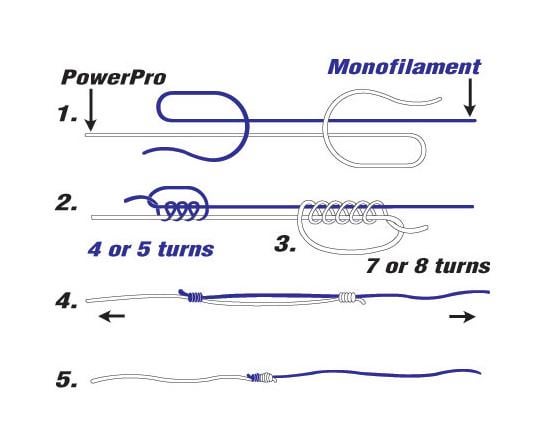
Tying The Double Uni Knot
The double uni knot is easy to tie and strong. It works well for joining two different lines.
Overlap the two lines and tie a uni knot on each side. Pull both knots together to lock.
- Overlap the braided and fluorocarbon lines.
- Make a loop with the braided line.
- Wrap the braided line 5-7 times around the fluorocarbon.
- Repeat with the fluorocarbon line on the braided side.
- Pull both knots tight and slide them together.
- Trim the tag ends close to the knots.
Tying The Albright Knot
The Albright knot is popular for joining thick braided to thinner fluorocarbon lines. It is smooth and strong.
Make a loop in the fluorocarbon line. Pass the braided line through and wrap it around the loop.
- Make a loop in the fluorocarbon line.
- Pass the braided line through the loop.
- Wrap the braided line around both strands of the loop 10-12 times.
- Pass the braided line back through the loop.
- Hold the knot and pull both lines to tighten.
- Trim the tag ends close to the knot.

Credit: www.reddit.com
Securing And Testing Knots
Tying braided fishing line to fluorocarbon needs strong knots. Good knots keep your line safe and help catch fish. You must secure and test your knots well.
Proper tightening and checking the knot’s strength are key. Follow these tips to make sure your knot will hold.
Proper Tightening Techniques
Tightening your knot correctly stops it from slipping. Pull the lines slowly and evenly. Avoid quick jerks that can weaken the knot.
- Wet the knot with water or saliva before tightening
- Pull the main line and tag end evenly
- Keep tension while sliding the knot tight
- Don’t over-tighten to avoid damaging the line
- Trim the tag end close but leave a small tail
Checking Knot Reliability
Testing your knot is important to avoid losing fish. A simple test helps you see if the knot will hold under pressure.
| Test Method | Description | What to Look For |
| Pull Test | Pull the line hard by hand | No slipping or loosening |
| Water Soak | Soak the knot in water | Knot stays tight after soaking |
| Load Test | Attach a weight and pull | Line holds weight without break |
Common Mistakes To Avoid
Tying braided fishing line to fluorocarbon can be tricky. Many anglers make mistakes that weaken their knots.
Knowing what to avoid helps keep your line strong and secure. This guide covers two common mistakes.
Line Slippage Issues
One big problem is the line slipping inside the knot. Braided lines are slick and can slide easily.
Not tightening the knot enough or using the wrong knot type causes slippage. This can make you lose fish.
- Use knots designed for braided to fluorocarbon connections
- Make sure to wet the line before tightening the knot
- Tighten the knot slowly and firmly to avoid slips
- Check the knot after tying to see if it moves
Overtightening Risks
Pulling too hard on the knot can damage the line. Over-tightening weakens both braided and fluorocarbon lines.
This damage lowers the knot’s strength and may cause it to break under pressure.
- Pull the knot tight, but avoid extreme force
- Let the knot settle before final tightening
- Inspect the line for any cuts or damage after tying
- Practice tying knots to find the right tension
Maintaining Line Performance
Tying braided fishing line to fluorocarbon requires care to keep the line strong. Proper maintenance helps prevent breaks and slippage. It keeps your fishing line working well over time.
Checking your knots and replacing worn lines keeps your setup reliable. This helps you catch more fish without line failure.
Regular Knot Inspection
Check your knots before and after every fishing trip. Look for signs of wear like fraying or loosening. Even strong knots can weaken after use.
Tighten or retie knots that look weak. A secure knot keeps the line strong and prevents losing fish.
- Look for frayed or damaged line near knots
- Feel knots to ensure they are tight and firm
- Retie knots if any slip or looseness is found
- Use proper knots for braided to fluorocarbon connections
Replacing Worn Lines
Replace fishing lines regularly to keep performance high. Old lines lose strength and can break easily. Look for discoloration, stiffness, or cracks.
Cut off worn sections or replace the entire line if needed. This prevents unexpected breaks during fishing.
- Check the line for stiffness or discoloration
- Remove damaged or cracked sections immediately
- Replace lines after several fishing trips or heavy use
- Store lines away from sunlight and heat to reduce wear

Credit: www.youtube.com
Frequently Asked Questions
How Do You Tie Braided Line To Fluorocarbon Leader?
Use strong knots like the FG knot or Double Uni knot. These knots ensure a secure connection without slipping. Moisten the knot before tightening to reduce friction and protect the line. Practice tying to improve knot strength and reliability.
What Is The Best Knot For Braided To Fluorocarbon?
The FG knot is the best choice for tying braided to fluorocarbon. It provides a slim, strong connection ideal for casting and fighting fish. The Double Uni knot is a simpler alternative but less streamlined than the FG knot.
Can I Use A Double Uni Knot For Braided To Fluorocarbon?
Yes, the Double Uni knot works well for joining braided to fluorocarbon. It is easier to tie and holds strong under tension. However, it is bulkier than the FG knot, which may affect casting distance.
Why Moisten The Knot Before Tightening?
Moistening the knot reduces friction and heat caused by tightening. This prevents line damage and increases knot strength. Use water or saliva to wet the knot before pulling it tight to ensure durability and reliability.
Conclusion
Tying braided line to fluorocarbon is simple with the right steps. Practice the knot a few times to gain confidence. A strong knot helps catch more fish and avoid losing gear. Use clean, dry lines and pull tight for best results.
Take your time and check the knot before fishing. This skill improves your fishing experience and makes your setup reliable. Keep practicing, and you’ll get better every time. Fishing becomes more fun with solid knots you trust.