If you love fishing, you know how important it is to have your gear set up just right. One key step is tying braided fishing line to your spool properly.
Doing it the right way can save you from annoying tangles and lost fish. In this guide, you’ll learn simple, clear steps to get your line secure and ready for action. By the end, you’ll feel confident and ready to cast like a pro.
Keep reading, and let’s make sure your next fishing trip is smooth and successful!

Credit: www.youtube.com
Choosing The Right Braided Line
Choosing the right braided fishing line is important for a good fishing experience. The line affects how you cast, how strong your connection is, and how much fish you can catch.
Different braided lines have various features. Knowing these features helps you pick the best line for your needs.
Types Of Braided Lines
There are several types of braided fishing lines. They differ in material and construction. These differences change how the line performs in water.
Common types include Spectra, Dyneema, and Microfilament. Each type offers different strength and stretch levels.
- Spectra:Strong and smooth, low stretch.
- Dyneema:Very durable, resists abrasion well.
- Microfilament:Thin and flexible, good for long casts.
Line Strength And Diameter
Line strength is the maximum weight the line can hold before breaking. Diameter is how thick the line is. Both affect fishing performance.
Stronger lines can catch bigger fish but may be thicker. Thinner lines cast farther and are less visible in water.
| Line Strength (lbs) | Diameter (inches) | Use |
|---|---|---|
| 10-20 | 0.10 – 0.15 | Small fish, light tackle |
| 20-40 | 0.15 – 0.25 | Medium fish, general use |
| 40-80 | 0.25 – 0.40 | Large fish, heavy tackle |
Preparing Your Spool
Tying braided fishing line to a spool needs a good start. Preparing your spool helps avoid line slipping or tangling.
Clean and add a backing layer to the spool before loading the braided line. These steps improve line hold and casting.
Cleaning The Spool
Remove old line and dirt from the spool. A clean spool helps the line stick well and prevents damage.
Use a soft cloth and mild soap to wipe the spool surface. Dry it completely before adding any line.
- Take off old fishing line carefully
- Wipe spool with soapy cloth
- Rinse if needed and dry fully
- Check for any damage or rough spots
Adding Backing Layer
The backing layer adds grip for braided line on the spool. It also helps fill space and protect your braid.
Use a thin nylon or monofilament line as backing. Wrap it tight and even around the spool until full or nearly full.
- Choose a backing line thinner than your braid
- Tie the backing line to the spool securely
- Wrap evenly without gaps or overlaps
- Fill spool to about 75% capacity
Selecting A Knot For Braided Line
Choosing the right knot is important when tying braided fishing line to a spool. Braided line is thin and strong but can slip if the knot is not secure.
Some knots work better with braided line because they hold tight and do not damage the line. Here are three common knots to consider.
Palomar Knot
The Palomar knot is very strong and simple to tie. It works well with braided line because it keeps the line from slipping.
To tie it, double the line and pass it through the spool eye. Tie a loose overhand knot, then pass the loop over the spool. Pull tight to secure.
- Strong and reliable for braided line
- Easy to tie quickly
- Less chance of slipping
Uni Knot
The Uni knot is very popular with anglers. It grips well on braided line and does not weaken the line much.
To tie it, pass the line through the spool eye and make a loop. Wrap the tag end around the main line and through the loop several times. Pull tight.
- Good knot for braided line
- Adjustable and easy to tie
- Works with different line types
Improved Clinch Knot
The Improved Clinch knot is a common choice for many anglers. It works fine with braided line if tied carefully.
To tie it, pass the line through the spool eye. Wrap the tag end around the main line five to seven times. Thread the tag end through the small loop near the eye and then back through the big loop. Pull tight.
- Widely used and easy to learn
- Secure if tied properly
- May slip if not tightened well
Step-by-step Knot Tying
Tying braided fishing line to a spool is a key skill for anglers. It ensures your line stays secure during fishing.
Follow these simple steps to tie a strong knot. This guide breaks down the process into clear parts.
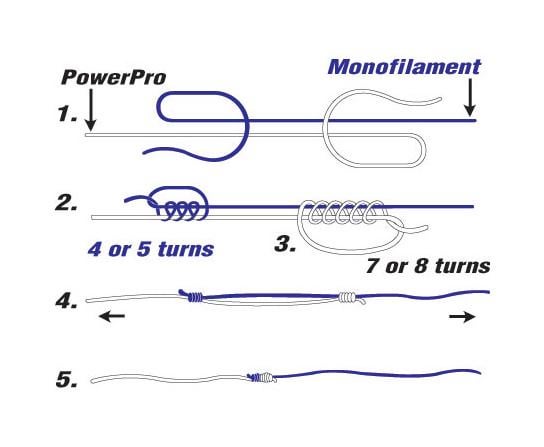
Threading The Line
First, pull the braided line through the spool’s eyelet. Leave enough line to work with, about 12 inches.
Forming The Loop
Create a small loop by doubling the line back toward the spool. Hold the loop firmly with your fingers.
- Pass the end of the line around the spool’s main line.
- Bring the end through the loop you made.
- Wrap the end around the spool line twice.
- Slide the end back through the loop again.
Securing The Knot
Hold both the main line and tag end tightly. Pull slowly to tighten the knot around the spool.
| Tip | Reason |
|---|---|
| Moisten the knot | Reduces friction and prevents line damage |
| Pull slowly | Ensures the knot tightens evenly |
| Check for slippage | Prevents the knot from loosening during use |
Tightening And Trimming
After the knot is tight, trim the tag end close to the knot. Leave a small tail to avoid slipping.
- Use sharp scissors for a clean cut
- Do not cut too close to the knot
- Test the knot by pulling on the line firmly
Spooling The Line Properly
Spooling braided fishing line to your reel is important for good fishing. Proper spooling helps the line work well and last longer.
Putting the line on the spool correctly stops problems like tangles and knots. It also keeps the line strong while fishing.
Maintaining Tension
Keep the line tight as you spool it. Loose line can cause loops and knots. Tight line fits better on the spool.
Use your fingers or a cloth to hold the line firmly. Apply steady pressure while winding the line onto the spool.
- Hold the line with light but firm pressure
- Keep the spool turning slowly and evenly
- Check for loose loops and fix them right away
Avoiding Line Twist
Line twist happens when the line spins too much while spooling. It can cause tangles and weak spots.
Make sure the line comes off the filler spool in the same direction it goes onto the reel spool. This helps stop twists.
- Place the filler spool so the line pulls off straight
- Keep the reel spool turning smoothly
- Stop and fix any twists during spooling

Credit: www.reddit.com
Testing The Knot And Line
After tying braided fishing line to the spool, testing the knot and line is important. This ensures your setup is strong and reliable before fishing.
Two key tests help check the knot and line: the pull test and casting practice. Both show if the line holds well under pressure and during use.
Pull Test
Perform a pull test by pulling on the line where it meets the spool. This checks knot strength and line security. Pull firmly but do not overdo it.
- Hold the spool in one hand.
- Grab the line near the knot with the other hand.
- Pull the line steadily and firmly.
- Look for any slipping or loosening of the knot.
- If knot slips, retie the line.
Casting Practice
Practice casting to test how the line performs under real conditions. This helps spot any issues with the knot or line tension.
| Action | What to Check | Result |
| Cast slowly | Line flow and knot hold | No knot movement, smooth flow |
| Cast hard | Knot security under pressure | Knot stays tight, no slipping |
| Reel in | Line tension and spool grip | Line tight, no slack or noise |
Common Mistakes To Avoid
Tying braided fishing line to a spool can be tricky. Avoiding common mistakes will save you time and trouble.
Knowing what to watch out for helps keep your fishing line secure and ready to use.
Loose Knots
Loose knots can slip and cause the line to come off the spool. Make sure to tighten your knots firmly.
A secure knot keeps the line in place and stops it from unraveling during fishing.
- Pull the knot tight before winding the line
- Check the knot for any gaps or looseness
- Practice common knots like the Palomar or Improved Clinch
Overfilling The Spool
Filling the spool too much can cause line tangles and reduce casting distance. Leave some space on the spool.
Overfilled spools often lead to line jams or knots when you cast or reel in.
- Stop filling when the line is about 1/8 inch below the spool edge
- Too tight packing can damage the line
- Keep the line even and neat on the spool
Ignoring Line Direction
Not paying attention to the line direction causes twists and tangles. The line should flow naturally onto the spool.
Always wind the line in the same direction the spool turns to avoid loose loops.
- Match the winding direction to the reel’s spool rotation
- Keep tension on the line while spooling
- Stop if the line starts twisting or looping

Credit: www.reddit.com
Frequently Asked Questions
How Do You Tie Braided Line To A Spool?
Start by threading the braided line through the spool’s eye. Wrap the line around the spool two times. Use a Uni Knot or Palomar Knot to secure it tightly. Pull the knot firmly to ensure it holds. Trim any excess line close to the knot.
What Knot Works Best For Braided Fishing Line?
The Palomar Knot is the most reliable for braided line. It is strong, simple, and prevents slippage. This knot maintains the line’s strength and is easy to tie even with slippery braided lines. It’s ideal for tying braided line to a spool or hook.
Can You Tie Braided Line Without A Backing?
Yes, but it is not recommended. Braided line is thin and slippery. Using a monofilament backing prevents line slippage on the spool. It also helps fill the spool to maintain consistent casting and reel performance. Backing protects the braided line’s integrity.
How Tight Should The Line Be On The Spool?
The line should be wound firmly but not overly tight. Tight winding prevents line tangles and slippage. Overly tight winding can damage the line or spool. Maintain steady tension to ensure the line lays evenly and securely on the spool.
Conclusion
Tying braided fishing line can be simple with practice. Follow the steps outlined here for a secure knot. A good knot ensures your line won’t slip. Strong knots help catch more fish. Regular practice makes the process easier. Keep your tools handy for quick access.
Always check your knot before casting. A well-tied line can make your fishing trip successful. Remember, patience leads to better results. Enjoy your time on the water. Happy fishing!