If you fish with braided line, you know how tricky it can be to tie two pieces together. A weak knot can cost you a big catch or even your favorite lure.
But don’t worry—once you learn the right technique, you’ll have a strong, reliable knot every time. You’ll discover simple, step-by-step instructions to tie braided fishing line together like a pro. Keep reading, and you’ll never lose a fish because of a weak knot again.

Credit: www.youtube.com
Choosing The Right Knot
Tying braided fishing line requires the right knot. A good knot keeps your line strong and secure. Different knots work better with braided line than others.
Understanding which knot to use helps prevent line slipping or breaking. This guide covers knots suitable for braided lines and factors that affect knot strength.
Knots Suitable For Braided Line
Braided fishing line is thin and slick. Some knots hold better than others with this type of line. Here are popular knots for braided line:
- Palomar Knot – Simple and very strong for braided line.
- Double Uni Knot – Great for joining two braided lines.
- FG Knot – Very slim and strong, ideal for leader connections.
- Improved Clinch Knot – Easy to tie and works well with braided line.
- Loop Knot – Creates a strong loop for lure freedom.
Factors Affecting Knot Strength
Several factors affect how strong your knot will be with braided line. Knowing these helps you tie the best knot possible.
| Factor | Description |
|---|---|
| Line Diameter | Thinner braided lines need knots that hold tightly without slipping. |
| Knot Type | Different knots distribute stress differently on the line. |
| Tying Technique | Properly wetting the knot and tightening slowly prevents damage. |
| Number of Wraps | More wraps usually increase knot strength but can bulk the knot. |
| Line Condition | Old or damaged braided line knots break more easily. |
Preparing The Lines
Tying braided fishing lines can be tricky. Prepare your lines to make it easier.
Proper preparation ensures a strong knot. It helps avoid line slippage.
Trimming And Aligning
Start by trimming the line ends. Use sharp scissors for a clean cut.
Align the lines parallel to each other. This alignment aids in knot tying.
- Trim with sharp scissors
- Align lines before knotting
- Check for frayed edges
Moistening The Line
Moisten the line with water or saliva. This reduces friction during knotting.
Moistening prevents heat damage. It makes the line easier to pull tight.
- Use water or saliva
- Reduce friction with moisture
- Prevent heat damage
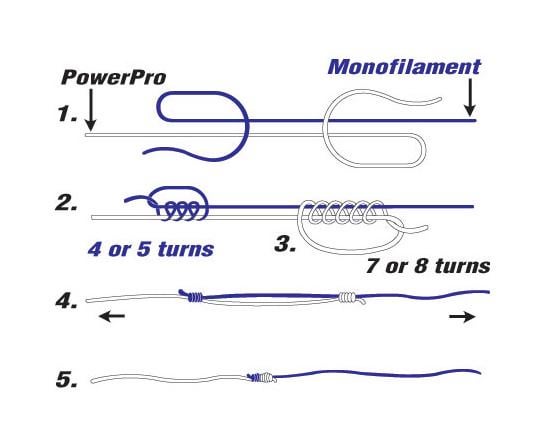
Double Uni Knot
The Double Uni Knot is a strong way to tie braided fishing lines together. It works well for lines of different sizes. This knot keeps the line secure and easy to tie.
This knot is popular with anglers because it does not weaken the line much. It is also simple to learn and reliable in water.
Step-by-step Tying
Start by overlapping the ends of two braided fishing lines. Leave about 6 inches of overlap for the knot.
Next, make a loop with one end and wrap it around the other line 4 to 6 times. Pass the tag end back through the loop.
- Repeat the wrapping process with the other tag end around the first line.
- Pull both standing lines to bring the knots close together.
- Make sure the knots slide and meet in the middle.
- Trim the tag ends close to the knots.
Tips For Tightening
Moisten the lines before tightening to reduce friction. This helps the knot tighten smoothly without damaging the line.
Pull the standing lines slowly and evenly. Avoid jerking the lines to keep the knot secure and neat.
- Wet the line with water or saliva before pulling.
- Hold the tag ends while pulling the main lines.
- Check that the knots slide toward each other.
- Cut the excess tag ends after the knot is tight.
Palomar Knot
The Palomar knot is a strong and simple knot to tie braided fishing lines. It keeps the line from slipping and works well with all types of fishing lines.
This knot is popular because it is easy to tie and holds up under heavy use, making it a favorite for many anglers.
How To Tie Palomar Knot
Tying the Palomar knot is quick and reliable. Follow these steps to make a strong knot for your braided fishing line.
- Double about 6 inches of line and pass it through the eye of the hook or lure.
- Tie a loose overhand knot with the doubled line, leaving a loop large enough to pass the hook through.
- Pass the hook or lure through the loop.
- Moisten the knot with water or saliva to reduce friction.
- Pull on both the tag end and standing line to tighten the knot down to the eye.
- Trim the tag end close to the knot to finish.
When To Use Palomar Knot
The Palomar knot works best for braided lines and is good for many fishing situations. It holds well even with slippery lines.
- Use it when fishing with braided or monofilament lines.
- Good for tying hooks, lures, and swivels securely.
- Best for situations needing a strong, simple knot.
- Ideal for freshwater and saltwater fishing.
| Benefit | Details |
| Strength | Maintains about 95% of line strength |
| Simplicity | Easy to learn and tie quickly |
| Reliability | Does not slip or weaken under pressure |
| Versatility | Works with many types of fishing lines |
Fg Knot
The FG Knot is a popular way to tie braided fishing line to a leader. It is strong and smooth. This knot lets the line pass through the rod guides easily.
Many anglers use the FG Knot because it holds well under pressure. It is useful for fishing with braided lines and fluorocarbon or monofilament leaders.
Tying The Fg Knot
Start by wrapping the braided line around the leader many times. Keep the wraps tight and close together. This creates strong friction.
Next, pull the leader to tighten the wraps on the braided line. Make sure the wraps do not slip. Then, tie a few half hitches to secure the knot.
- Wrap braided line around the leader 15-20 times
- Keep wraps tight and neat
- Pull leader to tighten wraps firmly
- Tie 2-3 half hitches to lock the knot
- Trim excess line close to the knot
Advantages Of Fg Knot
The FG Knot is very strong and slim. It does not slip easily, making it reliable for big fish.
This knot has a low profile that passes through rod guides smoothly. It keeps the line from catching or breaking.
- High strength with braided and leader lines
- Low chance of slipping or failure
- Slim knot passes through guides easily
- Works well with various line types
- Improves casting distance and accuracy

Credit: www.wikihow.com
Testing Knot Strength
Testing the strength of your braided fishing line knot is important. It helps ensure the knot holds under pressure while fishing.
You want to avoid losing fish because of a weak knot. Let’s look at how to test your knot’s strength.
Applying Pressure
Apply steady pressure to the knot by pulling the lines in opposite directions. This mimics the force during a catch.
- Hold both ends of the braided line firmly.
- Pull slowly but firmly to avoid sudden shock.
- Check if the knot slips or loosens under pressure.
- Repeat this test a few times to confirm strength.
Signs Of A Weak Knot
Watch for these signs to spot a weak knot before fishing:
| Sign | What It Means |
| Knot slips easily | Improper tying or too little tension |
| Line frays near knot | Friction or poor knot choice |
| Knot loosens quickly | Tension not held; knot is weak |
| Line breaks at knot | Incorrect knot or damaged line |
Common Mistakes To Avoid
Tying braided fishing line requires care and skill. Avoid mistakes that weaken your knots.
Some errors are easy to fix but can cause line breaks or slippage. Learn what to watch out for.
Over-tightening
Pulling the knot too tight can damage the braided line. It may cut the fibers inside.
Keep tension firm but gentle. This helps the knot hold without weakening the line.
- Pull slowly to avoid sudden tightness
- Use your fingers to feel the knot’s tension
- Stop tightening once the knot feels secure
Incorrect Line Overlap
Line overlap means how the lines sit inside the knot. Too little overlap makes weak knots.
Make sure the lines overlap evenly. This adds strength and stops slipping during fishing.
- Lay the lines side by side before tying
- Check that they twist together smoothly
- Adjust overlap if the knot looks uneven

Credit: www.reddit.com
Maintaining Knots For Longevity
Tying braided fishing line correctly is important. Keeping knots strong helps catch more fish. Good care of knots keeps them lasting longer.
This guide shows how to care for your knots. Regular checks and re-tying can stop knots from breaking.
Regular Inspection
Check your knots before and after fishing trips. Look for any signs of wear or damage. A worn knot can fail at the wrong time.
- Look for frayed or thin spots on the line near the knot
- Make sure the knot is tight and not slipping
- Check if the knot looks uneven or twisted
- Feel the knot for any rough or weak areas
- Replace the line if it shows heavy wear
Re-tying When Needed
Do not wait for a knot to break. Re-tie knots often to keep your line reliable. Use clean cuts and wet the line before tightening knots.
| When to Re-tie | Reason |
| After heavy catches | Knots stretch and weaken |
| After rough pulls | Knots may slip or fray |
| Every few fishing trips | General line wear |
| If line feels rough near knot | Damage from friction |
Frequently Asked Questions
How Do You Tie Braided Fishing Line Together?
To tie braided fishing line, use strong knots like the Double Uni or Palomar knot. Wet the knot before tightening to prevent friction damage. Trim excess line closely for a neat finish and reliable strength.
What Is The Best Knot For Braided Line?
The Double Uni knot is best for braided line. It maintains high strength and resists slipping. This knot is easy to tie and perfect for joining braided lines to fluorocarbon or monofilament.
Can You Join Braided Line To Monofilament?
Yes, join braided line to monofilament using the Double Uni or Albright knot. These knots provide secure connections and maintain line strength. Always moisten the knot before tightening for durability.
Why Is Tying Braided Line Tricky?
Braided line is slippery and thin, making knots prone to slipping. Proper knots and lubrication help secure the line. Practice ensures better knot strength and prevents line damage.
Conclusion
Tying braided fishing line takes practice but is very useful. Use the right knot and tighten it well. Make sure to wet the line before pulling the knot tight. Check the knot for any slippage before fishing. Strong knots keep your line secure and help catch fish.
Keep trying different methods until you find what works best. With patience, tying braided line becomes quick and easy. This skill improves your fishing experience every time you go out.