If you want to catch more fish, knowing how to tie your fish lure properly is a game-changer. The right knot keeps your lure secure, making it swim naturally and attract more bites.
Imagine missing out on a big catch just because your lure slipped loose. Don’t let that happen to you. In this guide, you’ll learn simple, step-by-step techniques to tie your fish lure quickly and effectively. By the end, you’ll feel confident every time you cast your line.
Ready to improve your fishing skills? Let’s dive in.
Choosing The Right Knot
Tying the right knot is important for fishing lures. It helps keep the lure secure and improves fishing success.
Different knots work best for different lines and lures. Knowing which knot to use can save your catch.
Popular Knots For Fishing Lures
Some knots are very popular among anglers because they are strong and easy to tie. The Improved Clinch Knot, Palomar Knot, and Loop Knot are common choices.
- Improved Clinch Knot:Easy to tie and works well with light to medium lines.
- Palomar Knot:Very strong and holds well with braided lines.
- Loop Knot:Allows the lure to move freely and looks more natural in water.
Knot Strength And Suitability
| Knot | Strength | Best For |
| Improved Clinch | Good | Monofilament lines, general use |
| Palomar | Very Strong | Braid and heavy lines |
| Loop Knot | Moderate | Lures needing free action |
Choosing a knot depends on your line type and the lure action you want. Use strong knots for heavy lines and moving knots for lively lures.

Credit: medium.com
Preparing Your Line And Lure
Tying your fish lure correctly starts with preparing both the fishing line and lure. This ensures a strong, secure connection for better fishing results.
Focus on trimming and checking your line before choosing the right lure for your fishing conditions.
Trimming And Checking The Line
Inspect your fishing line for any damages or weak spots. Trim the end of the line to remove frays and ensure a clean tie.
- Look for cracks, abrasions, or discoloration
- Cut off about an inch from the line’s end
- Use sharp scissors or a line clipper
- Make sure the line is dry before tying
- Test the strength by pulling gently
Selecting The Appropriate Lure
Choose a lure that matches the fish species and water conditions. The lure’s size and type impact your chances of success.
| Lure Type | Best For | Water Condition |
| Spinnerbait | Bass, Pike | Murky or Weedy |
| Jig | Crappie, Walleye | Clear or Deep |
| Crankbait | Trout, Bass | Open Water |
| Soft Plastic | Various Species | All Conditions |
Step-by-step Knot Techniques
Tying the right knot is key for fishing success. A good knot holds the lure firmly.
Learn these simple knots to secure your fish lure effectively and easily.
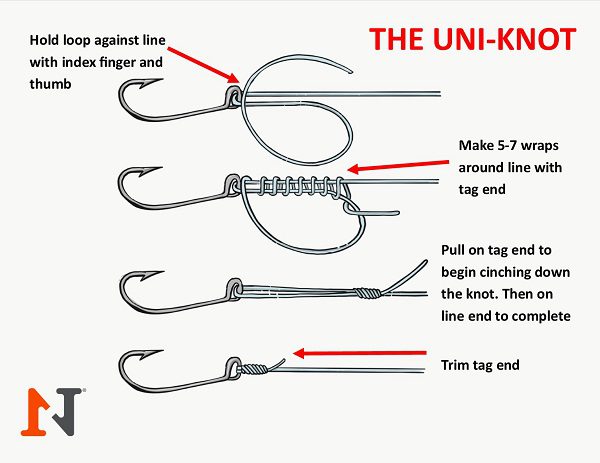
Improved Clinch Knot
The Improved Clinch Knot is popular for its strength and ease. Use it to tie your lure to the line securely.
- Thread the line through the lure eye.
- Wrap the tag end around the standing line five times.
- Pass the tag end through the small loop near the lure eye.
- Then pass it through the large loop you just created.
- Moisten the knot and pull tight to secure.
Palomar Knot
The Palomar Knot is strong and simple. It works well with braided lines and resists slipping.
Follow these steps to tie the Palomar Knot:
- Double about 6 inches of line and pass through the lure eye.
- Tie a loose overhand knot with the doubled line.
- Pass the lure through the loop.
- Moisten the line and pull both tag end and standing line to tighten.
Loop Knot
The Loop Knot lets your lure move freely. This action attracts more fish in the water.
| Action | Description |
| Form a loop | Make an overhand knot leaving a loop above. |
| Pass line | Pass the tag end through the lure eye. |
| Thread tag end | Pass the tag end through the overhand knot loop. |
| Tighten | Moisten and pull the tag end to secure the knot. |
Tips For Secure Knots
Tying a fish lure securely is key for successful fishing. A strong knot keeps your lure attached even under pressure.
This guide offers simple tips to help you tie knots that hold tight and last longer.
Maintaining Line Tension
Keep steady tension on the line while tying the knot. This prevents slack and helps the knot form tightly around the lure.
- Hold the line firmly but do not pull too hard.
- Keep the line straight to avoid twists.
- Use your fingers to guide the knot as it tightens.
Wet The Knot Before Tightening
Wet the knot with water or saliva before pulling it tight. This reduces friction and helps the knot slide into place smoothly.
| Effect | Benefit |
|---|---|
| Dry Knot | Higher chance of line damage |
| Wet Knot | Less friction and stronger hold |
Double-check Knot Tightness
After tightening, test the knot to ensure it holds firm. A loose knot may slip or break during fishing.
- Pull gently on the lure to feel the knot’s grip.
- Look for any gaps or loose loops.
- Retie if the knot feels weak or uneven.
Common Mistakes To Avoid
Tying a fish lure properly helps catch more fish and keeps your gear safe.
Many anglers make simple errors that weaken their knots or cause line damage.
Overlapping Lines
Letting the lines overlap while tying knots can create weak spots. Overlap causes uneven pressure, making the knot slip or break.
- Keep lines straight and tight during tying
- Do not twist or cross the lines
- Check the knot carefully before casting
Insufficient Wraps
Not wrapping the line enough times around the lure hook reduces knot strength. Each wrap adds friction and grip.
- Use at least five wraps for most lure knots
- More wraps may be needed for thinner lines
- Test knot strength by pulling firmly before use
Ignoring Line Type
Different lines need different knot types and tying methods. Not adjusting for line type can cause knot failure.
| Line Type | Recommended Knot | Tip |
| Monofilament | Improved Clinch Knot | Use 5-7 wraps |
| Fluorocarbon | Palomar Knot | Keep line moist while tying |
| Braid | Double Uni Knot | Use more wraps (6-8) |

Credit: www.youtube.com
Testing Your Knot Strength
Testing your knot strength is key to keeping your fish lure secure. A strong knot helps avoid losing your catch.
Check your knot before fishing to ensure it can handle the pull and pressure from fish.
Pull Test Methods
Pull tests show if your knot holds well under pressure. You can test your knot by pulling it hard with your hands.
- Hold the lure firmly and pull the line away slowly.
- Increase the force to simulate a fish pulling.
- Look for any slipping or loosening of the knot.
- If the knot slips, retie it before fishing.
When To Retie
Retie your knot if you notice any damage or weakness. Knots weaken after heavy use or strong pulls.
| Condition | Action |
| Knot slips during pull test | Retie immediately |
| Line frays near knot | Retie with new line section |
| Knots used multiple times | Retie before each fishing trip |
| Knot looks loose or uneven | Retie to secure |
Credit: www.youtube.com
Frequently Asked Questions
What Is The Best Knot For Tying Lures?
The improved clinch knot is highly recommended for tying fishing lures. It is strong and reliable, ensuring your lure stays secure. To tie it, pass the line through the lure’s eye, wrap it around the main line five times, then thread the end through the loop and tighten.
How Do You Tie A Lure To A Fishing Line?
To tie a lure, use the loop knot. This knot allows the lure to move freely, enhancing its action. Thread the line through the lure’s eye, make a simple overhand knot, pass the lure through the loop, and tighten.
Why Does My Lure Keep Slipping Off?
Lures may slip due to improper knot tying. Ensure your knots are tightly secured and correctly tied. Using the wrong type of knot can also cause slipping. Choose a knot suitable for your lure, like the Palomar knot, which offers extra security.
What Line Strength Is Ideal For Lures?
The ideal line strength depends on the fish species you’re targeting. For light freshwater fishing, a 6-8 lb line is suitable. For larger fish or saltwater fishing, consider using a 10-20 lb line. Always match the line strength with your lure and fishing conditions.
Conclusion
Tying a fish lure well helps catch more fish. Practice the steps slowly and carefully. Strong knots keep your lure secure in water. Try different knots to find what works best. Remember, patience and practice improve your fishing skills. Keep your line tight and check knots often.
Enjoy fishing with confidence and better results. Simple steps lead to great fishing days ahead.