Tying your fishing line to a hook might seem simple, but getting it right can make all the difference between a great catch and frustration. If you’ve ever struggled with knots that slip or break, you’re not alone.
In this guide, you’ll learn easy, reliable ways to secure your line so it holds strong every time. Whether you’re a beginner or just want to improve your technique, these tips will help you fish smarter and catch more. Keep reading to master the skill that can transform your fishing experience.

Credit: n1outdoors.com
Choosing The Right Fishing Line
Picking the right fishing line is key for a good fishing experience. The line must match the fish you want to catch and the hook you use.
Different lines have their own strengths and uses. Knowing the differences helps you tie the fishing line properly on the hook.
Monofilament Vs. Braided Lines
Monofilament lines are made from a single strand of nylon. They stretch more and are easy to handle. Braided lines have many fibers woven together. They are thinner and stronger but do not stretch much.
- Monofilament lines are good for beginners because they are soft and knot well.
- Braided lines have higher strength and last longer in rough water.
- Monofilament floats better, which helps with certain fishing methods.
- Braided lines are less visible in water but need special knots.
Line Strength And Diameter
Line strength is how much weight the line can hold before breaking. Diameter is the thickness of the line. Thicker lines are stronger but harder to cast.
| Line Type | Strength (lbs) | Diameter (inches) |
| Monofilament | 4-20 | 0.008-0.035 |
| Braided | 10-50 | 0.006-0.020 |
| Fluorocarbon | 6-30 | 0.007-0.030 |
Best Line For Different Fish
Choose your line based on the fish size and type. Stronger fish need stronger lines. Smaller fish need lighter lines for better feel and control.
- For small fish like trout, use light monofilament lines (4-8 lbs).
- For medium fish like bass, use braided lines (12-20 lbs) for strength.
- For large fish like pike or catfish, use heavy braided or fluorocarbon lines (30-50 lbs).
- Fluorocarbon lines work well for clear water because they are less visible.

Credit: www.ohero.com
Selecting The Hook
Choosing the right hook is important for tying fishing line properly. The hook must fit your fishing needs and bait. This guide helps you pick the right hook for a better fishing experience.
Consider the size, type, and material of the hook. These factors affect how well the hook works with your bait and how long it lasts in water.
Hook Sizes And Types
Hooks come in many sizes and shapes. The size number gets smaller as the hook gets bigger. You can also find hooks labeled as “aught” sizes, like 1/0 or 2/0, which are larger hooks.
| Hook Size | Common Use |
| 10 – 6 | Small fish and bait |
| 5 – 1 | Medium fish and bait |
| 1/0 – 5/0 | Large fish and bait |
| 6/0 and up | Very large fish and big bait |
Matching Hook To Bait
Use a hook that fits your bait well. If the hook is too big, the bait will fall off easily. If the hook is too small, the bait may not cover the hook properly.
- Small hooks work best with worms and small insects.
- Medium hooks suit minnows and medium-sized bait.
- Large hooks fit big bait like frogs or large fish chunks.
Hook Material And Durability
Hooks are made from different metals. Some resist rust better than others. Choose a hook that lasts long and stays strong in water.
Steel hooks are strong but can rust. Stainless steel hooks resist rust but cost more. Coated hooks have a layer to protect them from water damage.
Preparing The Line And Hook
Tying fishing line to a hook starts with good preparation. You need to get both the line and hook ready before tying.
Proper preparation helps the knot hold better and makes fishing easier. Follow these simple steps to prepare your line and hook.
Cutting The Line Properly
Cut the fishing line cleanly to avoid frays. Use sharp scissors or a line cutter for the best results.
Cutting the line straight helps the knot hold tight and prevents slipping during fishing.
- Use sharp scissors or a line cutter
- Make a clean, straight cut
- Avoid crushing or tearing the line
Moistening The Line
Before tying, wet the fishing line with water or saliva. This helps reduce friction during knot tying.
Moistening the line protects it from heat and damage caused by tight knots.
- Wet the line slightly before knotting
- Use water or saliva to moisten
- Keep the line damp while tying
Positioning The Hook
Hold the hook steady with the eye facing up. This makes it easier to pass the line through the eye.
Position the hook so you have good control when wrapping the line to tie the knot.
- Hold the hook by the shank or bend
- Keep the eye of the hook facing up
- Make sure the hook is steady and secure
Basic Knot Techniques
Tying fishing line on a hook is an important skill for every angler. A good knot keeps the hook secure and helps catch fish.
This guide covers three basic knots used to tie fishing line to a hook. Each knot is strong and easy to learn.
Improved Clinch Knot
The Improved Clinch Knot is popular for attaching the line to the hook eye. It is simple and holds well with most lines.
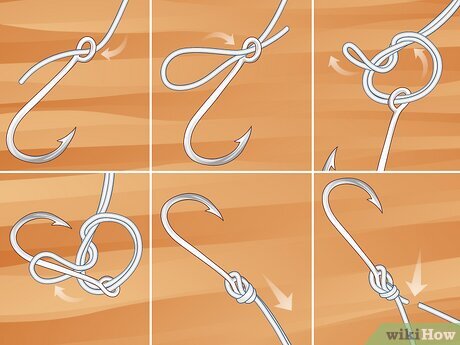
To tie it, pass the line through the hook eye and wrap it around the standing line five to seven times. Then, thread the line through the loop near the eye and back through the big loop. Pull tight to secure.
- Pass line through hook eye
- Wrap line 5-7 times around standing line
- Thread line through small loop near eye
- Pass line back through large loop
- Pull tight to secure the knot
Palomar Knot
The Palomar Knot is strong and easy to tie. It works well with braided and monofilament lines.
Double about six inches of line and pass the loop through the hook eye. Tie a loose overhand knot with the doubled line. Pull the hook through the loop, then pull all ends tight to finish.
- Double 6 inches of line
- Pass loop through hook eye
- Tie loose overhand knot with doubled line
- Pull hook through the loop
- Tighten all ends to secure
Uni Knot
The Uni Knot is versatile and works well on hooks, lures, and swivels. It is easy to adjust before tightening.
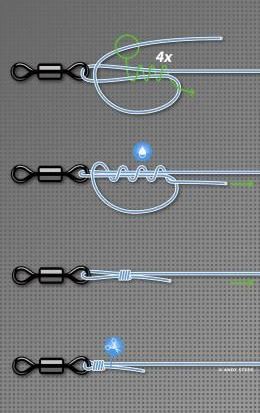
Pass the line through the hook eye and double it back parallel. Make six turns with the tag end around the double line and through the loop. Pull the knot down tightly on the hook eye.
- Pass line through hook eye
- Double line back parallel to main line
- Make six turns with tag end around double line
- Pass tag end through loop
- Pull knot tight on hook eye
Step-by-step Knot Tying
Tying a fishing line to a hook is an important skill for every angler. A good knot keeps the hook secure and helps catch more fish.
Below are simple steps for three popular knots. Follow these to tie your fishing line on a hook correctly.
Improved Clinch Knot Steps
The Improved Clinch Knot is strong and easy to tie. It works well with most fishing lines and hooks.
- Thread the line through the hook eye.
- Wrap the loose end around the main line 5 to 7 times.
- Pass the loose end through the small loop near the hook eye.
- Then pass it through the big loop just created.
- Moisten the knot with water or saliva.
- Pull the loose end and main line to tighten the knot.
- Trim the excess line close to the knot.
Palomar Knot Steps
The Palomar Knot is very strong and simple. It works best with braided and monofilament lines.
- Double about 6 inches of line and pass it through the hook eye.
- Tie a loose overhand knot with the doubled line.
- Pass the hook through the loop of the overhand knot.
- Pull both ends of the line slowly to tighten the knot.
- Make sure the knot is snug against the hook eye.
- Cut the tag end close to the knot.
Uni Knot Steps
The Uni Knot is versatile and easy to adjust. It works well for tying hooks, lures, and swivels.
- Pass the line through the hook eye and double back alongside the main line.
- Form a loop by laying the tag end over the doubled line.
- Make 6 to 8 wraps with the tag end around the doubled line and through the loop.
- Moisten the knot before pulling it tight.
- Pull the tag end and main line to slide the knot down to the hook eye.
- Trim the excess tag end close to the knot.
Tips For Stronger Knots
Tying a fishing line on a hook needs care to keep the knot strong. A good knot helps you catch fish without losing them.
Use the right steps to make your knot tight and safe. This guide gives simple tips for stronger knots.
Checking Knot Tightness
After tying the knot, pull the line hard to check its tightness. The knot should not slip or loosen.
If the knot moves, retie it to avoid losing your hook or fish. A tight knot holds better under pressure.
Avoiding Line Damage
Handle the fishing line gently to avoid damage. Sharp bends or rough pulls can weaken the line near the knot.
Wet the line before tightening the knot. This reduces friction and keeps the line strong.
- Do not pull the line too fast or hard
- Use your fingers, not teeth, to tighten knots
- Keep the line wet during knot tying
Trimming Excess Line
Cut off extra line close to the knot after tying. This stops the loose ends from catching weeds or fish.
Use sharp scissors or clippers for a clean cut. Leaving too much line can weaken the knot or cause tangles.
Common Mistakes To Avoid
Tying fishing line on a hook may seem simple. Yet, many anglers make mistakes that cause lost fish.
Fixing these errors helps your knot hold tight and improves your fishing success.
Loose Knots
Loose knots can slip or come undone easily. This makes you lose fish and tackle.
Always pull the knot tight after tying it. Check the knot before casting.
- Pull the tag end firmly
- Test the knot strength with a quick tug
- Retie if the knot feels loose
Overlapping Line
Overlapping lines cause knots to weaken or slip. The line should wrap neatly without crossing itself.
Make sure the wraps are smooth and side by side. Avoid crossing the line when making turns.
- Keep wraps tight and even
- Do not let the line twist or cross
- Practice to keep line control while tying
Not Moistening The Line
Dry knots can burn the fishing line when tightened. This weakens the knot and causes breaks.
Wet the line before pulling the knot tight. Saliva or water works well to reduce friction.
- Moisten the line before tightening
- Use water or saliva for best results
- Do not skip this step to protect your line
Testing Your Knot Strength
After tying your fishing line on a hook, it is important to test the knot strength. A strong knot keeps your catch safe and prevents line breakage.
There are simple ways to check if your knot is secure before you start fishing.
Pull Test Method
Hold the hook firmly and pull the line with steady force. The knot should hold tight without slipping or loosening.
- Pull slowly at first to feel the knot’s strength.
- Increase force gradually to test durability.
- Watch for any slipping or sliding of the knot.
- If the knot moves, retie it before fishing.
Visual Inspection
Look closely at the knot for any signs of weakness or damage. A good knot is neat and tight without loose ends.
| What to Check | Signs of a Strong Knot | Signs to Retie |
|---|---|---|
| Knot Tightness | Firm and snug | Loose or slipping |
| Line Condition | Clean and undamaged | Frayed or worn |
| Knot Shape | Symmetrical and compact | Uneven or messy |
When To Retie
Retie your knot if you notice any weakness. Always retie after catching a big fish or if the line feels worn.
- If the knot slips during the pull test
- If the line is frayed near the knot
- After a long time fishing with the same knot
- When the knot looks loose or messy
Credit: www.beadinggem.com
Frequently Asked Questions
How Do I Tie Fishing Line To A Hook Securely?
To tie fishing line securely, use a strong knot like the improved clinch knot. Pass the line through the hook eye, wrap it around 5-7 times, then thread it back through the loop. Tighten and trim the excess line to prevent slipping.
What Is The Best Knot For Fishing Hooks?
The improved clinch knot is the best for tying fishing hooks. It’s simple, reliable, and holds well under tension. This knot reduces the chance of the line slipping off, making it ideal for most fishing situations and line types.
Can I Use Any Fishing Line To Tie Hooks?
Yes, you can use various fishing lines like monofilament, fluorocarbon, or braided lines to tie hooks. Choose a line that suits your fishing type and strength needs. Each line may require slight knot-tying adjustments for optimal security.
How Do I Prevent The Fishing Line From Slipping On Hooks?
To prevent slipping, ensure the knot is tight and properly wrapped around the hook eye. Use knots like the improved clinch or Palomar knot. Wet the line before tightening to reduce friction and improve knot strength.
Conclusion
Tying a fishing line to a hook is simple with practice. Follow the steps carefully. Start with the right knot for your needs. Ensure the line is secure to avoid losing fish. Always double-check your work before casting. Keep your hands steady and focus on each step.
Practice makes perfect, so don’t get discouraged. Whether fishing for fun or food, a well-tied line ensures success. Enjoy the process and the peace of fishing. Happy fishing adventures await you!