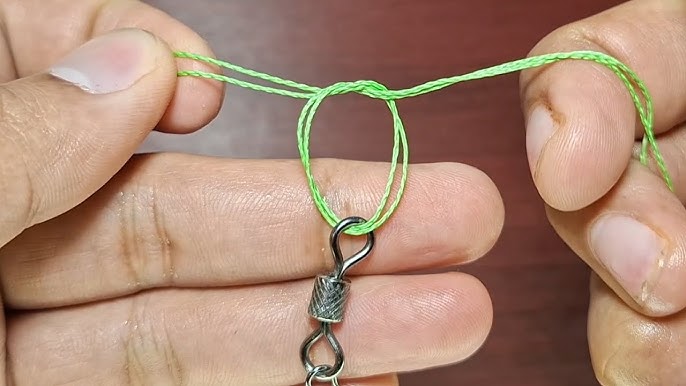
If you want your fishing setup to work smoothly, knowing how to tie your fishing line to a swivel is a must. This simple skill can save you from tangled lines, lost fish, and wasted time.
Imagine casting your line with confidence, knowing your knot is strong and reliable. You’ll learn easy, step-by-step methods that anyone can master. By the end, you’ll be ready to fish smarter, not harder. Keep reading to discover the secrets that make every catch more rewarding.

Credit: www.youtube.com
Choosing The Right Swivel
Using the correct swivel helps prevent line twists while fishing. It also keeps the line strong and secure.
Picking the right swivel depends on the fishing line and the type of fish you want to catch.
Types Of Swivels
There are several types of swivels to choose from. Each type serves a different purpose and suits different fishing styles.
- Barrel Swivel:Simple and strong. Good for general fishing.
- Ball Bearing Swivel:Rotates smoothly. Best for heavy or fast fishing.
- Snap Swivel:Has a clip. Allows quick lure changes.
- Three-Way Swivel:Used for multiple lines or rigs.
Matching Swivel Size To Line Strength
Choose a swivel size that matches your fishing line’s strength. A wrong size can cause line breakage or poor performance.
| Line Strength (lbs) | Recommended Swivel Size | Swivel Type |
|---|---|---|
| 2-6 | Small (Size 10-14) | Barrel or Snap |
| 8-15 | Medium (Size 6-8) | Barrel or Ball Bearing |
| 20-40 | Large (Size 3-5) | Ball Bearing or Snap |
| 50+ | Extra Large (Size 1-2) | Ball Bearing or Heavy Duty |
Selecting Suitable Fishing Line
Choosing the right fishing line is important for tying it to a swivel. The line must match your fishing style and target fish.
This guide explains the types of fishing lines and key factors like strength and diameter.
Monofilament Vs. Fluorocarbon Vs. Braided
Monofilament is easy to handle and stretches well. Fluorocarbon sinks faster and is less visible in water. Braided line is very strong and thin but lacks stretch.
- Monofilament works well for beginners and general fishing.
- Fluorocarbon suits clear water and picky fish.
- Braided line is best for heavy cover and deep water.
Line Strength And Diameter
Line strength is measured in pounds (lb). Diameter affects casting distance and knot strength. Stronger lines usually have bigger diameters.
| Type | Strength Range (lb) | Diameter Range (inches) | Stretch |
| Monofilament | 4 – 30 | 0.008 – 0.035 | High |
| Fluorocarbon | 4 – 30 | 0.007 – 0.030 | Low |
| Braided | 10 – 80+ | 0.005 – 0.020 | Very Low |
Preparing The Line And Swivel
Tying a fishing line to a swivel is essential for fishing. It ensures that your bait moves naturally in the water.
In this guide, you’ll learn how to prepare your line and swivel efficiently.
Cutting The Line
Before tying the line, you need to cut it to the right length. This helps you manage your fishing setup better.
- Use a sharp pair of scissors.
- Measure the line against your fishing rod.
- Cut the line leaving some extra length to tie knots.
Moistening The Line
Moistening the line reduces friction. This prevents the line from breaking when you tie it.
Tying The Improved Clinch Knot
Tying a strong knot is key to fishing success. The improved clinch knot holds your line firmly to the swivel.
This knot is simple and reliable for most fishing lines. Follow the clear steps to tie it correctly.
Step-by-step Instructions
- Thread the line through the swivel eye.
- Wrap the tag end around the standing line five to seven times.
- Pass the tag end through the small loop near the swivel eye.
- Then pass the tag end through the big loop created in the previous step.
- Moisten the knot with water or saliva to reduce friction.
- Pull the tag end and standing line slowly to tighten the knot.
- Trim the excess tag end close to the knot.
Tips For Tightening And Securing
Proper tightening keeps the knot strong and prevents slipping. Use these tips for a secure knot.
| Tip | Why It Helps |
| Moisten the line before tightening | Reduces heat and friction to protect the line |
| Tighten slowly and evenly | Keeps the knot neat and strong |
| Check the knot for slippage | Ensures the knot holds under tension |
| Trim tag end closely | Prevents snagging and loose ends |
Tying The Palomar Knot
The Palomar knot is a strong and simple way to tie fishing line to a swivel. It keeps the line secure and works well with many types of fishing lines.
This knot is popular because it is easy to tie and holds well under pressure, making it a favorite for anglers of all skill levels.
Step-by-step Instructions
Start by doubling about six inches of your fishing line and passing the loop through the eye of the swivel.
Next, tie a simple overhand knot with the doubled line, but do not tighten it yet.
Pass the swivel through the loop of the overhand knot.
Pull both ends of the line to tighten the knot against the swivel.
Trim any excess line close to the knot for a clean finish.
When To Use Palomar Knot
Use the Palomar knot when you need a strong, reliable connection to a swivel or hook. It works well with braided and monofilament lines.
This knot is best for fishing situations where strength and line visibility matter less, such as deep water or heavy cover fishing.
- Attaching swivels to prevent line twist
- Connecting hooks or lures for strong hold
- Using braided line that can be slippery
- Fishing for larger or stronger fish
Testing Knot Strength
Testing your knot strength is important to keep your fishing line secure. A strong knot prevents losing fish and tackle.
Learn simple ways to check if your knot holds well before you start fishing.
Pulling Techniques
Use steady pulling to test the knot’s strength. Pull the line firmly but smoothly to see if it holds.
- Hold the swivel firmly in one hand.
- Pull the fishing line slowly with your other hand.
- Feel for any slipping or loosening of the knot.
- Repeat the pull a few times to be sure.
Checking For Slippage
Look closely at the knot after pulling. A good knot stays tight without moving or slipping.
| Observation | Meaning | Action |
| No movement | Knot is strong | Safe to use |
| Minor slip | Knot is weak | Retie the knot |
| Major slip or untie | Knot failed | Use a different knot |
Common Mistakes To Avoid
Tying a fishing line to a swivel seems simple but often goes wrong. Mistakes can weaken the knot or cause the line to break.
Knowing what to avoid helps you tie stronger knots and catch more fish without losing tackle.
Overtightening The Knot
Pulling the knot too tight can damage the line. The fibers may break or get cut, making the knot weak.
- Pull gently to snug the knot without squeezing too hard.
- Moisten the knot with water or saliva before tightening to reduce friction.
- Check the knot for smooth and even wraps without sharp bends.
- Avoid jerking the line while tightening to keep it strong.
Using Damaged Line
Knots tied on old or frayed line often fail. Damaged sections reduce the line’s strength.
| Type of Damage | Effect on Knot | How to Avoid |
|---|---|---|
| Frays and Nicks | Weak spots that break under tension | Inspect line before tying; cut damaged parts |
| Sun Damage | Line becomes brittle and loses strength | Store line away from direct sunlight |
| Twists and Knots | Line tangles and weakens at knots | Use smooth, untwisted line sections |

Credit: www.wikihow.com
Maintaining Your Knots
Tying a fishing line to a swivel is only part of the job. Keeping the knot strong is very important for fishing success. Regular care helps avoid lost fish and gear.
Good maintenance means checking knots often and fixing them when needed. This keeps your fishing setup safe and ready to use.
Regular Inspection
Check your knots before and after each fishing trip. Look for signs of wear like frayed lines or loose knots. A weak knot can break easily under pressure.
- Look for damaged or worn fishing line near the swivel
- Make sure the knot is tight and not slipping
- Check for any twists or bends in the line
- Test the knot by pulling gently to feel its strength
Retying When Necessary
If you find any damage or weakness, cut the old knot off. Retie the fishing line to the swivel with a fresh, strong knot. This helps prevent breakage during fishing.
Always use proper knot-tying techniques. A well-tied knot holds better and lasts longer. Don’t risk losing fish by ignoring weak knots.

Credit: www.youtube.com
Frequently Asked Questions
How Do You Tie A Fishing Line To A Swivel?
To tie a fishing line to a swivel, use a strong knot like the improved clinch knot. Thread the line through the swivel eye, wrap it five to seven times, then pass the tag end through the loop and tighten securely.
Which Knot Works Best For Tying Line To Swivel?
The improved clinch knot is the most reliable for tying line to a swivel. It’s simple, strong, and resistant to slipping, making it ideal for most fishing lines and swivels.
Can I Use Braided Line With A Swivel?
Yes, braided lines can be tied to swivels using knots like the Palomar knot. Braided lines require secure knots due to their slick texture, so choose knots that maintain high strength.
Why Should I Use A Swivel In Fishing?
A swivel prevents line twisting and tangling during casting and retrieval. It also allows smooth lure action and easy line changes, improving overall fishing efficiency.
Conclusion
Tying a fishing line to a swivel is simple and useful. Practice the steps slowly to get it right. A strong knot keeps your line secure while fishing. This small skill can improve your fishing experience a lot. Try different knots to find what works best.
Keep your line tight and check knots often. With patience, you’ll tie the perfect knot every time. Enjoy fishing with confidence and less worry about your line. Easy, strong knots make fishing more fun and successful.