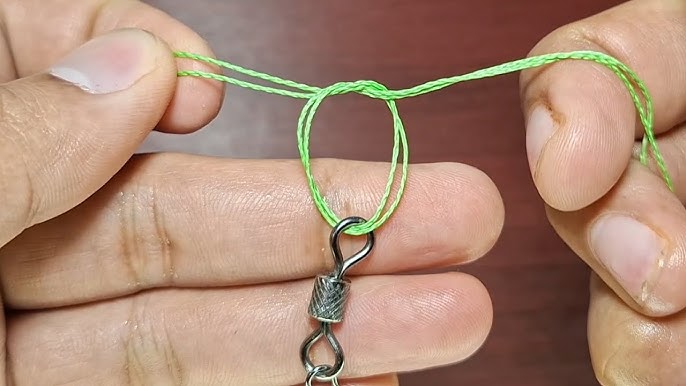
Tying your fishing line to a swivel might seem simple, but getting it right can make all the difference in your fishing success. If your knot slips or isn’t strong enough, you risk losing your catch—or worse, your gear.
In this guide, you’ll learn a step-by-step method to tie your line securely and quickly. By mastering this skill, you’ll fish with more confidence and spend less time fixing knots. Ready to improve your fishing game? Let’s dive in and make sure your line stays strong when it matters most.
Choosing The Right Swivel
Using the right swivel helps keep your fishing line strong and tangle-free. It also lets your bait move naturally in the water.
Picking a swivel depends on the type of fishing and the strength of your line. This guide will help you choose the best one.
Types Of Swivels
There are several types of swivels for different fishing needs. Each type works best in certain situations.
- Barrel Swivels:Simple and common. Good for most fishing lines.
- Ball Bearing Swivels:Spin smoothly. Best for heavy or fast fishing.
- Snap Swivels:Have a clip to change lures quickly.
- Three-Way Swivels:Allow you to connect multiple lines or rigs.
Matching Swivel Size To Line Strength
Swivels come in different sizes. Choose one that matches your fishing line’s strength.
Using a swivel too small can break your line. Too large can be heavy and scare fish.
| Line Strength (lbs) | Recommended Swivel Size |
|---|---|
| 2-6 | Size 10-12 |
| 6-12 | Size 6-8 |
| 12-20 | Size 4-5 |
| 20-40 | Size 1-3 |
| 40+ | Size 0 or larger |

Credit: www.wikihow.com
Selecting The Proper Fishing Line
Choosing the right fishing line is key to tying your line to a swivel correctly. The type of line affects strength, stretch, and visibility. Pick a line that suits your fishing style and the fish you want to catch.
Understanding the differences between monofilament, fluorocarbon, and braided lines helps you make a smart choice. Each line has unique features that affect how you tie it to a swivel.
Monofilament Vs. Fluorocarbon Vs. Braided
Monofilament is soft and stretches well. It is easy to tie and good for beginners. Fluorocarbon is harder and nearly invisible underwater. It sinks faster and resists abrasion. Braided line is very strong and thin. It has little stretch but can be harder to knot.
- Monofilament: stretchy, easy to knot, visible in water
- Fluorocarbon: low visibility, abrasion-resistant, sinks fast
- Braided: thin, strong, low stretch, knots need care
Line Strength Considerations
Line strength is measured in pounds and shows how much weight the line can hold. Choose a line strength that matches the size of fish you want to catch. Using too weak a line can cause breaks. Too strong a line can be hard to handle.
Check the swivel size and weight limit too. Make sure the fishing line and swivel strength work well together. This balance helps your knots hold tight and your fishing go smoothly.
Preparing The Line For Knot Tying
Preparing your fishing line before tying it to a swivel is important. It helps create a strong, reliable knot.
Two main steps help you get ready: trimming and straightening the line, and moistening the line.
Trimming And Straightening The Line
Cut the line cleanly to avoid frayed ends. A sharp pair of scissors or a line cutter works best. After trimming, straighten the line by pulling it gently between your fingers.
- Use sharp scissors to cut the line close to the swivel eye.
- Remove any damaged or weak parts of the line.
- Pull the line tight to remove any kinks or twists.
- Make sure the line lies flat and smooth for easier knot tying.
Moistening The Line
Moistening the line before tightening the knot prevents damage. It also helps the knot close smoothly and hold better.
| How to Moisten | Why It Helps |
|---|---|
| Use water or saliva | Reduces friction and heat during knot tightening |
| Apply a small amount to the knot area | Prevents line from weakening or breaking |
| Keep the line moist until the knot is fully tightened | Ensures knot stays secure and strong |
Popular Knots For Swivel Attachment
Tying fishing line to a swivel is important for a strong connection. Using the right knot keeps the line secure and prevents slipping. This guide shows three popular knots used for swivel attachment.
Each knot offers different benefits depending on the type of fishing line and conditions. Learning these knots helps anglers tie a reliable knot every time.
Improved Clinch Knot
The Improved Clinch Knot is simple and widely used for attaching line to a swivel. It works well with monofilament and fluorocarbon lines. This knot is strong and easy to tie.
- Thread the line through the swivel eye.
- Wrap the tag end around the main line 5 to 7 times.
- Pass the tag end through the small loop near the eye.
- Then pass it back through the big loop just made.
- Moisten the knot and pull tight slowly.
Palomar Knot
The Palomar Knot is strong and holds well with braided and monofilament lines. It is less likely to slip and is easy to tie even in low light.
| Step | Action |
|---|---|
| 1 | Double about 6 inches of line and pass it through the swivel eye. |
| 2 | Tie a loose overhand knot with the doubled line. |
| 3 | Pass the swivel through the loop created by the overhand knot. |
| 4 | Moisten the knot and pull both the tag end and main line to tighten. |
Uni Knot
The Uni Knot is versatile and works with many line types. It is good for attaching swivels because it is strong and easy to adjust before tightening.
- Pass the line through the swivel eye and double back parallel to the main line.
- Make a loop by laying the tag end over the doubled line.
- Wrap the tag end around both lines 5 times.
- Pull the tag end to tighten the coils against the swivel.
- Slide the knot down to the swivel and pull the main line to secure.
Step-by-step Knot Tying Guide
Tying a fishing line to a swivel is important for strong connections. Good knots keep your line from slipping.
This guide shows how to tie three popular knots. Each knot is simple and works well with swivels.
Tying The Improved Clinch Knot
Start by threading the line through the swivel eye. Wrap the loose end around the line five to seven times.
Next, pass the tag end through the small loop near the swivel. Then, pass it through the big loop you just made.
- Thread line through swivel eye
- Wrap line 5 to 7 times
- Pass tag end through small loop
- Pass tag end through big loop
- Pull tight and trim excess line
Tying The Palomar Knot
Double about six inches of line and pass it through the swivel eye. Tie a loose overhand knot with the doubled line.
Pass the swivel through the loop of the overhand knot. Pull both ends to tighten the knot close to the swivel.
- Double 6 inches of line
- Pass doubled line through swivel eye
- Tie loose overhand knot
- Pass swivel through knot loop
- Pull ends tight and trim excess
Tying The Uni Knot
Pass the line through the swivel eye and form a loop alongside the standing line. Wrap the tag end around both lines five to six times.
Pull the tag end to tighten the coils against the swivel. Slide the knot down and pull the standing line to secure it.
- Pass line through swivel eye
- Make a loop with tag end
- Wrap tag end 5 to 6 times
- Tighten coils against swivel
- Slide knot and pull standing line

Credit: www.youtube.com
Testing Knot Strength
Testing the strength of your fishing knot is important to avoid losing fish. A strong knot holds the line and swivel tightly under pressure.
Check your knot before you start fishing. This helps ensure it will not fail during use.
Applying Tension
To test knot strength, apply steady tension by pulling on the line. Use your hands or a clamp to hold the swivel firmly.
- Pull the line slowly to feel how the knot holds.
- Increase pressure until you feel the knot tighten.
- Watch for any slipping or loosening of the knot.
- If the knot slips, retie it with more wraps or a different method.
Common Mistakes To Avoid
Many anglers make simple errors that weaken their knots. Avoid these to keep your setup strong.
| Mistake | Effect | How to Fix |
| Not wetting the line | Friction weakens line during tightening | Moisten line before tightening knot |
| Using too few wraps | Knot can slip under pressure | Add more wraps for security |
| Pulling unevenly | Knot may tighten poorly or loosen | Pull evenly and steadily when tying |
| Cutting tag too short | Tag end may slip out | Leave a small tag to prevent slipping |
Tips For Maintaining Knot Integrity
Keeping your fishing line knot strong is important for a good catch. A weak knot can break and lose the fish.
Simple checks and care help keep the knot tied to your swivel secure and lasting longer.
Regular Knot Inspection
Look at your knots before every fishing trip. Check if the line is frayed or the knot looks loose. Wet knots can slip more easily, so inspect them carefully.
- Examine the knot closely for cracks or worn spots.
- Feel the knot with your fingers for any softness or looseness.
- Check the swivel for rust or damage near the knot.
- Make sure the knot stays tight after pulling on the line.
Retying When Necessary
If you find any damage or weakness, retie the knot right away. Using a fresh knot keeps your fishing line strong and safe from breaking.
| Reason to Retie | Action |
| Knot looks loose | Untie and tie a new knot |
| Line is frayed near knot | Cut damaged part and retie |
| Swivel shows rust | Replace swivel and retie knot |
| Knot slips under tension | Use a stronger knot and retie |

Credit: www.youtube.com
Frequently Asked Questions
How Do You Tie Fishing Line To A Swivel?
To tie fishing line to a swivel, use a strong knot like the improved clinch knot. Thread the line through the swivel eye, wrap it around the standing line five to seven times, then pass the tag end back through the loop and tighten firmly.
What Is The Best Knot For Swivels?
The improved clinch knot is the best for attaching fishing line to swivels. It is strong, reliable, and easy to tie. This knot minimizes slippage, ensuring your swivel stays securely attached during fishing.
Can I Use Any Fishing Line With A Swivel?
Yes, you can use any fishing line with a swivel, including monofilament, fluorocarbon, and braided lines. Just ensure you choose the right knot suited for the specific line type to maintain strength and durability.
Why Should I Use A Swivel When Fishing?
A swivel prevents line twisting and tangling by allowing the lure or bait to spin freely. This improves casting performance and reduces line wear, making your fishing experience smoother and more effective.
Conclusion
Tying a fishing line to a swivel is simple with practice. Follow each step carefully for the best results. Secure knots ensure a successful fishing experience. Remember, practice makes perfect. The right technique saves time and prevents frustration. Beginners can master this skill with patience.
A strong knot keeps your gear safe and effective. Happy fishing! Enjoy the peace and thrill of the water. With these tips, you’re ready to fish with confidence. Your next catch awaits, so grab your gear and get started!