If you want to catch more fish, knowing how to tie a leader on your fishing line is a skill you can’t afford to miss. The right knot can make your setup stronger, more reliable, and less visible to fish.
Whether you’re a beginner or just need a quick refresher, this guide will show you simple steps to tie a leader that holds tight every time. Keep reading, and you’ll soon feel more confident and ready to land your next big catch.

Credit: www.reddit.com
Choosing The Right Leader
A fishing leader connects your main line to your hook or lure. It helps keep your line strong and less visible to fish. Picking the right leader is key to catching more fish.
Leaders come in different types, materials, and lengths. Each choice affects how well you fish. Learn about these factors to choose the best leader for your fishing.
Types Of Leaders
There are several types of leaders. Each type suits different fishing needs. Knowing the types helps you pick the best one for your catch.
- Monofilament leaders are stretchy and easy to use.
- Fluorocarbon leaders are nearly invisible underwater.
- Wire leaders resist sharp teeth and rough fish mouths.
- Shock leaders absorb big pulls and sudden strikes.
Material Selection
Leader material affects strength, visibility, and flexibility. Choose a material that fits the type of fish and water conditions.
- Monofilament is affordable and good for general use.
- Fluorocarbon is strong and blends well in clear water.
- Wire is best for fish with sharp teeth.
- Braided leaders offer high strength with low stretch.
Leader Length Tips
Leader length affects how natural your bait looks and how well it resists fish bites. Pick the right length for your fishing style.
- Short leaders (6-12 inches) work for clear water and light bites.
- Medium leaders (12-24 inches) suit most fishing situations.
- Long leaders (over 24 inches) help in very clear water or wary fish.
- Use longer leaders for sensitive fish or when fishing with light gear.
Essential Tools For Knot Tying
Tying a leader on a fishing line needs some basic tools. These tools help you make strong and neat knots. Using the right tools saves time and effort while fishing.
Below are the key tools you will need to prepare your line and tie knots properly. Knowing how to use these tools is important for every angler.
Recommended Tools
Before tying knots, gather these essential tools. Each item plays a role in making the knot secure and easy to handle.
- Fishing Line:Choose the right type and strength for your fishing.
- Leader Material:Fluorocarbon or monofilament leaders work well.
- Scissors or Line Clippers:To cut the line cleanly without fraying.
- Needle Nose Pliers:Helps pull knots tight and adjust the leader.
- Knot Tying Tool:Optional but useful for tight or small knots.
Preparing Your Line
Preparing your fishing line properly makes knot tying easier and stronger. Start by cutting and cleaning the line and leader.
| Task | Instructions |
| Cut the Line | Use sharp scissors to cut a clean end on your fishing line and leader. |
| Remove Frays | Check the ends for any frays or damage. Trim if needed to keep ends smooth. |
| Moisten Line | Lightly wet the line before tying. This reduces friction and prevents damage. |
| Arrange Tools | Keep all tools nearby for easy access during knot tying. |
Step-by-step Knot Techniques
Tying a leader to your fishing line is important for strong connections. Different knots work best for different situations. Learning these knots helps keep your gear secure.
Below are simple step-by-step guides for three popular fishing knots. Follow them carefully for best results.
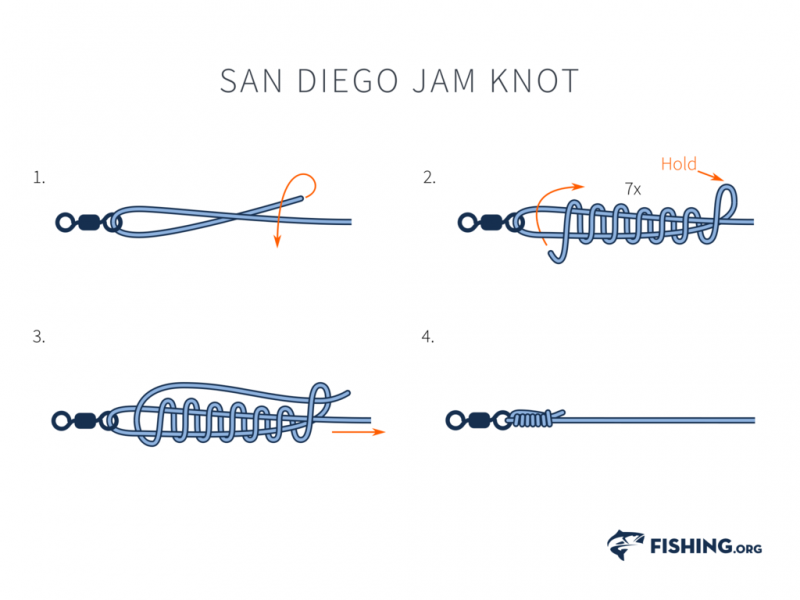
Improved Clinch Knot
The Improved Clinch Knot is great for attaching a leader to your main line. It is strong and easy to tie.
Start by threading the leader through the hook or swivel eye. Wrap the tag end around the main line five to seven times.
- Pass the tag end through the small loop near the eye.
- Then pass it through the big loop you just made.
- Pull the knot tight and trim the tag end.
Double Uni Knot
The Double Uni Knot connects two lines of similar or different thickness. It is very reliable and easy to adjust.
Overlap the ends of both lines by 6 inches. Make a loop with one line and wrap its tag end five times around both lines.
- Pass the tag end back through the loop and pull gently.
- Repeat the same steps with the other line.
- Pull both standing lines to slide the knots together.
- Trim the tag ends close to the knots.
Albright Knot
The Albright Knot is best for joining lines of different sizes or materials. It is smooth and strong.
Make a loop in the thicker line. Pass the thinner line through the loop from the bottom.
- Wrap the thinner line around the loop 10 to 12 times.
- Pass the tag end of the thinner line back through the loop.
- Hold both ends and pull the knot tight slowly.
- Trim the tag ends close to the knot.

Credit: www.reddit.com
Tips For Stronger Knots
Learning how to tie a leader on a fishing line is important for any angler. Strong knots make sure your catch does not escape.
Here are some tips that will help you create reliable and strong knots every time you fish.
Line Moistening
Moistening your fishing line before tying a knot reduces friction. This helps to avoid weakening the line.
- Use water or saliva to dampen the line.
- Ensure the entire section is evenly moistened.
- This step helps the knot tighten smoothly.
Proper Tightening
Tightening the knot properly is crucial. This ensures the knot holds under pressure.
Testing Knot Strength
After tying, test the knot to ensure it will withstand the force of a catch.
| Test Method | Description |
| Palm Pull | Wrap the line around your palm and pull firmly. |
| Weight Test | Attach a weight and lift gently to test strength. |
| Water Test | Submerge in water and apply pressure. |
Common Mistakes To Avoid
Tying a leader on a fishing line can be tricky for many anglers. Avoiding common mistakes helps keep your line strong and reliable.
These errors reduce your chances of catching fish and may cause line breaks or tangles.
Overtightening
Pulling the knot too tight can weaken the line or damage it. The line may also twist or tangle.
Tighten the knot just enough to hold it firmly. Avoid using too much force when securing the leader.
- Use steady, gentle pressure
- Wet the knot before tightening
- Check for twists before finishing
Incorrect Tag Length
The tag end is the short part of the line left after tying the knot. Too short or too long tag ends cause problems.
A very short tag may cause the knot to slip. A very long tag can tangle or catch on objects.
- Keep the tag length about 3-5 mm
- Trim excess line carefully
- Leave enough length to prevent knot slipping
Using Damaged Line
Using old or worn fishing line weakens your knots and increases breakage risk. Inspect your line before tying a leader.
Look for frays, cuts, or thin spots. Replace damaged sections to keep your setup strong and reliable.
- Check the entire line for damage
- Cut out weak or frayed sections
- Use fresh line for critical connections
Maintaining Your Leader And Line
Taking care of your fishing leader and line helps you catch fish more easily. Good maintenance stops breaks and tangles. It also keeps your setup strong and ready to use.
Regular checks and replacing old parts are key. This guide explains how to keep your leader and line in top shape.
Regular Inspection
Look over your leader and line before every fishing trip. Small damages can cause big problems if ignored. Check for cracks, frays, and knots. Also, feel for weak spots by gently pulling on the line.
- Inspect the leader for any cuts or abrasions.
- Check the line near the knot for wear.
- Look for discoloration or stiffness in the line.
- Test the knot’s tightness to avoid slippage.
- Replace any damaged parts immediately.
Replacing Worn Leaders
Leaders wear out over time and must be replaced to keep fishing smooth. A worn leader can break easily and lose fish. Replace it if you see deep cuts or if it feels weak.
| Signs of Worn Leader | Action Needed |
|---|---|
| Deep cuts or nicks | Replace immediately |
| Discoloration or stiffness | Replace soon |
| Frayed ends near knots | Retie or replace |
| Line slips at knot | Retie with a proper knot |

Credit: www.youtube.com
Frequently Asked Questions
How Do You Tie A Leader To A Fishing Line?
To tie a leader, use a strong knot like the Albright or FG knot. Thread the leader through the line loop, wrap tightly, then pull to secure. This ensures a smooth transition and strong connection between the line and leader.
What Knot Is Best For Attaching A Leader?
The Albright knot is ideal for attaching leaders. It’s strong, easy to tie, and creates a smooth, streamlined connection. This knot maintains line strength and prevents slipping, making it popular among anglers for leader attachment.
Why Use A Leader On Your Fishing Line?
A leader protects the main line from abrasion and sharp fish teeth. It also helps present the bait naturally and reduces line visibility in water, increasing your chances of a successful catch.
How Long Should A Fishing Leader Be?
Fishing leaders typically range from 12 to 36 inches. The ideal length depends on fishing conditions and target species. Longer leaders help with clear water and wary fish, while shorter ones suit heavier cover and fast strikes.
Conclusion
Tying a leader on your fishing line is simple with practice. Use strong knots to keep your line secure and ready. Test your knots by pulling gently before fishing. A well-tied leader helps catch more fish and avoids line breaks.
Take your time and be patient while learning. Soon, tying leaders will feel natural and fast. Keep practicing to improve your fishing skills every time.