If you want to catch more fish, knowing how to tie your lure onto your fishing line the right way is key. A strong, secure knot keeps your lure from slipping off, so you don’t lose that big catch.
In this guide, you’ll learn simple, step-by-step techniques anyone can master. Whether you’re new to fishing or just want to improve your skills, these tips will help you get ready for your next trip and boost your chances of success.
Keep reading to discover how to tie your lure quickly and confidently every time.
Choosing The Right Fishing Line
Choosing the right fishing line is important for tying a lure. The line affects how you cast and catch fish. Picking the best line helps you enjoy fishing more.
There are different types of fishing lines. Each type has its strengths and suits different fishing styles. Learn about the main types to make a good choice.
Monofilament Vs. Braided Lines
Monofilament lines are made from one strand of nylon. They are soft and stretch well. This makes them good for beginners and easy to tie knots.
Braided lines are made by weaving many fibers together. They are strong and thin. Braided lines have little stretch, which helps with sensitivity while fishing.
- Monofilament is easier to handle and knots hold well.
- Braided lines last longer and resist damage better.
- Monofilament floats on water, braided sinks faster.
- Braided lines show less stretch, improving bite detection.
Factors Influencing Line Choice
Pick your fishing line based on the type of fish and water conditions. The line strength must match the fish size. Water clarity also matters.
Other factors include how far you want to cast and the lure weight. Some lines work better with heavier lures. Think about knot strength and durability too.
- Fish size: bigger fish need stronger line.
- Water clarity: clear water needs thinner, less visible line.
- Casting distance: thin lines cast farther.
- Lure weight: heavy lures need strong, durable line.
- Knot strength: some lines hold knots better than others.
- Durability: abrasion resistance helps in rough areas.
Essential Tools For Knot Tying
Tying a lure onto a fishing line requires some basic tools. These tools help you tie strong and neat knots.
Having the right equipment makes fishing easier and more fun. It helps you work faster and safer.
Basic Tools Needed
You need a few simple tools to tie your lure properly. These tools are easy to carry and use.
- Fishing Line:The line you will tie the lure onto.
- Lure:The bait or lure you want to attach.
- Scissors or Line Clippers:To cut the line cleanly.
- Needle Nose Pliers:To help pull knots tight and handle small parts.
These tools are enough for most fishing knot tying tasks. Keep them handy in your tackle box.
Optional Accessories
You can use extra tools to make knot tying easier and faster. These are not required but helpful.
- Knot Tying Tool:A small device that holds the line and helps form knots.
- Magnifying Glass:Useful for seeing small lines and knots clearly.
- Waterproof Marker:To mark where to tie knots or cut line.
- Line Conditioner:Helps keep the fishing line smooth and less tangled.
These accessories improve your knot tying experience but are not needed for beginners.
Types Of Fishing Knots
Tying the lure to your fishing line correctly is important. Different knots work better for different fishing needs.
Here are some common knots used by anglers to tie lures securely and easily.
Improved Clinch Knot
The Improved Clinch Knot is popular for tying lures and hooks. It is strong and easy to tie.
To tie this knot, thread the line through the lure eye. Wrap the tag end around the standing line five to seven times.
- Pass the tag end through the small loop near the eye.
- Then pass it back through the big loop you just made.
- Pull tight and trim the excess line.
Palomar Knot
The Palomar Knot is very strong and works well with braided lines. It keeps the lure secure during fights.
Fold the line in half and pass the loop through the lure eye. Tie a loose overhand knot with the loop.
Pass the lure through the loop. Pull both ends to tighten the knot. Cut the tag end close.
- Use this knot for heavy or slippery lines.
- It is quick to tie even in low light.
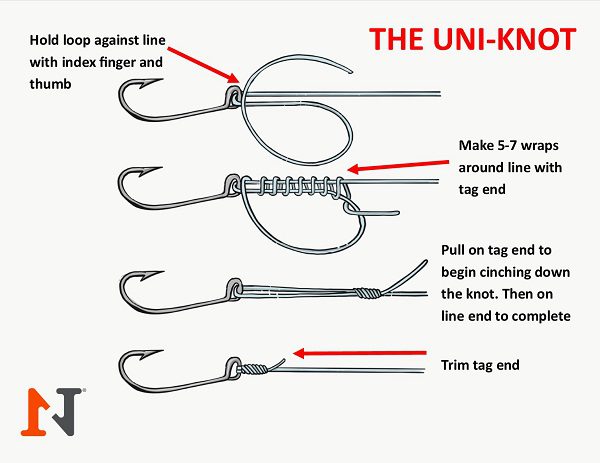
Uni Knot
The Uni Knot is versatile and easy to learn. It works for lures, hooks, and line joining.
Pass the line through the lure eye. Double back forming a loop along the standing line.
Make six turns around the loop and the standing line. Pull the tag end to tighten the coils.
- Slide the knot down to the lure eye and pull tight.
- Trim excess line close to the knot.
- It holds well with both monofilament and braided lines.

Credit: wholesalejigs.com.au
Step-by-step Guide To Tying Knots
Tying the right knot keeps your lure secure on the fishing line. This guide shows simple ways to tie strong knots. Follow these steps to prepare your gear and tie knots easily.
Good knot skills help you catch fish without losing your lure. Each knot works well for different types of fishing lines and lures.
Preparing The Line And Lure
Start by checking your fishing line for damage or knots. Cut any frayed ends to keep your line strong. Choose a lure that fits the fish you want to catch.
Wet the line before tying knots. This reduces friction and helps the knot hold better. Hold the lure and line steady as you work.
Tying The Improved Clinch Knot
Thread the line through the lure eye and wrap it around the standing line five to seven times. Pass the tag end through the small loop near the eye, then back through the big loop.
Pull the tag end and standing line slowly to tighten the knot. Trim any extra line close to the knot to avoid tangles.
- Thread line through lure eye
- Wrap line 5-7 times around standing line
- Pass tag end through small loop
- Pass tag end back through big loop
- Tighten knot slowly
- Trim excess line
Mastering The Palomar Knot
Double about 6 inches of line and pass it through the lure eye. Tie a loose overhand knot with the doubled line. Pull the lure through the loop created by the overhand knot.
Hold the tag end and standing line. Pull both to tighten the knot. Cut off the extra tag end close to the knot.
- Double 6 inches of line
- Pass loop through lure eye
- Tie loose overhand knot
- Pass lure through loop
- Tighten by pulling both ends
- Trim excess tag end
Using The Uni Knot
Pass the line through the lure eye and double it back. Form a loop by laying the tag end over the doubled line. Wrap the tag end around the doubled line and through the loop five to six times.
Pull the tag end to tighten the coils. Slide the knot down to the lure eye. Pull the standing line to secure the knot. Cut the tag end close to the knot.
- Pass line through lure eye and double it
- Make a loop with tag end over doubled line
- Wrap tag end 5-6 times around doubled line and loop
- Tighten coils by pulling tag end
- Slide knot to lure eye
- Pull standing line to secure
- Trim excess tag end
Tips For Ensuring Knot Strength
Tying a lure to your fishing line needs care. A strong knot keeps your catch safe and stops the lure from slipping off.
Learn how to test your knot and avoid common mistakes. This helps you fish with confidence.
Testing Knot Security
After tying your knot, check if it holds well. Pull the line hard to see if the knot slips or loosens.
- Wet the knot before pulling to reduce friction.
- Pull the line steadily, not with a sudden jerk.
- Look for any slipping or changes in the knot’s shape.
- Retie the knot if it feels weak or loosens easily.
- Test knots several times to be sure they are strong.
Common Mistakes To Avoid
| Mistake | Why It Happens | How to Fix It |
| Not wetting the knot | Friction damages the line when dry | Always moisten the knot before tightening |
| Wrong knot type | Some knots do not suit certain lines or lures | Choose a knot fit for your line and lure |
| Insufficient wraps | Too few turns reduce knot strength | Make enough wraps as recommended for your knot |
| Uneven tightening | Uneven tension weakens the knot | Tighten slowly and evenly on both ends |
| Cutting tag ends too short | Short ends can slip through the knot | Leave a small tail to secure the knot |

Credit: www.youtube.com
Maintaining Your Fishing Gear
Keeping your fishing gear in good shape helps you catch more fish. It also makes your equipment last longer.
Tying your lure correctly is important. Taking care of your fishing line and knots is part of this process.
Regular Line Inspection
Check your fishing line often for damage. Look for cuts, frays, or weak spots before fishing.
Replace the line if you see any damage. A strong line helps keep your lure secure and avoids losing fish.
- Look for discoloration or stiffness
- Feel for rough spots along the line
- Test the line strength by pulling gently
- Cut off damaged parts before tying knots
Proper Knot Storage
Store your fishing line and knots carefully to avoid tangles and damage. Keep knots tight and clean.
Use a small container or spool to hold tied lures. This keeps knots from loosening and saves time next use.
- Dry your line before storing to prevent mildew
- Keep knots away from sharp edges
- Use a hook keeper or a soft cloth wrap
- Check knots again before casting
Credit: medium.com
Frequently Asked Questions
How Do I Tie A Lure To A Fishing Line Securely?
To tie a lure securely, use strong knots like the Improved Clinch Knot. Moist the line before tightening to prevent damage. Pull the knot tight and trim excess line. This ensures your lure stays attached during fishing.
Which Knot Is Best For Tying Lures?
The Improved Clinch Knot and Palomar Knot are best. Both offer strength and reliability. They are easy to learn and tie quickly. These knots minimize line slippage, making them ideal for most fishing situations.
Can I Use Any Fishing Line To Tie Lures?
Yes, but match the knot type to your line. Monofilament and fluorocarbon lines work well with most knots. Braided lines may require specialized knots like the Palomar. Always check compatibility for maximum knot strength.
How Tight Should The Knot Be When Tying Lures?
The knot should be tight enough to hold firmly without damaging the line. Wet the line before tightening to reduce friction. Pull steadily and evenly until snug. Avoid over-tightening, which can weaken the line.
Conclusion
Tying a lure onto your fishing line is simple and important. A strong knot keeps the lure secure while fishing. Practice the steps to tie the knot right every time. This skill helps you fish with confidence and catch more fish.
Remember, patience and practice make a big difference. Try different knots to find what works best for you. Keep your line tight and your lure steady. Enjoy your fishing trips with this easy and useful technique.