
Imagine you’re driving and suddenly notice your tire is flat. What do you do next?
Knowing how to use a car jack to change a tire can save you time, money, and stress. It’s a skill everyone should have because you never know when you’ll need it. In this guide, you’ll learn simple, clear steps to safely lift your car and swap out that flat tire.
By the end, you’ll feel confident and ready to handle this common roadside challenge on your own. Keep reading—you’ve got this!
Gather Essential Tools
Changing a tire requires the right tools to do the job safely. Before you start, gather everything you need.
This guide covers the main tools you should find in your car to change a flat tire.
Locate Your Car Jack
Your car jack is essential to lift the car off the ground. It is usually stored in the trunk or under a seat.
- Check the trunk floor or side compartments.
- Look under the rear seats if you have an SUV or minivan.
- Refer to your owner’s manual for the exact location.
Find The Spare Tire
The spare tire replaces the flat tire temporarily. It is often kept near the car jack.
| Common Spare Tire Locations | Notes |
| Trunk under the floor panel | Lift the panel to see the tire |
| Mounted under the rear of the vehicle | Release mechanism or bolts hold it in place |
| Inside the cargo area | Usually on SUVs and vans |
Get The Lug Wrench
The lug wrench loosens and tightens the wheel nuts. It is vital for removing the flat tire.
Common types of lug wrenches include:
- Cross-shaped wrench with different socket sizes
- Single socket wrench with a handle
- Socket wrench set with a ratchet
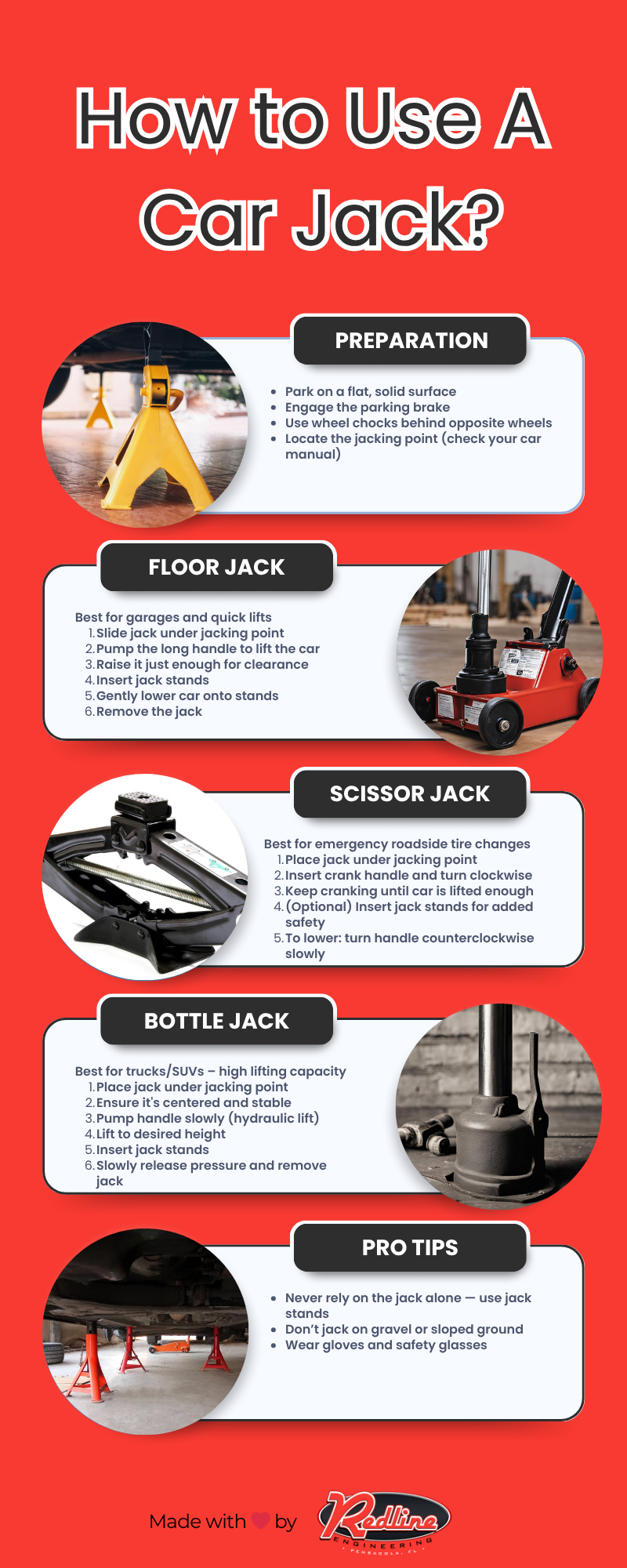
Credit: www.redlinestands.com
Prepare Your Vehicle
Changing a tire safely starts with preparing your vehicle. Taking the right steps helps keep you safe during the process.
These preparations make sure the car does not move and stays stable while using the jack.
Park On A Flat Surface
Always park your car on a flat and solid surface. This prevents the car from rolling or shifting.
A flat surface gives the jack a stable base to lift the vehicle safely.
Engage The Parking Brake
After parking, set the parking brake firmly. This keeps the car from moving while you work.
Engaging the brake reduces the risk of accidents during the tire change.
Place Wheel Chocks
Use wheel chocks to block the wheels that stay on the ground. This adds extra safety.
Place the chocks on both sides of the wheel to stop any movement.
- Chock wheels opposite to the flat tire
- Use sturdy blocks or special chocks
- Check that chocks fit tightly against the tires
Loosen The Lug Nuts
Loosening the lug nuts is an important step before lifting your car. It makes removing the tire easier and safer.
Make sure the car is on a flat surface and the parking brake is on. This prevents the car from moving.
Turn Lug Nuts Counterclockwise
Use a lug wrench to turn each lug nut to the left. Turning counterclockwise will loosen them.
Turn each nut a little at a time. Do this for all lug nuts before lifting the car with the jack.
Use Proper Force
Apply steady force to the wrench. Avoid sudden or too strong moves to prevent damage.
If the nuts are hard to turn, try using your body weight carefully. You can also use a longer wrench for more leverage.
- Stand firmly and push or pull the wrench slowly
- Do not use excessive force that may strip the nuts
- Check the wrench fits properly on the lug nuts

Credit: www.youtube.com
Position The Car Jack
Using a car jack safely is very important when changing a tire. The first step is to position the jack correctly under your car.
Placing the jack in the right spot keeps the car stable and prevents accidents while you work.
Locate Jack Points
Jack points are special spots under the car made to hold the jack safely. Check your car manual to find these points.
They are usually near the tires, on the frame or under the side skirts. Do not place the jack on plastic parts or the car body.
- Look for small notches or marks near the wheels
- Use the flat metal parts designed to support the car weight
- Avoid soft or curved areas that can bend or break
Place The Jack Securely
After finding the jack point, position the jack carefully under it. Make sure the jack is straight and stable on the ground.
Use a flat, hard surface to place the jack. Avoid soft ground like dirt or grass. This stops the jack from sinking or tipping over.
- Center the jack’s lifting pad under the jack point
- Check that the base of the jack is fully on the ground
- Do not let the jack lean or wobble before lifting
- If the ground is uneven, use a solid board under the jack base
Lift The Vehicle
Lifting the vehicle safely is important when changing a tire. Use a car jack to raise the car just enough to remove the tire. Follow these steps carefully to avoid accidents.
Make sure the car is on a flat, solid surface before you start lifting. Engage the parking brake for extra safety.
Pump The Jack Handle
Insert the jack handle into the jack’s socket. Use smooth pumping motions to raise the jack. Each pump lifts the car slightly.
- Place the jack handle firmly in place.
- Push down and pull up the handle repeatedly.
- Keep pumping until the jack makes firm contact with the vehicle’s lifting point.
Raise Until Tire Is Off The Ground
Continue pumping the jack handle to lift the vehicle higher. Stop when the flat tire is fully off the ground. This makes it easy to remove the tire safely.
| Task | Tip |
| Lift vehicle | Stop when tire clears ground |
| Check stability | Ensure jack is steady |
| Remove tire | Pull straight off the wheel studs |
Remove The Flat Tire
Removing a flat tire is an important skill for any driver. You need to work safely and carefully to avoid damage or injury.
Using a car jack makes it easier to lift the vehicle. After that, you can take off the flat tire and replace it.
Fully Unscrew Lug Nuts
Start by loosening the lug nuts that hold the tire in place. Use a wrench or tire iron to turn them counterclockwise.
Make sure you unscrew them all the way before removing the tire. Keep the nuts in a safe place so you don’t lose them.
Take Off The Tire
After the lug nuts are fully unscrewed, carefully pull the tire straight off the wheel hub. Avoid twisting or forcing it.
If the tire is stuck, gently rock it back and forth to loosen it. Place the flat tire aside on a flat surface.
Mount The Spare Tire
After lifting your car with a jack, you need to mount the spare tire. This step is key to safely replacing your flat tire.
Follow clear steps to attach the spare tire properly before tightening the lug nuts.
Align The Tire With Wheel Studs
Hold the spare tire close to the wheel hub. Make sure the holes in the tire line up with the wheel studs.
Aligning the tire correctly helps it fit securely on the car. Take your time to match each hole with a stud.
- Lift the tire and place it near the hub
- Rotate or move the tire to line up holes with studs
- Keep the tire steady once aligned
Hand-tighten Lug Nuts
Once the tire is in place, start screwing the lug nuts by hand. This prevents cross-threading and makes tightening easier.
Use your fingers to turn each nut. Tighten them evenly in a star pattern for better fit and balance.
- Place lug nuts on each stud
- Turn nuts clockwise with fingers
- Follow a star pattern: tighten opposite nuts one by one
- Do not fully tighten yet; just hand-tighten
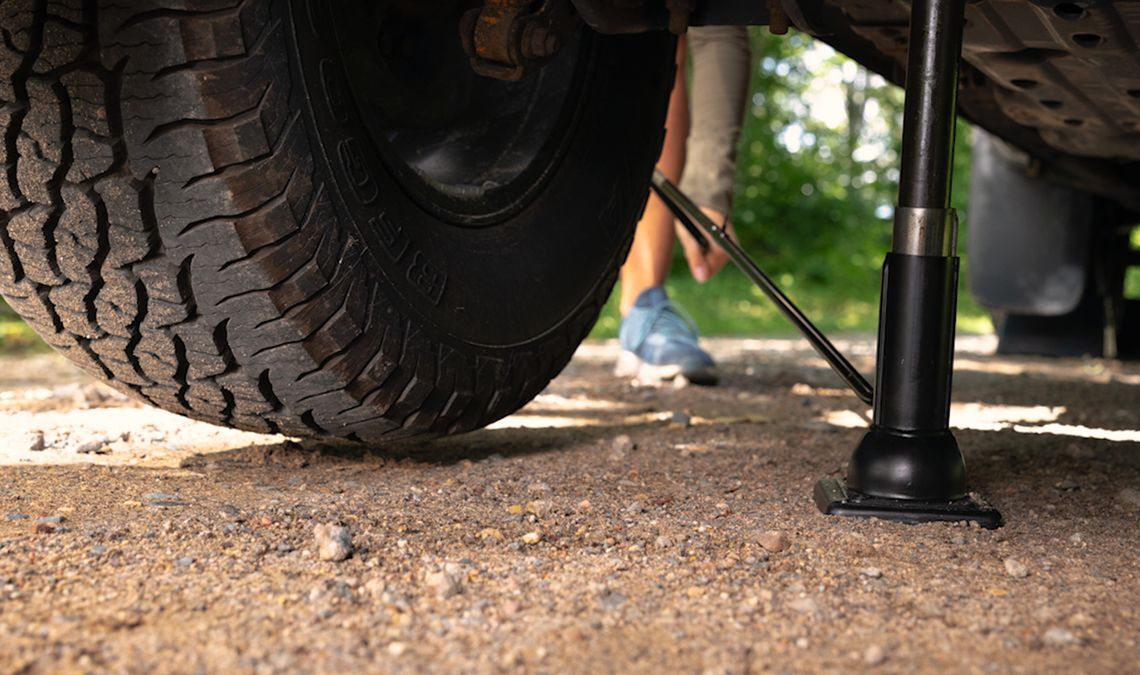
Credit: www.bfgoodrichtires.com
Lower The Vehicle
After changing the tire, it is time to lower the vehicle carefully. Lowering the car properly helps avoid damage and keeps you safe.
Follow the right steps to slowly bring the vehicle down to the ground.
Slowly Release The Jack
Turn the jack handle slowly to lower the car. Do not rush this step.
Lower the vehicle until the tire touches the ground and the car feels stable.
- Turn the handle in the correct direction to lower
- Move slowly to avoid sudden drops
- Check the tire is on the ground before stopping
Remove The Jack
Once the vehicle rests on the tire, remove the jack carefully. Keep your hands clear of the car’s underside.
Store the jack in a safe place after removal to avoid accidents later.
- Make sure the car is stable and not moving
- Lift the jack slightly to free it from the car
- Pull the jack out carefully and store it
Tighten The Lug Nuts
After lifting your car with the jack, you need to tighten the lug nuts. Proper tightening keeps the tire safe and secure.
Using the right method helps avoid uneven pressure on the wheel. This prevents damage and ensures a smooth drive.
Use The Wrench In A Star Pattern
Always tighten the lug nuts in a star pattern. This means you tighten nuts opposite each other, not next to each other. It helps the wheel fit evenly on the hub.
- Start with one lug nut and tighten it slightly.
- Move to the lug nut directly across and tighten it slightly.
- Continue this pattern until all nuts are snug.
- After all are tight, repeat the pattern to fully tighten each nut.
Ensure Nuts Are Secure
Check that each lug nut is tight enough to hold the wheel firmly. Loose nuts can cause the wheel to wobble or come off.
| Torque Level | Recommended Value |
|---|---|
| Small cars | 80-100 ft-lbs |
| SUVs and trucks | 100-120 ft-lbs |
| Consult your owner’s manual | Follow specific instructions |
Final Checks
After changing a tire with a car jack, you must do final checks. These checks ensure safety and readiness before driving again.
Two important things to check are storing the tools and inspecting the flat tire and spare tire pressure.
Store Tools And Flat Tire
Put all tools back in their places. This includes the car jack, lug wrench, and any other equipment used. Secure the flat tire in the trunk or storage area.
- Clean any dirt from tools before storing
- Place the flat tire flat in the trunk or tire well
- Lock the tools and tire to prevent movement while driving
- Check that the jack is lowered completely and stored safely
Check Spare Tire Pressure
The spare tire might lose air over time. Check its pressure before using it on the road. Proper pressure helps avoid damage and accidents.
| Pressure Level | Recommended PSI |
| Full-size Spare | 35 – 45 PSI |
| Compact Spare (Donut) | 60 PSI |
| Check Frequency | Monthly |
Frequently Asked Questions
What Is The First Step To Using A Car Jack?
The first step is to ensure your vehicle is on a flat surface. Engage the parking brake to prevent any movement. Gather all necessary tools, including the car jack and the spare tire. Safety first!
How Do You Position The Car Jack Correctly?
Locate the jacking point beneath your vehicle. It’s usually marked in the owner’s manual. Place the jack directly under this point. Ensure it’s stable before lifting the vehicle to avoid any accidents.
Can You Change A Tire Without A Car Jack?
Changing a tire without a car jack is not recommended. A car jack safely lifts the vehicle, providing necessary clearance. Without it, replacing the tire becomes unsafe and challenging. Always use a jack for safety.
What Should You Do After Lifting The Car?
Once the car is lifted, remove the lug nuts completely. Take off the flat tire and replace it with the spare. Tighten the lug nuts by hand before lowering the vehicle.
Conclusion
Changing a tire with a car jack is simple and safe. Follow each step slowly and carefully. Always place the jack on a flat, solid surface. Tighten the lug nuts after lowering the car. Keep your tools organized and ready for next time.
Practice this skill to feel more confident on the road. A little preparation helps avoid stress during emergencies. Now, you can handle a flat tire with ease. Stay safe and drive smart every day.