Your cutting board is one of the busiest tools in your kitchen. Every time you prepare a meal, it takes a beating from knives, juices, and bits of food.
But do you really know how to wash cutting boards the right way? Cleaning it poorly can leave behind harmful bacteria that put your health at risk. You’ll discover simple, effective steps to keep your cutting board spotless and safe.
By the end, you’ll feel confident that your board is not just clean, but truly protected from germs. Ready to make your kitchen safer? Let’s dive in.
Credit: www.thekitchn.com
Choosing The Right Cutting Board
Choosing a cutting board affects how you prepare food. The right board helps keep your kitchen clean and safe.
Boards come in different materials, sizes, and thicknesses. Each type has benefits and limits to know.
Wood Vs Plastic
Wood boards are gentle on knives and often last longer. They can absorb liquids if not cleaned well.
Plastic boards are easy to clean and dishwasher safe. They may wear down faster and show knife marks.
- Wood: durable, holds knives well, needs hand washing
- Plastic: dishwasher safe, less durable, shows cuts easily
- Both: can be sanitary if cleaned properly
Bamboo And Other Materials
Bamboo boards are hard and resist knife marks. They are eco-friendly but may dull knives faster.
Other materials include glass and composite boards. Glass is easy to clean but can damage knives. Composite boards mix materials for strength and ease.
| Material | Pros | Cons |
| Bamboo | Eco-friendly, hard surface | Can dull knives |
| Glass | Easy to clean, non-porous | Harsh on knives, can break |
| Composite | Durable, knife friendly | Can be expensive |
Size And Thickness
Cutting boards come in many sizes. Bigger boards give more space but take more storage room.
Thickness adds stability. Thin boards may slip. Thick boards last longer but weigh more.
- Small boards: good for light tasks, easy to store
- Large boards: better for big meals, need space
- Thin boards: light but may slide
- Thick boards: stable and durable
Daily Cleaning Routine
Keeping your cutting board clean is important for safe food preparation. A daily cleaning routine helps stop germs and food smells.
This guide covers simple ways to wash your cutting board every day. Follow these tips to keep it fresh and ready.
Hand Washing Techniques
Wash your cutting board by hand right after use. Use warm water and dish soap to remove food bits and oils.
- Scrub the board well with a sponge or brush.
- Rinse it with warm water to remove all soap.
- Use a mixture of vinegar and water to sanitize if needed.
- Avoid soaking wood boards to prevent warping.
Dishwasher Safety
Some cutting boards can go in the dishwasher. Check if your board is dishwasher safe before placing it inside.
| Board Material | Dishwasher Safe? |
| Plastic | Yes |
| Bamboo | No |
| Wood | No |
| Composite | Check label |
Drying Methods
Dry your cutting board well after washing to stop bacteria growth. Use these drying tips.
- Wipe the board with a clean towel.
- Stand the board upright to let air flow around it.
- Keep it in a dry place away from direct sunlight.
- Do not leave the board wet or stacked with other dishes.
Deep Cleaning Methods
Cutting boards can hide germs and stains. Deep cleaning keeps them safe for food use. It removes tough dirt and bacteria that normal washing misses.
Here are some easy ways to deep clean your cutting board using natural ingredients. These methods help keep your board fresh and hygienic.
Using Vinegar And Baking Soda
Vinegar is a natural disinfectant. Baking soda helps scrub away stains and odors. Together, they clean and refresh your cutting board.
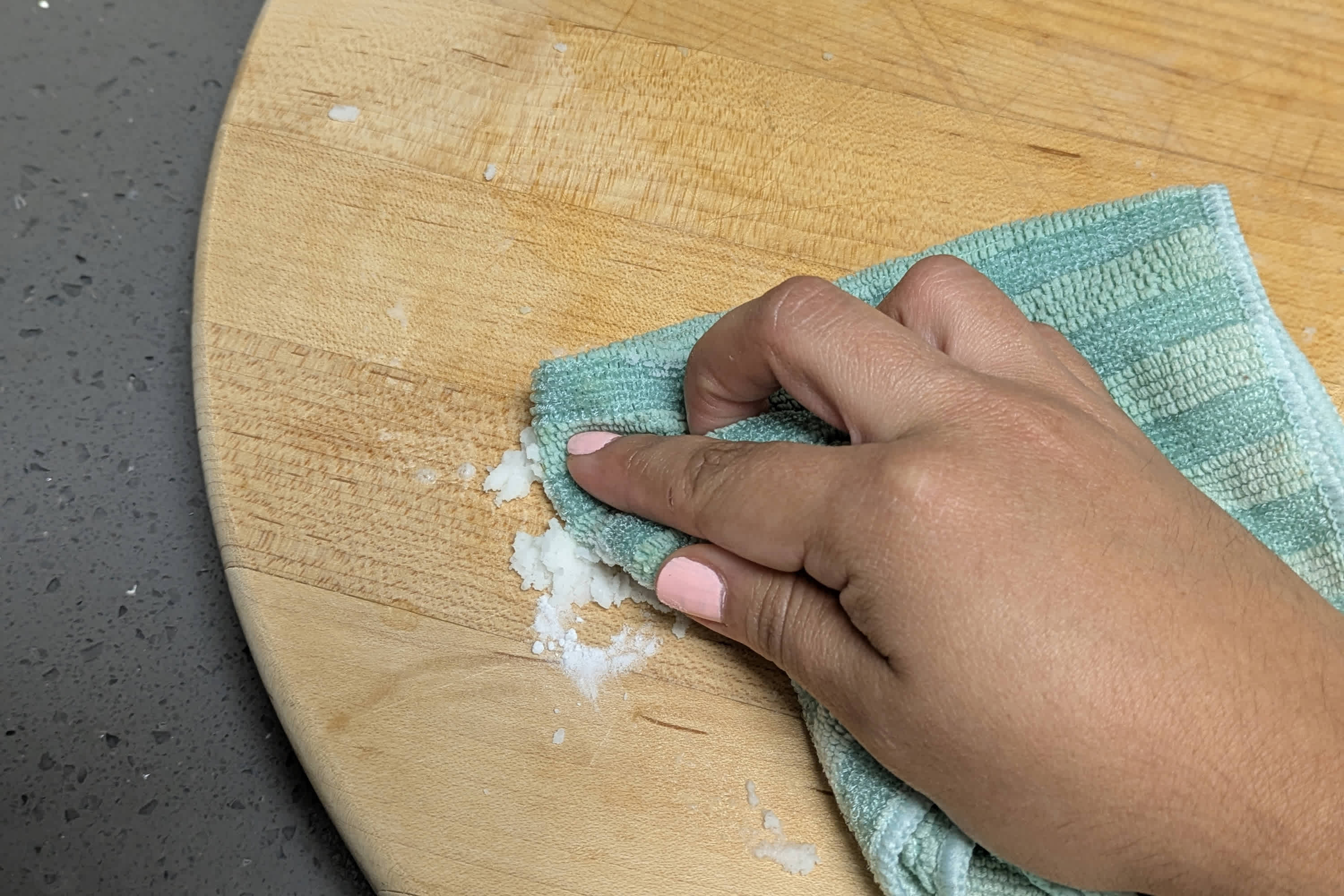
Sprinkle baking soda on the board. Spray or pour vinegar over it. Let the mix bubble for a few minutes. Scrub the surface with a brush or sponge. Rinse well with warm water and dry.
Lemon And Salt Scrub
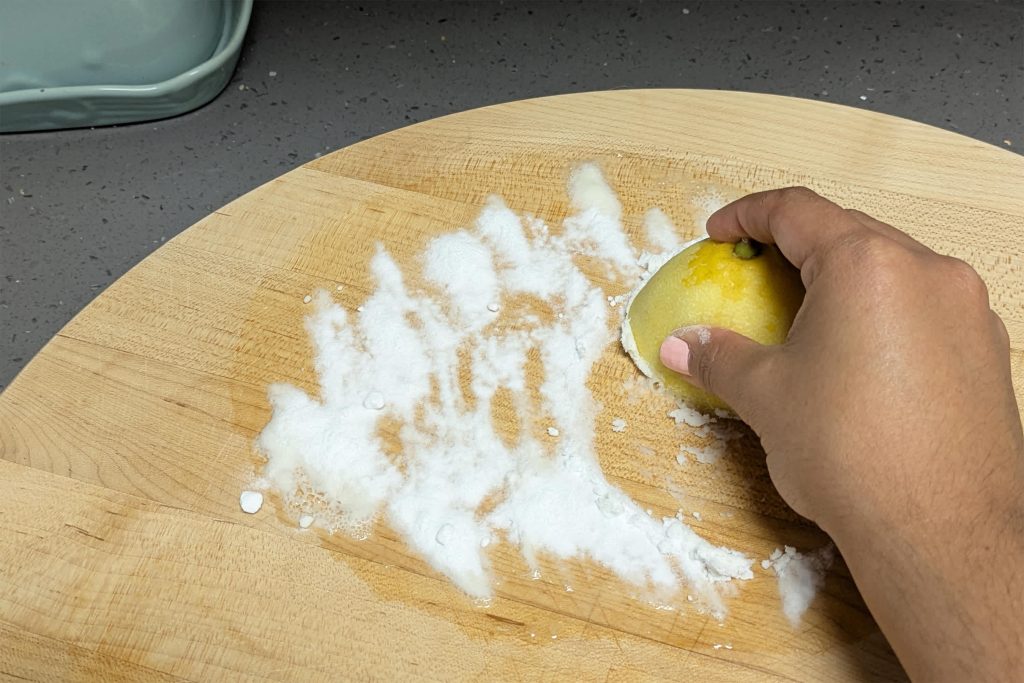
Lemon juice is acidic and kills bacteria. Salt works as a rough scrub to remove stains. This mix brightens the board and fights germs.
Cut a lemon in half. Sprinkle coarse salt over the board. Use the lemon half to scrub the salt into the surface. Let it sit for 5 minutes. Rinse with warm water and wipe dry.
Hydrogen Peroxide Treatment
Hydrogen peroxide kills bacteria and removes stains. It is safe to use on cutting boards if rinsed well after.
Pour 3% hydrogen peroxide over the board. Spread it evenly and let it sit for 10 minutes. Rinse thoroughly with water. Dry the board before storing.
Sanitizing For Food Safety
Cleaning your cutting board is important to keep food safe. Sanitizing kills germs and bacteria that cause illness.
Using the right sanitizer helps stop cross-contamination. This keeps your kitchen healthy and clean.
Bleach Solutions
Bleach is a strong sanitizer for cutting boards. It kills most bacteria and viruses quickly.
To use, mix one tablespoon of bleach with one gallon of water. Soak the board for a few minutes, then rinse well.
- Use fresh bleach solution each time
- Do not mix bleach with other cleaners
- Rinse board thoroughly after soaking
Commercial Sanitizers
Commercial sanitizers are made for kitchen use. They are safe and easy to use on cutting boards.
Follow the instructions on the label for best results. These sanitizers often come in spray or wipe form.
- Choose food-safe sanitizers
- Apply sanitizer and let it sit briefly
- Wipe or rinse off as directed
Uv Light Options
UV light kills germs without chemicals. It is a modern way to sanitize cutting boards.
Use a UV light sanitizer device. Shine the light on the board surface for the recommended time.
- Use only devices made for kitchen use
- Keep the light close to the board
- Follow all safety instructions carefully
Maintaining Your Cutting Board
Taking care of your cutting board keeps it safe and lasts longer. Clean and treat it regularly to avoid damage.
Proper maintenance stops cracks and bacteria build-up. Learn simple steps to keep your board in good shape.
Oiling And Conditioning
Oiling your cutting board helps protect the wood from drying out. Use food-safe mineral oil or conditioning creams.
- Apply oil evenly with a clean cloth
- Let the oil soak in for several hours or overnight
- Wipe off any excess oil before use
- Repeat this process once a month or after washing
Repairing Cuts And Scratches
Small cuts and scratches can be smoothed to keep the surface safe. Sanding fixes these imperfections.
- Clean the board and let it dry fully
- Use fine-grit sandpaper to sand the damaged area gently
- Wipe away dust with a damp cloth
- Apply oil or conditioner to seal the surface
When To Replace
| Sign | Reason | Action |
|---|---|---|
| Deep cracks or splits | Can harbor bacteria | Replace immediately |
| Warped or uneven surface | Unsafe for cutting | Replace for safety |
| Foul smell or discoloration | Possible mold growth | Discard and get new board |

Credit: www.amazon.ca
Tips For Avoiding Cross-contamination
Cross-contamination happens when harmful bacteria spread from one food to another. It can cause food poisoning and illness.
Using the right cleaning and storage methods helps keep your cutting boards safe. Follow these tips to avoid cross-contamination.
Using Separate Boards
Use different cutting boards for raw meat, vegetables, and cooked foods. This stops germs from spreading between foods.
Clean each board well after use with hot soapy water. Dry them completely before storing.
- One board for raw meat and poultry
- One board for fruits and vegetables
- One board for cooked foods and bread
Color Coding Systems
Color coding helps you quickly know which board to use. Assign a color to each food type to stop mistakes.
- Red for raw meat
- Green for vegetables
- Blue for fish
- Yellow for cooked foods
Make sure everyone in your kitchen knows the color system. This keeps food preparation safe and easy.
Proper Storage
Store cutting boards in a clean, dry place. Avoid stacking boards to let air circulate and stop germs from growing.
Keep raw meat boards separate from others to reduce risk of contamination.
- Store boards vertically for better drying
- Keep boards away from sinks and trash
- Replace boards when deep cuts appear

Credit: www.reddit.com
Frequently Asked Questions
How Often Should I Wash My Cutting Board?
You should wash your cutting board after each use. This practice prevents bacteria buildup and cross-contamination. Always use hot, soapy water. For deep cleaning, use a mixture of vinegar and baking soda weekly. This routine ensures your cutting board remains hygienic and safe for food preparation.
Can I Use Bleach On Cutting Boards?
Yes, you can use a diluted bleach solution for plastic boards. It effectively kills bacteria and removes stains. Mix one tablespoon of bleach with one gallon of water. Soak the board for a few minutes, then rinse thoroughly. Avoid using bleach on wooden boards, as it can damage them.
How Do I Remove Odors From Cutting Boards?
To remove odors, use lemon and salt. Sprinkle salt on the board, then rub with a lemon half. Let it sit for a few minutes. Rinse with warm water. This method neutralizes odors and leaves your cutting board smelling fresh.
Repeat as needed for persistent odors.
Are Dishwashers Safe For Cutting Boards?
Dishwashers are safe for plastic and some composite boards. High heat and detergent effectively clean and sanitize. Avoid placing wooden boards in the dishwasher. The heat and moisture can warp or crack them. Hand wash wooden boards to preserve their integrity and longevity.
Conclusion
Keeping your cutting board clean helps prevent germs and bad smells. Wash it with warm, soapy water after each use. Dry it well to stop bacteria from growing. For wooden boards, use oil to keep them strong and crack-free. Avoid soaking or putting boards in the dishwasher.
A clean cutting board makes cooking safer and more pleasant. Simple care keeps it lasting longer. Easy steps, big difference.