
Your synthetic sleeping bag is your trusted companion on every outdoor adventure. Keeping it clean is key to making sure it stays fresh, comfortable, and lasts longer.
But washing a synthetic sleeping bag isn’t as simple as tossing it in the machine. If you want to avoid damage and keep your bag in top shape, you need the right steps. In this guide, you’ll discover how to wash your synthetic sleeping bag the smart way—protecting its insulation and fabric so it performs just like new on your next trip.
Ready to learn the secrets to easy, effective cleaning? Let’s dive in.

Credit: www.ellis-brigham.com
Prepare Your Sleeping Bag
Washing your synthetic sleeping bag helps maintain its warmth and comfort. Proper preparation is key before you start cleaning.
Follow these steps to ensure your sleeping bag stays in top condition. Preparing your sleeping bag correctly will make the washing process easier and more effective.
Check Care Label
The care label provides important information on how to wash your sleeping bag. It tells you the right water temperature and cleaning method.
Always follow the instructions on the care label to avoid damaging the material. This ensures your sleeping bag lasts longer and maintains its quality.
Remove Loose Dirt
Shake your sleeping bag to remove loose dirt and debris. You can also use a soft brush to gently sweep away dirt from the surface.
This step prevents dirt from embedding deeper during washing. Removing loose dirt helps keep your washing machine clean as well.
Spot Treat Stains
Identify any stains on your sleeping bag and treat them before washing. Use a mild soap or stain remover for best results.
Apply the cleaner directly to the stain and gently rub it in. Let it sit for a few minutes to break down the stain effectively.
- Test the cleaner on a small area first
- Do not use bleach on synthetic fabrics
- Rinse thoroughly after spot treating
Choose The Right Detergent
Washing a synthetic sleeping bag requires care to keep it clean and safe. The detergent you pick plays a big role. Using the wrong detergent can damage the fabric or reduce its warmth.
Choosing the right detergent helps keep the sleeping bag soft and lasts longer. Let’s look at important tips for detergent use.
Use Mild Detergents
Mild detergents clean without harsh chemicals. They protect the synthetic fibers in your sleeping bag.
- Choose detergents labeled for delicate fabrics
- Avoid bleach or strong stain removers
- Use liquid detergents instead of powders
- Check the detergent has no brighteners or enzymes
- Use only the recommended amount to avoid buildup
Avoid Fabric Softeners
Fabric softeners can harm your synthetic sleeping bag. They leave a coating that blocks insulation and breathability.
| Reason | Effect on Synthetic Sleeping Bag |
| Coats fibers | Reduces warmth and loft |
| Blocks moisture wicking | Makes bag less comfortable |
| Builds up over time | Hard to remove and damages fabric |
Select Washing Method
Cleaning your synthetic sleeping bag correctly keeps it fresh and lasts longer. You need to pick the right washing method for the best care.
Both machine and hand washing can work well. Choose the one that fits your bag’s care label and your available tools.
Machine Washing Tips
Machine washing saves time but needs careful steps to avoid damage. Use a front-loading washer for gentler cleaning.
- Use cold water and a gentle cycle to protect the fabric.
- Choose a mild detergent designed for synthetic fabrics.
- Do not use bleach or fabric softeners as they harm the insulation.
- Make sure all zippers and Velcro are fastened to avoid snags.
- Run an extra rinse cycle to remove all detergent residues.
- Dry the bag in a large dryer on low heat with clean tennis balls to keep loft.
Hand Washing Guide
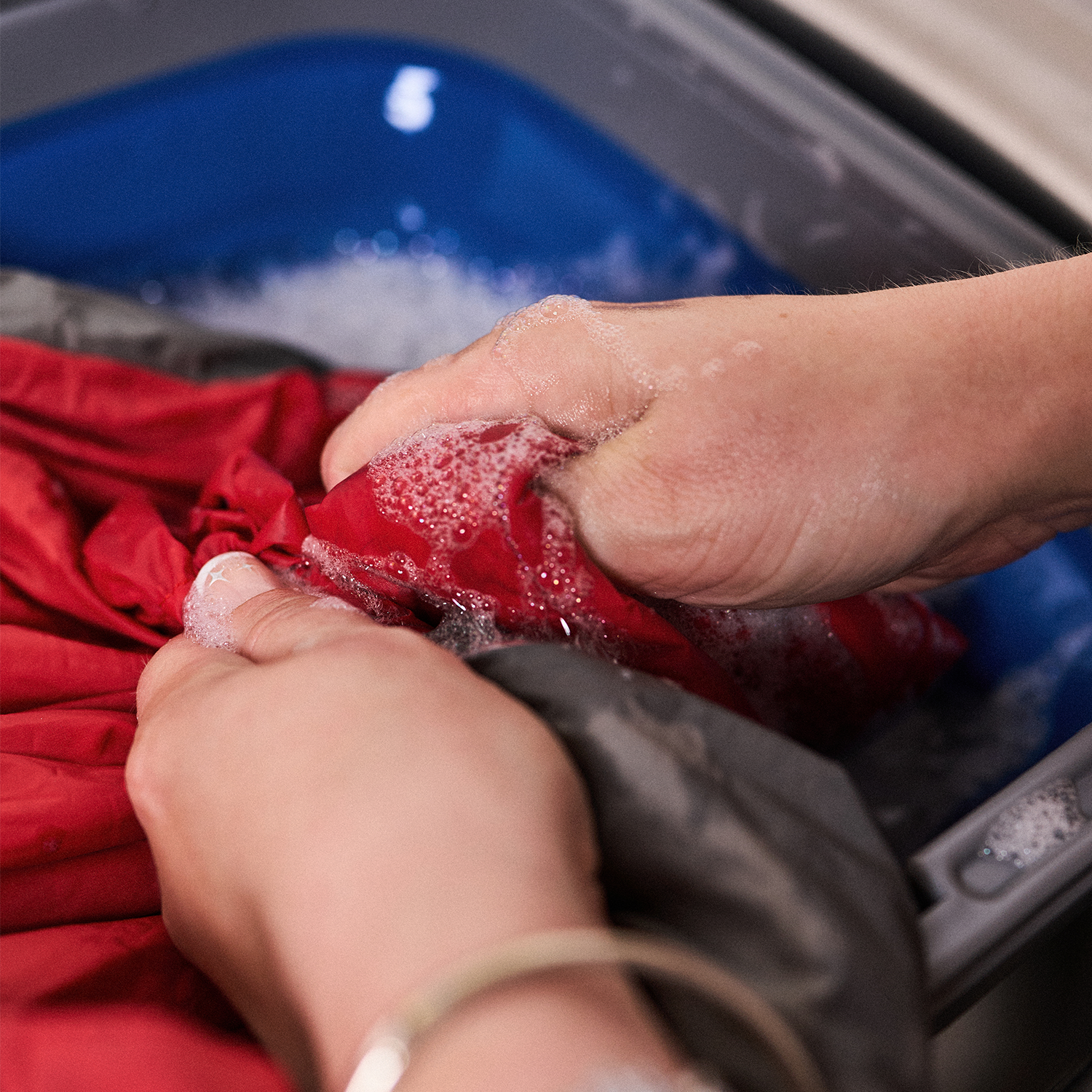
Hand washing is gentle and good for delicate bags or if you lack a suitable washing machine. Use a clean tub or large basin.
| Step | Action |
|---|---|
| 1 | Fill the basin with cold or lukewarm water and add mild detergent. |
| 2 | Submerge the sleeping bag and gently squeeze to soak. |
| 3 | Let it soak for 15 to 30 minutes to loosen dirt. |
| 4 | Gently press and squeeze the bag without wringing or twisting. |
| 5 | Drain water and rinse thoroughly with clean water until no soap remains. |
| 6 | Press out excess water carefully, then dry flat or hang in shade. |

Credit: cascadedesigns.com
Drying Your Sleeping Bag
After washing your synthetic sleeping bag, drying it properly is important. Good drying keeps the insulation fluffy and effective.
There are safe ways to dry your sleeping bag without damaging its material or filling.
Air Drying Techniques
Air drying is a gentle way to dry your synthetic sleeping bag. It helps keep the insulation in good shape.
- Find a clean, dry place out of direct sunlight.
- Lay the sleeping bag flat on a large surface or hang it loosely.
- Turn the bag often to help even drying.
- Make sure air flows around the bag to speed drying.
- Do not fold or compress the bag while drying.
Using A Dryer Safely
Using a dryer can speed up drying. Use low heat and check the bag often.
| Dryer Setting | Recommended Action |
| Low Heat | Use this setting to protect the synthetic fibers. |
| No Heat/Air Fluff | Good for delicate drying without shrinking. |
| High Heat | Avoid this to prevent damage to insulation and fabric. |
| Dryer Balls | Add 2-3 balls to help keep insulation fluffy. |
Maintain Freshness Between Washes
Synthetic sleeping bags keep you warm, but washing them too often can reduce their life. Keeping them fresh between washes helps maintain their warmth and comfort.
Simple daily care and smart habits can keep your sleeping bag clean and smelling good for many uses.
Proper Storage Tips
Store your synthetic sleeping bag in a cool, dry place to avoid moisture and odors. Avoid compressing it tightly when not in use.
Using a large storage sack or hanging it loosely helps keep the insulation fluffy and fresh.
- Keep the bag dry before storing
- Use a breathable cotton storage sack
- Hang the bag or store it loosely
- Avoid plastic bags that trap moisture
- Store in a cool, dark place
Spot Cleaning Tricks
Spot clean small dirt or stains to keep your bag fresh without full washing. Use mild soap and water for safe cleaning.
Focus on dirty areas and gently scrub with a soft cloth or sponge. Rinse lightly and let it air dry completely before packing.
- Mix mild soap with water
- Apply solution to the dirty spot
- Gently scrub with soft cloth
- Rinse with clean water
- Air dry fully before storage
Credit: www.ellis-brigham.com
Frequently Asked Questions
How Often Should I Wash A Synthetic Sleeping Bag?
Wash your synthetic sleeping bag after every 3 to 4 uses or if it gets dirty. Frequent washing can damage insulation, so spot clean when possible. Proper washing maintains warmth and extends the bag’s life.
What Is The Best Detergent For Synthetic Sleeping Bags?
Use a mild, non-detergent soap or a cleaner made specifically for synthetic sleeping bags. Avoid regular detergents or bleach, as they can damage the fabric and insulation, reducing performance and durability.
Can I Machine Wash A Synthetic Sleeping Bag Safely?
Yes, machine wash on a gentle cycle with cold water. Use a front-loading washer if possible to prevent damage. Always check the care label for specific instructions before washing.
Should I Use Fabric Softener When Washing Sleeping Bags?
No, avoid fabric softeners as they reduce the bag’s water repellency and breathability. Fabric softeners can also break down synthetic fibers, decreasing insulation efficiency.
Conclusion
Cleaning your synthetic sleeping bag keeps it fresh and lasting longer. Use gentle detergent and cold water for the best care. Avoid strong chemicals and high heat to protect the fabric. Dry it slowly, away from direct sunlight or heaters.
Regular washing helps keep your bag soft and warm. Taking these simple steps saves money and improves your camping comfort. Remember, good care means better trips and happy nights outdoors. Keep your sleeping bag ready for every adventure.