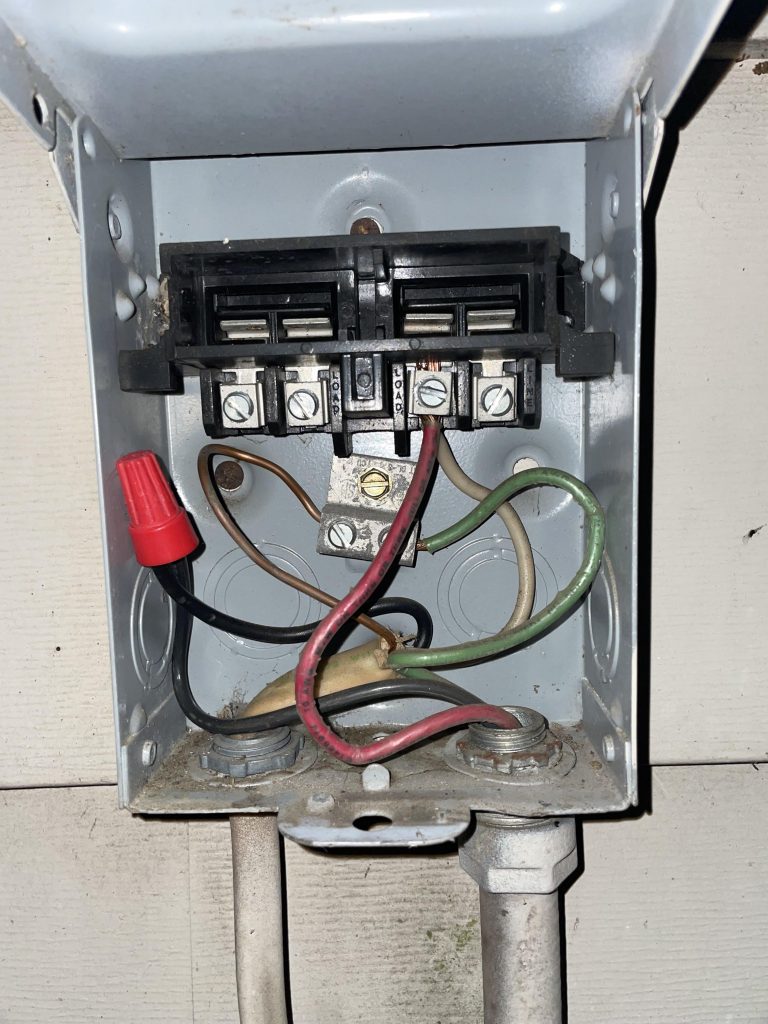
Wiring a disconnect for your air conditioner might sound tricky, but with the right steps, you can do it safely and confidently. If you want to protect your unit and make maintenance easier, this small device is a must-have.
In this guide, you’ll learn exactly how to wire the disconnect correctly, avoid common mistakes, and keep your system running smoothly. Ready to take control of your air conditioner’s safety? Let’s dive in and make the process simple for you.
Credit: www.electriciantalk.com
Tools And Materials Needed
Wiring a disconnect for an air conditioner needs the right tools and materials. Using the correct items makes the job safe and easier.
Gather everything before starting to avoid delays and mistakes.
Essential Tools
You need basic electrical tools to wire a disconnect box. These tools help you cut, strip, and connect wires safely.
- Wire strippers to remove insulation from wires
- Voltage tester to check power is off
- Screwdrivers (flathead and Phillips) to tighten screws
- Needle-nose pliers for bending and holding wires
- Electrical tape for insulation
- Drill with bits for mounting the disconnect box
- Wrench or socket set for securing connections
- Level to mount the box straight
Required Materials
Choose the right materials to match your air conditioner’s power needs. Use parts that are rated for outdoor use if the disconnect is outside.
- Disconnect box with proper amperage rating
- Appropriate gauge copper wire for the circuit
- Circuit breakers compatible with your electrical panel
- Wire connectors (wire nuts or terminal lugs)
- Conduit and fittings for protecting wires
- Mounting screws and anchors
- Grounding wire and grounding screws
Credit: www.diychatroom.com
Safety Precautions
Wiring a disconnect for an air conditioner is a task that needs care and attention. Safety comes first to avoid accidents or damage.
Follow simple safety rules to protect yourself and ensure the job is done right.
Power Shutoff
Always turn off the power before working on the air conditioner disconnect. This prevents electrical shocks and injury.
- Locate the main circuit breaker for the air conditioner.
- Switch off the breaker to cut power supply.
- Use a voltage tester to confirm no electricity flows to the disconnect box.
- Lock the breaker in the off position if possible, to avoid accidental turn-on.
Protective Gear
Wearing the right protective gear helps prevent injuries when wiring the disconnect box.
| Gear | Purpose |
| Insulated Gloves | Protect hands from electric shock |
| Safety Glasses | Shield eyes from sparks and debris |
| Long-sleeved Clothing | Cover skin from cuts and burns |
| Non-slip Shoes | Prevent falls on slippery surfaces |
Choosing The Right Disconnect
Wiring a disconnect for your air conditioner is important for safety and code compliance. Choosing the right disconnect ensures easy power shutoff and protects your unit.
This guide helps you understand the types of disconnects and how to size them correctly for your air conditioning system.
Types Of Disconnects
There are several types of disconnects used with air conditioners. Each type has its own features and installation methods.
- Fused Disconnect:Contains fuses to protect the circuit from overloads.
- Non-Fused Disconnect:Provides a switch without overload protection.
- Circuit Breaker Disconnect:Combines a breaker and disconnect switch in one unit.
- Safety Switch:Offers quick power shutoff and is often weatherproof.
Choose a disconnect type that meets local electrical codes and suits your installation location.
Sizing The Disconnect
Proper sizing of the disconnect is critical for safety and performance. The disconnect must handle the current of your air conditioner.
| Disconnect Size | Air Conditioner Size (Tons) | Maximum Current (Amps) |
| 30 Amps | Up to 2 Tons | 16 |
| 40 Amps | 2 to 3 Tons | 24 |
| 50 Amps | 3 to 4 Tons | 32 |
| 60 Amps | 4 to 5 Tons | 40 |
Check the nameplate on your air conditioner for exact current ratings. The disconnect rating should be equal or higher than this value.
Locate The Installation Spot
Finding the right place to install the disconnect for your air conditioner is very important. It helps keep the unit safe and easy to reach.
The spot must follow rules and be close enough to the air conditioner for quick power cutoff.
Near The Air Conditioner
The disconnect should be close to the air conditioner unit. This makes it easy to turn off power during service or emergencies.
Usually, it is installed on an outside wall near the unit or on a nearby post.
Accessibility
The disconnect must be easy to reach at all times. Do not place it behind bushes or other obstacles.
Make sure there is clear space around the disconnect for safe access.
- Keep at least 3 feet of clear space
- Install at a height of 5 to 6 feet
- Ensure no doors or windows block access
Code Compliance
Local electrical codes set rules for disconnect placement. Follow these rules to pass inspections.
Codes often require the disconnect to be within sight of the unit and easily accessible.
- Check local building codes before installation
- Use a disconnect rated for outdoor use if outside
- Label the disconnect clearly for safety
Turn Off Power Supply
Before wiring a disconnect for your air conditioner, you must turn off the power supply. This step keeps you safe from electric shock.
Working with electricity is dangerous if the power is on. Always check twice to be sure the power is off.
Locate The Main Breaker
Find your home’s main electrical breaker panel. This is usually in the basement or garage. The main breaker controls power to the entire house.
Turning off the main breaker stops electricity flow to the air conditioner. This prevents accidents during wiring.
Switch Off The Air Conditioner Breaker
Look for the breaker that controls your air conditioner specifically. It is often labeled “AC” or “Air Conditioner.”
Turn this breaker off to cut power to the air conditioning unit. This adds safety while you work on the disconnect.
Verify Power Is Off
Use a voltage tester or multimeter to check if the power is off at the disconnect location. This ensures no electricity is present.
- Set the tester to measure voltage.
- Touch the tester leads to the wires or terminals.
- No reading means power is off and safe to work on.
- If voltage shows, turn off the breaker again and test once more.
Wear Safety Gear
Put on insulated gloves and safety glasses before starting any wiring. These protect you from accidental shocks and debris.
Safety gear reduces the risk of injury while handling electrical parts. Always use it when working on power lines.
Credit: www.diychatroom.com
Mount The Disconnect Box
Mounting the disconnect box is important for safety and easy access. The box holds the switch that cuts power to the air conditioner.
Follow the right steps to place the box securely near the air conditioner unit.
Marking And Drilling
First, decide where to mount the disconnect box. It should be close to the air conditioner and easy to reach.
Use a pencil to mark the holes for screws on the wall or mounting surface. Make sure the box will be level.
- Hold the box against the wall
- Use a level to check alignment
- Mark screw hole locations with a pencil
- Drill holes where you marked
Securing The Box
After drilling, place the disconnect box on the wall. Align the holes in the box with the drilled holes.
Use screws and a screwdriver or drill to fasten the box tightly. The box must not move or wobble.
- Insert screws into each hole
- Tighten screws evenly
- Check the box is firm and level
- Close the box cover securely
Run Electrical Wiring
Running electrical wiring is important to connect your air conditioner safely. Proper wiring helps the unit work well and prevents electrical problems.
This guide explains how to run wiring from the breaker panel to the disconnect, then from the disconnect to the air conditioner.
From Breaker Panel To Disconnect
First, run the wire from the breaker panel to the disconnect box. Use a cable rated for outdoor use and the correct amperage.
Turn off power at the breaker before starting. Connect the wires to the breaker and feed them to the disconnect box through a conduit.
- Use a double-pole breaker matching the air conditioner’s amperage
- Choose wire size based on the unit’s electrical requirements
- Install a weatherproof conduit between the panel and disconnect
- Secure wires inside the disconnect with proper connectors
From Disconnect To Air Conditioner
Next, run wiring from the disconnect box to the air conditioner. Use cable that can handle outdoor conditions and the unit’s power load.
Make sure to ground the wiring properly. Connect the wires inside the air conditioner’s terminal box following the manufacturer’s instructions.
- Use cable with the right gauge for the distance and amperage
- Protect wiring with conduit if required by code
- Connect black and red wires to the unit’s power terminals
- Attach the ground wire to the grounding screw inside the unit
Connect The Wires
Connecting wires correctly is important for your air conditioner’s disconnect. It keeps the system safe and working well.
Follow simple steps to connect the wires inside the disconnect box. Use the right tools and check the wires carefully.
Ground Wire Connection
The ground wire protects you from electric shock. It connects the metal parts to the earth.
Find the green or bare copper wire. Attach it to the green ground screw inside the disconnect box.
- Strip about half an inch of insulation from the wire end
- Loop the wire around the green grounding screw
- Tighten the screw firmly to hold the wire
- Make sure the wire does not touch other wires
Line And Load Wire Connection
Line wires bring power from the main source. Load wires send power to the air conditioner.
Connect the wires to the terminals labeled “Line” and “Load” inside the disconnect box. Match each wire to its correct terminal.
- Strip the insulation about half an inch from each wire
- Connect the power supply wires to the “Line” terminals
- Connect the wires going to the air conditioner to the “Load” terminals
- Tighten the terminal screws securely to hold the wires
- Check that no bare wire touches other terminals
Install The Disconnect Switch
Installing a disconnect switch for your air conditioner improves safety. It lets you cut power quickly during maintenance or emergencies.
This guide explains how to install the disconnect switch properly. Follow the instructions carefully to ensure a safe and correct setup.
Choose The Right Location
Select a spot near the air conditioner unit for easy access. The location should be visible and free from obstructions. It must meet local electrical codes.
Turn Off The Power
Before installation, switch off the main power to avoid electrical shock. Use a voltage tester to confirm power is off. Safety first.
Mount The Disconnect Switch Box
Fix the disconnect switch box securely to the wall or mounting surface. Use screws and anchors if needed. The box must be level and stable.
Strip the insulation from the wires carefully. Connect the incoming power wires to the line terminals. Attach the wires going to the air conditioner to the load terminals.
- Black wire to L1 terminal
- Red wire to L2 terminal
- Green or bare wire to ground terminal
Secure The Cover And Test
Place the cover on the disconnect switch box. Tighten all screws to keep it secure. Turn the main power back on and test the switch to confirm it works.
| Test | Expected Result |
| Switch ON | Air conditioner gets power |
| Switch OFF | Power to air conditioner cuts off |
Test The Installation
After wiring the disconnect for your air conditioner, you must test the installation. This ensures the system works safely and correctly. Testing helps find any wiring issues early.
Always follow safety rules before you start testing. Use the right tools and protective gear to avoid accidents.
Restore Power
First, restore power to the air conditioner by turning on the main circuit breaker. This supplies electricity to the disconnect and the unit. Watch for any signs of trouble like sparks or unusual sounds.
- Turn on the main breaker supplying the AC unit.
- Check the disconnect switch to confirm it gets power.
- Look for any tripped breakers or blown fuses.
- Listen for humming or unusual noises from the unit.
- If any problem occurs, turn off the power immediately.
Check Switch Operation
Next, test the disconnect switch. The switch should turn the power on and off to the air conditioner smoothly. A faulty switch can cause power loss or damage.
| Action | Expected Result | Troubleshooting |
|---|---|---|
| Flip the disconnect switch to ON | Air conditioner receives power and starts | Check wiring if unit does not start |
| Flip the disconnect switch to OFF | Air conditioner stops running | Replace switch if power still flows |
| Check switch for loose parts | Switch feels firm and clicks | Tighten or replace switch if loose |
Common Mistakes To Avoid
Wiring a disconnect for an air conditioner needs care. Mistakes can cause safety risks or damage. Knowing common errors helps you avoid problems.
Two big mistakes are using the wrong wire size and making loose connections. Both affect how well the system works and how safe it is.
Improper Wire Sizing
Using the wrong size wire can cause overheating or power loss. Wire that is too small heats up and may start a fire. Wire that is too large is hard to handle and wastes money.
Check the air conditioner’s manual for the right wire size. Use wires rated for the correct amps and distance. This keeps the system safe and efficient.
- Too small wire can overheat and cause fire
- Too large wire is difficult to connect and costly
- Use wire size based on amps and length of wire run
- Follow manufacturer’s wiring guidelines
Loose Connections
Loose connections cause sparks, heat, and power loss. They make the air conditioner run poorly or stop working. Loose wires may also damage the disconnect switch.
Make sure all wires are tight in their terminals. Use a screwdriver to secure the screws firmly. Double-check each connection before closing the disconnect box.
- Loose wires can cause sparks and overheating
- Check terminal screws and tighten properly
- Inspect connections again after finishing wiring
- Use wire strippers to expose the right wire length
Frequently Asked Questions
What Tools Are Needed To Wire A Disconnect?
To wire a disconnect for an air conditioner, you’ll need a screwdriver, wire stripper, voltage tester, and safety gloves. Ensure you have the correct disconnect switch rated for your unit. Double-check all connections and follow local electrical codes for safety and compliance.
How Do You Ensure Safety When Wiring?
Always turn off the main power supply before starting. Use a voltage tester to confirm no electricity is flowing. Wear insulated gloves and safety goggles. Follow all local electrical codes and guidelines. If unsure, consult a licensed electrician to avoid potential hazards.
What Is The Purpose Of A Disconnect Switch?
A disconnect switch provides a safe way to cut power to the air conditioner. It’s essential for maintenance and emergency situations. It ensures safety by allowing you to disconnect electricity before working on the unit. This prevents electric shocks and ensures compliance with safety regulations.
How Do You Choose The Right Disconnect Switch?
Choose a disconnect switch that matches your air conditioner’s electrical specifications. Consider the voltage and amperage ratings. Ensure it’s weatherproof for outdoor installations. Consult your air conditioner’s manual for specific requirements. When in doubt, seek advice from a professional electrician for the best fit.
Conclusion
Wiring a disconnect for your air conditioner keeps it safe and easy to service. Follow each step carefully and use the right tools. Double-check your work to avoid any mistakes or risks. Always turn off the power before you start wiring.
This simple task can save time and prevent damage later. Take your time, stay safe, and your air conditioner will work smoothly. A proper disconnect helps protect both you and your system. Simple, clear, and done right.