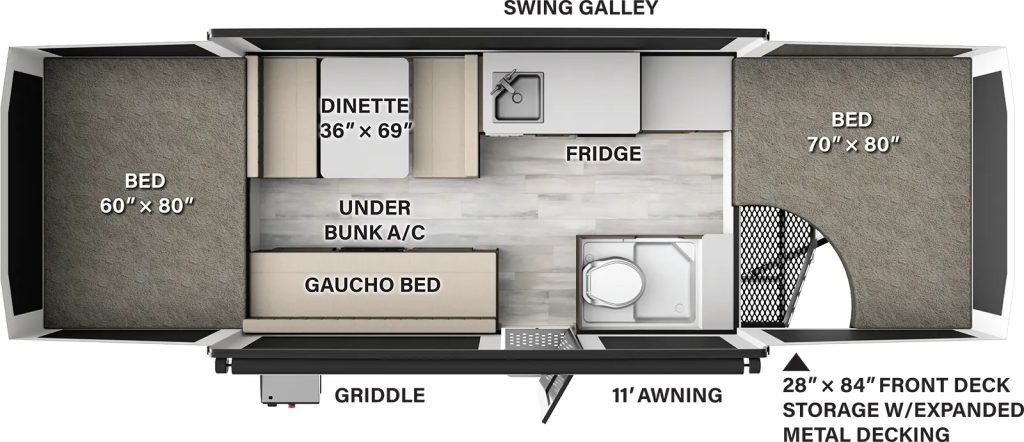
Are you thinking about getting a tent trailer but wondering how wide it actually is? Knowing the width of a tent trailer is important for many reasons—from making sure it fits in your garage to planning your travel route.
You don’t want to be caught off guard by tight spots or parking challenges. You’ll discover exactly how wide tent trailers usually are and what that means for your trips and storage. Keep reading to find out what you need to know before you hit the road with your tent trailer.
Tent Trailer Width Basics
Tent trailers are popular for camping and easy to tow. Knowing their width helps with parking and driving.
This guide explains basic tent trailer widths and what affects them.
Standard Dimensions
Most tent trailers have widths between 6 and 8 feet. This size fits well on roads and campsites.
The width usually includes the trailer body but not the extended tent parts.
- Common width: 7 to 8 feet (84 to 96 inches)
- Includes wheels and body frame
- Tent extensions add extra space when set up
Variations By Model
Different models have different widths based on design and purpose. Smaller models are narrower and easier to tow.
Larger models offer more living space but need wider lanes and parking spots.
| Model Type | Width Range | Notes |
|---|---|---|
| Compact | 6 to 7 feet | Easy to tow, fits small spaces |
| Mid-size | 7 to 8 feet | Good balance of space and towing |
| Large | 8 feet or more | More room, needs wider roads |
Impact On Towing
Width affects how easy it is to tow a tent trailer. Wider trailers can be harder to control on narrow roads.
Drivers should check their vehicle’s towing limits and road laws about trailer width.
- Wider trailers need more careful steering
- Watch for legal width limits on highways
- Use mirrors to check trailer sides while driving
Choosing The Right Width
When selecting a tent trailer, width is a key factor. It affects your travel experience and comfort.
Consider your needs and restrictions. Focus on how the trailer width matches your vehicle, camping plans, and storage options.
Matching Vehicle Capacity
Your vehicle must handle the trailer’s width. Check your vehicle’s towing capacity and width allowance.
| Vehicle Type | Max Trailer Width |
| SUV | 7 feet |
| Truck | 8 feet |
| Van | 7.5 feet |
Considering Camping Needs
Consider the size of your camping group. Larger groups need wider trailers for comfort.
- Families may need a wider trailer for extra beds.
- Solo travelers can opt for a narrower, lighter option.
- Check park site regulations for trailer width limits.
Storage And Transport Factors
Trailer width impacts storage and transport. Ensure your storage area can accommodate the trailer’s width.
Measuring Tent Trailer Space
Knowing the width of your tent trailer is important for safe parking and travel. Accurate measurements help avoid damage and ensure enough space for setup.
This guide explains how to measure the width correctly, including parts like slide-outs and awnings. It also covers clearance needs for safety.
Width Measurement Techniques
Measure the widest part of the trailer from one outer edge to the other. Use a tape measure and keep it straight across the trailer base.
- Start at the outer edge of one sidewall.
- Stretch the tape to the opposite sidewall’s outer edge.
- Record the distance in feet and inches.
- Double-check the measurement for accuracy.
Including Slide-outs And Awnings
Slide-outs and awnings increase the trailer’s width when extended. Measure them separately and add to the main width.
| Part | Measurement Needed | Notes |
| Main Trailer Body | Width from side to side | Measured when slide-outs are retracted |
| Slide-Outs | Extension width | Measure from trailer side to slide-out edge |
| Awnings | Extended width | Include when awnings are fully open |
Clearance Requirements
Extra space is needed around the trailer for safety and easy movement. This clearance prevents damage to the trailer and objects nearby.
- Allow at least 2 feet of clearance on each side.
- Leave 3 feet of clearance at the rear for slide-outs and awnings.
- Check local rules for space requirements in campgrounds or parking.
- Consider extra space for walking and setup ease.

Credit: rvlife.com
Effects Of Width On Setup
The width of a tent trailer affects how easy it is to set up. Wider trailers can offer more space but may take longer to arrange. Narrower trailers usually need less room to open and close.
Understanding the effects of width helps campers prepare for setup and enjoy their time outdoors more.
Ease Of Setup And Breakdown
Wide tent trailers often need more space to open fully. This can make setup slower, especially in tight campsites. Narrow trailers open faster and require less space around them.
- Wider trailers may need two people to help with setup.
- Narrow trailers are easier to handle alone.
- Large width can cause trouble in crowded camp areas.
- Smaller width speeds up both setup and breakdown.
Space For Interior Comfort
A wider tent trailer means more room inside. This extra space can fit bigger beds and more gear. It makes camping more comfortable for families or groups.
| Width | Interior Space | Comfort Level |
|---|---|---|
| 6 to 7 feet | Limited | Basic comfort |
| 7 to 8 feet | Moderate | Good for small families |
| 8+ feet | Spacious | Ideal for larger groups |
Stability And Wind Resistance
Wider trailers tend to be more stable. They resist wind better because their base is larger. Narrow trailers can sway more in strong winds.
Tips to improve stability of tent trailers:
- Park with the trailer’s widest side against the wind
- Use stabilizer jacks on all corners
- Secure guy lines tightly
- Avoid camping in open, windy areas if possible
Legal And Safety Considerations
Tent trailers come in different widths. Knowing their size helps you stay safe and follow the law.
This guide covers important rules about trailer width on roads. It also shares tips for safe driving.
Road Width Restrictions
Roads have width limits to keep traffic safe. Tent trailers must fit within these limits to avoid accidents.
Most states allow trailers up to 8.5 feet wide without extra permits. Wider trailers face more rules.
- Check local laws for exact width limits.
- Wide trailers may need special routes.
- Watch for narrow bridges and tunnels.
Permits And Regulations
If your tent trailer is wider than allowed, get a permit before driving. Permits keep roads safe and legal.
Rules vary by state and country. Some places require special lights or flags on wide trailers.
- Apply for permits ahead of time.
- Follow all permit conditions closely.
- Carry your permit while driving.
Safe Driving Practices
Wide tent trailers need careful driving. Watch your speed and keep a safe distance from other vehicles.
Use extra caution in tight spots like city streets or campgrounds. Check mirrors often to avoid collisions.
- Drive slower than usual.
- Signal early before turns.
- Practice backing up in open areas.
- Inspect trailer connections before trips.

Credit: www.bongardsrv.ca
Tips For Narrow And Wide Tent Trailers
Tent trailers come in different widths to fit your camping needs. Choosing the right width helps with towing and comfort.
This guide covers the benefits of narrow and wide tent trailers. It also helps you pick one based on your camping style.
Advantages Of Narrow Models
Narrow tent trailers are easier to tow and park. They fit better on tight roads and in small campsites.
- Better fuel efficiency while driving
- Easier to maneuver on narrow roads
- Fits in smaller parking spaces
- Lighter weight for easier towing
- Less wind resistance on highways
Benefits Of Wider Models
Wide tent trailers offer more living space and comfort. They provide room for extra gear and sleeping areas.
| Feature | Narrow Trailer | Wide Trailer |
| Width | 6 to 7 feet | 8 to 10 feet |
| Living Space | Compact | Spacious |
| Towing Ease | High | Lower |
| Setup Time | Faster | Longer |
| Storage Capacity | Limited | More |
Choosing Based On Camping Style
Think about your camping habits before choosing a trailer width. Your style affects what fits best.
Consider these points:
- If you camp in crowded or small sites, narrow models work well.
- For long trips with family, wider trailers give more comfort.
- Frequent travelers may prefer narrow trailers for easier towing.
- If you carry many supplies, wide trailers offer better storage.

Credit: gearjunkie.com
Frequently Asked Questions
How Wide Is A Standard Tent Trailer?
Most tent trailers are between 6 to 8 feet wide when folded. This width allows easy towing and storage. When expanded, the width can increase significantly due to extended sleeping areas. Always check specific model dimensions before purchase or travel.
Does Tent Trailer Width Affect Towing Requirements?
Yes, wider tent trailers may require a vehicle with more towing capacity. The trailer’s width impacts wind resistance and stability on the road. It’s important to match your vehicle’s towing limits with the trailer’s size for safe travel.
Can A Tent Trailer Fit On Narrow Campsites?
Many tent trailers are designed to fit standard campsite widths. However, wider models might struggle on narrow or compact sites. Always verify campsite dimensions and trailer size before booking to avoid space issues.
How Does Tent Trailer Width Impact Storage Options?
Wider tent trailers need more storage space in garages or driveways. Compact models are easier to store in limited spaces. Knowing your trailer’s width helps plan appropriate storage solutions and protect your investment.
Conclusion
Tent trailers usually range between 6 to 8 feet wide. This width fits most roads and campsites easily. Knowing the size helps with travel planning and parking. It also ensures safety on highways. Always check your specific model’s width before buying or towing.
Understanding the width makes camping trips smoother and more fun. Keep these points in mind for a hassle-free experience. Choosing the right tent trailer size matters for comfort and convenience.