
Are you planning a kitchen renovation or simply replacing an old dishwasher? One crucial detail you might be curious about is the width of a typical dishwasher.
Knowing the standard dimensions can help you make informed decisions, ensuring that your new appliance fits seamlessly into your kitchen layout. Imagine avoiding costly mistakes and the hassle of returns just by having the right information at your fingertips. You’ll discover the standard measurements, why they matter, and how they can influence your kitchen’s functionality.
Let’s dive in and make sure your next dishwasher fits perfectly into your home.

Credit: www.communityappliance.com
Standard Dishwasher Widths
Standard dishwasher widths vary to fit different kitchen layouts and cabinets. Knowing the typical sizes helps choose the right model. Most dishwashers are designed to fit common kitchen spaces. Understanding these widths avoids installation problems and ensures a smooth fit.
Common Sizes In Inches
The most common width for dishwashers is 24 inches. This size fits most standard kitchen cabinets. Some compact models measure 18 inches wide. These smaller dishwashers suit tight spaces or apartments. A few models come in widths slightly over 24 inches for extra capacity.
- Standard width: 24 inches
- Compact width: 18 inches
- Wide models: 24 to 30 inches
Metric Measurements
Metric sizes are important for international buyers. A 24-inch dishwasher equals about 60 centimeters wide. The 18-inch compact models measure around 45 centimeters. Metric measurements help ensure compatibility in countries using the metric system. Always check exact dimensions before purchasing.
| Type | Width (Inches) | Width (Centimeters) |
|---|---|---|
| Standard | 24 | 60 |
| Compact | 18 | 45 |
| Wide | 24-30 | 60-76 |
Width Variations By Brand
Different brands offer various width options. Some brands focus on compact dishwashers for small kitchens. Others provide wider models with advanced features. It is important to check brand specifications carefully. Widths can vary slightly by manufacturer and model line.
- Brand A: Mostly 24-inch and 18-inch models
- Brand B: Offers wider options up to 30 inches
- Brand C: Specializes in slim dishwashers for tight spaces

Credit: www.maytag.com
Compact And Slim Dishwashers
Compact and slim dishwashers suit kitchens with limited space. They offer practical solutions without sacrificing too much capacity. These models fit in narrow spots, perfect for apartments or small homes.
Choosing the right size helps save space and maintain kitchen flow. Compact dishwashers come in various widths and depths. Knowing their dimensions is key to finding the best fit.
Dimensions For Small Kitchens
Compact dishwashers usually measure between 18 to 20 inches wide. Their height and depth often match standard sizes, around 24 inches deep and 33 to 35 inches tall.
These dimensions allow installation in tight spaces under counters or in small cabinets. Some models are even slimmer, around 17 inches wide, for very narrow spaces.
| Dimension | Typical Size |
|---|---|
| Width | 17 to 20 inches |
| Depth | 24 inches |
| Height | 33 to 35 inches |
Pros And Cons Of Narrow Models
- Pros:Save space in small kitchens.
- Pros:Use less water and energy.
- Pros:Easy to fit in tight spots.
- Cons:Smaller capacity, fewer dishes per cycle.
- Cons:Some models lack advanced features.
- Cons:May require more frequent runs.
Wide And Extra-large Dishwashers
Wide and extra-large dishwashers offer a practical solution for homes with heavy dishwashing needs. These models go beyond the standard width to provide more space for plates, pots, and pans. If you often find yourself running multiple dishwasher cycles, these larger options could save you time and effort.
Sizes For Larger Households
Wide dishwashers typically start at 24 inches in width, but extra-large models can reach up to 30 or even 36 inches. This extra width means more racks and space for large items like baking sheets and serving trays. If your household has five or more people, or you entertain frequently, these sizes are worth considering.
Think about how many dishes pile up in a day. Would a wider dishwasher reduce the number of runs you need? This can cut down on water and energy use, making your kitchen more efficient.
Impact On Kitchen Space
Installing a wide or extra-large dishwasher requires more kitchen space, which may affect your layout. You might need to adjust cabinetry or countertops to fit the larger appliance. This could mean some remodeling, but the payoff is less frequent dishwashing and more convenience.
Before you choose a larger model, measure your kitchen carefully. Can your space handle the extra width without feeling cramped? Sometimes, a wider dishwasher can become the centerpiece of a functional kitchen, but only if it fits well.
Measuring Your Kitchen Space
Measuring your kitchen space accurately is crucial before buying a dishwasher. A wrong size can lead to installation headaches or wasted space. Taking the time to measure properly ensures your new appliance fits perfectly and works efficiently with your kitchen layout.
Tools Needed For Accurate Measurement
You’ll want a few simple tools to get precise measurements:
- Tape measure:A sturdy, retractable tape measure is essential for measuring width, height, and depth.
- Notepad and pen:Jot down your measurements clearly to avoid confusion later.
- Level:This helps check if your floor or counter surface is even, which affects dishwasher fit.
- Flashlight:Useful for checking dark corners or inside cabinets.
Using these tools, measure the width of the space where the dishwasher will go, then the height and depth. Don’t forget to check clearance for doors or drawers nearby.
Common Measurement Mistakes
Many people forget to account for extra space needed for plumbing and electrical hookups. This can make a dishwasher seem too tight to fit once installed. Always leave at least 1 to 2 inches of wiggle room around the appliance.
Another frequent error is measuring only the cabinet opening without considering the thickness of surrounding cabinetry or countertop edges. These can reduce the usable space more than you expect. Double-check each dimension carefully.
Have you ever bought something that didn’t fit because you rushed the measurements? Taking your time and measuring twice can save you from costly returns and frustration. Accurate measuring sets you up for a smooth installation and a dishwasher that fits just right.
Choosing The Right Width
Choosing the right width for your dishwasher is more than just a measurement on paper. It directly impacts how well your kitchen functions and how smoothly your daily chores go. Getting the fit right can save you from costly replacements and awkward kitchen layouts.
Matching Dishwasher Size To Kitchen Layout
Before buying a dishwasher, measure the space where you plan to install it. Check not only the width but also the height and depth to avoid surprises. Narrow kitchens usually benefit from slim models around 18 inches wide, while spacious kitchens can handle standard 24-inch units without crowding.
Think about your kitchen flow. Will the dishwasher door open without hitting cabinets or appliances? Do you have enough clearance to load and unload comfortably? Sometimes, a slightly narrower dishwasher makes your kitchen feel more open and less cramped.
Balancing Capacity And Space
Your dishwasher’s width affects its capacity. A 24-inch dishwasher typically holds 12 to 16 place settings, ideal for families or frequent entertainers. Meanwhile, an 18-inch model fits fewer dishes but suits smaller households or those who wash more often.
Ask yourself how much dishwashing you really do. Do you often run multiple cycles, or do you prefer to fill the dishwasher fully before starting it? Choosing the right size means balancing space constraints with your daily needs.
Remember, a larger dishwasher might seem like a luxury, but if it overwhelms your kitchen space, it can slow you down instead of speeding up cleanup. What matters most is a dishwasher that fits your lifestyle and your kitchen perfectly.
Installation Considerations
Installing a dishwasher is more than just sliding it under your counter. Proper planning ensures it fits well and works efficiently. Let’s look at key installation factors that often get overlooked but make a big difference.
Clearance And Ventilation Needs
Dishwashers need space not just to fit but to breathe. Without proper clearance around the unit, heat and moisture can build up, risking damage to your cabinets and the appliance itself.
Check the manufacturer’s guidelines for the recommended clearance, usually about 1/4 inch on the sides and back. Also, ensure there’s enough space in front for the door to open fully without obstruction.
Ventilation is crucial to prevent mold and keep your kitchen fresh. Are you ready to create space for air circulation behind and beneath your dishwasher? If not, your new appliance might not last as long as you hope.
Adjusting Cabinets And Counters
Most dishwashers come in standard widths, but your kitchen cabinets might not be built to match perfectly. You may need to trim or modify cabinets and counters to fit the unit seamlessly.
Think about your countertop material too. Thick granite or marble edges might require custom cutting or support adjustments to accommodate the dishwasher’s height and depth.
Have you measured the available space carefully? Even a half-inch difference can cause installation headaches. Taking precise measurements before buying saves time and money later.
Popular Dishwasher Sizes By Market
Dishwasher sizes vary significantly depending on the market, influenced by kitchen layouts and consumer preferences. Knowing the typical width in your region helps you choose a model that fits perfectly without compromising functionality. Let’s look at popular dishwasher sizes by market to help you make an informed decision.
North America Trends
In North America, the standard dishwasher width is usually 24 inches. This size fits well into most kitchens designed with ample space for large appliances. However, compact models around 18 inches wide are gaining popularity, especially for smaller households or apartments.
Depth and height tend to be fairly uniform, around 24 inches deep and 34-35 inches tall. If you have a narrow kitchen, you might want to explore these slim options without sacrificing washing capacity. Have you measured your kitchen space carefully before shopping?
European Size Standards
European kitchens often favor more compact dishwashers due to smaller living spaces. A common width is 60 cm (about 23.6 inches), which closely matches North American full-size models. However, many homes use 45 cm (about 17.7 inches) wide dishwashers to save space.
These narrower units still handle a decent load, making them ideal if you cook frequently but have limited kitchen space. If your kitchen is designed with space efficiency in mind, these European sizes could offer a better fit. Would a narrower dishwasher improve your kitchen flow?
Other Regional Variations
In other parts of the world, dishwasher sizes can vary widely depending on cultural cooking habits and kitchen design. For example, in Asia, smaller models around 45 cm wide are common, reflecting compact kitchen layouts. Meanwhile, Australia typically follows North American sizing but with some variations.
Understanding these regional differences can save you from buying a dishwasher that doesn’t fit your kitchen. What size options are available in your local market? Checking this can help avoid surprises during installation.
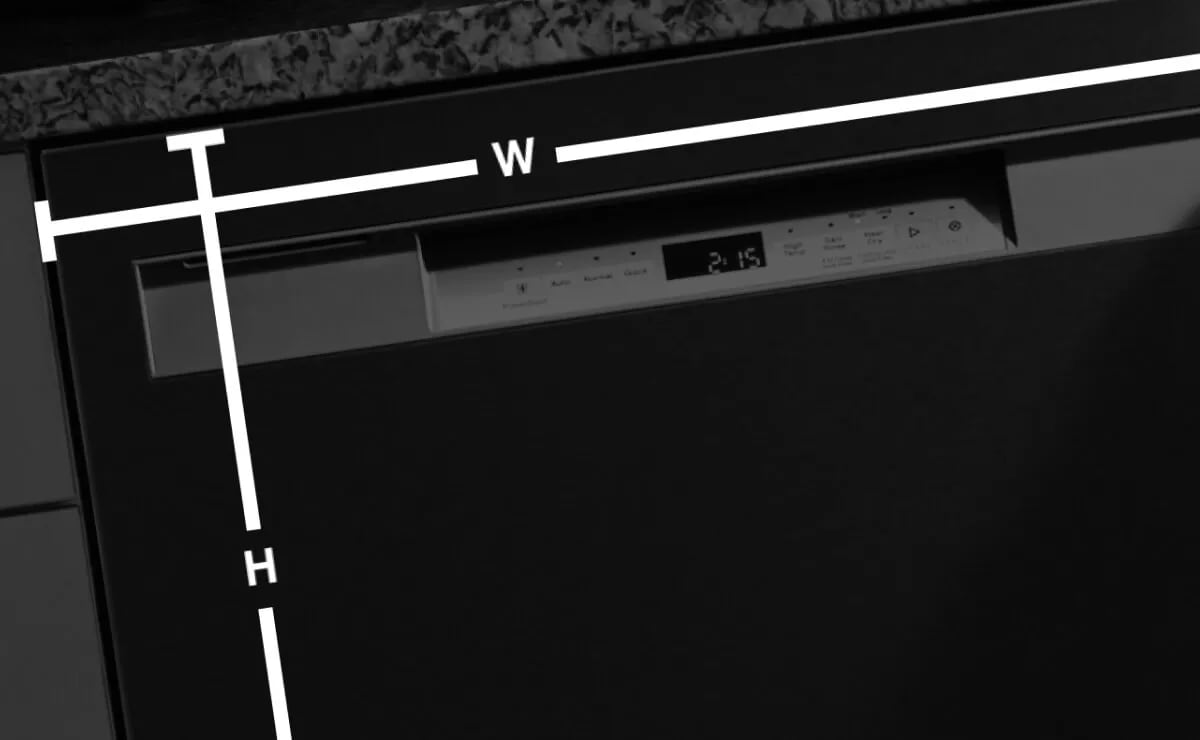
Credit: www.maytag.com
Frequently Asked Questions
How Wide Is A Standard Dishwasher?
A standard dishwasher is typically 24 inches wide. This size fits most kitchen cabinets and offers ample space for dishes. Compact models can be narrower, around 18 inches, ideal for smaller kitchens or apartments. Always measure your space before purchasing.
What Are The Dimensions Of A Built-in Dishwasher?
Built-in dishwashers usually measure 24 inches wide, 24 inches deep, and 35 inches high. These dimensions fit under standard countertops. Variations exist, but most models conform to these standard sizes for easy installation and compatibility.
Can Dishwasher Width Vary By Brand Or Model?
Yes, dishwasher width can vary slightly by brand and model. While 24 inches is standard, some models offer compact sizes around 18 inches. Always check the specific product dimensions before buying to ensure it fits your kitchen space.
Are There Narrower Dishwashers For Small Kitchens?
Yes, slim dishwashers are available in widths around 18 inches. These are ideal for small kitchens or limited spaces. They have reduced capacity but maintain essential features. They offer a practical solution for compact living areas.
Conclusion
A typical dishwasher usually measures about 24 inches wide. This size fits well in most kitchen spaces. Knowing the width helps you plan your kitchen better. It also ensures the dishwasher fits without issues. Different models may vary slightly in size.
Always check the exact measurements before buying. Space matters for comfort and efficiency. A well-chosen dishwasher saves time and effort. Choosing the right size makes kitchen work easier. Keep these points in mind for a smooth purchase.