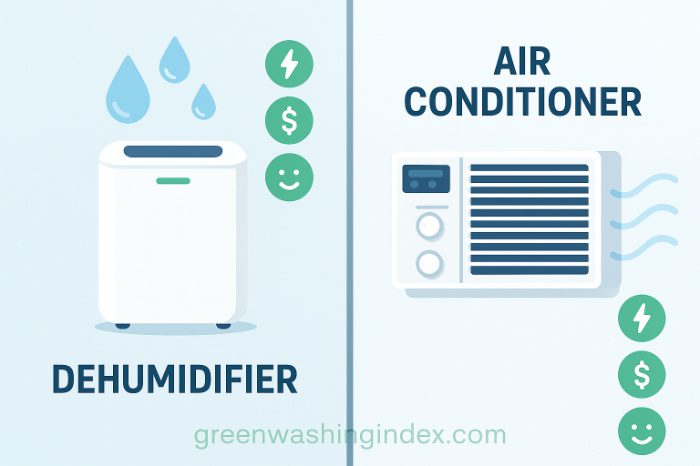
Are you confused about whether you need a dehumidifier or an air conditioner? Both devices can make your home more comfortable, but they work in very different ways.
Understanding what each one does can help you choose the right solution for your space. You’ll discover how a dehumidifier and an air conditioner differ, and which one fits your needs best. Keep reading to find out how to breathe easier and feel cooler in your own home.

Credit: www.amazon.ca
How Dehumidifiers Work
Dehumidifiers help remove moisture from the air. This makes rooms feel cooler and more comfortable.
They are useful in damp places to stop mold and mildew growth. Let’s look at how they work.
Moisture Removal Process
Dehumidifiers pull warm, humid air inside the machine. The air passes over cold coils.
When air cools, water vapor turns into liquid water. This water collects in a tank or drains out.
- The dry air is then warmed slightly.
- The machine releases the dry air back into the room.
- This cycle repeats to keep lowering humidity.
Types Of Dehumidifiers
There are different kinds of dehumidifiers for various needs. Each type works a bit differently.
| Type | How It Works | Best Use |
| Refrigerant | Uses cold coils to condense moisture | Homes and offices |
| Desiccant | Uses dry material to absorb water | Cooler places or tight spaces |
| Thermo-Electric | Uses a Peltier cooler to remove moisture | Small rooms or closets |
How Air Conditioners Work
Air conditioners cool indoor air to create a comfortable environment. They remove heat and moisture from the air. This process helps lower the room temperature and reduce humidity.
The working of an air conditioner involves two main parts: cooling mechanism and air circulation. Each part plays a key role in making the air cooler and fresher.
Cooling Mechanism
An air conditioner uses a refrigerant to absorb heat from inside the room. The refrigerant changes from liquid to gas and back to liquid during this cycle. This change removes heat and cools the air.
- The compressor pumps the refrigerant through the system.
- The refrigerant absorbs heat from indoor air and evaporates.
- The heat is released outside when the refrigerant condenses.
- The cooled refrigerant returns inside to absorb more heat.
Air Circulation
Air circulation moves warm indoor air through the air conditioner. The cooled air is then pushed back into the room. This cycle repeats to keep the room cool and comfortable.
| Component | Function |
| Evaporator Coil | Absorbs heat from indoor air |
| Blower Fan | Moves air across the evaporator coil |
| Condenser Coil | Releases heat outside |
| Compressor | Circulates refrigerant and increases pressure |
Main Differences Between Dehumidifiers And Air Conditioners
Dehumidifiers and air conditioners both help improve indoor comfort. They remove moisture from the air but work in different ways.
Knowing their differences can help you choose the right device for your needs.
Purpose And Function
Dehumidifiers reduce humidity by pulling moisture from the air. They keep rooms dry and prevent mold growth.
Air conditioners cool the air by removing heat. They also reduce humidity but their main goal is to lower temperature.
- Dehumidifier: Removes moisture only
- Air conditioner: Cools air and removes some moisture
Effect On Temperature
Dehumidifiers do not change the room temperature much. They may make the air feel a bit warmer because of their heat output.
Air conditioners lower the room temperature by removing heat. They make the space cooler and more comfortable.
- Dehumidifier: Slight temperature increase
- Air conditioner: Significant temperature decrease
Energy Consumption
Dehumidifiers usually use less energy than air conditioners. They run at lower power since they only remove moisture.
Air conditioners use more energy because they cool the air and remove moisture. Their compressors need more power.
| Device | Energy Use |
|---|---|
| Dehumidifier | Lower |
| Air Conditioner | Higher |

Credit: www.nytimes.com
When To Use A Dehumidifier
A dehumidifier helps reduce moisture in the air. It is useful in places with high humidity levels.
Using a dehumidifier keeps your home dry and comfortable. It also protects your belongings from mold and mildew.
Ideal Conditions
Use a dehumidifier when the air feels damp and sticky. It works well in basements, bathrooms, or kitchens.
Dehumidifiers are helpful during rainy seasons or in places with poor ventilation. They keep humidity levels below 60%.
- Basements with musty smells
- Rooms with mold or mildew
- Areas with condensation on windows
- Homes in humid climates
Health Benefits
Lowering humidity helps reduce dust mites and mold spores. This can improve breathing and reduce allergies.
Dehumidifiers create a healthier environment. They can also reduce the risk of asthma attacks and other respiratory problems.
- Reduces mold growth that causes allergies
- Limits dust mites that trigger asthma
- Prevents musty odors that irritate lungs
- Improves overall indoor air quality
When To Use An Air Conditioner
Air conditioners cool indoor spaces by removing heat and humidity. They help create a comfortable environment during warm weather.
Knowing when to use an air conditioner can save energy and improve comfort. This depends on your cooling needs and the climate you live in.
Cooling Needs
Use an air conditioner if you need to lower the indoor temperature quickly. It works best in places where the air feels hot and sticky.
- When indoor heat is above 75°F (24°C)
- When humidity makes the air feel uncomfortable
- If fans or dehumidifiers do not cool enough
- When you want fast cooling in rooms with many people
Climate Considerations
Climate affects how often and how long you should run an air conditioner. Hot and humid climates need air conditioners more than dry or cool areas.
| Climate Type | Air Conditioner Use |
| Hot and Humid | Daily, especially in summer |
| Hot and Dry | During heat waves or high temperatures |
| Moderate | Occasionally, on very warm days |
| Cold | Rarely or not at all |
Can Dehumidifiers And Air Conditioners Work Together?
Many people wonder if dehumidifiers and air conditioners can be used at the same time. Both devices help improve indoor air quality and comfort. They have different functions but can work side by side.
Using both can help control temperature and moisture levels in your home. Understanding their benefits and challenges helps decide if combining them is right for you.
Benefits Of Combined Use
Using a dehumidifier with an air conditioner offers several advantages. It helps maintain a comfortable environment by controlling both heat and humidity.
- Reduces indoor humidity more efficiently
- Improves air conditioner performance
- Prevents mold and mildew growth
- Increases comfort without lowering temperature too much
- Helps protect furniture and walls from moisture damage
Potential Challenges
Using both devices together may cause some issues. It is important to understand these challenges before combining their use.
| Challenge | Description | Tip |
| Higher Energy Use | Running both devices increases electricity consumption. | Use energy-efficient models and timers. |
| Space Requirements | Both devices need room, which can be limiting in small spaces. | Place them strategically to save space. |
| Over-Drying | Too much moisture removal can make air uncomfortably dry. | Monitor humidity levels and adjust settings. |
Choosing The Right Appliance For Your Home
Selecting the right appliance for your home can improve comfort and air quality. Both dehumidifiers and air conditioners help, but they serve different purposes.
Understanding your needs and space will guide you to the best choice. Let’s explore key factors to consider before buying.
Assessing Your Environment
Know your home’s climate and common problems before choosing an appliance. A dehumidifier removes moisture, good for damp areas. An air conditioner cools the air and lowers humidity.
- Check humidity levels in your home
- Identify if heat or dampness is the bigger issue
- Consider room size and ventilation
- Think about allergy or mold concerns
Budget And Maintenance
Costs include purchase price, energy use, and upkeep. Maintenance differs between devices and affects long-term expense.
| Appliance | Average Cost | Maintenance Needs | Energy Use |
| Dehumidifier | $150 – $300 | Clean filter, empty water tank | Moderate |
| Air Conditioner | $300 – $700 | Clean filters, check coolant | High |

Credit: www.nytimes.com
Frequently Asked Questions
What Is The Main Function Of A Dehumidifier?
A dehumidifier primarily removes excess moisture from the air. It helps prevent mold growth and reduces humidity levels. This creates a more comfortable indoor environment, especially in damp areas. By controlling moisture, it can also protect home furnishings and improve air quality.
How Does An Air Conditioner Work?
An air conditioner cools indoor air by removing heat and humidity. It circulates refrigerant, which absorbs and releases heat. This process not only cools the air but also dehumidifies it. Thus, an air conditioner provides a comfortable and cool environment during hot weather.
Can Dehumidifiers And Air Conditioners Be Used Together?
Yes, they can be used together for optimal comfort. While air conditioners cool and dehumidify, a dehumidifier focuses on moisture control. Using both can efficiently manage temperature and humidity. This combination is especially useful in areas with high humidity and varying temperatures.
Do Dehumidifiers Consume Less Energy Than Acs?
Generally, dehumidifiers consume less energy than air conditioners. They focus solely on removing moisture rather than cooling air. This makes them more energy-efficient in controlling humidity. However, energy consumption varies based on the model and usage patterns of each device.
Conclusion
A dehumidifier and an air conditioner serve different purposes. One removes moisture; the other cools air. Both can improve indoor comfort in different ways. Choosing the right device depends on your needs. Understanding their functions helps you make a smart choice.
Clear, dry air feels better and healthier. Remember, proper use saves energy and money. Keep your home comfortable all year round. Simple steps make a big difference.