Have you ever wondered if a dehumidifier does the same job as an air conditioner? Both machines seem to promise relief from uncomfortable indoor air, but are they really the same?
If you’re tired of sticky, humid rooms and want to know the best way to stay comfortable, understanding the difference can save you time, money, and frustration. Keep reading, and you’ll discover exactly how these devices work, which one suits your needs, and how to make your home feel just right.
Don’t miss out on this simple yet powerful knowledge that could change the way you handle indoor comfort.
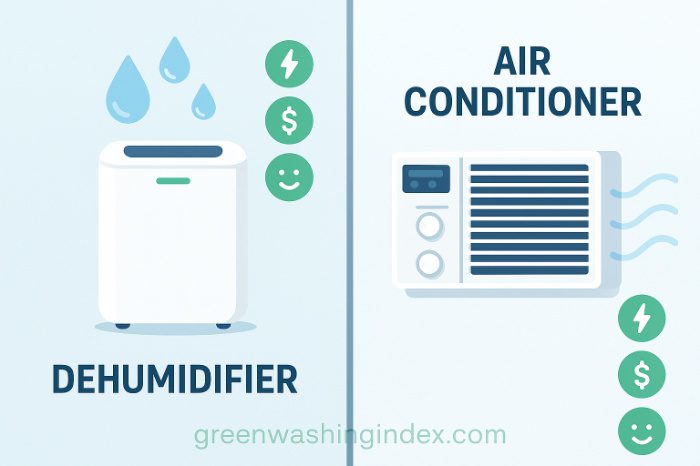
Credit: www.greenwashingindex.com
How Dehumidifiers Work
Dehumidifiers help remove moisture from the air. They keep rooms dry and comfortable.
Understanding how they work can help you choose the right one for your space.
Moisture Removal Process
Dehumidifiers pull in moist air from the room. The air passes over cold coils inside the machine.
The cold coils cause water to condense and collect as liquid. The dry air is then released back into the room.
- Air intake draws in humid air
- Air cools on cold coils
- Water condenses and drips into a collection tank
- Dry air is released back into the room
Types Of Dehumidifiers
There are different types of dehumidifiers for various needs. Each type works in a unique way.
| Type | How It Works | Best For |
| Refrigerant | Uses cold coils to condense moisture | Homes and offices |
| Desiccant | Uses a drying material to absorb moisture | Low temperature areas |
| Thermo-Electric | Uses a Peltier cooler to remove moisture | Small spaces or closets |

Credit: aircareconnect.com
How Air Conditioners Work
Air conditioners help keep indoor spaces cool. They remove heat and moisture from the air.
Let’s explore how they work to provide cool air and maintain comfort.
Cooling Mechanism
Air conditioners use a refrigerant to cool the air. The refrigerant absorbs heat from the indoor air.
This process involves a cycle of evaporation and condensation. It occurs within the air conditioner’s coils.
- Evaporator coil absorbs heat
- Compressor pumps refrigerant
- Condenser coil releases heat outside
Air Circulation And Filtration
Air conditioners circulate air through the room. They use fans to move the air across the coils.
Filters in air conditioners clean the air. They trap dust and other particles.
- Fans help distribute cool air
- Filters improve air quality
- Regular cleaning keeps filters effective
Primary Functions Compared
Many people wonder if a dehumidifier and an air conditioner work the same way. Both devices help improve indoor comfort, but they serve different main purposes. Understanding these differences helps you choose the right device for your needs.
This comparison focuses on the primary functions of each device. We look at how they control humidity and regulate temperature in your home or office.
Humidity Control
A dehumidifier’s main job is to reduce moisture in the air. It pulls damp air inside, removes water, and sends dry air back out. This helps prevent mold, mildew, and musty smells.
Air conditioners also remove some humidity, but this is a side effect of cooling the air. Their main focus is not to dry the air but to lower the temperature.
- Dehumidifiers remove moisture directly from the air.
- Air conditioners reduce humidity while cooling.
- Dehumidifiers are better for high humidity without cooling needs.
Temperature Regulation
Air conditioners cool the air to lower the room temperature. They use a refrigerant to absorb heat and send cool air inside. This makes spaces more comfortable on hot days.
Dehumidifiers do not cool the air much. They may even make a room feel slightly warmer because they release heat while removing moisture.
- Air conditioners focus on cooling the air.
- Dehumidifiers mainly remove moisture, not heat.
- Use air conditioners for cooling and comfort in hot weather.

Credit: www.nytimes.com
Energy Consumption Differences
Dehumidifiers and air conditioners both remove moisture from the air. They use electricity but in different ways. Understanding their energy use helps you choose the right device.
Energy consumption depends on the device design and how it works. Let’s explore these differences in detail.
How Dehumidifiers Use Energy
Dehumidifiers use a fan and a cooling coil to remove moisture. They run the compressor to cool the air and collect water.
- Mostly focus on lowering humidity, not temperature.
- Run for longer periods in humid conditions.
- Use less power compared to air conditioners.
How Air Conditioners Use Energy
Air conditioners cool the air to lower the room temperature. They also remove moisture as a side effect of cooling.
- Work by compressing and circulating refrigerant.
- Use more power to cool entire rooms or spaces.
- Run shorter times but consume more electricity per hour.
Comparing Energy Use
| Device | Primary Function | Power Use (Watts) | Typical Run Time |
| Dehumidifier | Remove Moisture | 200-700 | Long periods |
| Air Conditioner | Cool Air | 1000-3500 | Short periods |
Factors Affecting Energy Consumption
Several factors affect how much energy each device uses. These include room size, humidity, and device efficiency.
- Larger rooms need more power.
- Higher humidity increases dehumidifier runtime.
- Air conditioners use more energy in hot weather.
- Energy star rated devices consume less power.
Ideal Use Cases
Dehumidifiers and air conditioners both improve indoor comfort but work differently. Knowing when to use each helps maintain a healthy living space.
This guide explains ideal situations for choosing a dehumidifier or an air conditioner.
When To Choose A Dehumidifier
Use a dehumidifier when humidity is the main problem. It removes excess moisture from the air without lowering the temperature much.
- Basements that feel damp or musty
- Homes with mold or mildew issues
- Areas where clothes are dried indoors
- Rooms with poor ventilation
- To protect wooden furniture and floors
When To Choose An Air Conditioner
Choose an air conditioner if you want to cool your space and reduce humidity. It lowers both temperature and moisture levels.
| Condition | Why Air Conditioner Helps |
| Hot and humid weather | Cools air and removes moisture |
| Need for temperature control | Maintains comfortable room temperature |
| Large living spaces | Efficient cooling over bigger areas |
| During summer months | Keeps indoor air fresh and cool |
Impact On Indoor Air Quality
Dehumidifiers and air conditioners both affect indoor air. They change humidity and temperature. These changes influence air quality in different ways.
Understanding how each device works helps choose the best option for better air quality.
How Dehumidifiers Improve Air Quality
Dehumidifiers remove excess moisture from the air. This helps stop mold and mildew growth. They make the air less sticky and fresher to breathe.
- Reduce mold and mildew spores
- Lower dust mite populations
- Prevent musty odors
- Help people with allergies or asthma
Air Conditioners And Air Quality Effects
Air conditioners cool the air and remove some moisture. They filter out dust and pollen using built-in filters. This can improve air quality but may not control humidity as well as dehumidifiers.
Regular maintenance of air conditioners is important to avoid mold inside the unit.
Comparing Dehumidifiers And Air Conditioners
| Feature | Dehumidifier | Air Conditioner |
| Primary Function | Removes moisture | Cools air and removes some moisture |
| Humidity Control | Strong | Moderate |
| Air Filtration | Limited | Built-in filters for dust and pollen |
| Effect on Allergens | Reduces mold and dust mites | Filters dust and pollen |
| Temperature Change | No cooling | Cools indoor air |
Cost Considerations
When choosing between a dehumidifier and an air conditioner, costs matter. Both devices help improve indoor comfort but differ in price.
Understanding initial and ongoing expenses can help you decide which device fits your budget better.
Initial Investment
Dehumidifiers usually cost less upfront than air conditioners. Prices depend on size and brand. Air conditioners need more complex installation, raising the total price.
- Dehumidifier units often range from $150 to $400.
- Window air conditioners start around $200 and go up to $700.
- Central air conditioning systems can cost several thousand dollars.
- Installation fees for air conditioners can add $300 or more.
Maintenance Expenses
Both devices require upkeep, but air conditioners tend to have higher maintenance costs. Regular filter changes and professional servicing are common.
| Maintenance Type | Dehumidifier | Air Conditioner |
| Filter Replacement | Every 3-6 months | Every 1-3 months |
| Professional Servicing | Rare, if any | Yearly recommended |
| Energy Costs | Lower | Higher |
Frequently Asked Questions
What Is The Main Difference Between A Dehumidifier And An Air Conditioner?
A dehumidifier removes moisture from the air, while an air conditioner cools the air. Dehumidifiers reduce humidity but don’t lower temperature like air conditioners. Air conditioners both cool and dehumidify, but their primary function is temperature control.
Can A Dehumidifier Replace An Air Conditioner?
No, a dehumidifier cannot replace an air conditioner. It only controls humidity and doesn’t cool the air. Air conditioners provide both cooling and humidity control, making them essential for hot, humid climates.
Do Air Conditioners Remove Humidity Effectively?
Yes, air conditioners remove humidity as part of their cooling process. They condense moisture from warm air, reducing indoor humidity. However, their main purpose is cooling, not dehumidification.
Are Dehumidifiers Energy Efficient Compared To Air Conditioners?
Dehumidifiers generally use less energy than air conditioners because they only remove moisture. Air conditioners consume more power since they cool and dehumidify simultaneously. Energy use depends on device size and usage patterns.
Conclusion
A dehumidifier and an air conditioner are not the same. Both remove moisture but work differently. An air conditioner cools the air and lowers humidity. A dehumidifier only removes moisture without cooling. Choosing the right device depends on your needs.
For damp rooms, a dehumidifier works best. For hot, humid days, an air conditioner helps more. Understanding their differences can save energy and money. Use each device for its main purpose. This keeps your home comfortable and healthy.