
Are you wondering if a heat pump is the same as an air conditioner? It’s a question many homeowners ask when deciding how to keep their homes comfortable all year round.
Both systems cool your space, but there’s more to the story. Understanding the difference can help you save money, stay cozy in winter, and make smarter choices for your home. Keep reading to discover how these two systems work, and which one might be the best fit for you.

Credit: www.rapidheat247.co.uk
Heat Pump Basics
Heat pumps are devices that move heat from one place to another. They can warm or cool your home by changing how heat flows.
People often ask if heat pumps and air conditioners are the same. They share some parts but work differently in cold weather.
How Heat Pumps Work
Heat pumps use a refrigerant to move heat. In warm months, they work like air conditioners, taking heat from inside and sending it outside.
In cold months, heat pumps reverse. They take heat from outside air and bring it inside to warm your home.
- Heat moves through coils filled with refrigerant.
- A compressor pumps the refrigerant between coils.
- Heat is absorbed or released depending on the mode.
- Fans help move air over the coils to heat or cool rooms.
Types Of Heat Pumps
There are several types of heat pumps. Each type works best in different climates and spaces.
| Type | How It Works | Best For |
| Air Source | Moves heat between air inside and outside | Most homes in mild climates |
| Ground Source | Uses underground pipes to move heat | Areas with extreme temperatures |
| Water Source | Transfers heat using a nearby water source | Near lakes or wells |
| Ductless Mini-Split | Small units that heat or cool rooms without ducts | Houses without ductwork |
Credit: trident-heat.com
Air Conditioner Basics
Air conditioners cool indoor spaces by removing heat. They help keep homes and offices comfortable during hot days.
Understanding how air conditioners work helps you see if a heat pump is the same or different.
How Air Conditioners Work
An air conditioner moves heat from inside a building to the outside. It uses a special liquid called refrigerant to do this.
The refrigerant absorbs heat from the air inside. Then it carries the heat outside and releases it there.
- The indoor unit has an evaporator coil where refrigerant absorbs heat.
- The compressor pumps the refrigerant through the system.
- The outdoor unit has a condenser coil that releases heat outside.
- Fans move air over the coils to help heat transfer.
Common Air Conditioner Types
There are several types of air conditioners. Each type fits different rooms and needs.
- Window Units:Small units installed in windows for single rooms.
- Split Systems:Have indoor and outdoor units connected by pipes.
- Central Air:Cool entire buildings through ductwork.
- Portable Units:Move easily from room to room.
Heat Pump Vs Air Conditioner
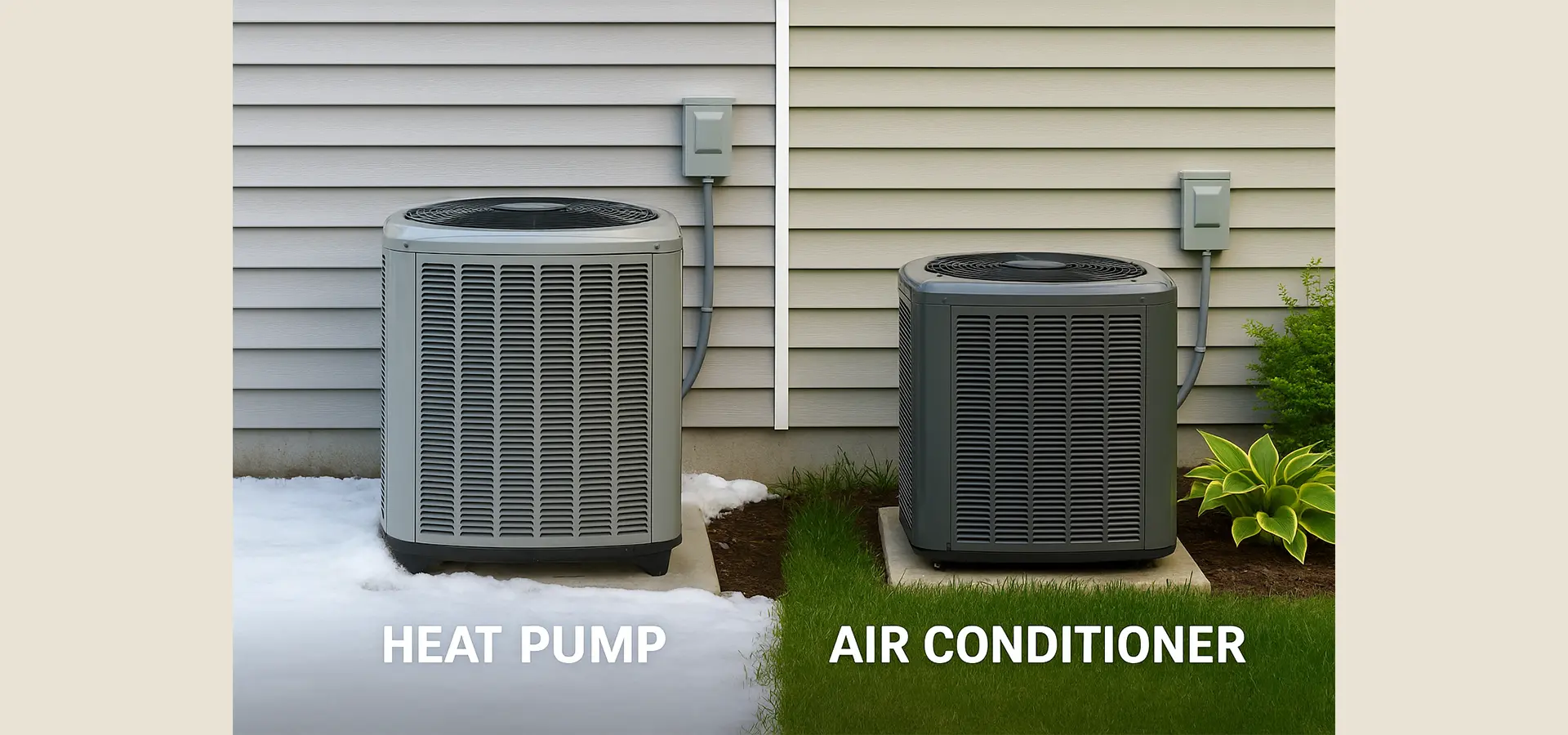
Many people wonder if a heat pump is the same as an air conditioner. Both systems cool your home, but they work differently. Understanding the differences can help you pick the right system for your needs.
This article explains how heat pumps and air conditioners compare in function, energy use, and cost.
Key Functional Differences
An air conditioner only cools the air inside your home. It moves heat from indoors to outdoors. A heat pump can cool and heat your home. It moves heat both ways depending on the season.
Heat pumps have a reversing valve that changes the flow of refrigerant. This lets them work as heaters in winter and coolers in summer. Air conditioners do not have this feature.
- Air conditioner: cools only
- Heat pump: cools and heats
- Heat pump has reversing valve for heating
- Air conditioner moves heat only out of home
Energy Efficiency Comparison
Heat pumps are more energy efficient because they transfer heat instead of creating it. This saves electricity in both summer and winter. Air conditioners use electricity only to cool.
In moderate climates, heat pumps can reduce energy bills. In very cold areas, they may need a backup heater, which lowers efficiency.
- Heat pumps save energy by transferring heat
- Air conditioners use energy only for cooling
- Heat pumps work best in mild climates
- Backup heat may reduce heat pump efficiency in cold areas
Cost Differences
Heat pumps usually cost more to buy and install than air conditioners. This is because they have more parts and can heat and cool. Air conditioners are simpler and cheaper.
Over time, heat pumps can save money on energy bills. The initial cost is higher, but running costs are lower in many cases.
| System | Initial Cost | Running Cost |
|---|---|---|
| Heat Pump | Higher | Lower (in mild climates) |
| Air Conditioner | Lower | Higher (no heating) |
Heating And Cooling Capabilities
Both heat pumps and air conditioners help keep homes comfortable. They move air to cool or warm indoor spaces.
Understanding their heating and cooling abilities helps you choose the right system for your home.
Heat Pumps For Heating
Heat pumps can heat your home by moving warm air inside. They work like an air conditioner but in reverse.
They pull heat from outside air and bring it indoors, even when it is cold outside.
- Use electricity to move heat, not create it
- Efficient for mild to moderate cold weather
- Can both heat and cool with one system
- Lower energy use than traditional heaters
Air Conditioners For Cooling Only
Air conditioners cool indoor air by removing heat and releasing it outside. They only cool and do not heat.
These systems are designed for hot weather and cannot provide warmth during cold months.
- Remove heat from inside air
- Do not have heating function
- Best for cooling in warm climates
- Require a separate heating system for winter
Installation And Maintenance
Heat pumps and air conditioners both cool indoor spaces. They share some installation steps but differ in key ways. Proper maintenance keeps both systems running well for years.
Understanding installation needs and maintenance tasks helps you care for your system. This guide covers what to expect with heat pumps and air conditioners.
Installation Requirements
Both heat pumps and air conditioners need outdoor units and indoor air handlers. They require space, power supply, and correct placement for best results.
- Clear outdoor area for airflow and service access
- Proper electrical wiring and circuit breakers
- Correct refrigerant lines and insulation
- Indoor unit placement for even air distribution
- Drainage system for condensation removal
Heat pumps also need to handle heating in cold weather. This may require extra insulation or backup heating options in some climates.
Maintenance Needs
| Task | Heat Pump | Air Conditioner |
| Filter Cleaning | Every 1-3 months | Every 1-3 months |
| Outdoor Unit Cleaning | Yearly | Yearly |
| Check Refrigerant Levels | Yearly | Yearly |
| Inspect Electrical Components | Yearly | Yearly |
| Heating Mode Check | Yearly | Not applicable |
Heat pumps require checking the heating function each year. Air conditioners do not have this step. Both systems benefit from professional inspections.

Credit: www.rapidheat247.co.uk
Choosing The Right System
Choosing between a heat pump and an air conditioner depends on several factors. Understanding your needs helps you pick the best system.
Both systems cool your home, but a heat pump also heats it. This makes a difference in many places.
Climate Considerations
Climate plays a big role in which system works best. Heat pumps work well in mild to cold climates. They can both heat and cool your home efficiently.
- Heat pumps save energy in areas with moderate winters.
- Air conditioners are better in hot climates where heating is rarely needed.
- Extreme cold can reduce heat pump efficiency.
Budget And Usage Factors
Cost and how you use the system affect your choice. Heat pumps may cost more upfront but save money over time.
| Factor | Heat Pump | Air Conditioner |
| Initial Cost | Higher | Lower |
| Operating Cost | Lower in mild climates | Higher if heating needed |
| Heating Ability | Yes | No |
| Cooling Ability | Yes | Yes |
| Best Use | Year-round comfort | Cooling only |
Frequently Asked Questions
What Is The Main Difference Between A Heat Pump And An Ac?
A heat pump can both heat and cool your home, while an AC only cools. Heat pumps transfer heat either inside or outside. This dual function makes heat pumps more versatile and energy-efficient in moderate climates.
Can A Heat Pump Replace An Air Conditioner Completely?
Yes, a heat pump can replace an air conditioner in most cases. It provides cooling during summer and heating in winter. However, in extremely cold climates, a heat pump might need a backup heating system.
How Does Energy Efficiency Compare Between Heat Pumps And Acs?
Heat pumps are generally more energy-efficient than traditional air conditioners. They use less electricity by transferring heat instead of generating it. This efficiency leads to lower energy bills, especially when heating is required.
Are Heat Pumps More Expensive Than Air Conditioners?
Heat pumps typically have a higher upfront cost than air conditioners. However, the dual heating and cooling ability can save money on energy bills. Over time, this makes heat pumps a cost-effective investment.
Conclusion
A heat pump and an air conditioner both cool your home. A heat pump also warms your house in winter. Air conditioners only cool, so they need another heater. Heat pumps save space and can reduce energy bills. Choosing the right system depends on your climate and needs.
Think about how you want to heat and cool your home. Both devices keep your indoor air comfortable. Now, you can decide which fits your lifestyle best.