
Are you thinking about upgrading your kitchen tools? If you’ve come across bamboo cutting boards, you might be wondering: Is a bamboo cutting board really good for you?
Choosing the right cutting board is more than just a simple purchase—it affects your cooking experience, hygiene, and even the lifespan of your knives. You’ll discover why bamboo cutting boards are becoming a popular choice and whether they fit your kitchen needs perfectly.
Keep reading to find out the surprising benefits and a few things you should watch out for before making your decision.
Credit: greenerchef.com
Benefits Of Bamboo Cutting Boards
Bamboo cutting boards are popular for many kitchens. They offer several benefits that make them a good choice.
This article explains why bamboo boards stand out for durability, eco-friendliness, and hygiene.
Durability And Strength
Bamboo is a very strong material. It resists cuts and scratches from knives well. This helps the board last a long time.
- Bamboo is harder than many hardwoods.
- It does not warp easily with water.
- The boards stay smooth and safe for cutting.
- They require less frequent replacement.
Eco-friendly Choice
Bamboo grows fast and does not need many resources. Choosing bamboo helps protect the environment.
| Feature | Bamboo | Hardwood |
| Growth Time | 3-5 years | 20-50 years |
| Water Use | Low | High |
| Carbon Footprint | Smaller | Larger |
| Renewability | High | Moderate |
Natural Antibacterial Properties
Bamboo has natural substances that slow bacteria growth. This keeps your food safer.
- Contains natural antimicrobial agents
- Less likely to harbor harmful germs
- Easy to clean with soap and water
Comparing Bamboo With Other Materials
Bamboo cutting boards are popular for their natural look and eco-friendliness. Many people wonder how bamboo compares to other common cutting board materials.
This article looks at bamboo against plastic and hardwood boards. It also covers how to care for each type.
Bamboo Vs. Plastic
Bamboo boards are made from fast-growing grass, while plastic boards come from synthetic materials. Bamboo is harder and less likely to get deep cuts. Plastic boards can sometimes absorb odors and stains.
- Bamboo is more eco-friendly than plastic.
- Plastic boards are often dishwasher safe.
- Bamboo boards need hand washing to last longer.
- Plastic can dull knives faster than bamboo.
Bamboo Vs. Hardwood
| Feature | Bamboo | Hardwood |
| Material Source | Grass | Tree Wood |
| Hardness | Hard and dense | Varies by wood type |
| Weight | Lighter | Heavier |
| Water Resistance | Moderate | Better if oiled well |
| Eco-friendliness | Highly renewable | Depends on wood source |
Bamboo is lighter and often more sustainable. Hardwood can be softer, but some types are very durable. Both need care to avoid cracking or warping.
Maintenance Differences
Here is a simple maintenance guide for each cutting board type:
- Bamboo:Wash by hand with mild soap. Dry immediately. Oil monthly to prevent cracks.
- Plastic:Can go in the dishwasher. Replace when deeply scored or stained.
- Hardwood:Hand wash only. Oil regularly. Avoid soaking to keep wood strong.
Care And Maintenance Tips
Bamboo cutting boards are popular for their strength and eco-friendliness. Proper care helps keep them clean and lasting longer.
Understanding how to clean and maintain your bamboo board will protect it from damage. This guide offers simple tips to follow.
Cleaning Techniques
Wash your bamboo cutting board with warm, soapy water after each use. Avoid soaking it in water to prevent warping.
Use a soft sponge or cloth to clean the surface gently. Rinse well and dry with a towel right away.
- Do not put bamboo boards in the dishwasher
- Use mild dish soap, no harsh chemicals
- Dry standing up or on a rack for air flow
- Disinfect with a vinegar solution if needed
Avoiding Damage
Prevent cracks and splits by keeping your bamboo board dry. Avoid leaving it in water or damp areas.
Do not use very sharp knives or cleavers on the board. This can cause deep cuts and reduce its lifespan.
- Do not expose the board to extreme heat
- Use both sides to avoid uneven wear
- Keep away from direct sunlight
- Trim food scraps gently to avoid gouges
Extending Board Lifespan
Apply food-grade mineral oil regularly to keep the bamboo hydrated. This prevents drying and cracking.
Sand the surface lightly with fine-grit sandpaper if it becomes rough. This restores smoothness and removes stains.
- Oil the board once a month or as needed
- Store in a cool, dry place
- Use a cutting board conditioner for extra care
- Replace if deep cuts or cracks appear

Credit: www.amazon.com
Potential Drawbacks Of Bamboo Boards
Bamboo cutting boards are popular, but they have some downsides. Knowing these can help you decide if bamboo fits your kitchen.
This section covers three main issues: cracks, effect on knives, and cost. Each may affect your experience with bamboo boards.
Susceptibility To Cracks
Bamboo boards can crack if they dry out too much. This happens when they are left in very dry places or washed too often with hot water.
Cracks let bacteria grow and make the board less safe. You should oil the board regularly to keep it moist and avoid cracks.
Hardness Impact On Knives
Bamboo is harder than some other woods. This hardness can dull knives faster than softer cutting boards.
Using a bamboo board means you might need to sharpen your knives more often. Softer boards are easier on knife edges.
Cost Considerations
Bamboo cutting boards are usually more expensive than plastic ones. The price can be a downside for budget buyers.
While bamboo is durable, the initial cost might be higher than other materials. Think about your budget before buying.
Choosing The Right Bamboo Board
Bamboo cutting boards are popular for their durability and eco-friendliness. Picking the right one can improve your kitchen experience.
This guide helps you understand key features like grain patterns, sizes, finish, and quality to choose a good bamboo board.
Grain Patterns And Sizes
Bamboo boards come with different grain patterns. The pattern affects the board’s strength and appearance.
- Horizontal Grain:Strips run side to side. This pattern is softer on knives but may show cuts faster.
- Vertical Grain:Strips stand upright. It is harder and lasts longer but can be tougher on knives.
- End Grain:The ends of bamboo strips face up. This type is very durable and gentle on knives.
Sizes vary from small boards for quick tasks to large ones for big meals. Choose a size that fits your kitchen space and needs.
Finish And Quality Indicators
Check the board’s finish to ensure it is smooth and well-sealed. A good finish protects the bamboo from moisture and stains.
| Quality Factor | What to Look For |
| Surface | Smooth, no rough spots or splinters |
| Sealing | Natural oil finish or food-safe sealant |
| Weight | Heavy enough to stay stable but not too heavy to handle |
| Edges | Rounded or chamfered edges for comfort |
Best Brands And Options
Some brands focus on eco-friendly practices and use high-quality bamboo. Look for brands with good reviews and clear product details.
- Choose boards made from mature bamboo for better strength.
- Look for brands that offer warranty or satisfaction guarantees.
- Check if the board is easy to clean and maintain.
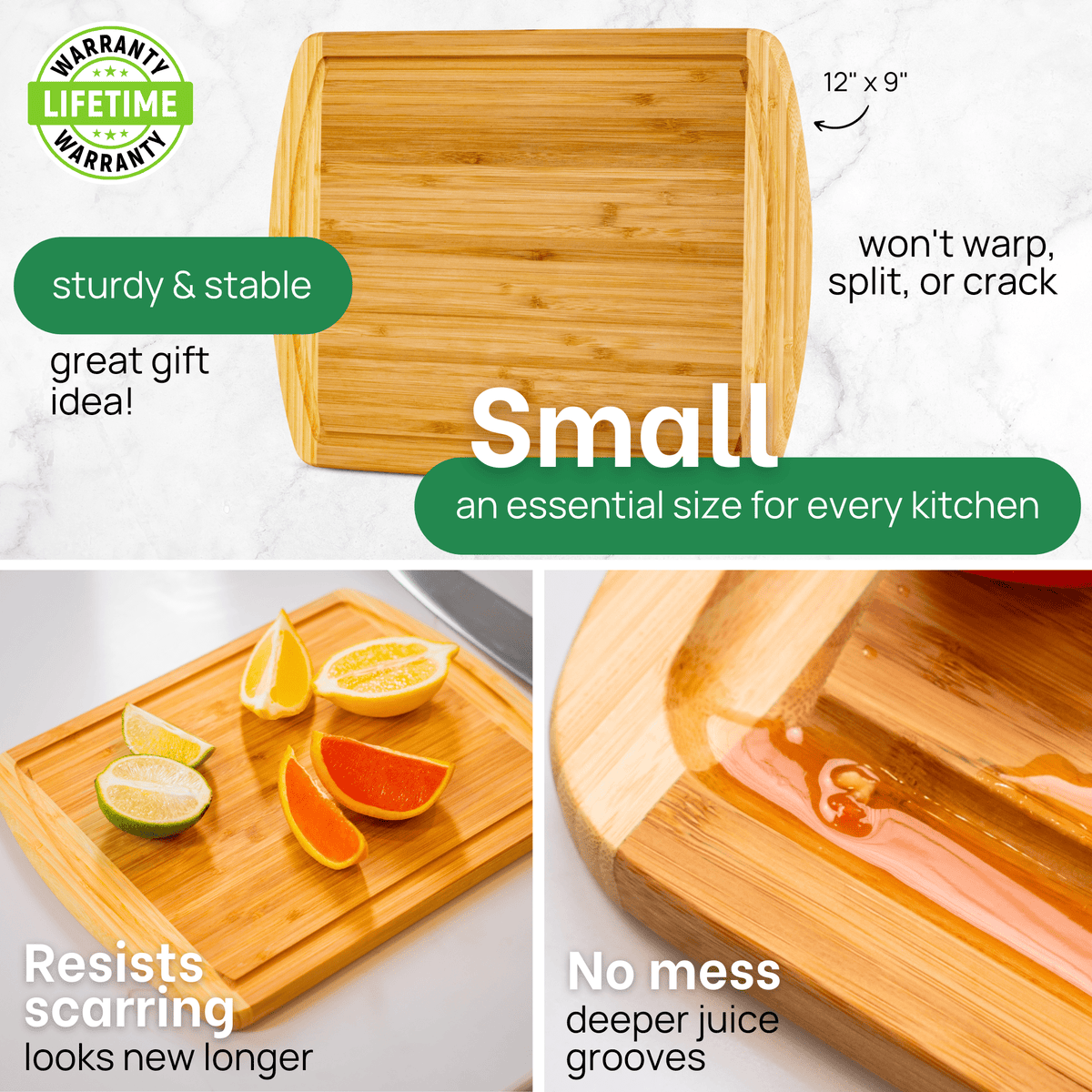
- Consider if the board has added features like juice grooves or handles.

Credit: www.amazon.com
Frequently Asked Questions
Are Bamboo Cutting Boards Better Than Wooden Ones?
Bamboo boards are harder and more durable than many woods. They resist moisture and bacteria well. Bamboo is eco-friendly and renews quickly, making it a sustainable choice.
How Long Do Bamboo Cutting Boards Last?
With proper care, bamboo boards last 3 to 5 years. Regular oiling prevents drying and cracking. Avoid soaking to extend their lifespan and maintain quality.
Are Bamboo Cutting Boards Safe For Knives?
Bamboo is firm but less harsh on knives than glass or stone. It keeps blades sharper longer while providing a sturdy cutting surface.
Can Bamboo Cutting Boards Harbor Bacteria?
Bamboo is naturally antimicrobial, reducing bacteria growth. Proper cleaning and drying after use keep boards hygienic and safe for food prep.
Conclusion
Bamboo cutting boards offer a strong and eco-friendly choice. They resist knife marks and dry quickly, keeping bacteria away. Easy to clean and light to handle. They last long with simple care. A smart pick for healthy kitchens. Choose bamboo for a natural, safe cutting surface.