Have you ever wondered what makes wood baseball bats so special? If you’re curious about what goes into crafting these essential tools of the game, you’re in the right place.
Understanding what wood baseball bats are made of can change the way you see the sport and even help you choose the perfect bat for your swing. Keep reading, and you’ll discover the secrets behind the wood that powers every powerful hit.
Your next game might just benefit from this knowledge!
Types Of Wood Used In Bats
Wood baseball bats are made from different types of wood. Each type has unique features that affect the bat’s performance and feel.
Understanding the types of wood helps players choose the right bat for their style and strength.
Ash Wood Characteristics
Ash wood is light and flexible. It has a grainy texture that allows the bat to bend without breaking easily.
Players like ash bats for their good balance of strength and light weight. These bats give a good swing speed and control.
- Lightweight and easy to swing
- Flexible and absorbs shock well
- Visible grain pattern for easy inspection
- Can break if hit off-center
Maple Wood Benefits
Maple wood is hard and dense. It offers more power on contact because it is less flexible than ash.
Many players choose maple bats for their durability and solid feel. The smooth surface also looks good and feels strong.
- Hard and dense wood
- Provides strong hitting power
- Less flexible but more durable
- Smooth grain and polished finish
Birch Wood Features
Birch wood is a mix between ash and maple. It is harder than ash but more flexible than maple.
Birch bats give a balance of power and flex. They can handle strong hits and still offer good control.
- Harder than ash, softer than maple
- Offers both power and flexibility
- Durable and less likely to crack
- Good for players who want control and strength
Other Woods In Bat Making
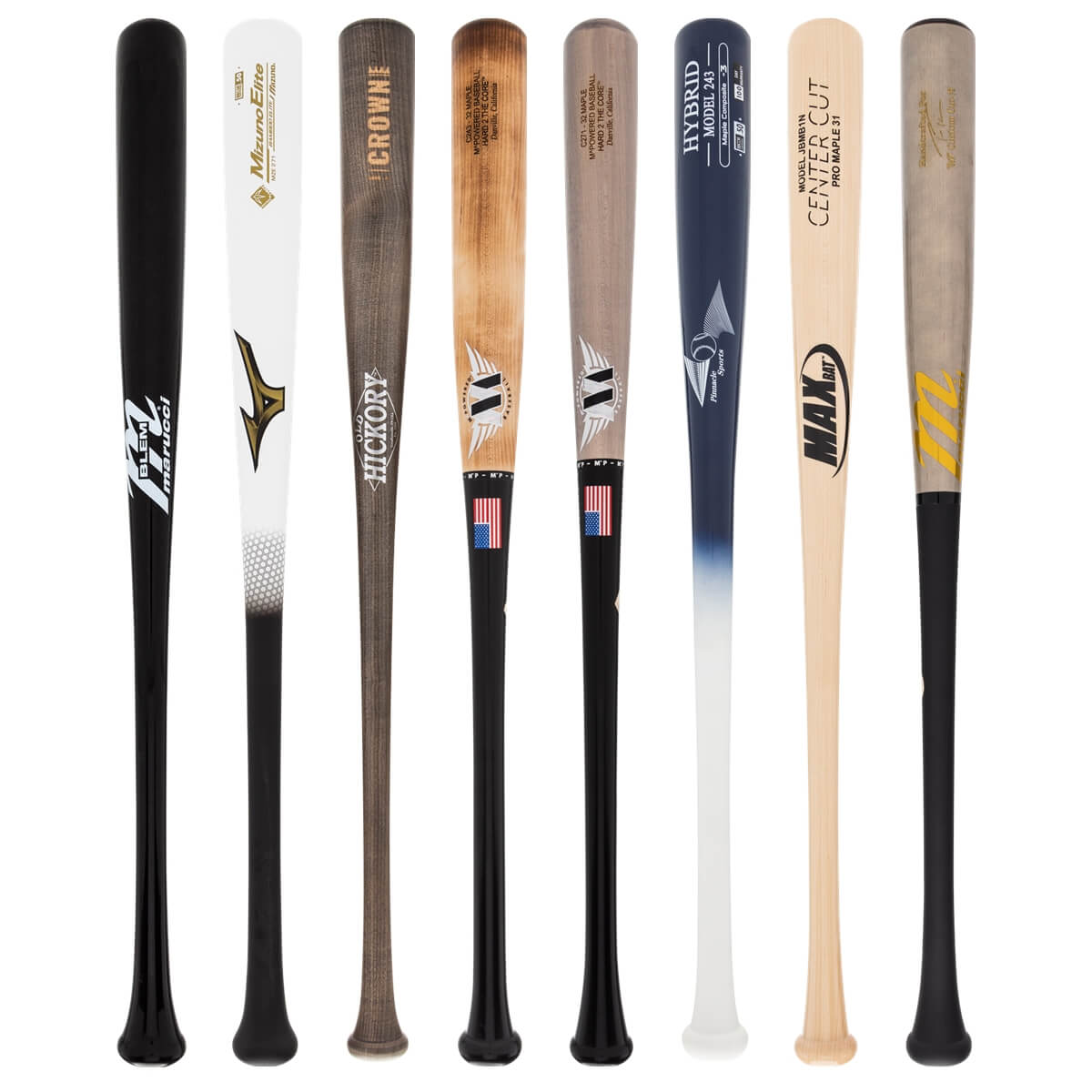
Besides ash, maple, and birch, other woods are sometimes used for bats. These include bamboo and hickory.
Each wood type has different qualities that can suit different player needs and preferences.
- Bamboo:Not technically wood but used for its light weight and strength.
- Hickory:Very hard and durable but heavier than other woods.
- Walnut:Offers good strength and a unique feel, less common.
Credit: www.justbats.com
Wood Selection Process
Wood baseball bats are made from carefully chosen wood. The selection process ensures the bat is strong and performs well.
Experts check the wood for qualities like grain, moisture, and durability. These factors affect the bat’s quality and lifespan.
Grain Structure Importance
Grain structure shows how the wood fibers grow. Straight and tight grains make the bat stronger and smoother.
Wood with uneven or wide grain may break easily. Bat makers look for even grains to ensure better performance.
Moisture Content Impact
Moisture in wood affects its weight and strength. Too much moisture can weaken the bat and cause warping.
Wood is dried to a specific moisture level before making bats. This helps keep the bat light and durable.
- High moisture: weaker and heavier wood
- Low moisture: stronger but may crack
- Ideal moisture: balanced strength and weight
Durability Factors
Durability depends on wood type and how it is treated. Hardwoods like maple and ash are common for bats.
Wood that is free from knots and defects lasts longer. Proper curing and finishing also improve durability.
- Hardwoods resist impact better
- Clear wood reduces weak spots
- Good finishing protects from moisture damage
Manufacturing Steps
Wood baseball bats are crafted through several precise steps. Each step ensures quality and performance.
The process involves selecting the right wood, shaping it, and then finishing it for play.
Log Preparation
The journey begins with selecting the right wood logs. Maple, ash, and birch are common choices.
Logs are cut to the correct length. They are then dried to reduce moisture content.
- Choose high-quality logs
- Cut logs to specified lengths
- Dry logs to optimal moisture levels
Turning And Shaping
Once dried, logs are shaped into bats using a lathe. This machine carves the wood into a bat’s form.
Precision is key for balance and weight. Each bat is measured for consistency.
- Place log on a lathe
- Shape wood into a bat form
- Ensure consistent weight and balance
Sanding And Finishing
The bats are sanded to achieve a smooth surface. This process removes any rough edges.
Finally, bats receive a finish to protect the wood. This adds shine and durability.
- Sand bats for a smooth texture
- Apply a protective finish
- Inspect for final quality assurance

Credit: sambat.com
Wood Treatment Techniques
Wood baseball bats undergo special treatments to improve strength and durability. These techniques help the wood resist damage and perform well during play.
Treatment processes include drying the wood, adding protective coatings, and balancing the bat’s weight. Each step affects the bat’s quality and lifespan.
Seasoning And Drying
Seasoning removes moisture from wood to prevent warping and cracking. It makes the bat lighter and stronger.
- Air drying: Wood is left in open air for several months.
- Kiln drying: Wood is dried in a controlled heated chamber.
- Combination drying: Uses both air and kiln methods.
Sealing And Coating
Sealing protects the wood from moisture and dirt. Coatings improve the bat’s smoothness and grip.
| Type | Purpose |
| Wax Sealant | Water resistance and shine |
| Lacquer Coating | Surface hardness and smooth feel |
| Oil Treatment | Prevents drying and cracking |
Weight Balancing
Weight balancing ensures the bat feels comfortable and swings well. This process adjusts the wood density and shape.
- Select wood with consistent grain patterns.
- Remove excess wood from the handle or barrel.
- Test swing weight and adjust as needed.
Performance And Material Impact
Wood baseball bats are made from different types of wood that change how they work. The type of wood affects the bat’s strength, flexibility, and how fast players can swing it.
Choosing the right wood helps players get the best performance. Understanding the material’s impact can improve play and bat durability.
Bat Strength And Flexibility
Wood bats need a balance between strength and flexibility. Hard woods like maple are strong but less flexible. Softer woods like ash offer more flex but less strength.
This balance affects how the bat handles impact. A flexible bat can absorb shock better. A strong bat resists breaking but may feel stiffer.
- Maple: High strength, low flexibility
- Ash: Moderate strength, high flexibility
- Birch: Mix of strength and flexibility
Swing Speed Effects
Wood type affects how fast a player can swing the bat. Lighter woods allow faster swings. Heavier woods can slow down swing speed but add power.
Players choose wood based on their style. Quick hitters prefer lighter bats. Power hitters often pick heavier, stronger wood.
- Lighter wood: Faster swings, less power
- Heavier wood: Slower swings, more power
Durability And Lifespan
Durability depends on the wood’s grain and hardness. Harder woods last longer but can break from strong impacts. Softer woods wear out faster but resist cracking.
Proper care also extends bat life. Dry storage and avoiding hard hits keep the wood strong and lasting.
- Hard woods: Longer lifespan, risk of cracking
- Soft woods: Shorter lifespan, less cracking
- Good care: Increases durability
Choosing The Right Wood Bat
Wood baseball bats come in different types of wood. Choosing the right one affects your performance.
Consider your skill, budget, and personal taste when picking a wood bat.
Player Skill Level Considerations
Beginners should pick lighter bats to improve their swing speed. Advanced players may prefer heavier bats for power.
Different woods offer various weights and durability. Maple is hard and heavy. Ash is lighter and flexible.
- Beginners: Lighter ash bats improve control
- Intermediate: Balanced weight for power and speed
- Advanced: Heavier maple bats for stronger hits
Budget And Quality Balance
Wood bats vary in price based on wood type and quality. More expensive bats usually last longer.
Choose a bat that fits your budget but still offers good durability and performance.
- Lower budget: Select ash or birch bats
- Mid-range: Consider maple for better strength
- High budget: Premium-grade wood with smooth finish
Personal Preference Factors
Feel and grip affect your comfort with a bat. Some players like a smooth finish, others want more grip.
Length and weight should match your size and swing style for better control.
- Choose a length that fits your height and stance
- Pick a weight that feels balanced in your hands
- Consider wood grain and finish for better grip and look

Credit: sskbaseballshop.com
Frequently Asked Questions
What Types Of Wood Are Used For Baseball Bats?
Baseball bats are commonly made from ash, maple, birch, and hickory. Each wood offers different strength, flexibility, and weight.
Why Is Maple Wood Popular For Baseball Bats?
Maple is dense and hard, providing great power and durability. It offers a solid feel and lasts longer than softer woods.
How Does Ash Wood Affect Bat Performance?
Ash is lighter and more flexible, allowing faster swing speed. It absorbs vibrations well, giving better control and comfort to hitters.
Are Birch Wood Bats Better Than Ash Or Maple?
Birch combines flexibility of ash and hardness of maple. It offers a balanced feel, making it a versatile choice for many players.
Conclusion
Wood baseball bats come from different types of trees. Each wood type affects the bat’s weight and strength. Players choose bats based on feel and performance. Knowing what wood is used helps pick the right bat. Quality wood means better hits and longer use.
Now, you can understand why wood matters in baseball bats. It’s all about finding the best fit for your game.